Ponderosa Park, Sunnyvale (94086): Silicon Valley’s Mid-Century Gem in a Modern Tech Era
Sunnyvale’s Ponderosa Park neighborhood (ZIP code 94086) offers a compelling blend of mid-century heritage, community-centered lifestyle, and Silicon Valley convenience. This in-depth profile examines Ponderosa Park’s journey from orchard lands to a sought-after enclave, covering its history, demographics, schools, lifestyle attractions, architectural character, and dynamic real estate market, and how the Boyenga Team leverages its deep expertise in this unique neighborhood.
Historical Overview
Origins and Early Development
Ponderosa Park’s story begins in the post-World War II boom that transformed Sunnyvale from agricultural orchards into the bedrock of Silicon Valley suburbia. In the 1950s and 1960s, Sunnyvale’s orchard-lined fields were gradually developed to meet surging housing demand from engineers, educators, and entrepreneurs shaping the emerging tech industry.
The Ponderosa Park area, once dotted with fruit trees and farms, became a canvas for visionary builders who sought to create more than cookie-cutter tract homes. Esteemed local developers like Stern & Price and Gavello led the planning of what became the Ponderosa Park neighborhood, envisioning a residential enclave that balanced form, function, and community. Unlike many generic postwar subdivisions, the neighborhood was conceived as a model for “livable modernism,” featuring thoughtful street layouts, parkland, and distinctive modern home designs rather than repetitive tracts.
Throughout the 1960s, construction in Ponderosa Park introduced clusters of single-story homes with a contemporary flair, aimed at young families and professionals working at nearby aerospace and electronics firms. The establishment of Ponderosa Elementary School in 1964 anchored the growing community, reflecting a commitment to neighborhood schools and family life. By the late 1960s, Ponderosa Park had firmly emerged as one of Sunnyvale’s defining mid-century neighborhoods – a tranquil counterpart to the region’s rapidly evolving high-tech corridor.
Transformations Over the Decades
Over the subsequent decades, Ponderosa Park witnessed key transformations in urban planning, architecture, and zoning.
In the 1970s and 1980s, as Silicon Valley’s tech economy took off, Sunnyvale’s population grew and diversified. Some original residents of Ponderosa Park – often aerospace engineers or second-generation orchard owners – gradually moved out, selling homes to a new wave of tech professionals drawn by the neighborhood’s location and character. This shift brought an influx of educated, globally diverse homeowners who raised the area’s median incomes and education levels. Sunnyvale’s identity as a tech hub was cemented, and Ponderosa Park became home to early employees and founders from the region’s fast-growing companies.
Architecturally, Ponderosa Park’s housing stock evolved but retained its mid-century roots. Many original mid-century modern homes remained intact into the 1990s, as owners undertook sensitive renovations – updating kitchens or adding family rooms – while preserving signature design elements like open floor plans and large windows. The City of Sunnyvale maintained low-density residential zoning in the core of Ponderosa Park, protecting it from the high-rise development seen elsewhere. Zoning adjustments along the neighborhood’s periphery (such as El Camino Real) allowed pockets of new housing types, including townhouses and condominiums, while interior streets remained dominated by single-family homes.
As statewide policy in California began to encourage accessory dwelling units (ADUs), Ponderosa Park saw a gradual introduction of backyard cottages and in-law units, increasing flexibility for multi-generational living and rental income while maintaining the existing neighborhood fabric. City improvements focused on park upgrades, traffic calming, pedestrian safety, and school modernization rather than large-scale redevelopment. The result is a neighborhood that feels updated yet fundamentally consistent with its original design.
Notable Figures and Developments
Several figures and milestones stand out in Ponderosa Park’s development:
Stern & Price and Gavello – These builders are often cited as key shapers of Ponderosa Park’s mid-century modern character. Their work, in parallel with contemporaries like Eichler in other parts of the Bay Area, gave the area its distinctive look and build quality.
Ponderosa Park (the park) and Ponderosa Elementary School – The dedication of the public park and opening of the elementary school in the 1960s created a civic and social core. PTA leaders, coaches, and volunteers became informal community leaders, fostering a strong neighborhood identity.
Tech-industry pioneers as residents – While not celebrities in the Hollywood sense, early employees and founders from major Silicon Valley firms bought homes here, quietly influencing the neighborhood’s culture through school programs, civic engagement, and local philanthropy.
Taken together, Ponderosa Park’s history is a microcosm of Silicon Valley’s transformation: from agricultural roots to a modern community intertwined with the rise of technology.
Demographic and Socioeconomic Profile
Population and Household Characteristics
Ponderosa Park sits within Sunnyvale’s 94086 ZIP code (and partially 95051), in a broader area of roughly 27,000–30,000 residents. The population density is moderate for an urban suburb: dense enough to support amenities, yet low enough to preserve a quiet residential feel.
The demographic profile is:
Median age: mid-30s to late-30s, slightly younger than the national average.
Children: roughly one-fifth to one-quarter of residents are under 18, reflecting a strong family presence.
Seniors: a smaller but meaningful share of residents are 65+, including original owners who have aged in place.
Households in Ponderosa Park tend to be affluent and highly educated, reflecting the neighborhood’s proximity to major tech employers:
Median household income: approximately in the $160,000–$190,000 range, significantly higher than state and national medians.
Education: an overwhelming majority of adults have at least a bachelor’s degree, and a very high proportion hold graduate or professional degrees. Engineers, product managers, data scientists, professors, and healthcare professionals are common.
Economic hardship exists but is relatively rare compared with broader regional statistics. Dual-income professional households are the norm, and even renters often work in highly skilled roles.
Ethnic and Cultural Diversity
One of Ponderosa Park’s defining attributes is its ethnic and cultural diversity, mirroring the broader Sunnyvale and Santa Clara County populations.
Approximate patterns include:
A large Asian population (often around or near half of residents), including Indian, Chinese, Korean, Vietnamese, and other communities.
Significant White and Hispanic/Latino populations, plus smaller percentages of Black, Middle Eastern, and multiracial residents.
A high share of foreign-born residents, particularly from Asia, attracted by the tech industry and strong local schools.
This diversity shows up in daily life: different languages in playground conversations, varied cultural festivals, and a rich mix of cuisines in nearby restaurants and markets. El Camino Real just north of Ponderosa Park is known informally as part of a “Koreatown” corridor, featuring Korean supermarkets and eateries, while Indian grocery stores, pan-Asian restaurants, and Latin American businesses are also well represented.
The neighborhood’s social fabric reflects an ethos of inclusion and global perspective. Many residents have international careers or extended families abroad, and it’s common for neighbors to bond over shared experiences in tech, academia, or global travel.
Tech-Driven Shifts and Trends
Silicon Valley’s tech economy has strongly shaped Ponderosa Park’s demographic and socioeconomic trajectory. Over the last several decades:
Original working- and middle-class homeowners (including aerospace and semiconductor workers) gradually sold to tech-industry professionals with higher incomes.
Property values rose rapidly, reinforcing an affluent profile while also making the neighborhood less accessible to lower-income households.
Multi-generational living became more common as families pooled resources to afford homes or built ADUs for grandparents and adult children.
Despite these shifts, Ponderosa Park has generally experienced “gentle gentrification” rather than abrupt displacement. The neighborhood’s limited turnover and strong community institutions (schools, park, churches, and cultural organizations nearby) have helped maintain continuity even as demographics evolved.
In essence, Ponderosa Park is now a diverse, high-income, highly educated neighborhood emblematic of Silicon Valley’s knowledge economy, with residents from around the world anchored by shared professional and family priorities.
School Districts and Education Landscape
Public Schools and Performance
High-quality public schools are one of Ponderosa Park’s strongest draws. The neighborhood is primarily served by:
Ponderosa Elementary School (Santa Clara Unified School District)
A neighborhood K–5 school established in the 1960s, Ponderosa Elementary has a strong academic reputation, active parent involvement, and a diverse student body. The school emphasizes foundational literacy and math, STEM enrichment, and social-emotional learning. Families value the safe walking routes and the school’s adjacency to Ponderosa Park.Marian A. Peterson Middle School (Santa Clara Unified)
Serving grades 6–8, Peterson Middle offers robust academic programs, including advanced math tracks, science fairs, music, and a wide array of clubs. Its strong performance metrics and inclusive culture make it a natural next step for Ponderosa Elementary graduates.Adrian C. Wilcox High School (Santa Clara Unified)
For grades 9–12, most Ponderosa Park students attend Wilcox High School, known for rigorous academics, strong extracurriculars, and innovative programs. Curriculum highlights often include:A wide range of AP and honors classes
Specialized academies and CTE (Career and Technical Education) pathways
Programs that connect academics with real-world skills (such as culinary/hospitality, business, and technology)
Wilcox enjoys a strong reputation among local families and real estate buyers. It sends graduates to University of California campuses, California State Universities, private colleges, and competitive out-of-state institutions. For many buyers, the combination of Ponderosa Elementary, Peterson Middle, and Wilcox High positions Ponderosa Park as a “sweet spot” – excellent schools without the very highest pricing seen in some Cupertino-school neighborhoods.
School Boundaries and Relevance for Homebuyers
In Silicon Valley, school boundaries are one of the most important drivers of real estate decisions. Ponderosa Park’s advantages include:
Stable feeder patterns – Homebuyers can reasonably expect their children to attend Ponderosa → Peterson → Wilcox under current boundaries.
High performance across the pipeline – All three schools are high-performing, which supports resale value and buyer confidence.
Comparative value – Because Santa Clara Unified is sometimes priced slightly below the premium commanded by Cupertino Union/Fremont Union in certain pockets, Ponderosa Park can offer relative value while still delivering top-tier outcomes.
Buyers and sellers in Ponderosa Park frequently highlight schools in their negotiations and marketing. Listings often mention proximity to Ponderosa Elementary and the Wilcox High boundary, and families relocating for tech roles may specifically request properties zoned to these schools.
Higher Education and Lifelong Learning
Ponderosa Park residents benefit from proximity to multiple higher education institutions:
Mission College (Santa Clara) – community college with strong STEM and career programs.
De Anza College (Cupertino) – consistently ranked among the top community colleges in the state.
Santa Clara University – private Jesuit university with undergraduate, graduate, and professional programs.
San José State University – a major public research university in downtown San José.
Stanford University – a world-class research institution within commuting distance.
Students often take dual-enrollment courses, summer classes, or transfer programs at Mission and De Anza, while residents of all ages attend extension courses, lectures, and cultural events at SCU, SJSU, and Stanford. This surrounding ecosystem reinforces the neighborhood’s education-centered culture and enhances long-term human capital.
Neighborhood Attractions and Lifestyle
Parks, Trails, and Recreational Assets
Ponderosa Park (the park) is the neighborhood’s social and recreational anchor. Its features commonly include:
Children’s playgrounds (including thematic equipment that appeals to younger kids)
Tennis and basketball courts
Open lawn areas for soccer, frisbee, and picnics
Shaded picnic tables and barbecue areas
Walking paths and mature trees
Because the park is centrally located, many Ponderosa Park residents think of it as an extension of their backyards. Weekend birthday parties, pickup basketball games, and evening dog walks all gravitate toward this green space.
Nearby recreational amenities expand the options:
Braly Park – another family-friendly park with playgrounds and open fields.
Sunken Gardens Golf Course – a nine-hole executive course with a driving range, ideal for beginners and casual golfers.
Regional hiking – a short drive west leads into the foothills of the Santa Cruz Mountains, offering hiking, biking, and nature preserves for those seeking larger open spaces.
Sunnyvale’s mild climate and investment in public parks make outdoor recreation a year-round reality.
Dining, Retail, Cultural Landmarks, and Entertainment
While Ponderosa Park itself is predominantly residential, it sits near several vibrant commercial corridors:
El Camino Real (north of the neighborhood)
This major thoroughfare offers:Korean supermarkets, bakeries, and restaurants
Indian grocery stores and South Asian eateries
Pan-Asian cuisine, Latin American restaurants, and American comfort food
Pharmacies, banks, small retail centers, and services
The result is a diverse, food-rich environment where residents can easily rotate among Korean BBQ, Indian curries, Japanese ramen, burritos, and more – often within a short drive or bike ride.
Downtown Sunnyvale (Heritage District)
A few minutes away, downtown Sunnyvale has undergone a renaissance, with:A revitalized Murphy Avenue dining and entertainment district
Weekly farmers’ markets and seasonal festivals
Boutique shops and larger retailers
A movie theater and community events
Residents frequently head downtown for an evening out, community gatherings, and weekend errands.
Nearby Santa Clara and San José attractions
Within a short drive, Ponderosa Park residents can reach:Levi’s Stadium (NFL games, concerts, major events)
California’s Great America amusement park
The Tech Interactive, Children’s Discovery Museum, and other downtown San José attractions
Historic and cultural sites like the Winchester Mystery House and the Sunnyvale Heritage Park Museum
This combination gives Ponderosa Park a lifestyle profile that blends quiet neighborhood living with access to regional entertainment and culture.
Proximity to Major Tech Employers and Commuter Hubs
One of Ponderosa Park’s biggest lifestyle advantages is its strategic location in Silicon Valley:
Apple Park (Cupertino) – roughly a 10-minute drive or short bike ride.
Google, LinkedIn, Microsoft, and other major tech campuses – reachable within 10–20 minutes depending on traffic.
Nvidia and many semiconductor, networking, and startup offices – located in nearby Santa Clara and north Sunnyvale.
By car, residents enjoy quick access to:
Lawrence Expressway (north–south artery)
Interstate 280 (to Cupertino, Los Altos, Palo Alto, San José)
Highway 101 and Highway 237 (to Mountain View, Milpitas, and the Peninsula corridor)
El Camino Real (for local travel)
Public and private transportation options include:
VTA bus routes along El Camino Real and Lawrence Expressway.
Nearby VTA light rail stations.
Sunnyvale Caltrain Station a short drive or bike ride away.
Company shuttles (e.g., Google, Apple, Facebook/Meta) with stops within easy reach.
San José Mineta International Airport is approximately 15–20 minutes away in typical traffic, making business travel relatively seamless.
For residents, this translates into short commutes, flexible transportation options, and more time at home rather than on the freeway – a critical consideration in evaluating overall quality of life.
Architectural Highlights and Housing Inventory
Predominant Architectural Styles
Ponderosa Park is prized for its mid-century architectural heritage. Core characteristics include:
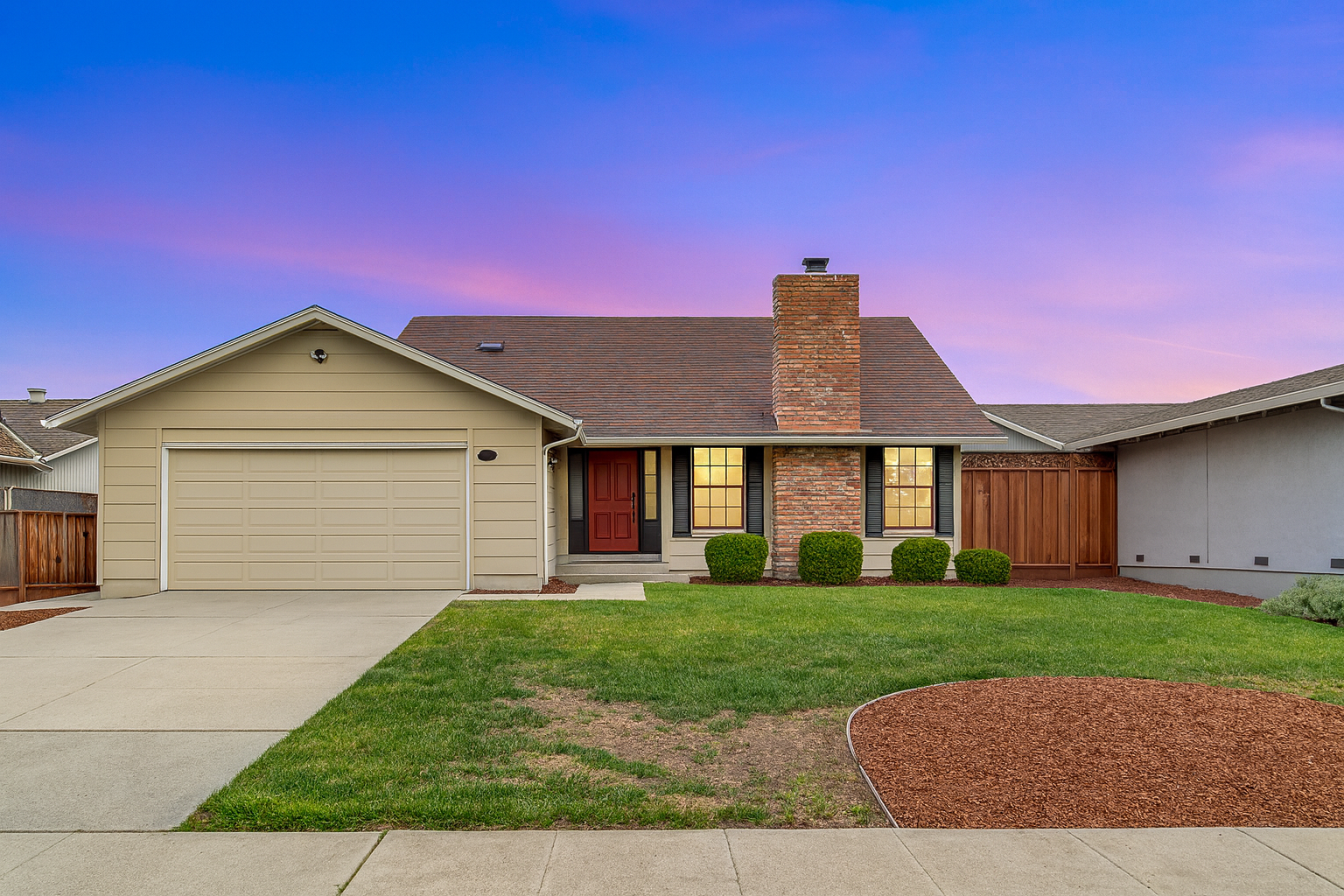
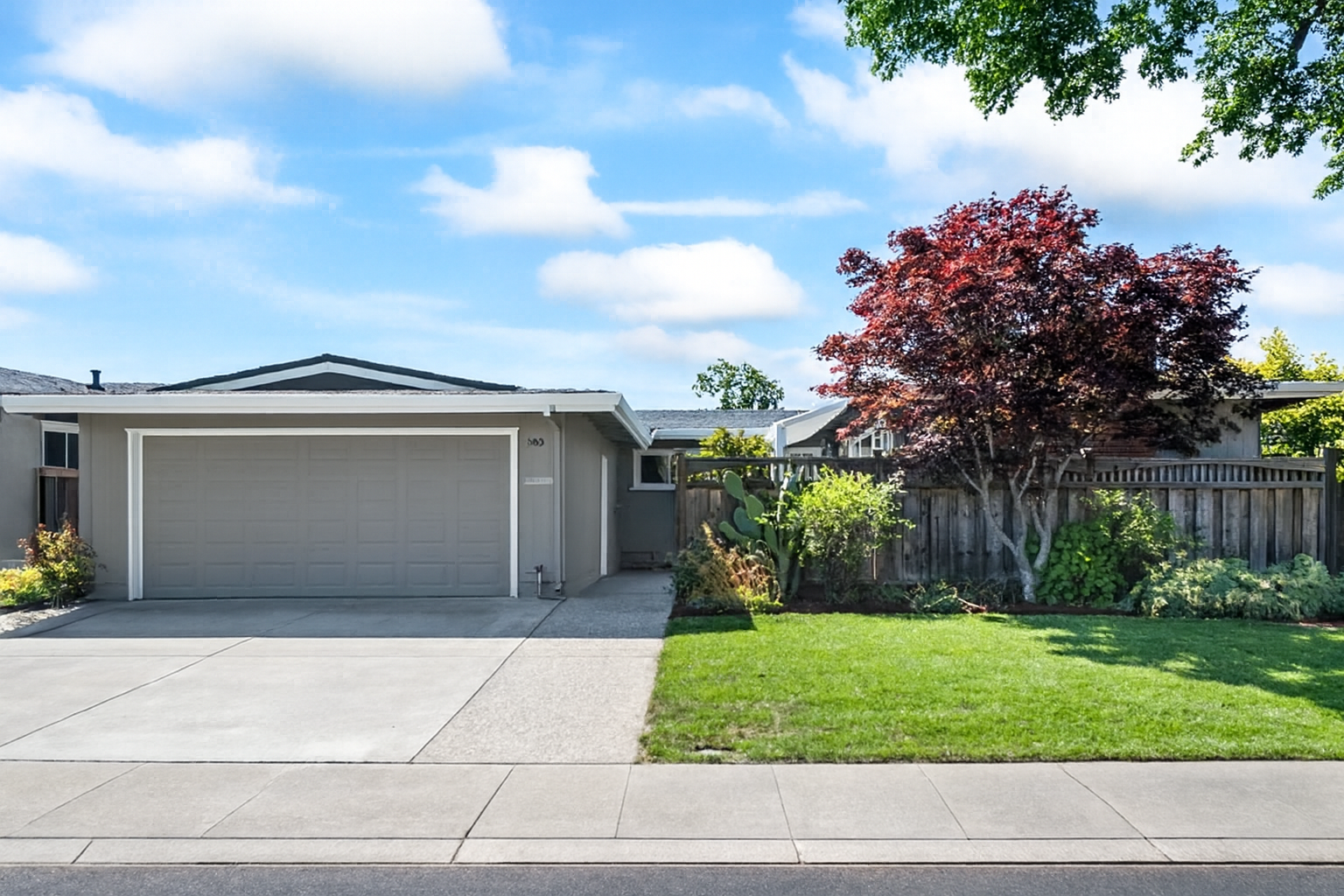
Single-story ranch and contemporary homes from the late 1950s and 1960s.
Low-pitched roofs, wide eaves, and horizontal lines.
Post-and-beam construction in many homes.
Large windows, clerestory glass, and sliding doors connecting to patios and backyards.
Integrated courtyards and atriums in certain models, echoing the mid-century indoor-outdoor living ideal.
Natural materials such as wood siding, brick, and aggregate concrete.
Many homes show the influence of California Modernism similar to, but distinct from, Eichler developments. While Ponderosa Park is not an Eichler tract, buyers enamored with mid-century modern typically find its homes appealing: they deliver many of the same lifestyle benefits – open plans, light, integration with garden spaces – without being slavish copies.
Later development phases introduced:
Some Spanish-influenced homes (stucco, arches, tile roofs) from the 1970s.
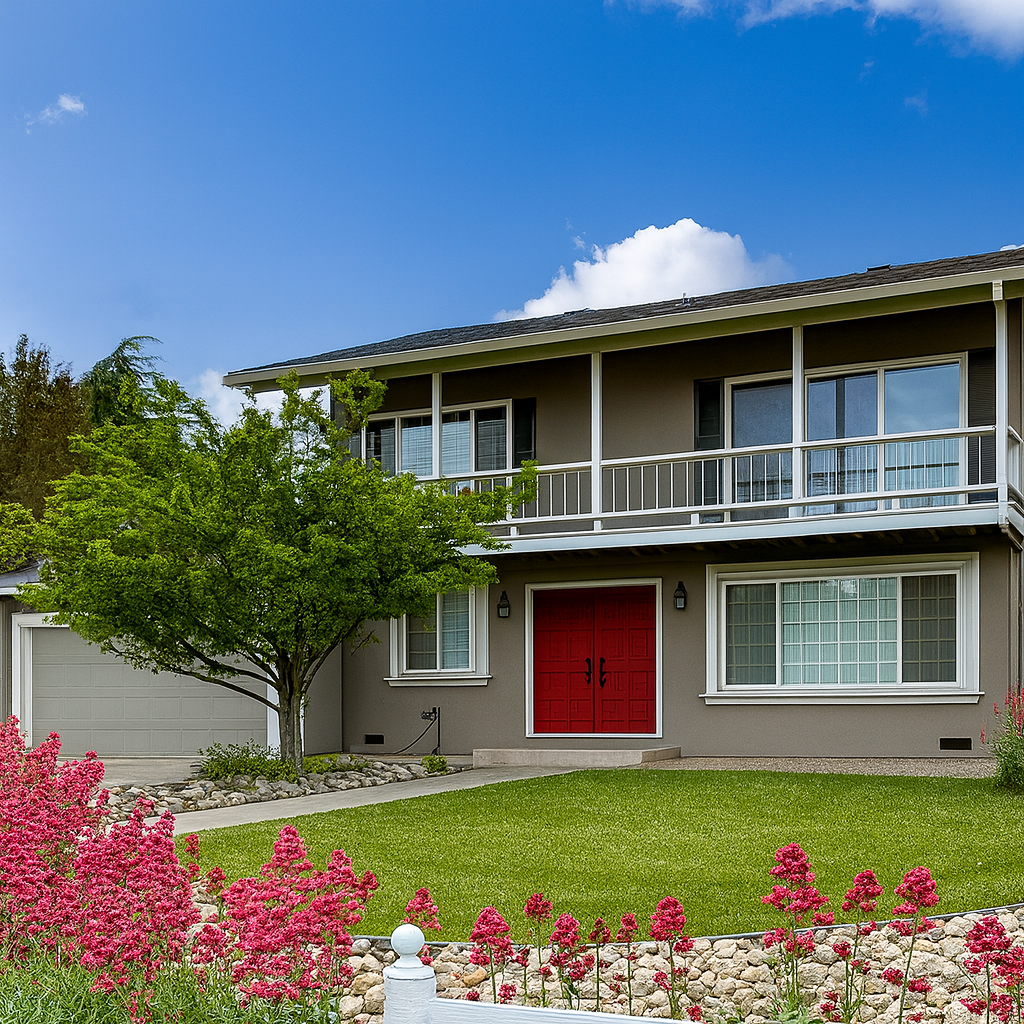
A limited number of two-story homes, both original and later additions.
A handful of fully contemporary rebuilds that respect neighborhood scale while introducing modern aesthetics.
The result is a visually cohesive yet varied streetscape: blocks lined with mature trees, homes with unique façades, and a palpable sense of being in a curated mid-century neighborhood rather than a generic tract.
Noteworthy Builders and Home Types
The most historically notable builders in Ponderosa Park include:
Stern & Price – Known for understated mid-century homes that blend functionality with elegant simplicity. Their properties often feature recessed entry courtyards, open-beam ceilings, and thoughtful site orientation.
Gavello – Another influential builder whose homes contribute to the neighborhood’s mid-century character, often with slightly more traditional touches on the exterior but modern interior layouts.
In the broader Sunnyvale context, builders like Joseph Eichler, Bahl Homes, and others also shaped nearby neighborhoods. Ponderosa Park can be understood as part of this mid-century ecosystem: a distinct but related expression of the same design movement.
Home types in and around Ponderosa Park include:
Single-family mid-century ranch and contemporary homes (the majority of the inventory).
Townhomes and condominiums along the edges, especially near El Camino Real and Sunken Gardens Golf Course.
Manufactured home communities (mobile home parks) near the northern boundary, offering more affordable ownership options with space rent.
Inventory Breakdown
Within the core Ponderosa Park area, most homes share several traits:
Living area: often 1,400–2,100 square feet for original mid-century houses.
Lots: typically around 6,000–9,000 square feet.
Layouts: 3–4 bedrooms, 2–3 bathrooms, attached garages, and open living/dining spaces oriented toward the backyard.
Over the years:
Many homes have undergone substantial interior updates (new kitchens and baths, updated electrical and plumbing, energy-efficient windows).
Some properties have been expanded with family rooms, additional bedrooms, or second stories.
A smaller set has been torn down and rebuilt as larger custom homes, often 2,400–3,000+ square feet, designed to blend reasonably well into the neighborhood.
On the periphery:
Condos and townhomes generally range from 2- to 3-bedroom units and offer lower-maintenance living at a lower price point than single-family homes.
Manufactured homes provide entry-level ownership for buyers who prioritize location but need to manage purchase price and monthly costs.
Overall, the neighborhood’s inventory skews toward well-maintained, mid-sized, architecturally interesting single-family homes, with secondary options for condos, townhomes, and mobile homes widening the socioeconomic mix.
Real Estate Market Analysis
Median Prices and Appreciation
As of the mid-2020s, Ponderosa Park’s real estate market is firmly in the upper tier of Sunnyvale:
Median single-family home value: generally in the range of $2.1–$2.5 million, depending on the specific comp set and timeframe.
Condos/townhomes: often in the $800,000–$1.2 million range, with variations by age, size, and amenities.
Manufactured homes: purchase prices can be substantially lower (mid-hundreds of thousands), though owners also pay monthly space rent.
Over the last decade, appreciation has been strong. Many mid-century homes that sold for $1.2–$1.5 million around 2015 now command well over $2 million, especially if updated. This reflects both regional trends (Silicon Valley’s tech-driven surge) and the neighborhood’s specific desirability.
Key drivers of appreciation include:
Limited land supply and low-density zoning.
High-income buyer pool with significant equity and stock-based wealth.
Strong local schools and central location.
Growing appreciation for mid-century architecture among design-savvy buyers.
While short-term fluctuations in interest rates and tech stock valuations can influence buyer sentiment, the long-term trend has been a consistent upward trajectory in value, punctuated by occasional plateaus rather than deep declines.
Market Velocity and Demand Patterns
Ponderosa Park is generally a seller’s market, characterized by:
Low inventory – Only a small number of homes for sale at any given time.
Short days on market – Well-priced, well-presented homes frequently go pending in 1–3 weeks.
Multiple offers – Competitive bidding is common in peak seasons, with buyers often waiving contingencies or offering above list price.
Typical demand patterns:
Turnkey mid-century homes with tasteful modern updates attract the most intense competition, sometimes sparking bidding wars.
Original-condition homes still draw strong interest, particularly from buyers who want to customize and from investors who recognize the underlying value of the lot and location.
Condos and townhomes are popular among younger professionals and downsizers seeking lock-and-leave living while staying close to major employers.
Cash offers or large-down-payment buyers are common; many purchasers leverage substantial equity from previous homes or liquidity events in tech.
Investment Outlook and Comparison with Neighboring ZIP Codes
From an investment perspective, Ponderosa Park is well positioned:
Its mid-century architecture has enduring appeal and a growing enthusiast base.
Zoning that preserves single-family character in the core neighborhood makes these homes relatively scarce.
The broader Sunnyvale and South Bay tech economy provides a stable foundation for long-term demand.
Compared with nearby areas:
Sunnyvale 94087 (often Cupertino school zones) tends to command slightly higher prices for similar homes due to school district branding and proximity to Cupertino. Ponderosa Park can be a relative value play.
Sunnyvale 94085 and parts of north Sunnyvale/industrial zones typically have lower median prices but may lack the same combination of schools, architecture, and neighborhood cohesion.
Santa Clara 95051 next door offers somewhat lower pricing on average, but without as concentrated a collection of mid-century modern homes or the same neighborhood identity.
Overall, Ponderosa Park real estate is widely viewed as a solid long-term hold, combining lifestyle appeal, excellent fundamentals, and architectural character.
Case Studies and Success Stories
To understand how savvy sellers and their agents succeed in Ponderosa Park, it’s useful to examine representative transactions – particularly those handled by specialists in the neighborhood.
Case Study: Modernizing a Mid-Century Home for a Record Sale
Consider a classic Ponderosa Park mid-century home: a single-level ranch with open-beam ceilings, generous windows, and an attached two-car garage on a quiet cul-de-sac. Although structurally sound, the home’s original kitchen and bathrooms were dated, and the landscaping had not been refreshed in years.
Working with the Boyenga Team, the sellers:
Used concierge-style pre-sale improvements
Through Compass programs and the Boyenga Team’s contractor network, they financed updates such as:A new open-concept kitchen with quartz counters and modern cabinetry
Updated bathrooms with stylish tile and fixtures
Refinishing of original hardwood floors
Interior and exterior paint with a mid-century-friendly palette
Cleaned-up landscaping emphasizing outdoor living (deck, seating areas, lighting)
Emphasized wellness and lifestyle
The Boyenga Team recommended converting a bonus room into a recreation/wellness space with a built-in spa, yoga area, or home gym. This resonated strongly with buyers prioritizing health, relaxation, and work-life balance at home.Staged and photographed for design-minded buyers
Professional staging with mid-century modern and contemporary pieces highlighted the home’s architecture rather than hiding it. High-quality photography and video tours showcased indoor-outdoor flow, ceiling heights, and natural light.Leveraged off-market and private exclusive exposure
Before going fully public, the Boyenga Team quietly marketed the home within the Compass Private Exclusives network and to their database of mid-century enthusiasts, generating buzz and identifying potential buyers early.
The result was a record-setting sale, with the home selling quickly and above the expectations sellers might have had without strategic upgrades and targeted marketing. The property’s mid-century character, thoughtfully modernized, combined with the Boyenga Team’s positioning, created a powerful value proposition.
Case Study: Off-Market and Trust Sales
In another scenario, a Ponderosa Park home owned by a family trust needed to be sold after the passing of the original owner. The property required updating, and multiple heirs lived out of the area.
The Boyenga Team:
Coordinated repairs, inspections, and staging on behalf of the trustees.
Prepared detailed market analyses to help the family set realistic expectations.
Quietly marketed the home off-market through their network to avoid a lengthy public listing process and open-house logistics.
Identified a prepared buyer (a tech professional family moving up from a condo) who appreciated the home’s retro charm and location.
By handling legal coordination, vendor management, and buyer outreach, the Boyenga Team facilitated a smooth transaction that satisfied the trust’s financial goals while minimizing complexity and stress for the family.
These kinds of case studies show how value in Ponderosa Park is maximized through strategic improvements, focused storytelling, and intelligent use of private and public marketing channels.
The Boyenga Team Advantage
Neighborhoods like Ponderosa Park reward agents who understand history, design, data, and the psychology of Silicon Valley buyers. Eric and Janelle Boyenga, founders of the Boyenga Team at Compass, are widely recognized as Next-Gen Agents and Silicon Valley real estate innovators who excel in this environment.
Next-Gen Agents and Technology-Driven Strategy
The Boyenga Team is known for integrating:
Data-driven pricing and market analysis – Leveraging real-time market data, micro-neighborhood comps, and trend analysis to set accurate prices and negotiation strategies.
Advanced marketing technology – Using digital campaigns, AI-enabled tools, and Compass’s platform to optimize listing exposure and buyer targeting.
Client communication tools – Keeping clients constantly informed through dashboards, transparent reports, and proactive outreach.
They have been recognized in industry circles for their early adoption of technology and their willingness to experiment with new tools that give their clients an edge.
Expertise in High-End and Architecturally Significant Homes
Eric and Janelle have built a reputation as luxury real estate experts with particular strength in architecturally notable properties across the South Bay:
Representing mid-century modern homes, including properties designed by renowned builders and architects.
Selling historical and design-forward homes that require nuanced marketing beyond generic “3 bed, 2 bath” descriptions.
Advising on design decisions when owners are renovating with resale in mind, ensuring improvements align with the property’s architectural DNA.
Their work with mid-century properties in Sunnyvale and surrounding cities has positioned them as trusted advisors to owners who understand that architecture is an asset, not just an aesthetic.
Compass Affiliation, Partnerships, and Programs
As part of Compass, the Boyenga Team leverages:
Compass Concierge – Fronts the cost of pre-sale improvements to maximize value without upfront outlay from sellers.
Private Exclusives – Allows for confidential pre-market exposure to qualified buyers, ideal for high-profile clients or delicate situations.
Bridge loan and trade-in programs – Through Compass and partners such as HomeLight, they offer solutions to help clients buy before selling or move without contingent offers.
These tools are particularly valuable in high-pressure markets like Ponderosa Park, where timing and offer strength can make or break a deal.
Unmatched Local Knowledge of Silicon Valley’s Finer Communities
Eric and Janelle’s long-standing local roots and specialization in Silicon Valley’s premier neighborhoods give them a granular understanding of:
Micro-neighborhood distinctions (Ponderosa Park vs. Birdland vs. Cherry Chase, etc.).
School district nuances that heavily influence buyer demand and pricing.
The impact of new tech campuses, transportation projects, and zoning changes on property values.
For buyers, this translates into smart acquisition strategies – understanding where value lies today and where upside may exist tomorrow. For sellers, it means achieving top-of-market pricing by positioning their property correctly and tapping into the right buyer pool.
In Ponderosa Park, where mid-century heritage, top schools, and tech-sector demand converge, the Boyenga Team’s combination of analytics, design sensitivity, and local expertise offers a compelling advantage for both buyers and sellers.