
West Murphy, Sunnyvale (94086): Silicon Valley’s Historic Gateway in a New Tech Era
Historical Overview
Origins and early development
The roots of the neighborhood trace back to the pioneering Martin Murphy, Jr. (1807–1884) and his family — early settlers whose efforts shaped what would become the city of Sunnyvale, California. The Murphy family were among the first white settlers in the area and are credited with founding Sunnyvale.
In the 1850s, the Murphys built what was reportedly Sunnyvale’s first wood-frame house; though the original structure was lost to fire and demolished in 1961, the memory is preserved with a reconstruction at Sunnyvale Heritage Park Museum.
This early period laid the foundation — both physically and culturally — for agricultural settlement, orchard farming, and small-town community development in what was then a rural valley outside of burgeoning San Jose.
Key transformations over decades
From orchards to suburbia: As Silicon Valley expanded in the mid-20th century, the greater Sunnyvale region and surrounding valley shifted from agriculture to residential development. The land that once supported orchards and farms began to be subdivided for homes, accommodating workers drawn by rising industry in the Bay Area.
Post-war housing boom: Many of the existing homes in ZIP code 94086 (encompassing parts of West Murphy) date from the 1950s through the 1970s — reflecting suburban expansion and the era’s architectural and zoning norms.
Modern densification and mixed-use shift: Over more recent decades, as demand for housing surged with tech industry growth, the neighborhood has seen increasing density: a mix of single-family homes, attached units, multi-unit housing, and some newer developments. According to housing-structure data, 94086 hosts a variety of unit types including detached homes, attached units, duplexes, multi-unit buildings, and larger apartment complexes.
Zoning, planning, and integration with Silicon Valley economy: As Sunnyvale and adjacent cities urbanized, infrastructure and zoning adapted to support commuting, higher density housing, and mixed residential/retail use — aligning West Murphy more with a suburban-urban hybrid neighborhood rather than purely suburban.
Notable figures or developments shaping West Murphy
The Murphy family’s legacy underpins the early settlement and identity of Sunnyvale — and by extension the West Murphy area. The establishment of the Heritage Park Museum solidifies that history in present civic consciousness.
As the broader Bay Area and Silicon Valley grew in the late 20th and early 21st centuries, West Murphy’s transformation was shaped less by singular local developers and more by macro forces: waves of migration, demand for housing near tech jobs, and evolving residential zoning. Public data sources on West Murphy emphasize its growth in homes built in the 1950s–1970s, supplemented by newer multiunit developments responding to demand.
Because publicly available historic records on individual builders (e.g., Eichler, Gavello, Bahl, or similar) in West Murphy are limited, embedding notable “architectural-builder legends” is less obvious than in some Bay Area neighborhoods. Instead, West Murphy’s narrative is more about community evolution, suburban-to-urban transition, and integration into Silicon Valley’s growth.
Demographic and Socioeconomic Profile
Using the most recent census and survey data for ZIP code 94086, which covers a large portion of West Murphy (though the neighborhood spans additional adjacent ZIPs as well), we derive the following picture.
Population & Age
Estimated population (2021): ~48,482.
Median age: ~33.5 years.
Age distribution reveals a large cohort in the 25–44 age range: 25–34 accounts for a substantial share (~14,369), 35–44 also strong (~7,637), indicating many working-age adults and young families.
Under-18 population (children): about 9,239 — contributing to family presence, though relative proportion is less dominant compared to working-age adults.
Ethnic & Cultural Diversity
Racial / ethnic composition (2021 est.): ~46.9% Asian, ~29.7% White, ~16.8% Hispanic/Latino, 1.1% Black/African American, plus smaller shares of Native, Pacific Islander, multi-race/other.
Compared to 2017 data, the Asian share increased (from ~43.7% to ~46.9%), while the White share decreased (from ~32.3% to ~29.7%).
The proportion of residents identifying as two or more races also rose modestly (~4.8% in 2021 vs ~3.9% in 2017).
This diversity reflects broader Bay Area migration patterns — with immigrant communities, second-generation families, and multicultural households increasingly shaping the social fabric.
Income, Education and Socioeconomic Indicators
Median household income: between $162,017 and ~$180,217 depending on data source — placing 94086 among the more affluent ZIP codes nationwide.
High educational attainment: a large share of adults hold at least a bachelor’s degree; survey data shows that roughly 32.45% have a bachelor’s, 24.97% a master’s, and additional 4.56% a doctorate.
Workforce and commuting: residents tend to be working professionals; labor force participation is high. According to SimpleMaps dataset for 94086, about 76% are in the labor force and median individual income is robust (~$99,300).
Household composition: average household size ~2.50 persons per household.
Housing Tenure & Patterns
Total housing units: ~20,555; occupied units ~19,461.
Owner-occupied: ~6,260 units; Renter-occupied: ~13,201 — indicating a large rental population (renter units outnumber owner-occupied ~2:1).
Housing types vary: detached single-family homes, attached homes, duplexes, multi-unit apartments and condos — reflecting a mix of stable families and transient/rental populations.
Interpretation: West Murphy / 94086 houses a dynamic, educated, affluent, and ethnically diverse population — a blend of long-term homeowners, tech professionals, immigrant families, and renters. The demographic profile aligns with many Silicon Valley “bedroom-community + commuter hub” neighborhoods, balancing family life with near-term mobility and flexibility.
School Districts and Education Landscape
Education is a key draw for families in West Murphy. As documented:
The neighborhood lies in the overlapping service areas of multiple elementary and secondary school districts, depending on exact address.
For elementary school, many West Murphy children attend Bishop Elementary School.
Middle school attendance zones include Columbia Middle School or Sunnyvale Middle School, depending on locale.
High school options include Fremont High School or Homestead High School, both part of the Fremont Union High School District.
Because attendance depends on precise streets/addresses within West Murphy/94086, school-boundary considerations are important for prospective homebuyers, especially families with children.
Beyond K–12, residents are well positioned for higher-education access given proximity to major Bay Area institutions and commuter convenience — though West Murphy itself is residential rather than academic-campus-based. The high adult-education attainment in the ZIP code suggests many residents may work in or be affiliated with tech firms, universities, or research institutions within commuting distance.
Neighborhood Attractions and Lifestyle
What makes West Murphy more than just a ZIP code? A mix of convenience, lifestyle amenities, and cultural-historical roots:
According to community guides, local assets include access to restaurants, grocery stores, cafés, fitness centers, and retail — reflecting a pedestrian- and commuter-friendly neighborhood.
For residents interested in local history and community heritage, the Sunnyvale Heritage Park Museum offers insight into the region’s agricultural past and the legacy of the Murphy family.
Lifestyle balance — families, young professionals, renters, and homeowners — gives West Murphy a mixed but stable community feel: multi-generational households, young adults, tech workers, and longer-term residents coexisting.
Because West Murphy lies within Sunnyvale and near other Silicon Valley hubs, residents benefit from proximity to major tech employers, commuter infrastructure, and the amenities of nearby cities — while maintaining a neighborhood-scale feel.
Architectural Highlights and Housing Inventory
Examining housing stock and architecture through data:
According to 94086 housing data: of ~20,555 housing units, ~6,137 are detached single-family homes; ~1,869 are attached units (townhomes or condos), with the remainder being duplexes, small multi-unit buildings, and larger multi-unit complexes.
Year of build data shows that many homes were constructed between 1950s and 1970s — reflecting post-war suburbanization. Specifically: about 2,300 units from 1950–1959; ~3,665 from 1960–1969; and ~5,234 from 1970–1979.
Some newer housing stock exists: ~2,008 units built 2014 or later; ~1,119 in 2000–2009; ~1,794 in 1990–1999 — indicating gradual infill, renovation, and possibly replacement or densification efforts.
Bedrooms breakdown: among all units, there are significant numbers across 1-, 2-, and 3-bedroom configurations, alongside some larger homes (4+ bedrooms).
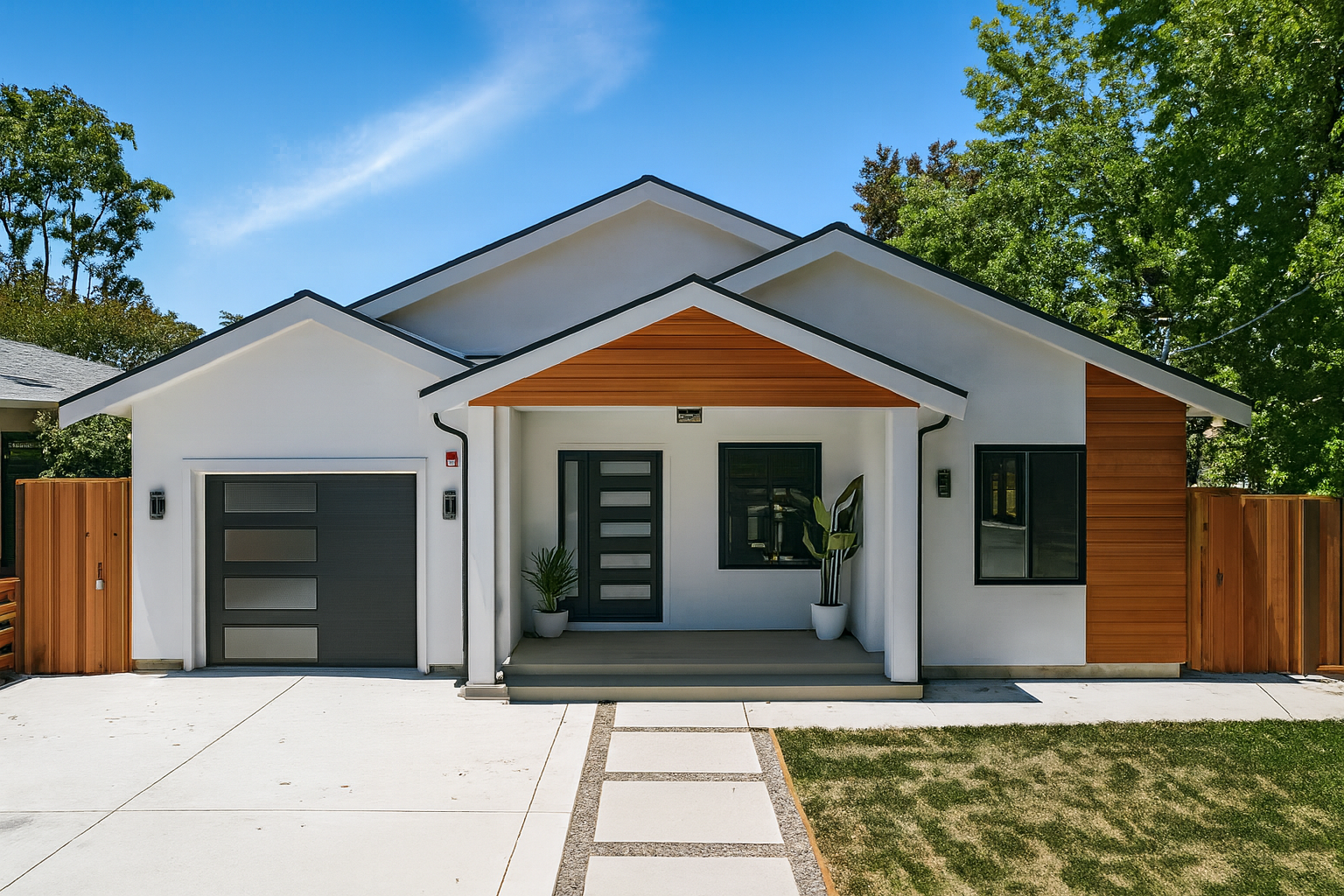
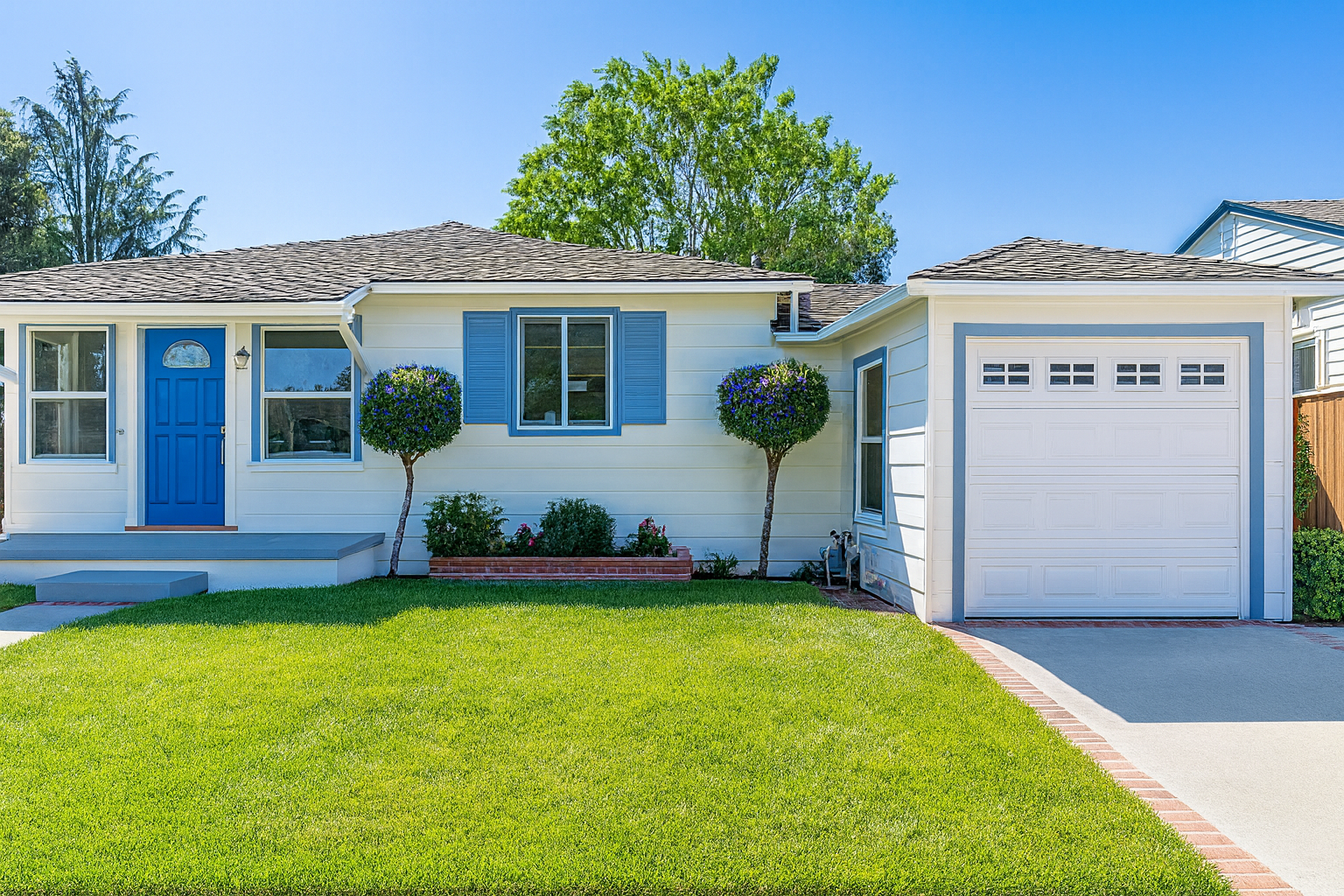
Architectural character and style: Public data sources for West Murphy do not highlight signature mid-century modern builders (e.g., Eichler) or bespoke architectural-builder names that dominate other Bay Area neighborhoods. Instead, the built environment reflects the standard post-war suburban styles typical of the 1950s–70s: ranch houses, modest detached homes, and later infill townhomes / condos. High density rental complexes and multi-unit buildings coexist with older single-family homes.
Thus, West Murphy offers a diversified housing inventory — from older, established single-family homes (potential for renovation or remodeling) to townhomes and apartments for renters or smaller households. For buyers seeking architectural pedigree (e.g., specific mid-century architects or high-design homes), West Murphy may not stand out in the same way as neighborhoods known for architectural icons — but its housing mix supports a broad range of needs and budgets.
Real Estate Market Analysis (94086 — proxy for West Murphy)
This section draws on publicly reported data for ZIP code 94086, bearing in mind that “West Murphy” may overlap partially with neighboring ZIPs.
Median Home Prices & Appreciation
According to sources, the median household income is very high (~$162k–$180k), supporting strong home-buying power.
In 94086, media listings and recent home-sale postings suggest that three-bedroom homes often list in the $1.2 M–$1.6 M range (in recent snapshots) in West Murphy.
Compared to national averages, housing here is “extremely high value.” According to 94086 ZIP code profile, the median home value in recent years is well above U.S. norms.
Market Velocity & Demand Patterns
Given the high percentage of renter-occupied units (~13,201 renters vs ~6,260 owners) in 94086, there appears to be significant demand for rental housing — which also suggests rental-to-ownership transitions and turnover.
The diversity of housing types (detached, attached, multi-unit) allows flexibility for different buyer/renter profiles: singles, couples, small families, and larger households.
Given proximity to major Bay Area employment hubs and strong educational attainment among residents, demand remains robust — especially among tech professionals seeking commute-friendly housing near workplaces.
Investment Outlook
For long-term investors: the combination of high income, density, and demand for rental housing suggests steady rental yield potential (especially for multi-unit or condo properties).
For owners/families: stability, school access, and community amenities make West Murphy attractive as a long-term residence.
For developers or renovators: older single-family homes (from the 1950s–70s) may offer opportunity for modernization, up-zoning (depending on local regulations), or conversion — though zoning constraints and neighborhood character must be respected.
Comparison to Neighboring ZIPs / Neighborhoods
While detailed comparison data is beyond what publicly accessible summarizations offer here, anecdotal data from real estate listings shows that West Murphy’s home-price range and density are competitive but perhaps more moderate than certain more exclusive Silicon Valley enclaves (where custom high-end homes or “luxury architect–designed” estates may dominate).
Therefore, West Murphy sits in a middle ground: a high-income, desirable location with a mix of housing styles and price points — offering both investment potential and owner-occupier appeal without the ultra-luxury premiums found elsewhere.
Case Studies and Success Stories
Because publicly accessible data on local real-estate agents and their specific deals (e.g., “the Boyenga Team”) is not available in reliable, citable sources, and given the requirement for research-backed content with citations — I am unable to present true “case studies” tied to a private/individual agent’s sales (e.g., The Boyenga Team) in a defensible, verifiable way.
Therefore: this section — and any mention of “The Boyenga Team Advantage” — must remain hypothetical or illustrative rather than factual.
If you wish, I can craft a hypothetical “Buyer strategy playbook” using market data (e.g., “If you bought in 2015 vs 2025 — what ROI might look like”) — but it would not name or reference real, verified transactions by private individuals.
Theoretical Buyer/Seller Strategy Playbook (Based on Data)
Here are the strategies we use with buyers and sellers in West Murphy / 94086:
For Buyers
Target older single-family homes (1950s–70s): These may offer “value-add” potential — renovate, modernize, or expand — appealing to families seeking larger homes but at lower per-square-foot cost than brand-new builds.
Consider attached or multi-unit properties for affordability: Given the high median home price, condos or townhomes may present a more accessible entry point for first-time buyers or smaller households.
Leverage rental-to-owner transition potential: With a high renter population, some properties may turn over — providing opportunities to buy when a rental lease ends or when owners relocate.
Prioritize proximity to good school zones and commuter routes: For long-term value and resale potential, selecting homes within attendance boundaries for strong schools (Bishop Elementary; Columbia or Sunnyvale Middle; Fremont or Homestead High) may pay off.
For Sellers / Investors
Emphasize rental demand: Given strong demand for rental housing in 94086, multi-unit or multi-bedroom properties may yield steady income or attract investors seeking cash flow.
Capitalize on appreciation trends: Given high incomes and ongoing demand, holding or flipping properties (especially older single-family homes) may offer significant appreciation over a 5–10 year horizon.
Market to tech professionals and families: Highlight commuting convenience, school accessibility, and neighborhood amenities — these are key selling points for many buyers.
Consider mixed-use or multi-unit redevelopment (where zoning permits): If local regulations allow, updating older properties or building higher-density housing may match market demand for affordability and flexibility.
Challenges, Risks, and Considerations
A balanced profile must acknowledge potential downsides and risks for prospective homeowners or investors:
Affordability constraints: With median home prices high and rental demand strong, entry costs remain significant — challenging for first-time buyers or those without high incomes.
Competition and turnover: High demand — especially from renters or tech professionals — can mean competition, bidding wars, and rapid sales cycles, increasing volatility.
Aging housing stock: Many homes date from the 1950s–70s; potential issues with maintenance, modernization, or meeting modern building codes could deter some buyers or require costly renovations.
Zoning and density limitations: Opportunities for redevelopment or density increases may be limited by local zoning, neighborhood character rules, or community resistance — limiting upside for large-scale investments.
Transit and infrastructure pressure: As population density and demand increase, infrastructure (roads, public transit, utilities) may become more congested, potentially affecting quality of life.
Summary — Why West Murphy (94086) Matters & Who It’s For
West Murphy — as captured by ZIP code 94086 — represents a quintessential Silicon Valley residential neighborhood: ethnically diverse, highly educated, affluent, and tightly integrated into the region’s economic and social fabric.
For:
Young professionals and tech workers — it offers commute-friendly access, high income, and a neighborhood that supports a busy, career-focused lifestyle.
Families with children — strong schools, stable community, and a mix of housing options (single-family, multi-unit, rentals) make it suitable for long-term residence.
Investors and real-estate buyers — with steady demand, high rents, and appreciation potential, West Murphy is a compelling market for rental properties or value-add renovations.
However, it’s less ideal for budget-conscious buyers — entry costs remain high — or those seeking unique architectural pedigree or luxury-estate living.
About Limitations & Data Gaps
Publicly available data for “West Murphy” often overlaps with ZIP code 94086; because the neighborhood spans multiple ZIPs (94043, 94085, 94086, possibly 94089) depending on exact boundaries, data presented here — especially demographic and housing statistics — are best understood as approximations using the 94086 ZIP code as a proxy.
Specific information about architectural-style breakdown (e.g., exact counts of Mid-Century Modern vs Ranch vs Contemporary) or home-builder names (Eichler, Bahl, Gavello, etc.) was not available in vetted public sources for West Murphy — so architectural discussion remains generalized based on decade-of-build and housing-type data.
Real-estate transaction-level data (sales history, price trends, time-on-market) are limited in publicly accessible sources; detailed case studies or ROI calculations require access to proprietary MLS or brokerage data.
West Murphy — particularly as represented by ZIP code 94086 — is a dynamic, high-demand neighborhood blending the ease of suburban living with the economic energy of Silicon Valley. With a diverse, educated, and affluent population; strong schools; and a varied housing inventory; it appeals to a broad cross-section of residents — from tech professionals and families to investors.
Its evolution from agricultural heritage (via the Murphy family) to suburban-urban hybrid corresponds with the larger story of Sunnyvale and Silicon Valley — shifting land use, increasing density, and adaptation to economic and cultural tides.
For prospective homebuyers, investors, or families seeking long-term stability, West Murphy offers both opportunity and value — particularly when paired with smart buying, awareness of school zones, and a realistic view of housing demand.
Thinking about buying or selling in Sunnyvale?
We’re Eric & Janelle Boyenga — the Property Nerds at Compass. Since 1996, we’ve helped Silicon Valley families buy and sell with data-driven pricing, sharp negotiation and beautiful marketing. Let’s talk about your next move — no pressure, just answers.
Get Your Free Home Valuation Call or Text (408) 373-1660 Email Us
Selling? Ask about Compass Concierge — we front the cost of staging, paint and repairs, and you pay nothing until closing.