
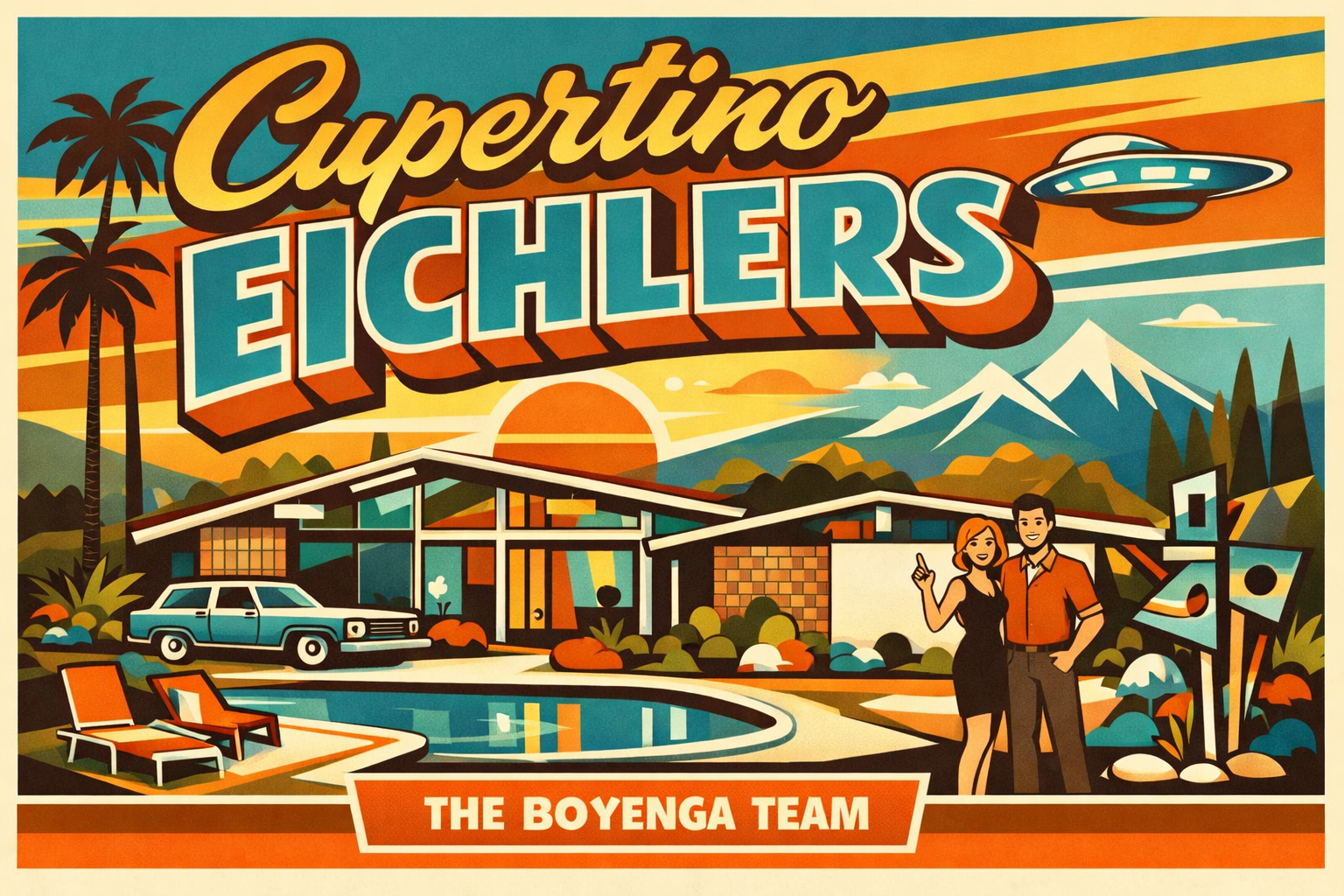
The Architectural Legacy of Fairgrove: A Definitive Guide to Eichler Living in Cupertino

The architectural landscape of Silicon Valley is often defined by its contradictions—the juxtaposition of cutting-edge technological infrastructure against the remnants of a pastoral past. Nowhere is this synthesis more elegantly realized than in the Fairgrove neighborhood of Cupertino. As one of the most meticulously preserved enclaves of Joseph Eichler’s mid-century modern vision, Fairgrove represents a rare intersection of aesthetic purity, historical significance, and contemporary luxury. For the affluent homebuyer and the architecture enthusiast alike, an Eichler home in Cupertino is not merely a residence; it is a profound statement of values, emphasizing light, spatial clarity, and a seamless integration with the natural world.
The enduring desirability of these properties in the twenty-first century stems from their unique "architectural DNA," a set of design principles that remains remarkably fresh in an era of cookie-cutter developments and oversized McMansions. In the high-stakes environment of Cupertino real estate, where proximity to global tech giants like Apple Park is paramount, Fairgrove stands as a serene architectural sanctuary. Navigating this exclusive micro-market requires more than traditional real estate expertise; it demands the nuanced perspective of specialists like The Boyenga Team, whose reputation as "Property Nerds" and masters of mid-century modern real estate has made them the go-to advisors for those seeking to acquire or preserve these modernist masterpieces.
From Orchards to Atriums: The Historical Tapestry of Cupertino
The story of Fairgrove is inextricably linked to the broader transformation of the Santa Clara Valley. Long before the silicon chip defined the region, the area was known as the "Valley of Heart’s Delight," a vast expanse of fertile land colonized by Spanish explorers in 1776 during Colonel Juan Bautista De Anza’s expedition. For nearly a century, the village of Cupertino—originally known as "West Side"—thrived on an agricultural economy of apricots, cherries, and plums. It was only in the post-World War II era, as the demand for suburban housing surged and the seeds of the technology revolution were sown, that the orchards began to give way to modernist tracts.
Joseph Eichler, a visionary developer inspired by the organic architecture of Frank Lloyd Wright, arrived in Cupertino around 1960. His timing was impeccable; Cupertino had incorporated as a city just five years prior and was experiencing a boom in housing demand from a new class of educated professionals. Eichler’s mission was radical for its time: to provide "architect-designed" homes for the middle class, utilizing elite firms like Anshen & Allen, Jones & Emmons, and Claude Oakland & Associates.
The Developmental Timeline of Fairgrove
The Fairgrove neighborhood, comprising approximately 225 homes, was constructed between 1960 and 1961 in two distinct phases that mirrored the evolution of Eichler’s design philosophy.
PhaseYearPrimary LocationArchitectural FocusStandard FootprintPhase I1960East of Hyde Avenue (Tantau Ave area)
3-bedroom courtyard models; focused on privacy and street-side entry.
~1,200 – 1,400 sq. ft.Phase II1961West of Hyde Avenue (Stendhal Ln, Brookgrove Ln)
Introduction of the signature atrium; 4-bedroom family-oriented layouts.
~1,400 – 1,852 sq. ft.
Phase I represented the refined "courtyard" concept, where an enclosed front patio served as a transitional space between the public street and the private home. However, it was Phase II that introduced the feature that would become synonymous with the Eichler brand: the central atrium. This interior-exterior room, open to the sky and surrounded by glass, represented a pinnacle of mid-century suburban planning, allowing light to permeate the core of the house while providing a secure, private outdoor sanctuary.
The Anatomy of an Eichler: An Architectural Masterclass
The architectural significance of Fairgrove lies in its uncompromising commitment to the principles of "California Modernism". Unlike the traditional ranch houses found in nearby tracts like Rancho Rinconada, Eichler homes are defined by their structural honesty and spatial fluidity.
Post-and-Beam Construction
At the heart of every Eichler is the post-and-beam structural system. This method uses heavy timber posts to support massive horizontal beams, which in turn carry the load of the roof. This innovation eliminated the need for interior load-bearing walls, allowing for the open, airy volumes that characterize modern living today. The absence of a traditional attic means that the tongue-and-groove wood planks of the ceiling are often the underside of the roof itself, lending a dramatic sense of height and warmth to every room.
The Fenestration of Light
Eichler’s philosophy was to "bring the outside in," a goal achieved through the extensive use of floor-to-ceiling glass walls. In the Fairgrove tract, it is common for the entire rear of the house to be comprised of glass, looking out onto private gardens and patios. This creates a seamless visual flow that expands the perceived square footage of the home and fosters a deep connection to the environment.
The Engineering of Comfort: Radiant Heating
Eichler was a pioneer in the use of hydronic radiant heat. Instead of relying on noisy furnaces and unsightly ductwork, these homes were built on concrete slab foundations with copper or plastic pipes embedded directly in the floor. Hot water circulating through these pipes provides gentle, even warmth that keeps the home comfortable without the dust and allergens associated with forced-air systems. This "silent" heating system is a hallmark of the Eichler experience, although modern owners often invest in restoring or upgrading these original systems to maintain the home’s historical integrity.

The Aesthetic of the Exterior
The street-facing facades of Fairgrove Eichlers are famously minimalist, often appearing as blank planes of vertical wood siding punctuated only by clerestory windows. This design choice prioritizes the privacy of the residents and focuses the home’s energy inward toward the atrium and backyard. The use of natural materials, such as Okoume mahogany or redwood siding, ensures that the homes blend harmoniously with the lush, mature landscaping of the neighborhood.
Socioeconomic and Demographic Profile of Fairgrove
The residents of Fairgrove are as architecturally distinguished as the homes themselves. The neighborhood attracts a highly educated, affluent demographic that is deeply integrated into the Silicon Valley tech corridor.
Income and Employment Data (95014 – Cupertino / Fairgrove)
Overall Profile
Among the most affluent ZIP codes in the United States
High concentration of white-collar professionals driven by proximity to major tech employers
Key Demographics Comparison
Median Household Income
Cupertino (95014): $230,913
Santa Clara County: $164,281
Average Household Income
Cupertino (95014): $301,633
Santa Clara County: $227,007
Households Earning Over $200K
Cupertino (95014): 56.8%
Santa Clara County: 41.6%
Workforce Composition
Cupertino (95014): 96.7% white-collar professionals
Santa Clara County: More economically diverse workforce
The professional landscape is dominated by tech executives, entrepreneurs, and senior engineers, many of whom are drawn to Fairgrove specifically for its architectural character. These buyers often view their homes as "livable art" and are willing to pay a premium for properties that have been preserved or sensitively restored.
Diversity and Cultural Fabric
Cupertino is renowned for its ethnic and cultural diversity, a quality that is vividly reflected in the Fairgrove community. The neighborhood has seen a significant influx of residents from international backgrounds, particularly from the Asian tech community, which has contributed to a rich, cosmopolitan social environment.This cultural synthesis is most evident during the neighborhood’s famous block parties, where traditional American barbecues share space with global cuisines like samosas and dumplings.
The community is characterized by a high homeownership rate, with many residents remaining in their Eichlers for decades. This longevity has fostered a strong sense of neighborhood pride and social cohesion, with multiple generations of families often living within walking distance of one another.
The Scholastic Magnet: Education in Cupertino
For many families, the primary catalyst for a move to Fairgrove is the unparalleled quality of the local school districts. Cupertino is home to some of the highest-performing public schools in the United States, a factor that provides a significant "floor" for real estate values and ensures constant demand.
Public School Infrastructure
Fairgrove is served by the Cupertino Union School District (CUSD) and the Fremont Union High School District (FUHSD), both of which are celebrated for their academic rigor and robust extracurricular programs.
Sedgwick Elementary School: Located near the neighborhood, Sedgwick is noted for its focus on critical thinking and its nurturing of foundational academic skills.
Hyde Middle School: Serving the adolescent years, Hyde is recognized for its innovative teaching models and its emphasis on well-rounded student development.
Cupertino High School: A flagship institution in the FUHSD, Cupertino High is a nationally recognized school with a strong emphasis on STEM (Science, Technology, Engineering, and Mathematics). The school offers an extensive array of Advanced Placement (AP) courses and maintains highly competitive sports and arts programs.
The importance of these schools cannot be overstated; they act as a primary driver for property appreciation and are often the first thing mentioned by potential buyers during the showing process.
Private and Higher Education Options
The area also offers elite private education for those seeking specialized curricula or smaller class sizes:
The Harker School: A prestigious K-12 independent school with a global reputation for academic excellence.
Legend College Preparatory: Known for its high success rate in college placements and its rigorous academic environment.
Fusion Academy Cupertino: Provides a unique 1-to-1 student-to-teacher ratio, ideal for students who thrive in a personalized learning environment.
De Anza College: Situated just minutes from Fairgrove, De Anza is consistently ranked as one of the top community colleges in California, offering excellent transfer programs to the UC and CSU systems.
Lifestyle and Neighborhood Attractions
The lifestyle in Fairgrove is one of "integrated tranquility". Residents enjoy the peace of a mid-century residential enclave while having immediate access to the high-energy amenities of Silicon Valley.
Outdoor Recreation and Green Spaces
The neighborhood’s walkable, tree-lined streets are complemented by several notable parks:
Wilson Park: Located in the heart of the community, Wilson Park features playgrounds and open spaces that serve as a central hub for families with young children.
Ortega Park: A short drive away, this park is a destination for sports enthusiasts, offering soccer fields, baseball diamonds, and multiple picnic areas.
Jollyman Park: Known for its large green expanses, it is a favorite spot for weekend gatherings and neighborhood events.
Hoover Park: Another local gem that offers sports facilities and serene areas for relaxation.
Dining, Retail, and Culture
Cupertino’s social scene has been revitalized in recent years with the development of "Main Street Cupertino," an upscale outdoor shopping and dining destination.
Main Street Cupertino: This development features a curated selection of restaurants, coffee shops, and boutique retail, including a modern movie theater and fitness centers.
Cupertino Crossroads: A classic shopping district that provides daily essentials, high-end groceries, and a variety of international dining options.
Farmers Markets: Weekly markets in the vicinity offer fresh, organic produce from local farms, continuing the region’s agricultural heritage in a modern context.
The proximity to these centers means that Fairgrove residents can enjoy a "walkable city" feel despite living in a traditionally suburban environment.
Connectivity: The Silicon Valley Commute
Apple Park
Distance: 2.0 miles
Commute: 4–5 minutes by car; ~37 minutes walking
Googleplex
Distance: 11.2 miles
Commute: 15–20 minutes by car
NVIDIA (Santa Clara)
Distance: 6.5 miles
Commute: 12–15 minutes by car
Meta (Headquarters)
Distance: 18.0 miles
Commute: 25–30 minutes via I-280
Stanford University
Distance: 12.5 miles
Commute: 20–25 minutes via Hwy 85
Transportation Access
Immediate access to Interstate 280 and Highway 85
Short drive to Sunnyvale Caltrain Station (direct to San Francisco & Palo Alto)
Served by Santa Clara VTA bus lines (23 & 56) for local commuting
Residents benefit from immediate access to Interstate 280 and Highway 85, the two primary arteries of Silicon Valley. For those who prefer to avoid the driver’s seat, the Sunnyvale Caltrain station is a short drive away, providing a direct rail link to San Francisco and Palo Alto. The Santa Clara VTA bus lines (such as the 23 and 56) offer reliable local service to Apple Park and De Anza College.
Real Estate Market Intelligence: The Fairgrove Micro-Market
The real estate market for Eichler homes in Cupertino operates under its own set of rules. Driven by scarcity and a growing "cult following" of mid-century enthusiasts, these homes often outperform the broader market.
Real Estate Market Intelligence: The Fairgrove Micro-Market
Market Dynamics
Highly limited supply of Eichler homes
Strong demand driven by mid-century modern enthusiasts
Consistently outperforming the broader Cupertino market
2025 Market Snapshot
Median Sale Price: ~$3,230,000
Year-over-Year Change: +33.4%
Average Price per Sq. Ft.: ~$1,729 – $2,200
Trend: Significantly increasing
Average Days on Market: 10 – 19 days
Trend: Faster turnover
Inventory Levels: ~2–3 active listings
Market Condition: Extremely tight supply
The "Architectural Premium"
Why do Eichler homes command such high prices? It is a combination of historical rarity and the modern "remote work" lifestyle. The open floor plans and private atriums provide the perfect environment for a home office that feels connected to nature, a feature that has become non-negotiable for many tech professionals.Furthermore, the strict zoning guidelines adopted by the city in 2001 ensure that the neighborhood will never be "mansionized," protecting the long-term aesthetic and financial value of every property.
When compared to nearby Sunnyvale or San Jose, Cupertino Eichlers fetch a significant premium. While Sunnyvale offers more inventory, it cannot compete with the prestige of Cupertino’s schools and the immediate proximity to Apple’s headquarters. This creates a high-barrier-to-entry market that rewards those who act decisively.
Case Studies: Real-World Sales Examples
To understand the market, one must look at specific transactions that demonstrate the depth of buyer demand in Fairgrove.
729 Stendhal Lane: The Ideal Atrium Model
A recent listing on Stendhal Lane serves as a masterclass in how to position an Eichler for the luxury market.
The Property: A classic courtyard-entry model with a dramatic weeping willow in the front garden.
The Transformation: The owners replaced original single-pane sliders with high-performance dual-pane glass, significantly improving energy efficiency without altering the home’s profile.
The Result: Managed by The Boyenga Team, the home attracted significant off-market interest before ever reaching the MLS, highlighting the power of a specialized network in this niche.
The 2025 High-Water Marks
Data from late 2025 shows the aggressive nature of the bidding wars for "turnkey" properties :
10211 E Estates Drive: Sold for $3,550,000, representing an 18% overbid from the list price. At $2,136 per square foot, this sale set a new benchmark for the neighborhood.
10400 Lindsay Avenue: A smaller 1,392 sq. ft. model sold for $3,066,420, proving that even the most modest Eichlers are now commanding luxury-level prices.
The Boyenga Team: Your Trusted Eichler Specialists
Navigating the Fairgrove market requires a partner who understands both the structural nuances of mid-century architecture and the complex social dynamics of Silicon Valley. The Boyenga Team are not just real estate agents; they are "Property Nerds" with a deep, personal passion for modernist design.
The Expert Advantage
Led by Eric and Janelle Boyenga, the team has been the #1 real estate group for Compass in Silicon Valley for years. They offer a unique set of skills tailored specifically for the Eichler owner:
Architectural Literacy: They can distinguish between an original mahogany panel and a modern imitation, helping buyers identify homes with the highest preservation potential.
Value Maximization: For sellers, the team utilizes the Compass Concierge program to manage pre-listing renovations—such as floor restoration or foam roof replacement—that can add hundreds of thousands of dollars to the final sale price.
Off-Market Intelligence: Due to their twenty-year history in the tract, many sales happen "quietly." The Boyenga Team provides their clients with access to these Compass Private Exclusives, often securing a home before it ever hits public sites like Zillow.
Hyper-Local Expertise: From school boundary changes to the latest city zoning updates, their data-driven approach ensures that clients are making informed decisions in one of the world’s most competitive markets.
Choosing The Boyenga Team means choosing a legacy of excellence in Silicon Valley real estate. They understand that an Eichler is more than just a house—it is an investment in a unique, modernist lifestyle.
The Future of Fairgrove: A Legacy Preserved
As Silicon Valley continues to expand, the value of architectural heritage only increases. Fairgrove stands as a testament to Joseph Eichler’s belief that great design can improve the human condition. For the families who call this neighborhood home, it offers a way of life that is increasingly rare: one that is connected to the past, engaged with the present, and prepared for a sustainable future. Whether you are a first-time buyer drawn to the glass walls or a long-time resident looking to pass your home to the next generation, Fairgrove remains the ultimate destination for those who value architecture, community, and the timeless spirit of the California dream.