
The Sunnyvale Ranch Home: Where Central Silicon Valley Meets California's Best Single-Story Living
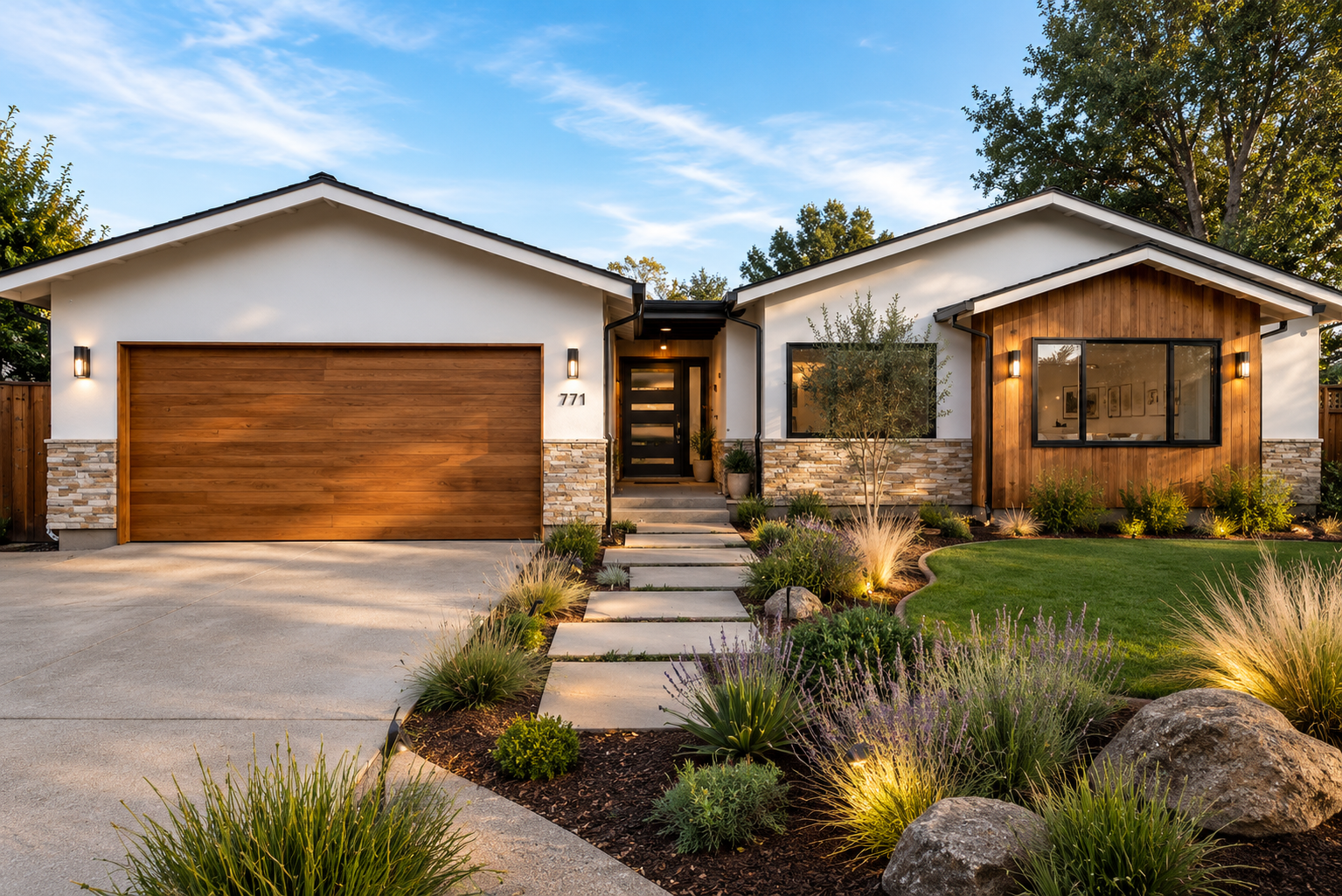
The City That Silicon Valley Built — And Never Stopped Needing
Sunnyvale does not announce itself the way some Silicon Valley cities do. It does not have Saratoga's foothills drama or Palo Alto's academic gravity. What it has is something arguably more useful: a position at the absolute center of the most productive technology economy in human history, wrapped in residential neighborhoods that have quietly delivered one of the best quality-of-life ratios in the entire Bay Area for the better part of seven decades. For buyers searching for ranch homes Sunnyvale, single-story homes Sunnyvale CA, or large lot homes in Silicon Valley's heart, the city delivers a combination that reveals itself gradually and rewards those who look carefully — mature streets, genuine community character, extraordinary employer access, and a ranch home stock that has aged into relevance rather than obsolescence.
Sunnyvale's ranch neighborhoods are not a consolation prize for buyers priced out of neighboring cities. They are a deliberate destination for buyers who understand that the valley's best-kept residential secret has always been the city that sits at its geographic center — close to everything, compromised by nothing, and consistently undervalued relative to the lifestyle it actually delivers.
The Boyenga Team, led by Eric and Janelle Boyenga at Compass, has spent years developing deep fluency in Sunnyvale's ranch home market. As Silicon Valley real estate experts and specialists in design-forward residential properties — including Sunnyvale's significant Eichler and mid-century modern inventory alongside its broader ranch stock — Eric and Janelle Boyenga bring the neighborhood-level knowledge, marketing sophistication, and transaction expertise that Sunnyvale buyers and sellers deserve at every price point.
The Geography of Opportunity: Why Sunnyvale's Location Is Its Most Underrated Asset
Sunnyvale's postwar residential development was faster, larger in scale, and more architecturally diverse than almost any other Santa Clara Valley city of comparable size. The city entered the postwar era with a combination of assets that made it an ideal target for large-scale residential development: flat, easily subdivided land, existing infrastructure connections, proximity to the defense and aerospace employers that drove the valley's early postwar economy, and a municipal government that actively welcomed growth rather than managing it cautiously.
The result was a burst of ranch neighborhood construction in the late 1940s, 1950s, and early 1960s that produced some of the Santa Clara Valley's most coherent and livable postwar residential landscapes. Sunnyvale's merchant builders worked quickly but not carelessly — the city's ranch neighborhoods reflect a consistent attention to street width, setback depth, lot proportion, and neighborhood-scale planning that distinguishes them from the more compressed tract developments that appeared elsewhere in the valley during the same period.
Sunnyvale also has a distinctive relationship with modernist residential architecture that sets it apart from most ranch-market cities. Joseph Eichler developed several of his most celebrated Silicon Valley neighborhoods within Sunnyvale's city limits, including the Birdland neighborhood and the Lakewood Village area, producing communities of post-and-beam modern homes that exist in close proximity to — and in genuine dialogue with — the city's broader ranch stock. The result is a Sunnyvale residential landscape where California ranch architecture and mid-century modern design coexist within walking distance of each other, creating a housing market of unusual architectural richness for a city of its size and density.
The decades since the initial development burst have layered additional complexity and character onto Sunnyvale's ranch neighborhoods. The technology industry's explosive growth from the 1980s onward brought successive waves of highly educated, architecturally aware buyers into the city's ranch market, driving renovation investment, design sophistication, and pricing appreciation that have transformed many of the city's original tract homes into genuinely distinguished residences. Today, Sunnyvale's ranch neighborhoods exist in a state of dynamic evolution — original-condition homes, mid-century renovations, contemporary transformations, and ADU additions coexist on the same blocks, creating a market of exceptional variety and opportunity.
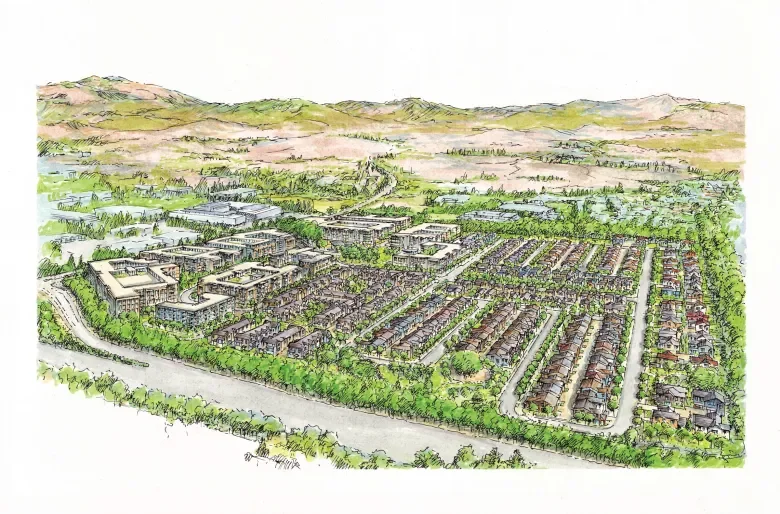
The Anatomy of a Sunnyvale Ranch Street
Unlike cities where the ranch stock is relatively uniform across residential areas, Sunnyvale's ranch market is internally differentiated in ways that matter significantly to buyers making location decisions. Understanding those distinctions — between the city's northern neighborhoods closer to the Bay, its central areas near downtown and El Camino Real, and its southern neighborhoods adjacent to Cupertino — is essential to navigating the market intelligently.
The Birdland neighborhood, in Sunnyvale's northwest quadrant, represents one of the city's most architecturally distinctive residential areas. Originally developed with a mix of ranch and Eichler properties, Birdland has attracted buyers who value architectural character alongside the neighborhood's mature street tree canopy, its access to the Sunnyvale Baylands trail network, and its positioning relative to the city's northern tech campus corridor. Properties in Birdland carry a consistent architectural premium that reflects both the neighborhood's Eichler inventory and the design sensibility that has shaped renovation choices across the broader area.
Sunnyvale's central ranch neighborhoods — those organized around the Murphy Avenue corridor and the city's historic downtown — benefit from the walkability assets that the city's ongoing downtown revitalization has been steadily building over the past decade. Buyers in these areas can walk to Sunnyvale's farmers market, its independent restaurant scene, its historic downtown retail district, and the Sunnyvale Caltrain station — a combination of pedestrian-accessible amenities that is genuinely unusual for a Silicon Valley city of Sunnyvale's scale and residential density.
The city's southern ranch neighborhoods, particularly those adjacent to the Cupertino boundary and within the Cupertino Union School District's attendance area, occupy their own distinct market tier. School district assignment in this zone is among the most sought-after in all of Silicon Valley, and properties that combine a Sunnyvale address — with its relative value advantage over Cupertino proper — with Cupertino school district access consistently generate exceptional buyer competition and premium pricing outcomes.
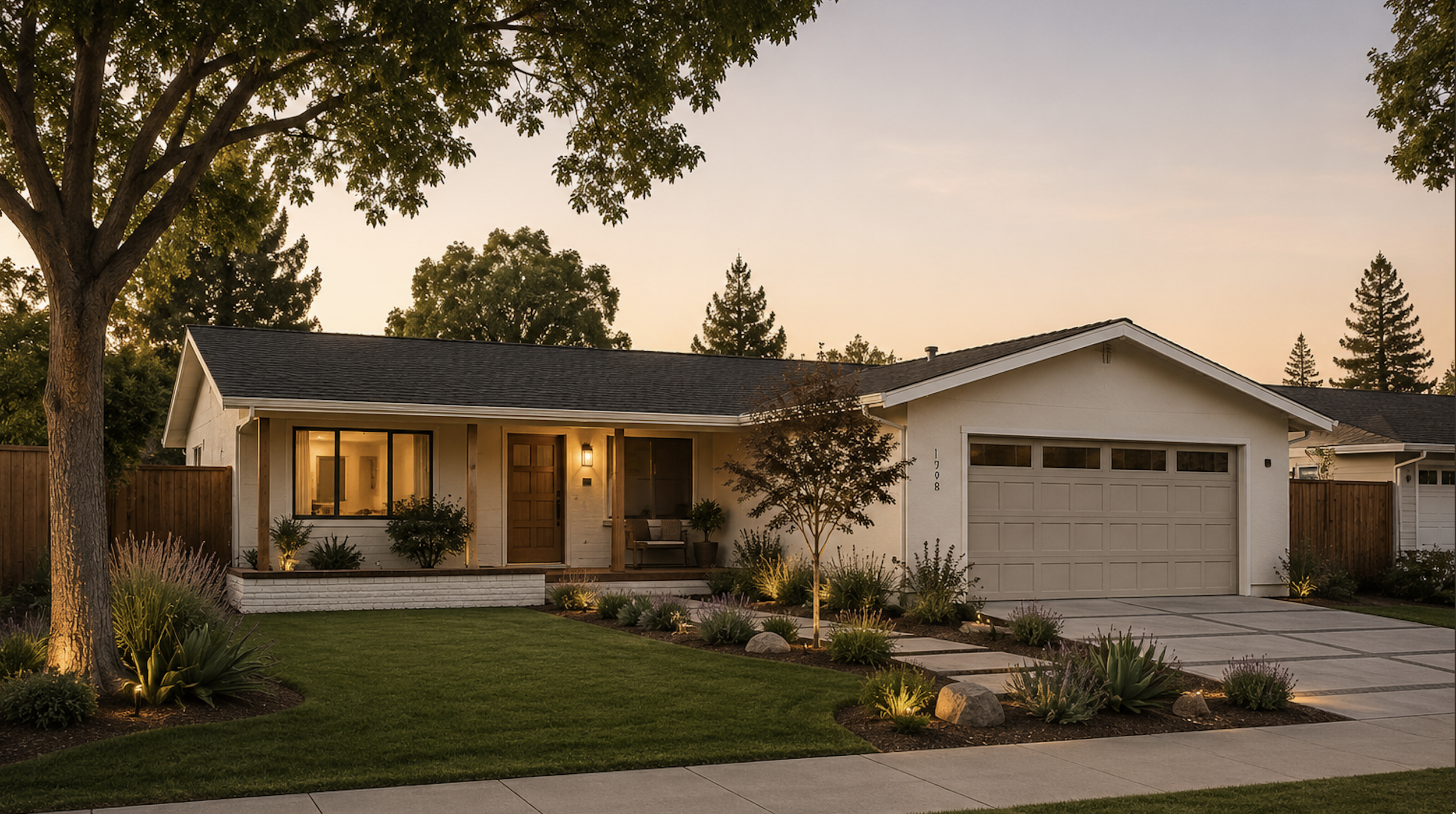
The School Picture: More Complex and More Rewarding Than It First Appears
Sunnyvale's lifestyle proposition has undergone a meaningful transformation over the past decade, driven by sustained investment in its downtown core, its trail infrastructure, and the restaurant and retail ecosystem that has developed along Murphy Avenue and the surrounding blocks. The city that was once characterized primarily by its employer density and its housing value has developed a genuine daily life texture that buyers increasingly factor into their location decisions alongside commute times and school assignments.
Murphy Avenue's restaurant row has emerged as one of Silicon Valley's most consistently enjoyable neighborhood dining destinations — not a curated lifestyle district engineered for Instagram appeal, but a genuinely local collection of restaurants, bars, and cafes that reflects the city's cultural diversity and its residents' appetite for quality without pretension. On weekend evenings, Murphy Avenue functions as a genuine community gathering space in a way that few Silicon Valley streets outside of Los Gatos's downtown or Saratoga Village can match.
The Sunnyvale Farmers Market, operating year-round on Saturday mornings in the downtown core, has become one of the South Bay's most beloved weekly institutions. For ranch-neighborhood residents within cycling distance of downtown — which describes a substantial portion of Sunnyvale's residential geography given the city's flat topography and growing bike infrastructure — the market represents the kind of Saturday morning ritual that transforms a house purchase into a genuine lifestyle commitment.
Sunnyvale's trail network is a significantly underappreciated residential asset. The Stevens Creek Trail provides a continuous low-traffic cycling and running corridor connecting Sunnyvale to Mountain View and Cupertino, functioning simultaneously as a recreational amenity and a practical car-free commute option for the significant portion of Sunnyvale's population employed at nearby tech campuses. The Sunnyvale Baylands Park and its connecting trail network along the Bay's southern edge adds bird watching, open water views, and genuine natural landscape access within a short ride of the city's core ranch neighborhoods — a combination of urban convenience and natural proximity that defines California residential living at its best.
Civic infrastructure reinforces the lifestyle picture. The Sunnyvale Public Library's main branch is one of the South Bay's most well-resourced community libraries. The city's community center programming, its youth sports leagues, and its robust parks system — which includes more than 50 parks distributed across the city's residential areas — create a family-friendly daily environment that buyers with children consistently rank as a primary factor in their Sunnyvale location decision.
At the Crossroads of Everything: Sunnyvale's Employer Access Story
Sunnyvale's commute story is not about proximity to any single employer — it is about proximity to all of them simultaneously. The city's central position in Silicon Valley's employment geography means that virtually every major technology campus in the region is accessible within a predictable and manageable drive from a Sunnyvale ranch neighborhood address, without the directional bias that characterizes commutes from cities on the valley's edges.
Apple Park's Cupertino campus is accessible from central Sunnyvale via Wolfe Road or Lawrence Expressway in approximately ten to fifteen minutes. Google's Mountain View headquarters is reachable via Central Expressway or Highway 101 West in a comparable window. LinkedIn's massive Sunnyvale campus — one of the city's largest single employers — is within a ten-minute drive of virtually every Sunnyvale ranch neighborhood. NVIDIA's Santa Clara headquarters, reachable via Lawrence Expressway or Highway 237, sits within a fifteen to twenty-minute window. Yahoo, Juniper Networks, Synopsys, and dozens of mid-sized technology companies maintain significant Sunnyvale presences that make the city a genuine live-work community for a substantial portion of its residents rather than purely a bedroom community for employers elsewhere.
The Sunnyvale Caltrain station provides rail connectivity that ranch-neighborhood residents in the city's central areas can access without a car — a meaningful quality-of-life differentiator for households that want to preserve the option of a car-free San Francisco commute or a train-based connection to Peninsula employment centers. Highway 101, Highway 237, and Central Expressway provide the automotive infrastructure that connects Sunnyvale's ranch neighborhoods to the full breadth of Silicon Valley's employment geography, while the city's growing protected bike lane network makes cycling a genuinely practical commute option for employers within three to five miles of most ranch neighborhoods.
Reading the Market: What Sunnyvale Ranch Homes Are Actually Worth
Sunnyvale's ranch home market operates in a pricing band that reflects both the city's genuine residential quality and its consistent undervaluation relative to immediately adjacent cities. Median sale prices for single-family ranch homes in Sunnyvale have tracked between $1.8 million and $2.4 million in recent market cycles, with significant variation by neighborhood, school district assignment, lot size, and renovation quality. Properties in the city's southern neighborhoods with Cupertino Union School District access regularly command pricing at the upper end of that range and beyond, while well-maintained but unrenovated original-condition homes in the city's northern areas offer entry points that represent genuine value relative to the lifestyle and employer access they provide.
Price per square foot for Sunnyvale ranch homes reflects the market's internal differentiation clearly. Turnkey renovated properties in strong school zones with meaningful lot sizes typically trade between $1,200 and $1,600 per square foot. Original-condition homes on larger lots — particularly those with demonstrated ADU potential or rear-yard depth that supports significant outdoor development — frequently attract land-value-oriented pricing that diverges from the per-square-foot calculation in ways that reward buyers who understand the difference between house value and site value.
Days on market for competitively priced Sunnyvale ranch homes remain among the shortest in Silicon Valley's mid-market segment. Well-prepared properties in strong school zones regularly generate offers within the first week of public marketing, and the most desirable examples — those combining school assignment, lot size, renovation quality, and neighborhood positioning — frequently close above asking price in competitive offer situations even in periods of broader market softening. That market velocity reflects the depth and consistency of Sunnyvale's buyer pool, which draws from the city's own resident move-up market, from tech-sector relocations, and from buyers migrating from denser and more expensive Peninsula cities in search of greater space and value.
The investment case for Sunnyvale ranch homes is reinforced by the city's ADU policy environment. Santa Clara County's ADU framework, combined with Sunnyvale's own permitting infrastructure, has made accessory dwelling unit development on ranch-era lots increasingly straightforward and increasingly common. For buyers with a long-term perspective, a Sunnyvale ranch home on a lot that can accommodate a well-designed ADU represents not just a primary residence but a flexible income asset in one of the Bay Area's most persistently supply-constrained rental markets.Commuting and Employer Access
Saratoga's real estate market occupies the uppermost tier of Silicon Valley residential pricing, and ranch homes within the city's most desirable school boundaries and neighborhood locations represent some of the most consistently valued residential assets in the entire Bay Area. Median home sale prices in Saratoga have consistently tracked above $3 million in recent market cycles, with ranch homes on estate-sized lots in prime school zones frequently transacting between $3.5 million and $5 million depending on condition, lot size, and the quality of any improvements.
Price per square foot for Saratoga ranch homes reflects both the premium land component and the renovation investment typical of the city's upper-tier properties. Well-maintained or renovated ranch homes in Saratoga's strongest locations regularly command between $1,400 and $1,900 per square foot, with exceptional properties — those combining architectural distinction, mature landscaping, and optimal school assignment — capable of exceeding those figures in competitive offer situations. The land value component in Saratoga ranch transactions is proportionally higher than in most Silicon Valley cities, reflecting both the scarcity of large lots and the premium that buyers place on the privacy, expansion potential, and outdoor living quality that generous parcels provide.
Inventory in Saratoga's ranch market is structurally constrained in ways that have persisted across multiple market cycles. The city's low density, high homeownership rate, and long average tenure create a supply environment where the number of available ranch homes for sale at any given time is small relative to the depth of qualified buyer interest. This dynamic has historically supported pricing resilience even in periods of broader market softening, as the most motivated buyers — those specifically committed to Saratoga's school district and neighborhood character — compete for a limited pool of available properties regardless of interest rate conditions.
Compared to neighboring West Valley communities, Saratoga ranch homes command a consistent premium over Los Gatos and Campbell comparable properties, reflecting the school district differential and the city's more established luxury market positioning. Within Saratoga itself, the neighborhoods closest to the Village and within the Saratoga High School attendance boundary represent the most consistently competitive micro-markets, while hillside-adjacent and larger-lot properties in the city's western reaches attract a distinct buyer segment willing to trade some commute convenience for extraordinary privacy and natural setting.
The Transaction Behind the Transaction: What Sunnyvale Ranch Deals Actually Look Like
The variety of buyer motivations in Sunnyvale's ranch market produces a corresponding variety of transaction types, each with its own logic and its own set of success factors. Understanding that variety is essential for both buyers developing a purchase strategy and sellers evaluating how to position their property for maximum market impact.
At the original-condition end of the market, Sunnyvale ranch homes priced accurately for their unrenovated state attract a genuinely competitive buyer pool that includes first-time luxury buyers stretching their budget, experienced investors evaluating renovation upside, and developer buyers assessing ADU or expansion potential. These transactions frequently involve accelerated timelines, waived contingencies, and above-asking pricing that can surprise sellers who have not fully internalized the depth of demand for well-located Sunnyvale land regardless of the condition of the improvements sitting on it.
Renovated Sunnyvale ranch homes in the $2 million to $2.8 million range represent the market's most active and most competitive tier. Properties that combine an open-plan kitchen and living area, updated primary suite, quality outdoor living space, and genuine school-zone alignment regularly generate five to ten offers in normalized market conditions — a level of competition that rewards sellers who invest in professional preparation and marketing, and buyers who come prepared with strong financing, clear priorities, and the ability to make confident decisions quickly.
The ADU story in Sunnyvale deserves particular attention. Unlike some Silicon Valley cities where accessory dwelling unit development remains aspirational for many ranch homeowners, Sunnyvale's flat topography, its generous average lot depths, and its relatively streamlined permitting environment have made ADU construction a genuine near-term option for a substantial portion of the city's ranch home stock. Completed ADUs on Sunnyvale ranch properties have demonstrated a consistent ability to add $300,000 to $500,000 or more in assessed value depending on size, quality, and location — a return profile that has made ADU-ready lots a specific search criterion for a growing segment of Sunnyvale's buyer market.
Why the Boyenga Team Belongs at the Center of Your Sunnyvale Search
Sunnyvale's ranch market rewards expertise that operates at several levels simultaneously. At the neighborhood level, it requires understanding the school district boundaries, micro-market pricing differentials, and street-by-street quality variations that determine whether a specific property is a sound purchase at its asking price. At the architectural level, it requires the ability to evaluate renovation quality, assess expansion potential, and distinguish between improvements that have genuinely added value and cosmetic updates that have merely added cost. At the transaction level, it requires the negotiating skill, marketing sophistication, and buyer network depth to achieve outcomes that reflect the full value of what Sunnyvale ranch properties actually represent.
Eric and Janelle Boyenga bring all three dimensions of that expertise to every Sunnyvale transaction they handle. As recognized Silicon Valley real estate leaders and specialists in both California ranch architecture and mid-century modern design — including Sunnyvale's celebrated Eichler neighborhoods — the Boyenga Team approaches the Sunnyvale market with a depth of knowledge that goes well beyond standard transaction management. Their familiarity with Sunnyvale's neighborhood distinctions, their relationships within the city's buyer and seller community, and their access to Compass's off-market and Private Exclusives network give clients a genuine advantage in a market where the best opportunities move quickly and the difference between a good outcome and a great one is often a matter of preparation, timing, and the quality of representation behind the transaction.
For buyers, working with the Boyenga Team in Sunnyvale means having access to properties before they reach peak public competition, receiving construction-informed analysis of renovation scope and ADU potential, and navigating school boundary and neighborhood micro-market nuances with the guidance of advisors who have spent years developing genuine fluency in Sunnyvale's residential landscape. For sellers, it means having a marketing partner who understands that a Sunnyvale ranch home is not just a transaction — it is a lifestyle proposition, a land asset, and a design opportunity that deserves to reach every qualified buyer in one of Silicon Valley's most active and competitive markets.
When you are ready to take the next step in your Sunnyvale ranch home journey — whether buying, selling, or simply beginning to understand what the market looks like — connect with Eric and Janelle Boyenga and the Boyenga Team at Compass. The Property Nerds of the Boyenga Team are ready to bring their full expertise, network, and commitment to your Sunnyvale real estate story.