
San Mateo Ranch Homes: Bay Views, Peninsula Character, and a Real Estate Market Built to Last
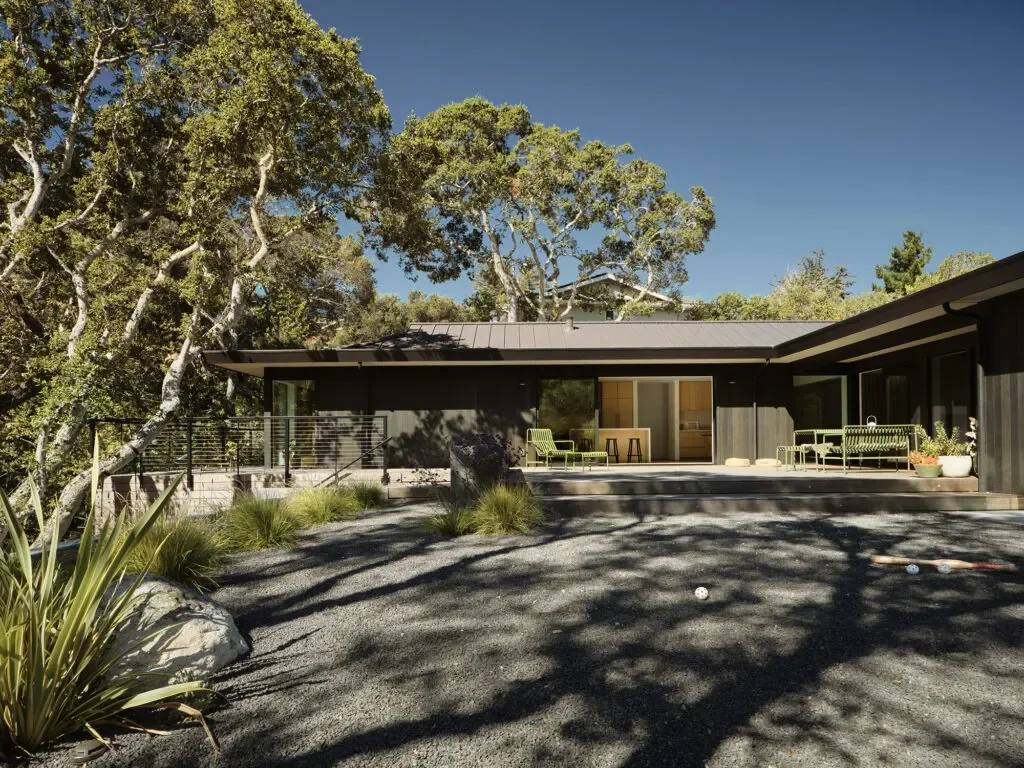
Where the Peninsula Finally Exhales
San Mateo occupies a position on the San Francisco Peninsula that is genuinely unlike anything Silicon Valley or the South Bay can offer. It is a city that faces the Bay rather than turning its back on it, that built its residential identity around neighborhood walkability and commuter convenience rather than campus adjacency, and that has maintained a civic character rooted in genuine community life rather than the transactional intensity that defines so many Bay Area addresses. For buyers searching for ranch homes San Mateo, single-story homes on the Peninsula, or large lot homes in the Bay Area's mid-Peninsula sweet spot, San Mateo delivers something that has become increasingly difficult to find at any price point in the region: a fully realized residential city with architectural depth, lifestyle infrastructure, and a real estate market that rewards patience and knowledge in equal measure.
Ranch-style homes in San Mateo carry a particular weight in the city's residential story. They were the physical expression of the Peninsula's postwar confidence — the belief that a broad, low-slung home on a generous lot, close to a real downtown and a reliable train, represented the finest version of California suburban life. Decades later, that belief has been validated rather than challenged. San Mateo ranch homes for sale continue to attract some of the most competitive buyer pools on the entire Peninsula, drawn by a combination of architectural authenticity, lot generosity, neighborhood maturity, and a downtown that has evolved into one of the Bay Area's genuinely great urban neighborhoods without sacrificing the residential scale that makes it livable.
The Boyenga Team, led by Eric and Janelle Boyenga at Compass, brings their established Silicon Valley expertise north to the Peninsula with a deep understanding of what makes San Mateo's ranch market distinctive. As recognized leaders in design-forward California residential real estate, Eric and Janelle Boyenga approach San Mateo with the same architectural literacy, market sophistication, and client-focused approach that has defined their work across Silicon Valley's most competitive neighborhoods.
The Bay at Your Back: How San Mateo's Geography Shapes Its Ranch Market
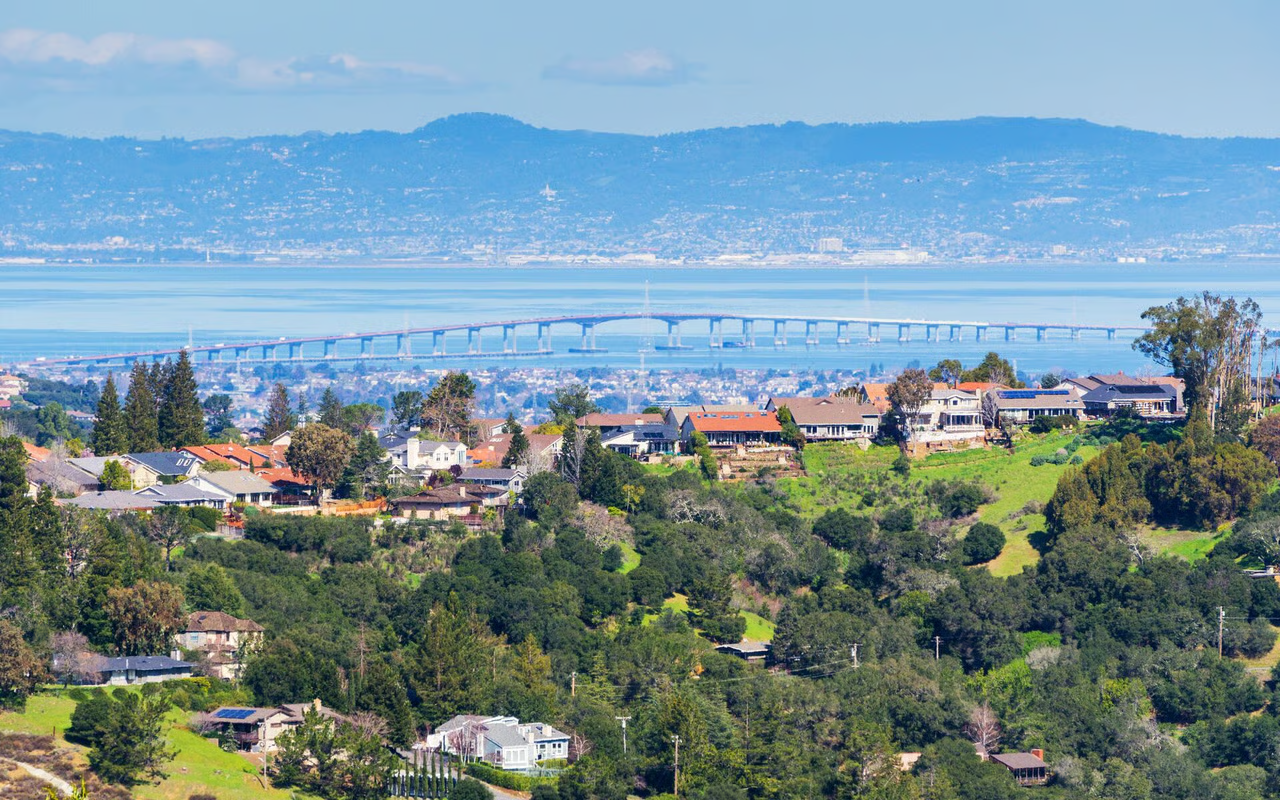
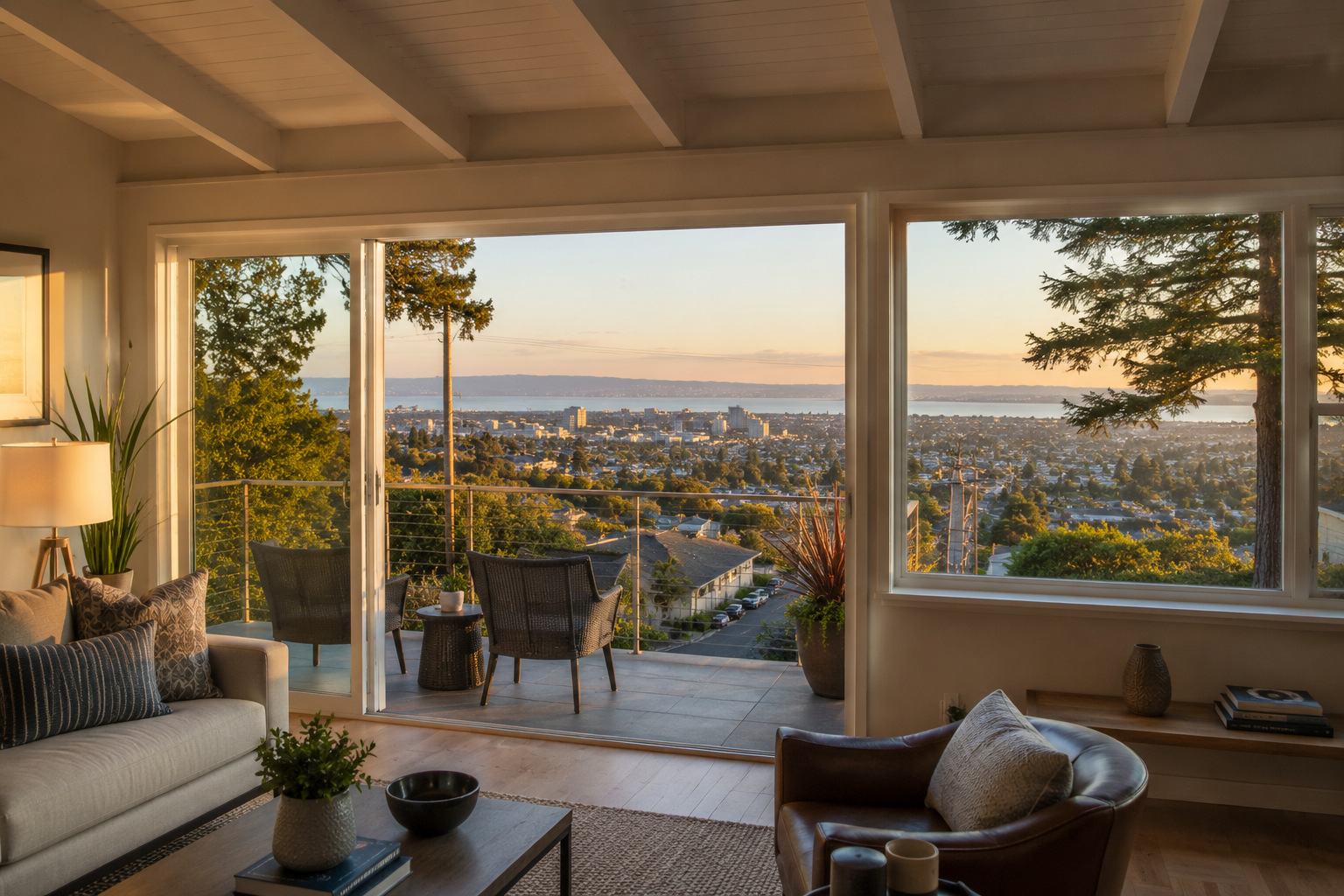
San Mateo's physical setting is the first thing that distinguishes it from every other ranch home market covered in this series. The city sits on the western shore of San Francisco Bay, with the Santa Cruz Mountains providing a western backdrop and the Bay's open water defining its eastern edge. That orientation — water to the east, hills to the west, a flat and easily navigable urban core in between — gives San Mateo a residential geography that is simultaneously open and contained, connected and private, urban and naturally grounded in ways that its neighbors to the north and south can only partially replicate.
The practical effect of that geography on San Mateo's ranch neighborhoods is visible at the street level. The city's flat central areas and its gently rising western neighborhoods offer dramatically different residential experiences within a single municipality — from the walkable, grid-planned streets of the Baywood and Beresford neighborhoods to the quieter, more topographically varied character of the areas approaching the Hillsborough border. That internal variety gives San Mateo's ranch market a range of neighborhood options that buyers with different lifestyle priorities can navigate within a single city boundary, without the trade-offs that typically accompany moves between distinct municipalities.
San Mateo's Bay proximity also gives it a microclimate that differs meaningfully from the South Bay cities further down the Peninsula. Afternoon Bay breezes moderate summer temperatures in ways that make outdoor living genuinely comfortable through the warmer months, and the combination of morning fog and afternoon clarity that characterizes the mid-Peninsula's seasonal rhythm creates a natural light quality in San Mateo's ranch neighborhoods that buyers who have lived there consistently describe as one of the city's most underappreciated residential assets.
From Rail Stop to Regional City: San Mateo's Residential Origin Story
San Mateo's development as a residential city predates Silicon Valley's existence by decades. The city grew up around the Southern Pacific Railroad's Peninsula line — established in the 1860s — as a collection of estates and country retreats for San Francisco's wealthy merchant class, who valued the Peninsula's mild climate and the rail connection's ability to make a daily San Francisco commute practical without requiring urban proximity. That origin story left San Mateo with something that most postwar suburban cities never had the opportunity to develop: an existing urban core, a civic identity, and a sense of place that predated the automobile and therefore did not depend on it for coherence.
The postwar ranch neighborhoods that define most of San Mateo's residential landscape today were layered onto that existing urban foundation beginning in the late 1940s. The city's flat central areas and its western hillside margins were subdivided and developed rapidly through the 1950s and early 1960s by a mix of Peninsula-based merchant builders who brought the California ranch form to San Mateo's particular land geometry. Unlike the valley floor cities where ranch development proceeded across open agricultural land with relatively few constraints, San Mateo's postwar builders worked within a city that already had streets, services, institutions, and neighborhoods — which meant that new ranch developments were integrated into an existing urban fabric rather than creating one from scratch.
That integration is still legible in San Mateo today. The city's ranch neighborhoods sit within walking or short driving distance of a downtown that has been continuously occupied and continuously improved for well over a century, a park system that was established before most of the ranch homes were built, and a Caltrain corridor that was carrying commuters to San Francisco before any of the city's current residents were born. For buyers who value the sense that a neighborhood has been genuinely lived in and continuously cared for — rather than assembled recently from components — San Mateo's ranch stock offers exactly that quality of accumulated civic investment.
The postwar development era also brought San Mateo into the orbit of the broader Bay Area defense and technology economy that was reshaping the entire region during the 1950s and 1960s. The city's position midway between San Francisco and the emerging Silicon Valley employment centers made it an attractive address for the engineers, managers, and executives who needed practical access to both, and that dual-orientation buyer profile — Peninsula professional with Bay Area employment flexibility — has remained a consistent feature of San Mateo's residential market ever since.
Broad Eaves and Bay Breezes: The Architecture of San Mateo Ranch Living
San Mateo's ranch home stock reflects the full breadth of the California ranch tradition while expressing it through the specific material and spatial vocabulary of Peninsula construction. The city's postwar builders brought a somewhat more substantial approach to materials and detailing than was typical of the most cost-driven valley floor tract developments — thicker walls, better window quality, more varied exterior finish treatments, and a greater attention to the relationship between indoor and outdoor space that the Peninsula's climate specifically rewards.
The physical profile of a San Mateo ranch neighborhood is immediately recognizable: single-story massing distributed across generous front setbacks, low-pitched rooflines with broad overhanging eaves designed to manage the Peninsula's combination of fog, rain, and summer sun, attached garages integrated into street-facing elevations with varying degrees of architectural success, and rear yards that open through sliding glass doors or French doors to outdoor spaces that the Bay Area's climate invites year-round use of. Street trees in San Mateo's established ranch neighborhoods have reached a maturity that fundamentally changes the character of the public realm — the streets feel genuinely shaded and genuinely settled rather than newly planted and provisional.
Typical San Mateo ranch homes were originally built in the 1,100 to 1,800 square foot range, with lot sizes generally running between 5,500 and 8,500 square feet in the city's core residential areas and somewhat larger in the western neighborhoods approaching the Hillsborough border. Three-bedroom, two-bath configurations were the dominant original layout, though four-bedroom plans appear consistently in the larger builder models and in homes that have received thoughtful additions over the decades.
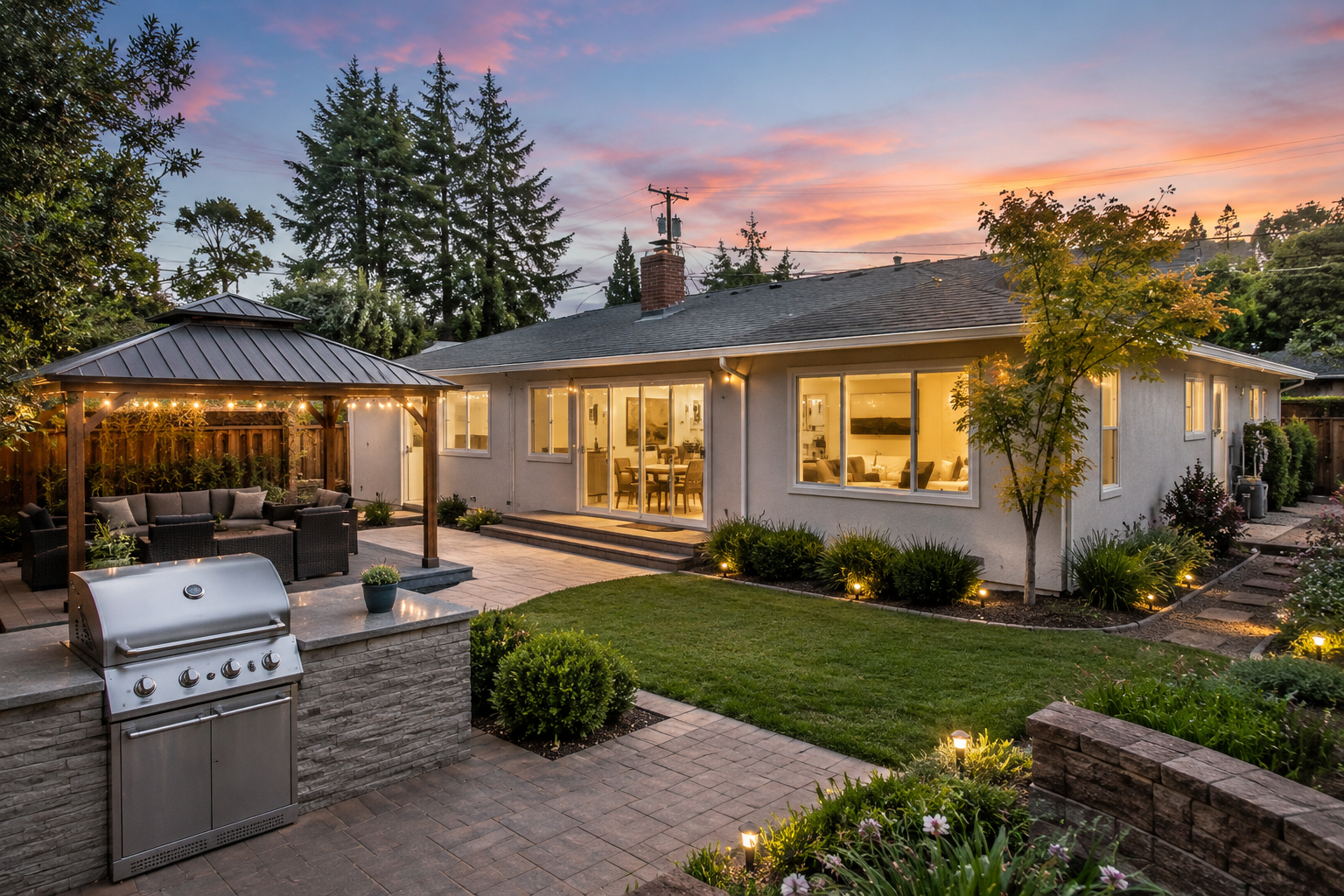
Renovation quality in San Mateo's ranch market reflects the city's sustained affluence and its architecturally aware buyer base. Kitchen transformations ranging from careful period-respectful updates to full contemporary open-plan conversions are nearly universal in the upper market tier. Primary suite expansions — adding square footage, upgrading bath finishes, and creating the kind of private retreat functionality that today's buyers consistently prioritize — appear in the majority of properties above the $2 million threshold. Outdoor living investment is particularly pronounced in San Mateo, where the climate's genuine year-round usability makes a well-designed patio, garden room, or outdoor kitchen a lifestyle asset rather than a seasonal amenity.
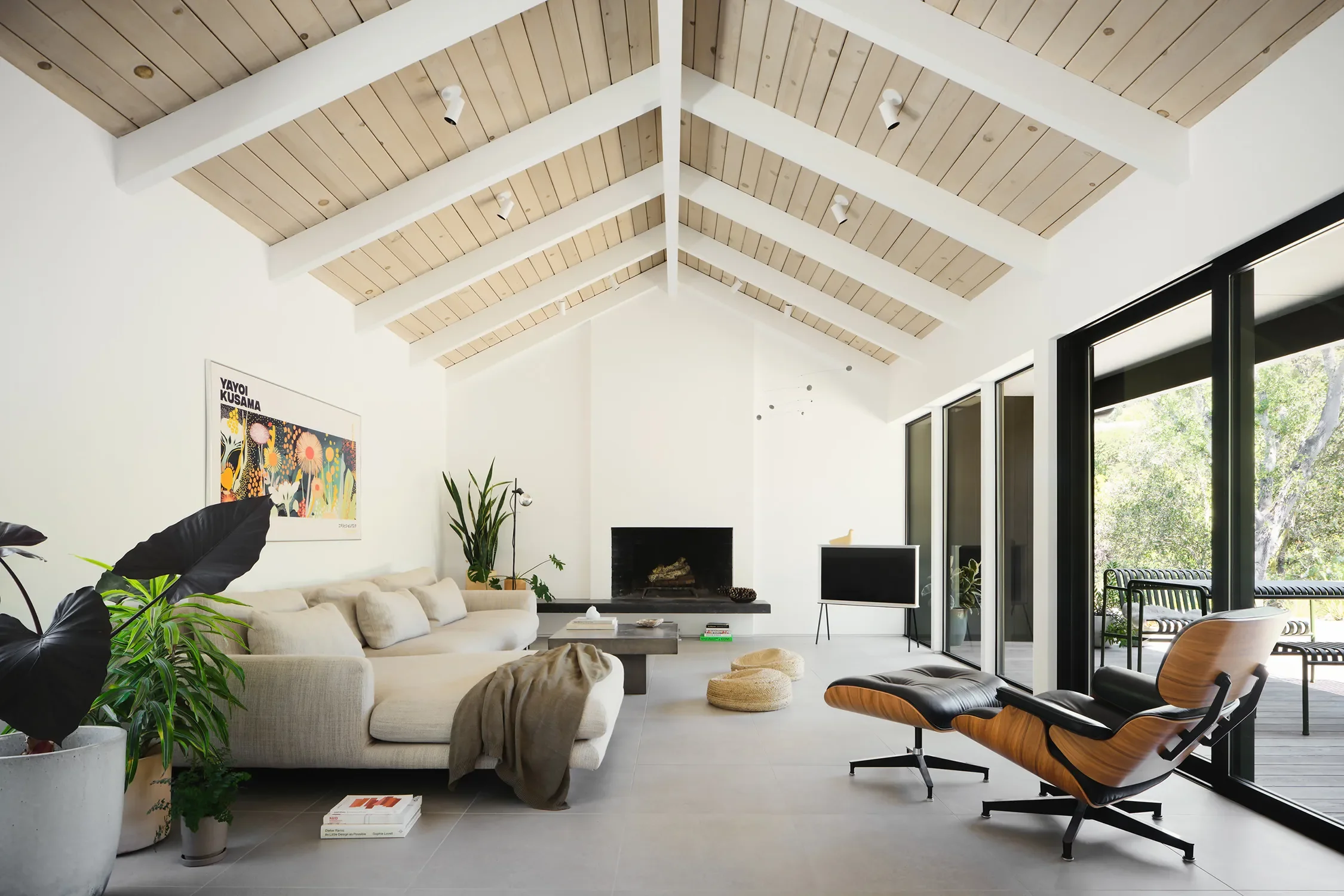
The city also has a meaningful presence of post-and-beam and architecturally distinctive mid-century modern homes alongside its broader ranch stock — properties that share the single-story vocabulary but express it with a greater emphasis on structural expression, glazing, and the indoor-outdoor integration that defines California modernism at its most coherent. For buyers whose architectural interests extend beyond the conventional ranch typology, San Mateo's residential landscape offers a range of design-forward options within the single-story category that few Peninsula cities can match.
The People Who Choose San Mateo: A Community Portrait
San Mateo's population of approximately 105,000 makes it one of the larger cities on the mid-Peninsula, but its residential character feels more intimate than that number might suggest — a product of the city's strong neighborhood identity, its active civic culture, and the genuine community investment that comes from a population that has consistently chosen San Mateo as a long-term home rather than a transitional address.
The homeowner demographic in San Mateo's ranch neighborhoods reflects the city's position as a mid-Peninsula anchor — established enough to attract buyers seeking permanence and community, connected enough to serve technology professionals who need flexible access to both San Francisco and Silicon Valley employment centers. Senior technology executives, finance and legal professionals, healthcare leaders, and established entrepreneurial households form the core of San Mateo's ranch home buyer pool, alongside a significant segment of multi-generational Peninsula families who have been in the area for decades and who view San Mateo ranch homes as the natural next chapter after raising families in the city's established neighborhoods.
San Mateo's cultural diversity is one of its most distinctive and most underappreciated residential assets. The city has a significant Filipino community with deep historical roots in the area, a substantial Hispanic population, a growing South and East Asian professional community, and a broadly international character that reflects both its Bay Area location and its history as a working city rather than a purely residential enclave. That diversity is reflected in the city's restaurant scene, its community institutions, its public school culture, and the variety of perspectives and experiences that define neighborhood life in San Mateo's ranch areas in ways that more homogeneous Peninsula cities cannot replicate.
Navigating San Mateo's School Landscape
San Mateo's public school system is served by the San Mateo-Foster City School District for elementary and middle grades, and by the San Mateo Union High School District for high school. The high school district serves students at a collection of comprehensive high schools — including San Mateo High School, Hillsdale High School, and Aragon High School — each with distinct academic cultures, extracurricular strengths, and community reputations that buyers with high school-age children evaluate carefully as part of their location decision.
Aragon High School, serving portions of San Mateo's western neighborhoods, carries a particularly strong academic reputation that consistently influences pricing in its attendance area — a pattern familiar to anyone who has studied the relationship between school assignment and real estate values on the mid-Peninsula. As with all San Mateo school assignments, buyers are strongly advised to verify specific school eligibility by parcel address directly with the serving district, as boundary lines within San Mateo can produce different school assignments on opposite sides of the same street.
The private school landscape accessible to San Mateo families is among the richest on the Peninsula. Crystal Springs Uplands School in Hillsborough, Chadwick School, and various independent elementary and middle programs throughout San Mateo County provide alternatives that many of the city's professional families actively consider alongside the public school options. The College of San Mateo, one of the San Mateo County Community College District's three campuses, sits within the city and provides both continuing education and dual enrollment opportunities that reinforce San Mateo's identity as a community that takes educational access seriously at every life stage.
The proximity of Stanford University — approximately twenty minutes south via Highway 101 or El Camino Real — adds an academic gravity to San Mateo's educational ecosystem that goes beyond what any single local institution could provide. For families whose educational aspirations and professional networks extend into Stanford's orbit, San Mateo's positioning on the mid-Peninsula provides practical proximity without the pricing premium of Palo Alto or Menlo Park addresses.
A Downtown Worth Walking To: The San Mateo Lifestyle Advantage
San Mateo's most powerful lifestyle differentiator is something that most Bay Area cities spend decades trying to manufacture and rarely succeed at: a genuinely great downtown. Third Avenue and its surrounding blocks constitute one of the Peninsula's most consistently excellent urban neighborhoods — a walkable collection of independent restaurants, wine bars, specialty retail, coffee shops, and community institutions that functions as a true daily destination for residents rather than a tourist attraction or a weekend convenience.
The range and quality of San Mateo's restaurant scene reflects the city's cultural diversity and its affluent, food-literate resident base. From long-established Japanese and Filipino restaurants that have anchored specific blocks for decades to contemporary Californian and international dining destinations that have earned regional recognition, San Mateo's culinary landscape is genuinely diverse in ways that neither curated nor accidental — it grew organically from the community's actual composition and tastes, which gives it an authenticity that more engineered dining districts consistently lack.
The San Mateo Farmers Market, operating year-round on Saturdays in the downtown core, draws buyers from throughout San Mateo County and has become one of the mid-Peninsula's most beloved weekly community institutions. For ranch-neighborhood residents within walking or cycling distance — which describes a substantial portion of the city's residential geography given its flat central topography — the market represents exactly the kind of weekly community ritual that transforms a real estate decision into a lifestyle commitment.
Coyote Point Regional Shoreline, one of the Bay Area's most versatile waterfront parks, sits within San Mateo's city limits and provides sailing, windsurfing, kayaking, shoreline trail access, and open Bay views within a short drive of virtually every ranch neighborhood in the city. The park's combination of active recreation infrastructure and genuine natural landscape — including a significant eucalyptus grove and a restored Bay margin habitat — makes it a daily-use asset rather than an occasional destination for San Mateo residents who prioritize outdoor life alongside urban convenience.
Central Park, San Mateo's primary urban green space, anchors the city's recreational landscape with its rose garden, Japanese tea garden, lawn areas, tennis courts, and event programming that draws residents from across the city's neighborhoods throughout the year. The park's central location — within walking distance of both the downtown core and a significant portion of the city's ranch neighborhoods — makes it a genuine community hub in the way that only long-established civic green spaces can be.
The Commute That Works Both Ways: San Mateo's Transportation Advantage
San Mateo's transportation story is built around a geographical and infrastructural asset that no South Bay city can claim: genuine bidirectional commute access that serves both San Francisco-bound and Silicon Valley-bound professionals with equal effectiveness. That bidirectionality is the product of the city's mid-Peninsula positioning combined with one of the Bay Area's most comprehensive transit connections, and it is a primary reason why San Mateo's ranch market attracts a buyer pool with more varied employment geographies than any of the valley floor cities covered in this series.
The San Mateo Caltrain station — one of the busiest on the Peninsula corridor — provides direct service to San Francisco's Fourth and King Street station in approximately thirty-five to forty-five minutes, and to San Jose Diridon in a comparable window in the opposite direction. For households where one partner works in San Francisco's financial district or South of Market technology corridor and the other works at a Peninsula or South Bay tech campus, San Mateo's Caltrain access makes a car-free or car-reduced dual commute genuinely practical in ways that valley floor cities cannot support.
Highway 101 runs through San Mateo's eastern edge, providing the automotive connection to Silicon Valley's employer corridor that complements the rail option for buyers whose specific employment location or schedule makes driving more practical than transit. The San Mateo Bridge — connecting the city directly to the East Bay via Interstate 92 — adds a further commute dimension that is particularly relevant for buyers with Fremont, Oakland, or Berkeley employment connections. Highway 92's junction with Interstate 280 provides access to the Peninsula's preferred northbound expressway corridor and to the tech campus clusters that line the 280 corridor between San Mateo and San Jose.
Major employers within San Mateo commute range span both the Peninsula and Silicon Valley in ways that illustrate the city's unique geographic position. Genentech's South San Francisco campus is accessible northbound via 101 in approximately twenty minutes. Meta's Menlo Park headquarters is reachable southbound via 101 or 280 in a comparable window. Oracle's Redwood Shores campus sits immediately adjacent to San Mateo's southern boundary. Electronic Arts maintains its headquarters in Redwood City, fifteen minutes south. The breadth of that employer geography — spanning biotech, social media, enterprise software, gaming, and traditional finance across two distinct employment centers — gives San Mateo's ranch home buyer pool a diversity of professional backgrounds that reflects the city's own community character.
What the Numbers Reveal About San Mateo Ranch Home Values
San Mateo's ranch home market occupies a pricing tier that reflects both its genuine residential quality and its position within the Peninsula's compressed and competitive housing landscape. Median sale prices for single-family ranch homes in San Mateo have tracked between $1.9 million and $2.6 million in recent market cycles, with significant variation driven by lot size, school assignment, neighborhood positioning relative to downtown and the Caltrain corridor, and the quality and sophistication of any renovation investment.
The land value component in San Mateo ranch transactions carries particular weight given the city's constrained residential geography and its position within one of the Bay Area's most supply-limited housing markets. San Mateo County as a whole has one of the lowest residential vacancy rates in California, and San Mateo's specific combination of employment access, transit connectivity, and downtown quality creates sustained demand pressure that has historically supported pricing resilience across market cycles. For buyers evaluating San Mateo ranch homes as long-term assets rather than transitional purchases, that structural supply constraint is a fundamental part of the investment thesis.
Price per square foot for San Mateo ranch homes reflects the market's internal differentiation in ways that reward buyers who take the time to understand the city's neighborhood-level pricing dynamics. Turnkey renovated properties in strong school zones and walkable downtown-adjacent locations regularly trade between $1,300 and $1,700 per square foot. Original-condition homes on larger lots — particularly in the western neighborhoods where lot sizes tend toward the more generous end of the city's range — attract pricing that reflects site value and expansion potential more than current square footage, creating opportunities for buyers who can evaluate what a property could become rather than simply what it currently is.
Days on market for well-priced San Mateo ranch homes remain consistently short, with competitively positioned properties in strong locations regularly generating offers within the first ten days of public marketing. The city's buyer pool is deep, financially capable, and consistently active — a product of the employment geography that surrounds San Mateo on multiple sides and the lifestyle quality that keeps buyers specifically committed to a San Mateo address rather than accepting alternatives in neighboring cities. That depth of demand is ultimately the most reliable indicator of a market's long-term health, and by that measure San Mateo's ranch home segment is among the most fundamentally sound on the entire Peninsula.
Reading Between the Listings: What San Mateo Ranch Transactions Actually Look Like
San Mateo's ranch market produces a range of transaction types that reflect the variety of buyer motivations and seller circumstances that converge in a city with both strong move-up demand from existing residents and consistent inbound interest from buyers relocating from other Bay Area markets.
Original-condition San Mateo ranch homes — particularly those on larger lots in western neighborhoods with Aragon High School assignment — consistently attract competitive offer situations that can surprise sellers who underestimate the depth of buyer interest in well-located land regardless of improvement condition. These transactions frequently involve buyers who have been watching the specific neighborhood for extended periods and are prepared to act decisively when a property becomes available, often resulting in above-asking pricing and compressed timelines that reward sellers who are prepared to move quickly once a decision is made.
The renovation premium in San Mateo's ranch market is among the most consistently documented on the Peninsula. Properties that have received thoughtful kitchen and bath updates, open-plan conversions, and meaningful outdoor living development regularly achieve sale prices that exceed original-condition comparables by 20 to 35 percent, reflecting a buyer pool that is willing to pay significantly for the ability to occupy a finished home immediately rather than managing a renovation process while paying carrying costs on an investment property. For sellers considering pre-sale renovation investment, the San Mateo market's consistent renovation premium makes that calculation particularly favorable for properties with strong bones, good locations, and renovation scopes that can be completed efficiently.
ADU development on San Mateo ranch lots has followed the statewide acceleration trend while reflecting the city's specific land economics. San Mateo's flat central topography, its relatively straightforward utility infrastructure, and its position within San Mateo County's ADU-friendly permitting environment have made accessory dwelling unit construction increasingly practical for a broad range of ranch home lots. Completed ADUs in San Mateo's ranch neighborhoods — particularly those designed with architectural coherence to the primary residence and finished to the quality standard the city's rental market supports — have demonstrated a consistent ability to add meaningful assessed value and rental income potential that reinforces the long-term investment case for San Mateo ranch home ownership.
The Boyenga Team's Approach to the Peninsula Ranch Market
San Mateo's ranch market demands a quality of representation that matches the sophistication of its buyer and seller base — people who have spent careers in analytically demanding professions and who bring those same standards to the most significant financial decisions of their lives. Generic transaction management is not sufficient in a market where the difference between a well-advised purchase and a poorly advised one can be measured in hundreds of thousands of dollars, and where the margin between a well-executed sale and a merely adequate one is defined by preparation quality, marketing reach, and the depth of the buyer pool the listing generates.
Eric and Janelle Boyenga bring the analytical rigor, architectural knowledge, and luxury marketing sophistication that San Mateo's ranch market deserves. As the Property Nerds of the Boyenga Team at Compass — recognized throughout the Bay Area for their expertise in design-forward California residential real estate — Eric and Janelle approach every San Mateo transaction with the same depth of preparation and the same commitment to client outcomes that has defined their reputation across Silicon Valley's most demanding markets.
For buyers navigating San Mateo's ranch market, the Boyenga Team's advantage lies in their ability to evaluate properties across multiple value dimensions simultaneously — school assignment, lot potential, renovation quality, neighborhood trajectory, and the specific market dynamics that determine whether a given property is priced accurately or represents either an opportunity or a risk at its asking price. Their access to Compass's Private Exclusives and off-market network means that San Mateo buyers working with the Boyenga Team encounter properties before they reach the full competitive exposure of public marketing — a meaningful advantage in a market where the most desirable ranch homes rarely sit available long enough for deliberate consideration once publicly listed.
For sellers, the Boyenga Team's approach to San Mateo ranch home marketing reflects their understanding that Peninsula buyers are sophisticated, well-informed, and expect a level of presentation quality that matches the price points they are being asked to consider. Professional architectural photography, design-forward staging, targeted digital marketing to the specific buyer profiles most likely to value a particular San Mateo property, and the strategic use of Compass's three-phase marketing platform combine to create a selling experience that consistently produces outcomes above what standard brokerage approaches deliver.
When you are ready to explore San Mateo ranch homes for sale — as a buyer seeking the Peninsula's finest single-story living or a seller ready to realize the full value of your San Mateo property — connect with Eric and Janelle Boyenga and the Boyenga Team at Compass. The Property Nerds of the Boyenga Team are ready to bring their full expertise and commitment to your San Mateo real estate journey.