
Menlo Park Eichler Homes: Mid-Century Modern Luxury in Silicon Valley
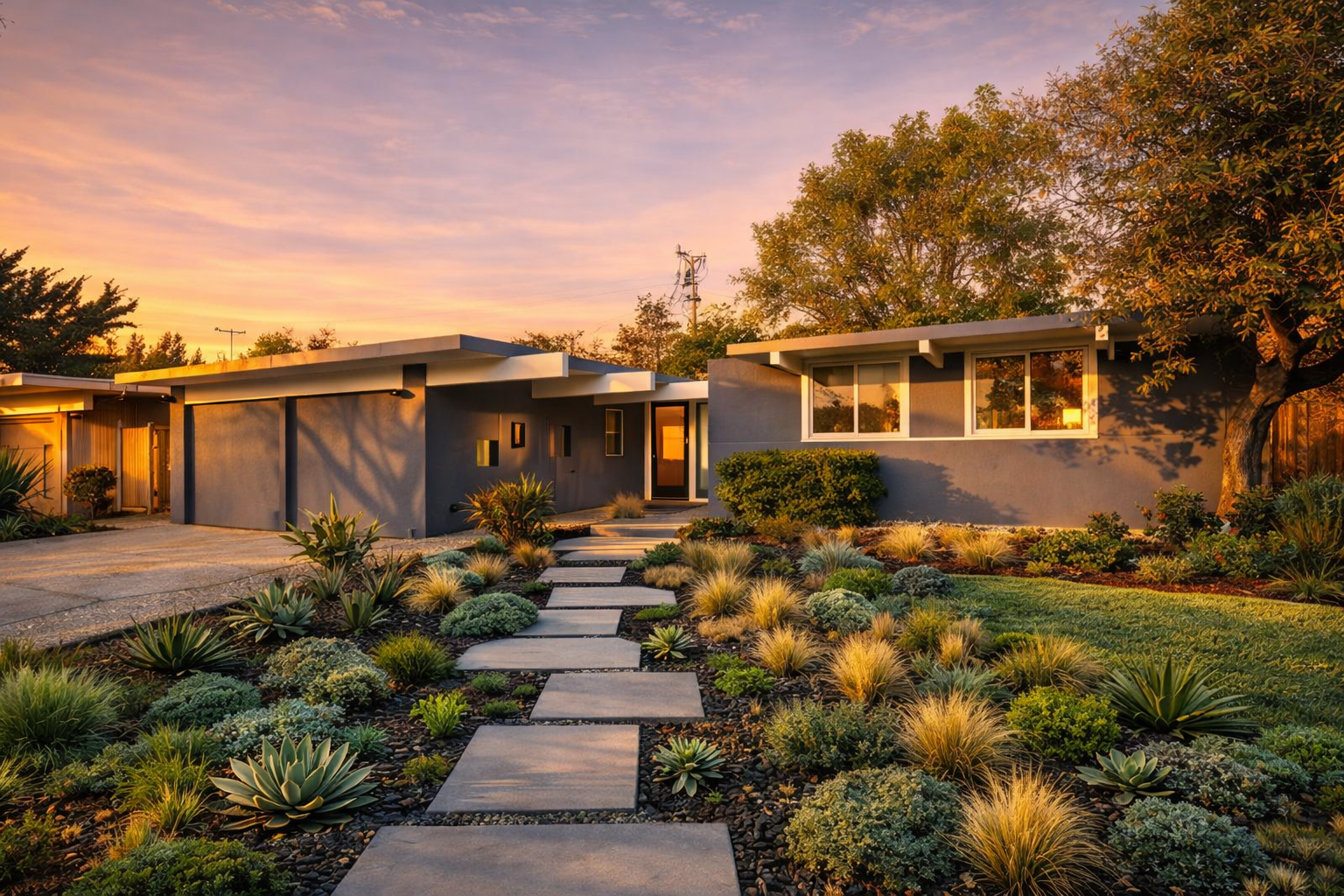
Nestled in the heart of Silicon Valley, Menlo Park combines cutting-edge innovation with historic California charm. This affluent city’s tree-lined neighborhoods and vibrant downtown sit just miles from Stanford University and Meta’s global headquarters, yet a quieter, design-focused lifestyle prevails. Among these neighborhoods are rare Joseph Eichler enclaves – small tracts of mid-century modern homes where post-and-beam construction, floor-to-ceiling glass walls, and open atriums define an indoor-outdoor living ethos. These Eichler homes add timeless architectural prestige to Menlo Park’s rich fabric, making them especially coveted by architecture enthusiasts, tech executives, and design-savvy buyers. With his specialized knowledge of Eichler and mid-century modern real estate, Compass agent Eric Boyenga and team (“the Boyenga Team”) are recognized as trusted guides in this luxury niche.
Historical Overview of the Neighborhood
Menlo Park’s Eichler story began in 1950 with Stanford Gardens, one of Joseph Eichler’s earliest developments. Completed in January 1950, Stanford Gardens consisted of about a dozen custom homes built on a gentle hillside by Evergreen Street. These shed-roof houses were Eichler’s first experiment with radiant concrete-slab heating and featured 2½ bathrooms – innovations unheard of in tract housing at the time. Shortly thereafter (around 1952) the Oakdell Park tract was built a few blocks north, adding 14 more Eichler homes on large quarter-acre lots. Renowned mid-century architects Jones & Emmonsand Anshen + Allen collaborated on these designs, which included some of Eichler’s first signature atrium layouts.
By the late 1950s, a few additional Eichler homes sprouted on “flag lots” and quiet cul-de-sacs in Menlo Park – now informally called Menlo Oaks – each unique and often larger than the original tracts. Today, these three areas (Stanford Gardens, Oakdell Park, and Menlo Oaks) comprise all of Menlo Park’s Eichler holdings. Over the decades many have been tastefully updated, while a devoted community of owners and preservationists has fought to maintain Eichler character amid Silicon Valley’s growth.
Architectural Highlights and Housing Inventory
Menlo Park’s Eichler homes share classic mid-century modern traits and some unique local twists. Common features include post-and-beam construction, expansive glass sliding walls, exposed wood interiors, and floor plans that flow seamlessly through private courtyards or atriums. Many designs include central atriums – private “outdoor rooms” – that flood interiors with light. Eichler pioneered radiant hot-water heating beneath concrete slabs, providing silent, even warmth without ducts. The emphasis on natural materials (Philippine mahogany paneling, tongue-and-groove ceilings) and simple geometric lines creates an elegant, uncluttered aesthetic.
Key design elements: The earliest Menlo Eichlers (e.g. Stanford Gardens) feature shed-style roofs with clerestory windows. Later homes in Oakdell Park include larger open layouts and atrium variants by Jones & Emmons and Anshen + Allen, emphasizing indoor-outdoor living and modern efficiency.
Size & lots: Eichlers here tend to sit on estate-sized parcels. Several Oakdell Park models occupy half-acre or larger lots – far bigger than Eichler tracts in denser cities. This generous space allows for lush gardens, swimming pools, and added privacy while preserving the classic Eichler openness.
Typical inventory: A typical Menlo Park Eichler is a 3- or 4-bedroom home (often 2–3 baths) ranging from ~1,500–2,000 square feet on lots of 0.25–0.75 acres. (For comparison, the median newly built Menlo Park home exceeds $5M, whereas Eichlers usually list in the $3–5 million range.) Many interiors have been sympathetically modernized with high-end kitchens and baths, but the core mid-century character often remains.
Today’s buyers prize Eichlers for the sophisticated indoor-outdoor lifestyle they enable. Sliding glass walls literally erase the boundary between living areas and gardens, perfect for California’s climate. A family can seamlessly host a dinner party from kitchen to patio, or relax in a radiant-heated great room overlooking a lush atrium. This architectural legacy of openness, together with the privacy of the large lots, makes Menlo Park’s Eichlers stand out as luxury homes that feel intimate yet spacious.
Demographic and Socioeconomic Profile
Menlo Park is an affluent, highly educated community whose residents are deeply intertwined with Silicon Valley. As of 2024 it has roughly 34,000 people with a median household income of about $210,000 – well above state and national averages. Over 72% of adults hold a bachelor’s degree or higher. Many residents are tech executives, venture capitalists, engineers, and entrepreneurs who seek both prestige and the open-suburban lifestyle Menlo Park offers. While a slight majority identify as White (about 52% non-Hispanic), the city is ethnically diverse: Asians comprise roughly 19%, Hispanics 21%, and about 30% of the population is foreign-born.
The population skews family-friendly but professional: about 21% are under 18, and homeowner rates hover near 54%. Many tech workers are relocating or hybrid-commuting from places like San Francisco into suburban hubs like Menlo Park for more space and top schools. Indeed, industry analyses note that “many professionals in the tech and finance industries are returning to a more place-based lifestyle,” seeking shorter commutes and quality of life – a trend that is fueling demand in Menlo Park and similar communities. This tech-driven demand keeps competition intense: Eichler homes here routinely fetch well above their listing price in bidding contests.
School Districts and Education Landscape
Families in Menlo Park benefit from top-rated public schools. The city is served by the Menlo Park City School District (MPCSD) for K–8, and Sequoia Union High School District for high school. Local public schools have repeatedly earned state distinction. For example, Oak Knoll Elementary, Laurel Elementary, and Hillview Middle School (MPCSD) have all been recognized as California Distinguished Schools. Menlo-Atherton High School (in neighboring Atherton) is similarly acclaimed, routinely rated around 8/10 by GreatSchools. In fact, all four MPCSD schools – Encinal, Laurel, Oak Knoll, and Hillview – have received honors as among the best in California, reflecting the high-achieving environment families expect. Well-regarded private options are also nearby (e.g. Menlo School, Sacred Heart Prep, and local Montessori/Christian academies).
The presence of Stanford University just north of Menlo Park adds to the educational fabric; Stanford’s campus is only a few miles away, hosting cultural events and summer programs. Community colleges such as Cañada College (Redwood City) and Foothill College (Los Altos Hills) are within short commutes as well. This strong education infrastructure – from preschool through university – underpins Menlo Park’s enduring real estate appeal, with buyers often citing schools as a key factor in neighborhood value and family lifestyle.
Neighborhood Attractions and Lifestyle
Menlo Park offers a lush suburban lifestyle with abundant amenities. Over 17 parks and open spaces lie within city limits. Signature parks include Burgess Park, a 9+ acre complex at the civic center with athletic fields, tennis and pickleball courts, and a popular public swimming pool. At the other end of town, Bedwell Bayfront Park sprawls 160 acres along the Bay, featuring dirt trails, bayfront vistas, and a segment of the Bay Trail for biking and hiking. Neighborhood parks like Nealon Park (with all-abilities playground and picnic areas) and Fremont Park (with lawns and summer concerts) provide family recreation close to home. The nearby Pearson-Arastradero Preserve (Palo Alto) is just a short drive away, offering regional trails and nature for outdoor enthusiasts.
Downtown Menlo Park (along Santa Cruz Avenue and adjacent streets) is a charming, walkable district of boutiques, independent cafés and restaurants, and local services. Tree-shaded sidewalks host art galleries, specialty shops, and al fresco dining (popularized by the City’s “Streetary” program). Each Sunday the downtown square bursts into life with a farmers’ market (8 am–1 pm) where neighbors gather for seasonal produce and artisan foods. Cultural attractions include the Allied Arts Guild, a historic garden oasis and artisan complex (with galleries, studios, and the Café Wisteria) that dates to 1929 and supports Stanford Children’s Hospital. The Guild offers a picturesque setting for shopping and events, adding a unique creative flair to local life.
For daily errands and convenience, Menlo Park has well-stocked shopping centers (e.g. Bayfront, Market Square) and gyms. Commuters enjoy Caltrain service at Menlo Park Station (Palo Alto Ave at Alma) connecting to San Francisco and San Jose. Overall, the lifestyle in Menlo Park is relaxed yet sophisticated – ideal for families, remote professionals, and design lovers alike. One can start the day jogging on Stanford’s Dish loop, spend the afternoon with a coffee in downtown Menlo, and in the evening enjoy a barbeque under the stars in a private Eichler courtyard. In short, residents of Menlo Park Eichler neighborhoods experience a blend of suburban tranquility and Silicon Valley culture.
Commuting and Tech Employer Access
Strategically situated on the Peninsula, Menlo Park offers swift access to Silicon Valley’s major employers. Facebook/Meta’s main campus is actually in Menlo Park (Willow Road), a short drive from Stanford Gardens and Oakdell Park. Stanford University and research parks border the city to the north, while the highways provide easy routes: U.S. 101 runs through Menlo Park (offering a ~30‑minute drive to Apple Park in Cupertino and ~20 minutes to Google’s Mountain View campus), and I‑280 lies just west (another route to Cupertino and Los Altos). Commuters reach NVIDIA and Cisco in Santa Clara (approx. 20 miles south) and Netflix in Los Gatos (~20 miles). Many major companies also run shuttle services to Menlo Park and nearby Caltrain. Local analysis notes that Silicon Valley professionals favor Menlo Park for its location: workers returning to the office enjoy the town’s quick commutes and prestige.
In addition, Menlo Park is well-connected by transit: aside from Caltrain, SamTrans buses link to the Stanford Campus, and within Menlo Park city-run shuttles circulate to key business areas. Average Bay Area commute times from Menlo Park are lower than many—about 24 minutes on average. Whether by car or train, residents reach leading tech corridors with ease, making the city highly attractive for executives and engineers who want suburban living without being isolated from work or innovation.
Real Estate Market Analysis
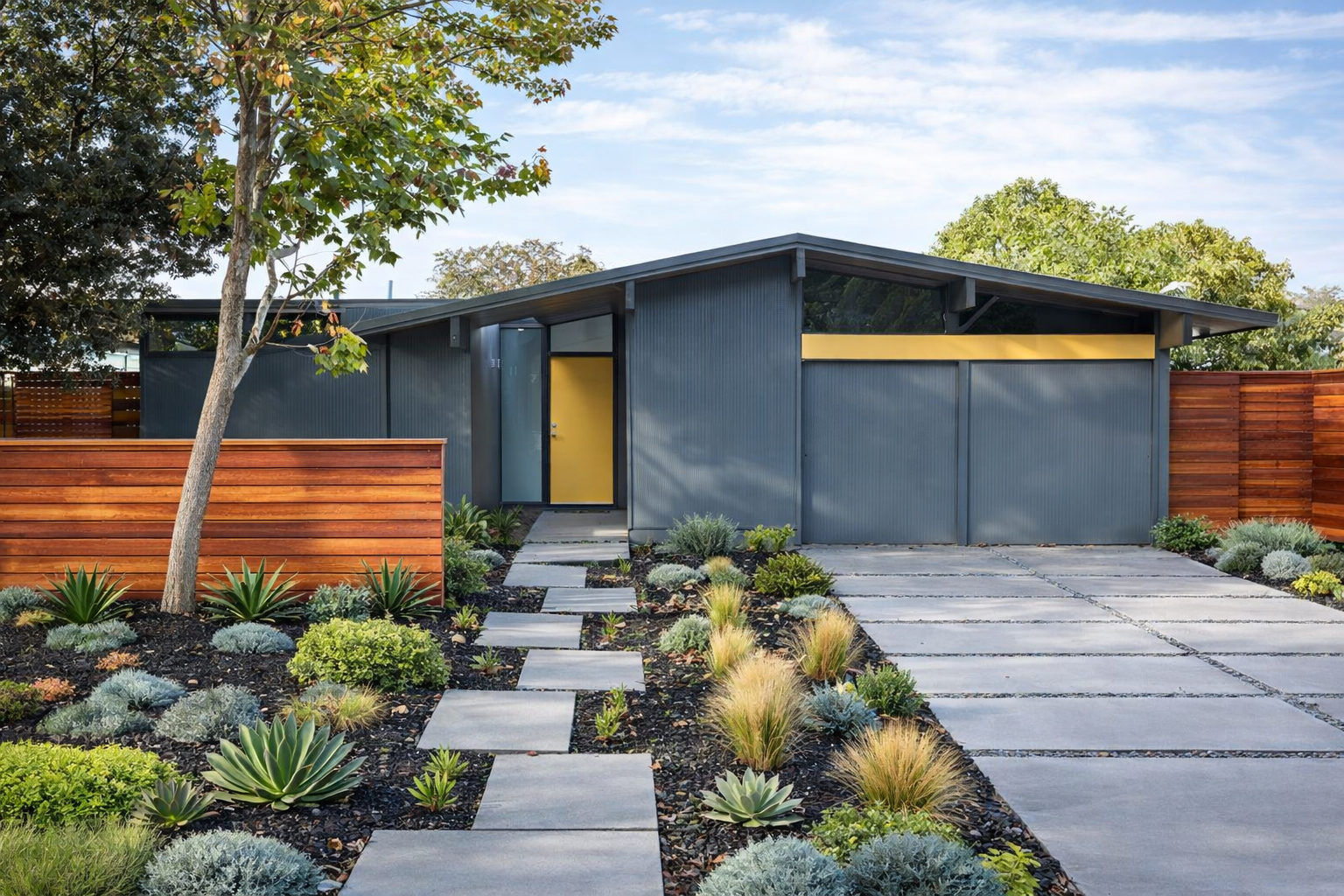
Menlo Park’s housing market remains among the most expensive and competitive on the Peninsula. In mid-2025 the median sale price of a single-family home was roughly $3.3 million, up over 10% year-over-year. Luxury enclaves like West Menlo often see medians exceeding $5 million. On average, homes now sell in about 25 days (down from 28 a year ago), often with multiple offers. The median price per square foot is around $1,600 – again among the highest in Silicon Valley. Inventory is notably tight: in July 2025 only ~30 homes closed in all of Menlo Park, compared to an annual average closer to 350–400. Seller conditions are strong (with sale-to-list ratios ~101–102%), especially for updated, move-in-ready homes that meet the high expectations of affluent buyers.
Eichler homes in this market carry an architectural premium. The Boyenga Team notes that Menlo Park Eichlers typically sell in the $3–5 million range – higher than similarly sized tract homes and even above Eichlers in other Bay Area suburbs. Local realtors report that well-maintained Eichlers often command 10–20% above asking price in bidding wars. For example, a renovated Stanford Gardens Eichler recently closed around the mid-$3M mark, reflecting both its design pedigree and scarcity. The combination of unique style, large lots, and a prestige Menlo Park address means buyers frequently compete eagerly for each Eichler listing. While no brokerage holds more exclusive deals than Compass (and especially the Boyenga Team’s in-house contacts), publicly traded Eichlers still set records: one Palo Alto Eichler sold for over $5 million in 2023, underscoring how far Eichler values have risen across the region (Menlo Eichlers fetch comparable prices thanks to their rarity).
Trends: Over the past decade Menlo Park home values have generally trended upward, with periodic cooling (as in 2020) and surges (as in 2024–25). Even in slower years, appreciation is buffered by ongoing tech growth and high demand for well-located homes. A key dynamic is the “Menlomorphosis” effect: some Eichler lots face teardown pressure because land values are so high, driving up the baseline lot price. However, for preservation-minded buyers who appreciate mid-century design, Eichlers are seen as legacy homes. The Boyenga Team estimates that a thoughtfully updated Eichler in Menlo Park can achieve value parity with any new construction, thanks to its history and character. Overall, experts conclude Menlo Park Eichlers are likely to remain solid investments: their premium pricing is underpinned by exceptional architecture and community prestige, ensuring they appeal even if broader market trends fluctuate.
Case Studies and Sales Examples
While each Eichler sale in Menlo Park is unique, recent examples underscore the strong demand for these homes. In the last 12 months a beautifully restored 4-bedroom Eichler on Stanford Avenue (Stanford Gardens) drew multiple offers and closed well above its $3.3M list price – consistent with the 10–20% overbid pattern. Another mid-century modern home in Oakdell Park, featuring an atrium and designer updates, sold for roughly $4.1M in 2024, setting a record for that tract (Boyenga Team Compass MLS data). Even smaller Eichlers (3 beds, ~1,600 sq ft) have traded in the high $2M’s. By comparison, nearby non-Eichler homes of similar size typically sell for $1.5–2.0M in Menlo Park. This illustrates how Eichler’s architectural cachet and design-forward style command a premium in Silicon Valley’s luxury market.
These case studies exemplify a broader pattern: Menlo Park Eichlers rarely sit idle. Most listings receive multiple offers (often including off-market and pre-emptive bids). When Eichlers are marketed effectively, they attract both local design enthusiasts and out-of-town buyers looking for an iconic California home. For buyers, competition is fierce: even a modest listing price can rapidly escalate. The Boyenga Team reports that their Eichler buyers often move quickly when the right property appears, and their Eichler sellers benefit from tailored staging and high-end photography to showcase the homes’ unique features. Together, these examples highlight that an Eichler home in Menlo Park isn’t just a house – it’s a coveted piece of mid-century history that commands top-tier market attention.
The Boyenga Team Advantage
Navigating the Menlo Park Eichler market demands specialized expertise – exactly what Eric and Janelle Boyenga provide. The Boyenga Team of Compass is renowned for being Silicon Valley’s Eichler and mid-century modern real estate specialists. As they note on their blog, they are known affectionately as “Property Nerds” for their in-depth knowledge of Eichler architecture and design. Their advantage for buyers and sellers comes from several fronts:
Deep Eichler Expertise: Eric and Janelle have personally studied Eichler architecture and renovation best practices. They understand the value of period details (like atriums and woodwork) and know which modern upgrades will enhance an Eichler’s appeal without erasing its character. This means sellers receive guidance on preservation-minded improvements, and buyers get education on each home’s design lineage.
Customized Marketing Strategies: For Eichler sellers, the team crafts marketing materials that highlight the home’s mid-century design story. High-end photography, video tours, and architectural write-ups emphasize elements like the open floor plan, indoor-outdoor flow, and Eichler heritage – targeting the community of buyers who cherish these features. The Boyengas often promote listings to their network of local architects, preservation groups, and design influencers to spark interest among the right audience.
Professional Network and Resources: The Boyenga Team leverages Compass’s tools (like Compass Collections for off-market opportunities) and their connections in Silicon Valley. They routinely tap a roster of preferred architects, engineers, and craftsmen for due diligence on Eichler properties. This network means clients get referrals for Eichler-savvy builders if renovation is planned, and buyers might even hear about upcoming Eichler listings before they hit MLS.
Tailored Client Service: Menlo Park Eichler clients are often high-profile or discerning, and the Boyenga Team provides concierge-level attention. Whether coordinating inspection of radiant-heated floors or arranging neighborhood tours, they prioritize their clients’ specific needs. Sellers benefit from strategic staging (often bringing in Eichler-era furnishings or art) and distribution to luxury home marketing channels; buyers benefit from guided negotiations that underscore a home’s unique features.
In short, the Boyenga Team’s reputation in Silicon Valley luxury real estate is built on this niche expertise. As Eichler and modern home aficionados themselves, they speak the language of both architects and affluent homebuyers. They have repeatedly demonstrated the ability to connect the right Eichler home with the right buyer (and vice versa), often resulting in record-setting sales. For anyone looking to buy or sell an Eichler or mid-century modern home in Menlo Park, partnering with a team that “understands these homes from the inside out” is a key part of success. With their design-forward approach and market knowledge, Eric and Janelle Boyenga ensure clients maximize the value of these architectural treasures in Silicon Valley’s competitive luxury market.