
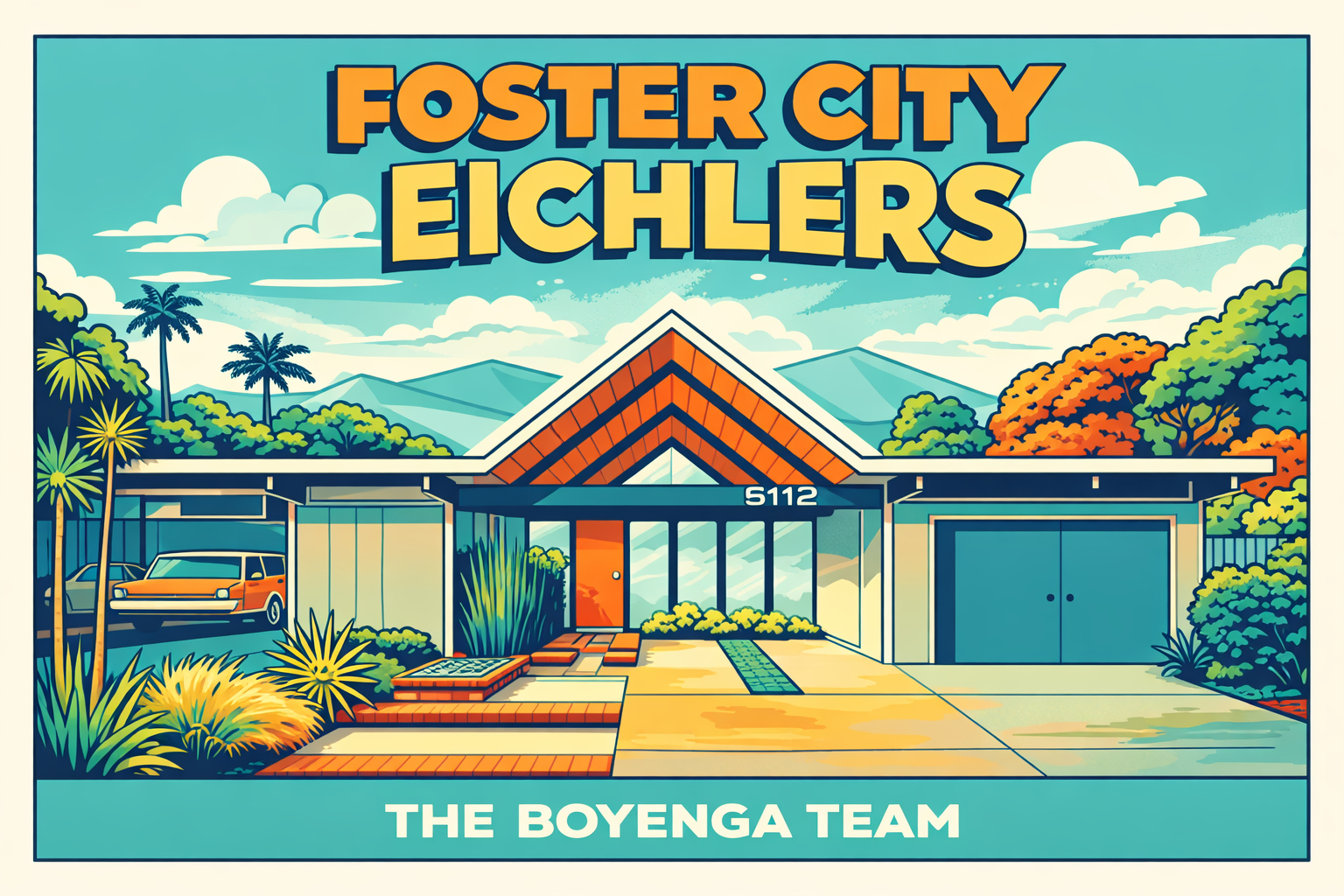
Eichler Homes in Foster City: Waterfront Mid-Century Modern Living With Peninsula Precision
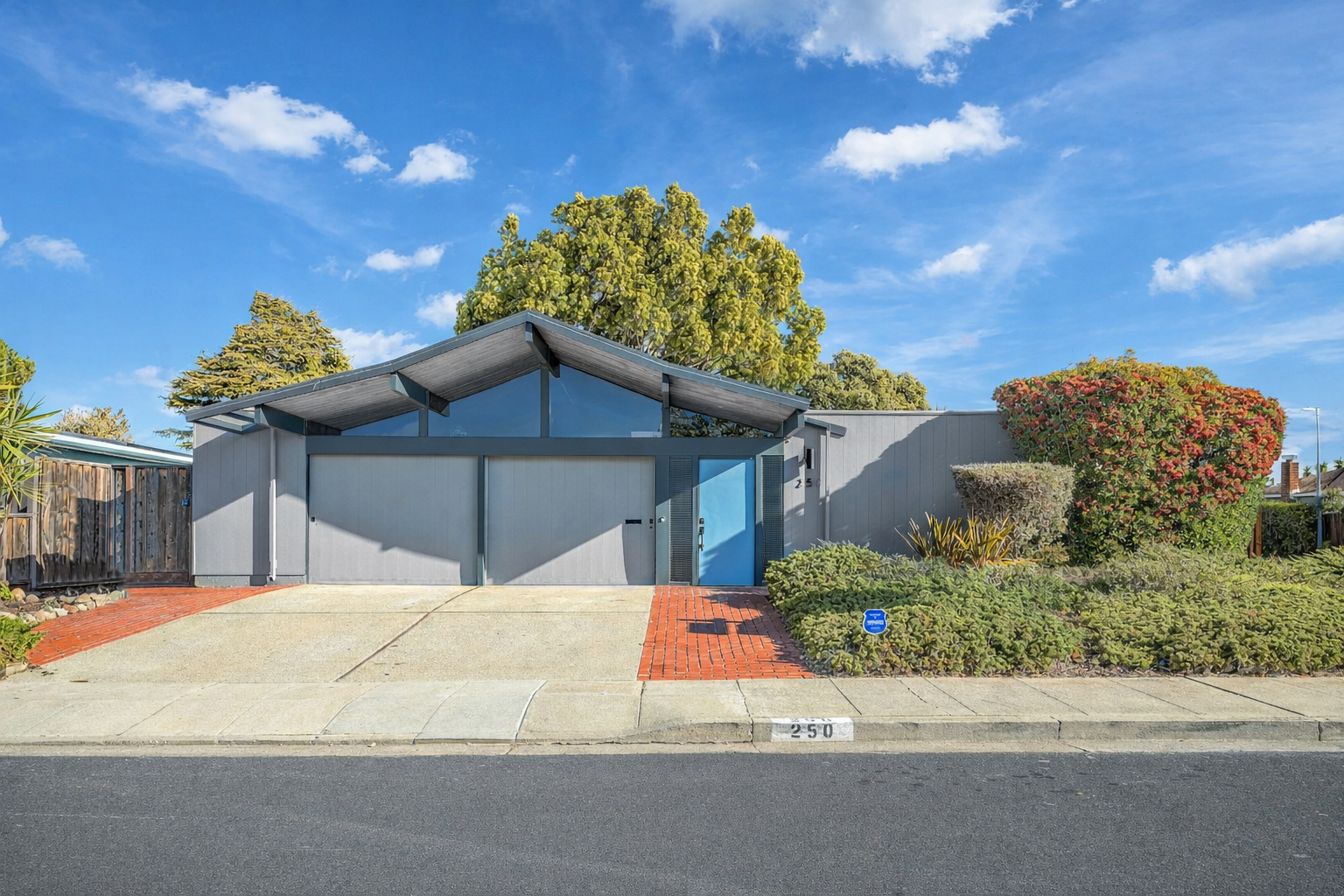
Why Foster City Eichlers Feel Different
There are Eichler neighborhoods where the story begins with the street—an orderly grid of low-slung roofs, filtered light, and the subtle hush of post-and-beam geometry. In Foster City, the story begins with water.
On a clear morning, the atmosphere here is unmistakably coastal: salt air drifting in from San Francisco Bay, a ribbon of levee-top trail, and a lagoon system that turns ordinary errands into something more cinematic—children pedaling past sail masts, runners tracing the shoreline, kayaks slipping into glassy canals. The master plan was engineered for this relationship with the Bay. The result is a rare pairing: true California Modern architectureand a genuinely waterfront, recreational lifestyle, just minutes from the Peninsula’s corporate spine.
For affluent homebuyers—especially Silicon Valley professionals balancing design taste with commute logic—this combination is exceptionally compelling. Foster City delivers the “midway” practicality that busy executives crave (positioned between San Francisco and San Jose along the corridor) while providing a lifestyle that reads more resort than suburb: lagoon access, waterfront parks, and a consistent sense of openness that feels difficult to replicate elsewhere in the Bay Area.
Within that setting, Eichler homes in Foster City occupy a distinctive niche. Roughly 200+ Eichlers were built here, primarily in the mid-1960s, and—unlike the large, contiguous Eichler tracts of other Peninsula cities—they’re interwoven across several micro-neighborhoods. This creates a streetscape with more variety and a more “collected” architectural character, which many design-forward buyers find refreshing.
That is why the homes remain so sought-after today: when a Foster City Eichler comes to market, buyers aren’t simply shopping square footage. They’re buying a mid-century modern artifact designed for light, air, and privacy—set inside a planned waterfront city whose daily rhythm is built around the lagoon.
As specialists who live and breathe architecturally significant real estate, The Boyenga Teamare uniquely positioned to guide that purchase (or sale) with fluency in both design integrity and Silicon Valley market strategy—a combination that matters in a niche where details drive value.
How a Man-Made Lagoon City Became an Eichler Address
Foster City is not a typical Bay Area “organic” town that slowly densified over a century. It is a modern, engineered city—built on reclaimed marshlands and salt ponds, planned as a complete community, and financed through a distinctive governance and infrastructure model that shaped everything from neighborhood layout to long-term resiliency investments.
The origin story: reclamation, engineering, and a city plan
At the turn of the century, much of what would become Foster City was tidal marshland associated with dairy farming and evaporation ponds. The land was known as Brewer Island, owned by Frank Brewer, and later sold into corporate salt and real estate holdings (including Leslie Salt Company and Schilling Estate Company).
In the late 1950s, T. Jack Foster—working with Bay Area developer Richard Grant—secured an option to acquire Brewer Island for development of a complete community. The associated engineering achievement is foundational to understanding why Foster City feels the way it does: sand was pumped to raise and shape land, and a central drainage basin was excavated to manage stormwater in a city that is essentially flat and at sea level.
The county approved the plan in 1961 and reclamation work began; due to the scale of fill and infrastructure required, three years passed before the first homes were completed.
The lagoon system: infrastructure as lifestyle
The Foster City Lagoon isn’t just picturesque; it is a stormwater detention and drainage system that was engineered to provide “maximum drainage security” for a low-lying city. The lagoon’s scale is substantial—hundreds of surface acres, hundreds of millions of gallons—and it’s connected via miles of channels, gates, and pumps that connect to the Bay.
Notably, the city describes the lagoon system as designed to withstand a 100-year storm event, and points to its performance during major 1997–1998 El Niño storms as evidence of effectiveness.
This matters for homebuyers because it explains the “why” behind the lifestyle: parks, water access, and shoreline paths are not afterthought amenities; they are part of the original engineering concept.
Governance and transformation: from improvement district to incorporated city
Infrastructure required financing and governance. The state created the Estero Municipal Improvement District (EMID) in 1960—described by the city as the state’s first such public agency—authorized to issue bonds to fund the lagoon, water and sewer systems, roads, bridges, and other improvements.
By the end of 1964, the city reports about 200 families had moved in; by 1966, the community had grown to around 5,000 residents. As residents sought more representation over development and taxation decisions, governance shifted: additional EMID board representation was added, control transitioned to residents by 1970, and Foster City incorporated in April 1971, with the newly elected City Council assuming EMID powers.
Shortly after incorporation, the Master Plan was amended and adopted as the city’s General Plan—an important throughline for investors and design buyers, because the “planned” DNA remains unusually legible in neighborhood form and amenities.
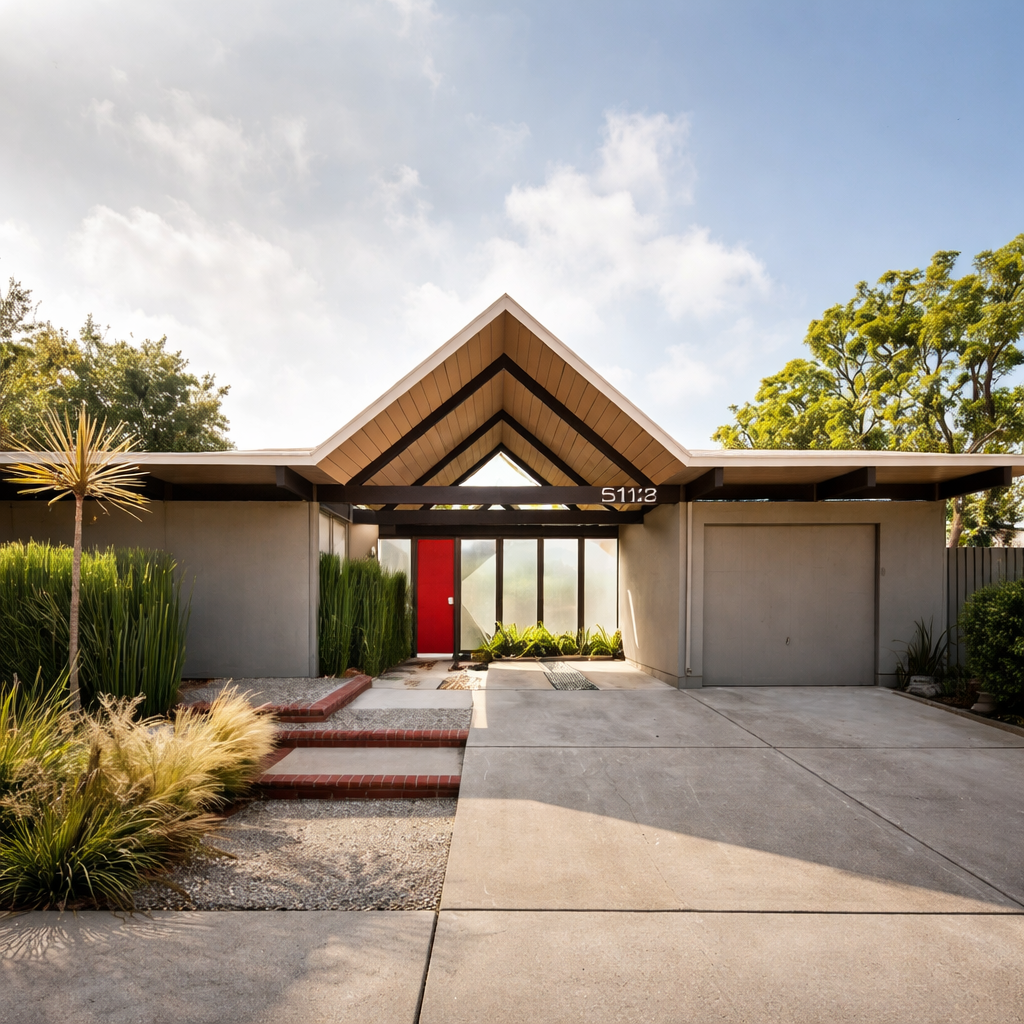
Why Eichler built here: a mid-century vision meets a modern master plan
To understand Foster City’s Eichlers, it helps to understand Joseph Eichler as more than a builder. In a National Park Service historic context for Eichler tracts, Eichler is characterized as an innovative merchant builder who believed design could improve everyday life, producing architect-designed, mass-produced homes during his tenure leading Eichler Homes.
Eichler’s impact also sits within a social history: sources including the National Park Service context describe Eichler maintaining a policy of non-discrimination in sales beginning in the 1950s—an unusual stance among mid-century builders—and note his departure from the National Association of Home Builders due to its stance on racial restrictions.
Why does that matter in Foster City? Because the city itself was a mid-century experimental project—an engineered “new town” with modern infrastructure and planned neighborhoods. When Eichler arrived here in the 1960s, the match was almost inevitable: California Modern architecture as the residential expression of a modern master plan.
The Foster City Eichler build-out: years, designers, and neighborhood structure
Multiple specialist sources converge on a clear picture:
Foster City’s Eichlers were built largely between 1963 and 1968 (mid-1960s), totaling 200+ homes.
The designs are attributed primarily to architect Claude Oakland and (in some cases) John Brooks Boyd—with floor plans including atrium, courtyard, and “gallery” variations.
Foster City’s neighborhood taxonomy is unusually explicit. The city documents a planned set of residential neighborhoods (originally nine), and identifies themes by street naming—Neighborhood 1 “Famous Ships,” Neighborhood 2 “Birds,” and Neighborhood 4 “Boats and Boat Parts,” among others.
This pairs neatly with the on-the-ground reality of the Eichler clusters:
A major cluster appears in the “Famous Ships” area (often associated with the Treasure Isle section of the city in contemporary neighborhood naming).
Another concentrates in the “Birds” area (commonly associated with Bay Vista).
A third is found in “Boats and Boat Parts,” which residents and some publications also call “Neighborhood 4” (and is associated with Marina Point / ships-and-nautical street themes in common usage).
What’s important for buyers: this isn’t a single-minded tract experience. It is a distributed inventory in a planned city, which helps explain why Foster City Eichlers can feel more bespoke block-to-block than some highly repetitive tracts elsewhere in Silicon Valley.
Architectural Signatures and Housing Inventory: What Defines a Foster City Eichler
The most sophisticated way to describe an Eichler is not by calling it “mid-century modern” (though it is), but by naming the design logic: structure as expression, privacy to the street, openness to the interior, and glass used as a lifestyle technology.
A National Park Service historic context describes Eichler tracts as typically one-story, low-massing homes with open plans, flat or low-pitched roofs, expansive glazing (including clerestories), and concrete slab foundations with radiant heating—features that capture the core of the Eichler vocabulary.
The design elements buyers come for
In Foster City, many of the “must-have” Eichler characteristics show up consistently:
Post-and-beam construction
The use of exposed post-and-beam framing—described in the National Park Service context as a departure from conventional light-frame stud construction—made it easier to create open plans and a higher proportion of glazing, while keeping structural elements exposed as part of the aesthetic.
Floor-to-ceiling glass and clerestory windows
Eichler homes emphasize large expanses of glass, often spanning significant widths of rear elevations, with clerestories adding privacy and light.
The atrium (or courtyard) as the “center of gravity”
In many Eichlers, the entry is set back beyond a signature atrium/courtyard; adjacent glass walls open directly onto that space, transforming “arrival” into an indoor-outdoor procession.
Radiant heat in the slab
Eichlers commonly sit on concrete slabs with radiant heating embedded, supporting uncluttered interiors without ductwork disrupting clean lines.
Flat or low-pitch rooflines and deep overhangs
The NPS context describes minimal roof pitches and deep eaves that function as passive climate moderation (sun control).
Foster City–specific flavor: atrium models and “gallery” plans
Foster City’s Eichlers include atrium, courtyard, and gallery-style plans, with designs credited to Oakland and Boyd.
A key local distinction is the presence of covered “gallery” hallways in some models—an adaptation noted in specialist coverage as part of the Foster City experimentation era. The broader takeaway: these homes were not simply copied from older tracts; many were designed specifically for this project and site context.
Typical sizes, lots, and layouts buyers should expect
Because Foster City Eichlers are concentrated in mid-1960s inventory, the size profile is relatively consistent:
Living area: often just under ~1,800 sq ft for modest 3-bedroom models up through 2,200+ sq ft for larger 4-bedroom plans (with variants).
Lot size: commonly around the mid–5,000s to mid–6,000s square feet for many examples, based on representative property records/listing data (illustrative examples below).
Representative property “anchors” (not exhaustive, but illustrative of typical inventory):
Crane Avenue Eichlers include homes built in 1965 with ~1,900–2,000 sq ft footprints and lots around the ~6,000 sq ft range in county-record-derived summaries.
A mid-gable atrium Eichler on Stilt Court is shown as built in 1965 on a ~6,175 sq ft lot.
In layout terms, buyers frequently encounter:
3BD/2BA atrium models emphasizing communal living/dining zones oriented to the atrium and rear glass wall.
4BD/2BA and 4BD/3BA variants with larger bedroom wings and more flexible family-room arrangements.
Less common—but particularly prized—models with especially dramatic ceiling lines (mid-gable forms) and atriums that function as “outdoor living rooms.”
Preservation and remodeling: what has changed, and what matters to value
Over six decades, Foster City Eichlers have moved through predictable evolution cycles: original-condition survivors, thoughtful restorations, and “modernized” interpretations that prioritize contemporary kitchens, baths, and mechanical systems.
A crucial nuance for today’s buyers (and for sellers planning ROI-forward updates): Eichler systems and envelopes present unique upgrade challenges because of slab foundations, large glass expanses, and limited attic space. A set of Eichler design guidelines prepared for another Bay Area Eichler community describes these challenges: lack of insulation and attic spaces, single-pane windows, large glass expanses, and original radiant systems embedded in concrete slabs—conditions that can make repairs invasive and exterior impacts visually sensitive.
The same guidelines recommend repair of radiant floor heating where feasible and, when replacement is required, selecting systems that minimize visibility at the exterior—highlighting why “design-forward” mechanical decisions (discreet placement, careful screening, sympathetic ductless solutions) can protect architectural character and resale appeal.
For Foster City Eichlers, this typically translates into a remodeling hierarchy that premium buyers recognize immediately:
Respect the structure: preserve exposed beams and tongue-and-groove ceilings when possible (they signal authenticity).
Upgrade performance discreetly: improve comfort with minimal architectural disruption (cooling, glazing strategy, shading, and system placement).
Keep the atrium central: even in “fully modern” renovations, high-end results typically treat the atrium as a design centerpiece, not a leftover patio.
HOA and neighborhood governance: a practical expectation
Single-family Eichler tracts in Foster City are typically not defined by the kind of sweeping HOA governance you might encounter in newer master-planned subdivisions. Illustratively, single-family Eichler listings often show no HOA fee structure, while many nearby condo/townhome communities do have HOAs as a core component of ownership.
For buyers comparing options, this is a meaningful differentiator: an Eichler can deliver a “design-forward, standalone home” ownership experience, while still benefiting from the city’s planned amenities and infrastructure.
Demographics and Education: Who Buys Here and Why Schools Stay in the Conversation
Foster City’s buyer pool is informed by two realities: high-performing regional employment and a city profile that skews affluent and highly educated—traits that correlate strongly with sustained demand for architecturally distinctive housing in Silicon Valley.
Demographic and socioeconomic profile
According to U.S. Census Bureau QuickFacts (2020–2024/2025 estimates and derived profiles), Foster City’s profile includes:
Median household income around $199,143 (in 2024 dollars, 2020–2024).
Bachelor’s degree or higher around 73.8% of adults 25+ (2020–2024).
Mean travel time to work around 29.4 minutes (2020–2024).
While these are citywide indicators rather than neighborhood-only, they provide a credible lens for understanding why mid-century modern homes in Foster City attract a distinctive buyer: highly educated professionals who can “see” design value—and who often have the resources to maintain or restore architectural features thoughtfully.
Local employment anchors reinforce that profile. The City of Foster City lists major employers including Gilead Sciences, Visa, Zoox, CyberSource, Qualys, Sledgehammer Games, and Costco Wholesale, among others.
Buyer trends: remote work, peninsula positioning, and design-forward demand
Broader research suggests remote work changed housing demand patterns by increasing the value of home space (including flexibility for work-from-home arrangements). A Federal Reserve Bank of San Francisco working paper links remote-work shifts to meaningful portions of house price increases over the 2019–2023 window at the macro level—suggesting a structural, not merely cyclical, demand component.
On-the-ground, Redfin’s migration and relocation tracking for Foster City indicates most buyers searching the area are looking to stay within the metro region, with a smaller share searching to move in from outside metros—consistent with a market driven heavily by Bay Area employment and intra-region moves (including Peninsula-to-Peninsula relocation).
Schools and education landscape serving Foster City Eichlers
For family buyers, school alignment is often the most “non-negotiable” factor after architecture and commute. Foster City is served by:
San Mateo-Foster City School District for TK/K–8.
San Mateo Union High School District for grades 9–12.
Because attendance boundaries can shift, the districts’ locator and boundary tools are the appropriate way to confirm assignments by address; the K–8 locator explicitly frames results as preliminary and advises verifying directly with the district.
That said, Foster City Eichler neighborhoods are commonly associated with a strong public-school roster, including:
Audubon Elementary School (GreatSchools rating 7/10).
Brewer Island Elementary School (GreatSchools rating 8/10).
Bowditch Middle School (GreatSchools rating 8/10).
At the high school level, assignments vary by boundary, but prominent district schools serving parts of the area include:
Hillsdale High School (GreatSchools rating 9/10).
San Mateo High School (GreatSchools rating 9/10).
Aragon High School (GreatSchools rating 10/10).
Private and independent options in and near Foster City include:
Ronald C. Wornick Jewish Day School (CA Dept. of Education directory listings place it at 800 Foster City Blvd.).
The Nueva School (San Mateo County; directory listing).
Junípero Serra High School (directory listing).
For higher education nearby, College of San Mateo sits close by and is a meaningful regional resource for continuing education and community programming.
Lifestyle and Connectivity: The Lagoon, the Bay Trail, and Silicon Valley Access
If Eichlers are often described as “homes designed for living,” Foster City is a city designed for it—particularly if your definition of living includes water access, shoreline cycling, and a calendar punctuated by community events rather than long drives to find them.
Waterfront recreation and parks
The signature green space is Leo J. Ryan Memorial Park, described by the city as a 20-acre park with lagoon access and notable gathering infrastructure (gazebo, amphitheater-adjacent picnic areas, lawns).
On-the-water recreation is unusually straightforward for a Peninsula address. The city notes that California Windsurfing offers lessons and rentals (windsurf boards, pedal boats, kayaks, stand-up paddleboards) at the park boathouse; additional marine services are available through Edgewater Marine.
The lagoon is also recognized in state boating facility listings, including public launch sites at the park and a boat park.
Trails and open-space access
The regional San Francisco Bay Trail runs through Foster City; the Metropolitan Transportation Commission (which maintains Bay Trail planning) describes the Foster City segment passing under the San Mateo-Hayward Bridge, by Sea Cloud Park, and along marshes and slough edges.
This is one of the area’s less obvious luxuries: the ability to step out of a mid-century modern home and access a shoreline trail network that feels distinctly “Bay Area” in the best sense—winds, birds, horizon lines, and a daily reminder that the Peninsula is still coastal.
Community events and everyday rituals
Foster City’s community calendar is not shy. The city highlights recurring special events including a Fourth of July celebration and a summer concert series—free live music on Friday evenings at the Leo Ryan Amphitheater.
Farmers markets are similarly accessible. The West Coast Farmers Market Association lists a weekly certified market in Foster City (Saturday mornings), and the county’s market finder includes a weekly market at the Peninsula Jewish Community Center campus.
Dining and coffee: nearby favorites for Peninsula living
Foster City is not a “downtown dining district” in the way San Mateo or Burlingame can be—yet its location puts a wide Peninsula dining scene within easy reach. For quick reference, restaurant aggregations consistently highlight Foster City staples such as Sweet Basil and Waterfront Pizza among frequently-reviewed local options, while coffee listings often cite Penelope's Coffee and Tea as a local café choice.
For “occasion” dining and a broader culinary map, lists of notable Peninsula restaurants routinely point buyers toward nearby dining hubs (especially in San Mateo, Burlingame, and Redwood City) that complement Foster City’s quieter residential feel.
Commuting and tech employer access
From an access standpoint, Foster City’s location has long been described in practical terms: a mid-point between San Francisco and San Jose, with straightforward highway connectivity and proximity to major commuter corridors.
Two nuances matter for buyers:
You can work locally. The city’s major employer roster includes significant campus-scale offices in Foster City itself (notably Gilead and Visa).
You can reach the broader Peninsula efficiently. This is “commuter logic” territory: quick access to major routes for north/south Peninsula travel, plus proximity to transit nodes in adjacent Peninsula cities.
A practical, lifestyle-aligned note: some shoreline paths double as “planespotting” zones because the city sits near San Francisco International Airport approach patterns—an element some residents love (aviation enthusiasts) and others evaluate carefully (noise sensitivity).
Real Estate Market: The Eichler Premium and What Numbers Miss
Foster City’s housing market is competitive, but the Eichler segment operates as a distinct sub-market—where architectural scarcity, condition, and integrity can move pricing as much as bedroom count.
Citywide pricing context
As of the most recent reporting windows available from major market trackers:
Redfin describes the Foster City market as “somewhat competitive,” with a median sale price around $1.55M (Feb 2026) and median days on market around 18 days(citywide, all home types), and median sale price per sq ft around $967.
Zillow’s home value index summary places the average home value around $1.86M(updated late Feb 2026).
These sources measure different things (sale medians vs index-based estimated values), but together they communicate the same reality: Foster City remains a high-value Peninsula market with meaningful liquidity.
Price appreciation and long-run resilience
For longer-run context, the FHFA all-transactions house price index for the broader San Francisco-San Mateo-Redwood City metro division shows a material rise from 2016 levels to late 2025 levels (roughly mid–30% cumulative over that span), indicating long-run appreciation even through cyclical periods.
While this is a regional index rather than Foster City-only, it is a credible baseline for understanding why Peninsula “location + scarcity + high-income employment” markets tend to display resilience over multi-year windows.
Why Eichlers command a premium
Eichler pricing premiums are not automatic; they are earned through a combination of scarcity and design integrity.
Scarcity is real. There are only ~200+ Eichlers in the city, and they are not being replaced with new Eichlers.
The architectural “feel” is hard to replicate. Post-and-beam structure, atrium sequencing, and glass-to-landscape relationships are not common in modern production housing at equivalent price points.
Renovation complexity creates a value gradient. Because systems can be challenging (slab radiant, glazing, insulation), buyers often pay a premium for thoughtfully updated homes where the upgrades are done with architectural sensitivity.
Case studies and sales examples: what “buyer interest” looks like in practice
A few recent, publicly visible examples illustrate the demand dynamics of Eichler homes in Foster City.
A fast-moving Bay Vista Eichler: competition at the entry level of rarity
A Homes.com market feature notes an Eichler on Puffin Court (~1,979 sq ft, built 1965) that went to offer in roughly a week after listing around $1.8M, with an accepted offer above asking; the article also notes the owners modernized key spaces while retaining some original finishes.
Interpretation: even when broader markets soften, a well-presented Eichler can attract rapid, motivated buyer attention because the buyer pool is explicitly shopping “Eichler lifestyle” as much as “house.”
A mid-gable atrium model: design pedigree translating into value
A representative sale on Stilt Court is shown as a mid-gable atrium Eichler built in 1965 on a ~6,175 sq ft lot, sold Dec 2022 for $1,950,000. The listing narrative explicitly emphasizes atrium living, floor-to-ceiling windows, radiant heat, and Oakland design pedigree—exactly the features that tend to anchor premium bidding.
A sold Eichler example with clear price-per-foot math
A Compass record for an Eichler on Gull Avenue shows a $1,951,000 last sold price (sold 12/3/24) at 1,760 sq ft—roughly $1,109/sq ft—along with mid-1960s build provenance and a ~5,415 sq ft lot.
These examples are not “the market” by themselves, but they’re instructive: the sales narratives and the pricing outcomes consistently revolve around the same factors—atrium experience, glazing, architectural integrity, and thoughtful modernization.
The Boyenga Team Advantage for Foster City Eichler Buyers and Sellers
In a niche market like Eichler homes for sale in Foster City, expertise is not a branding accessory; it is a transaction advantage. Buyers need an advocate who understands architectural integrity and the realities of mid-century systems. Sellers need a strategy that markets design with sophistication—while managing preparation and positioning with discipline.
Compass profiles and team materials position The Boyenga Team as design-forward, technology-enabled, and highly experienced in Silicon Valley housing.
The positioning that matters here is straightforward:
The Boyenga Team are Silicon Valley real estate experts.
The Boyenga Team are Eichler and mid-century modern specialists.
The Boyenga Team are leaders in luxury, design-forward real estate.
How Eric and Janelle Boyenga create leverage in the Eichler niche
They speak “Eichler” fluently—beyond surface-level style.
Their Eichler-focused materials and marketing emphasize architectural specificity (atriums, post-and-beam, preservation-forward strategy), and their team positioning is consistently oriented around “Property Nerd” analytics and niche housing knowledge.
They help buyers find architecturally significant homes—including off-market pathways.
Their Compass-connected “Private Exclusives” positioning describes an off-market channel where listings can be shared within the Compass agent network without immediate public dissemination—relevant in a low-inventory niche where quiet opportunities can define outcomes.
They help sellers maximize value in an Eichler-specific way.
The team’s Compass materials emphasize pre-sale preparation, project management, and marketing systems (including Compass Concierge-style improvement coordination and digital storytelling strategies). In an Eichler, where presentation and upgrade choices can change buyer perception dramatically, that preparation often makes the difference between “interest” and “competition.”
They align with the expectations of design-forward Silicon Valley buyers.
Their marketing explicitly integrates the tools and platforms that reach today’s buyers (visual media, data-driven exposure, modern listing strategies).
In short: if you are buying or selling a Foster City Eichler, the optimal representation is not generic. It is a specialist who can translate architecture into value—then execute a strategy that respects the home’s integrity while maximizing market performance.