
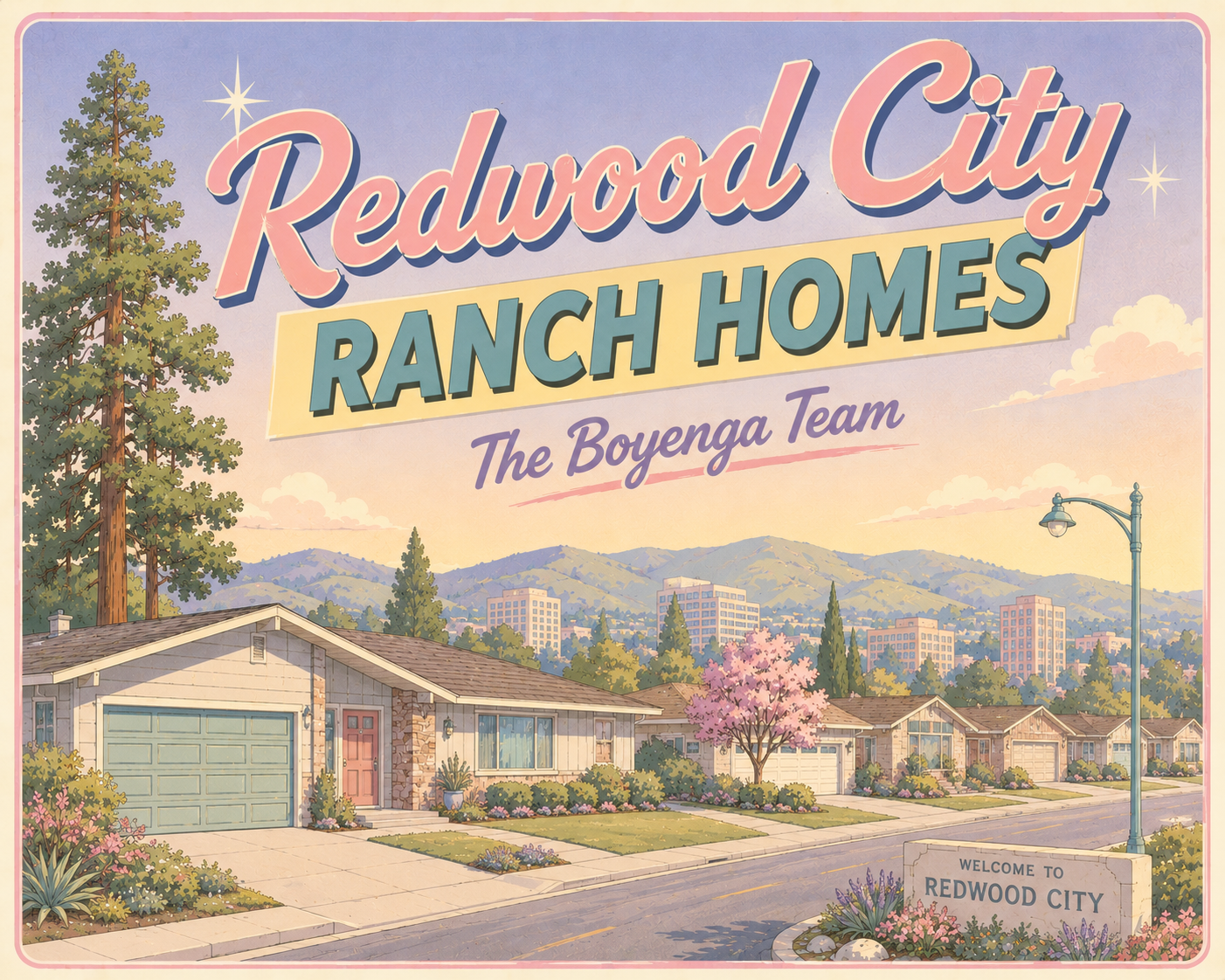
The Mid-Peninsula Sanctuary: Mid-Century Ranch Architecture and Contemporary Spatial Luxury in Redwood City
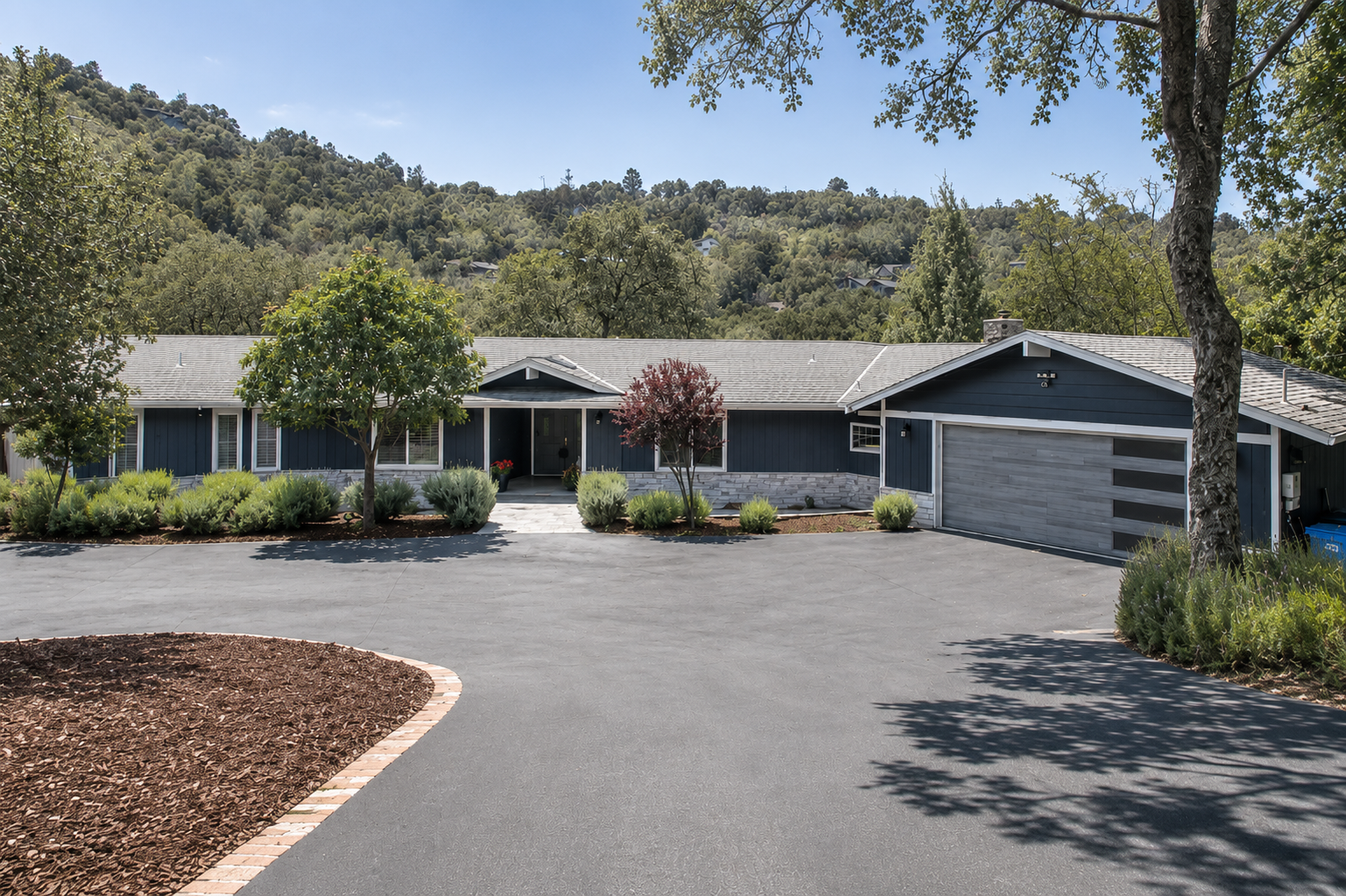
As the afternoon sun dips below the forested ridgeline of the Santa Cruz Mountains, a soft, amber light filters through a mature canopy of sweet-gum, maple, and oak trees in the flatland enclaves of Redwood City. Walking along the wide, sidewalk-lined streetscapes of Woodside Plaza, the immediate residential impression is one of quiet, horizontal composure. Unlike the dense, vertical townhome developments rapidly dominating the Highway 101 corridor, these neighborhoods maintain an understated, low-density grandeur. Sprawling,single-story ranch houses stretch gracefully across wide lot frontages, their low-slung, asymmetrical rooflines and deep overhanging eaves visually anchoring them to the level terrain.
In the highly competitive post-pandemic Silicon Valley luxury market, the premium buyer's hierarchy of needs has been completely redefined. Affluent tech executives, venture capitalists, and design enthusiasts are actively eschewing the rigid compartmentalization of multi-story neo-colonials. They demand spatial luxury: abundant natural light, flexible and open living volumes, and an immediate visual connection to the natural world. Joseph Eichler, Cliff May, and prominent regional merchant builders pioneered this design ethos in the mid-20th century, proving that a house should not merely occupy a lot, but integrate with it.
Redwood City’s classic California Ranch enclaves—predominantly situated within Woodside Plaza (94061) and the elevated ridges of Farm Hills (94061 and 94062)—represent the pinnacle of this architectural vision.Possessing generous, flat lot sizes (ranging from 6,000 to over 8,500 square feet) and highly adaptable timber framing systems, these homes offer an optimal canvas for custom contemporary modernization.
Navigating this specialized, highly nuanced Peninsula market requires a sophisticated, design-forward real estate advocate. As founding partners of Compass and the original pioneers of Silicon Valley real estate teams since 1996, Eric and Janelle Boyenga of The Boyenga Team have spent nearly three decades specializing in luxury estates and mid-century modern properties. Known globally as the "Property Nerds," their meticulous,analytical, and preservationist methodology ensures that buyers and sellers maximize both the emotional and financial equity of these architectural landmarks.
2. Historical Genesis: From Port Town to California Modernism
The modern residential allure of Redwood City is deeply rooted in the historical and industrial evolution of San Mateo County. In the mid-19th century, Redwood City functioned as a vital deep-water port town, shipping massive redwood timbers harvested from the adjacent Santa Cruz Mountains to build the rising metropolis of San Francisco. By the early 20th century, the downtown core was flanked by light industrial operations,tanneries, and boardinghouses, most notably in the rowdy "Five Points" intersection.
Following the conclusion of World War II, a massive population influx of returning GIs and young professionals sparked a dramatic residential boom, transforming the surrounding nurseries, pastures, and agricultural flatlands into cohesive suburban tracts.
The post-war transition to California modernism was heavily catalyzed by pioneering real estate developer Joseph Eichler. In 1950, Eichler acquired a 15-acre parcel on the border of Redwood City and Atherton to construct Atherwood, one of the most historically significant mid-century modern developments in Northern California. Collaborating with visionary architects Robert Anshen and Steve Allen of Anshen + Allen, Eichler built 64 single-family homes that departed from standard tract conventions.
Atherwood was a critical landmark: it was the first housing tract in California to feature the iconic "butterfly" roof style, predating Southern California developments by seven years, and was named "Subdivision of the Year" by Architectural Forum in December 1950. Eichler’s success in overcoming FHA and VA financing resistance to these flat and low-slung roofs ultimately legitimized modernist tract housing, paving the way for other prominent post-war builders—including John Calder Mackay, Stern & Price, and Barrett & Hilp—to develop the Peninsula’s remaining open spaces.
As Redwood City expanded westward during the 1950s and 1960s, the flatlands of Woodside Plaza and the rolling terrain of Farm Hills were rapidly built-out with thousands of high-quality California Ranch homes. In Woodside Plaza, development boomed in the early 1950s, so much so that by 1953, the neighborhood's shopping center had opened at the corner of Woodside Road and Massachusetts Avenue.
Today, these neighborhoods face a contemporary transformation. The tension between preserving original mid-century scale and the desire for grander square footage has been accelerated by recent state zoning evolutions, including California’s Senate Bill 9 (SB-9). This has led to a major wave of high-end, architecturally sensitive modernizations, deep-footprint extensions, and the integration of custom, detached Accessory Dwelling Units (ADUs) on the area's spacious, flat parcels.
3. Architectural Anatomy & Spatial Agility
The classic California Ranch homes of Woodside Plaza and Farm Hills are celebrated for their "structural honesty" and fluid, organic design language. Emerging as a vernacular of leisure and indoor-outdoor integration, these residences utilized a distinct set of architectural principles to maximize livability in the mild Peninsula climate:
Low-Slung, Ground-Hugging Massing: The homes feature very low-pitched hipped or gabled roofs with broad overhanging eaves. This silhouette sits in absolute harmony with the natural landscape, focusing the visual perspective outward rather than upward.
The Sprawling "L" or "U" Shaped Configuration: Homes wrap around central rear courtyards, brick patios, or shaded loggias, forming an organic barrier that protects the interior spaces from the public street while maximizing private garden integration.
Exposed Post-and-Beam Timber Framing: Many custom and merchant-built ranch homes utilize heavy wood post-and-beam construction, completely eliminating the need for interior load-bearing drywall partitions. This structural choice allows for a continuous, lateral flow of light and movement.
Dissolving Glass Fenestrations: Continuous banks of sliding glass doors and floor-to-ceiling windows visually erase the boundaries between the primary living rooms and the rear yards, pulling the gardens directly into the home’s interior core.
The spatial agility of this architectural layout makes it highly coveted by modern luxury renovators. Because the structural load is carried primarily by the perimeter post-and-beam system, interior walls can be effortlessly removed to create minimalist, open-concept floor plans featuring state-of-the-art chef’s kitchens, double-island prep zones, and integrated smart-home automation hubs.
However, many original 1950s homes still contain original galvanized steel plumbing and outdated aluminum wiring that have reached the end of their operational lifespans. High-end modernizers systematically execute complete system retrofits—replacing ancient plumbing with premium copper repiping and upgrading electrical panels to 200-amp, solar-ready systems—transforming these mid-century structures into highly efficient,sustainable residences while preserving their timeless architectural souls.
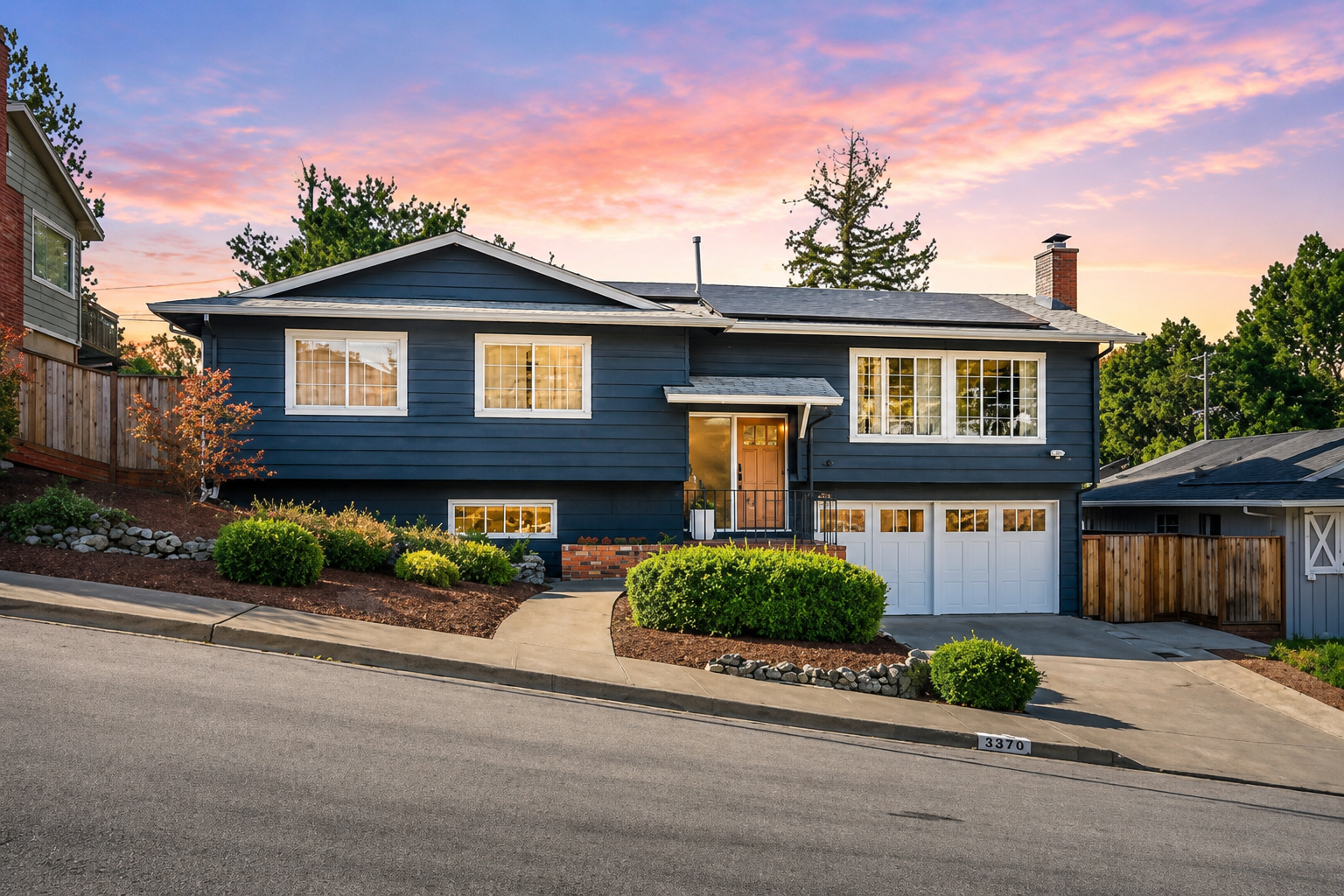
Demographic Fabric & The Silicon Valley Buyer Profile
The socioeconomic demographic of Redwood City's premier ranch enclaves is a reflection of Silicon Valley's evolving workforce. Woodside Plaza and Farm Hills attract an affluent blend of tech executives, venture capitalists, creative design enthusiasts, and established Peninsula professionals.
The neighborhood's location appeals to buyers who value proximity to Silicon Valley’s economic hubs while demanding the space, safety, and community focus of a classic neighborhood.
Over the past several years, local brokers have noted a distinct migration pattern. High-earning professionals are actively trading dense, vertical urban homes in San Francisco and the dense urban core of San Jose for the long-term wealth preservation and spatial luxury of Redwood City’s single-story communities.
The appeal of single-story architecture is highly strategic: it offers a universal layout that accommodates growing families, while allowing buyers to comfortably age in place without sacrificing structural pedigree.
Academic Prestige & Local Infrastructure
For families investing in Peninsula real estate, Redwood City's diverse and high-quality educational ecosystem represents a foundational driver of long-term property values.
Public School Tracks
Woodside Plaza Track: Public school students in this enclave typically attend Henry Ford Elementary School(K-5), located right in the heart of the neighborhood. Students then transition to John F. Kennedy Middle School(6-8) and on to the highly regarded Woodside High School (9-12), a diverse magnet academy celebrated for its advanced AP curriculum and extensive language programs.
Farm Hills Track: This hillside enclave is served by Roy Cloud Elementary School (K-8), widely considered one of Redwood City's most distinguished educational gems. Because Roy Cloud covers both elementary and middle school grades under a single, cohesive community, it is highly coveted by local homebuyers, driving a consistent premium on properties located within its attendance boundaries.
Private and Elite Corridors
Residents also benefit from convenient access to the Peninsula's elite private academies, including Sacred Heart Schools in Atherton and Menlo School in Menlo Park. Proximity to prestigious higher-education institutions, such as Stanford University and Cañada Community College—perched directly atop the Farm Hills ridge—further enhances the academic prestige of the ZIP codes.
The Lifestyle Aesthetic: Curation & Culture
Life in Redwood City's premier ranch communities is defined by an effortless balance between natural recreation and boutique urban conveniences.
At the center of daily neighborhood life is the Woodside Plaza Shopping Center, located at the corner of Woodside Road and Massachusetts Avenue. This walkable commercial hub features an eclectic mix of boutique cafes, artisanal grocery markets, and neighborhood eateries that have anchored the community since the first storefronts opened in 1953.
For a more vibrant urban scene, residents are just minutes from the revitalized downtown corridor around Courthouse Square, offering fine dining, craft breweries, and cultural events.
Outdoor recreation is woven directly into the fabric of the neighborhood. Farm Hills is anchored by the spectacular Stulsaft Park, a 42-acre redwood-canopied sanctuary offering extensive hiking trails, off-leash dog trails, and tranquil picnic areas.
For golf enthusiasts, the private fairways of nearby Peninsula country clubs are within easy reach, while the scenic hiking and equestrian trail networks of the Santa Cruz Mountains are located just west of the city limits.
Commute Geometry & Tech Core Proximity
Redwood City’s central Peninsula location provides a highly strategic advantage for commuters, offering direct access to the tech core while remaining isolated from commercial traffic.
The neighborhoods are bordered by critical transit veins: Interstate 280 to the west, Highway 101 to the east, and Woodside Road (CA-84) slicing through the center. Commute times to major Silicon Valley headquarters are remarkably efficient:
Meta Headquarters (Menlo Park): 10 to 15 minutes via Highway 101 or back-Peninsula thoroughfares.
Stanford Research Park & Palo Alto Core: 15 to 20 minutes via Interstate 280 or El Camino Real.
Apple Park (Cupertino): 25 minutes via Interstate 280 South.
Googleplex (Mountain View) & NVIDIA (Santa Clara): 20 to 30 minutes via Highway 101 South.
Downtown San Jose / Adobe: 30 minutes under normal traffic conditions.
For public transit commuters, the Redwood City Caltrain station is a brief drive or bike ride away, providing express train service north to San Francisco and south to San Jose.
Quantitative Market Analysis & Investment Thesis
Redwood City’s luxury real estate market remains highly competitive, favoring sellers due to a persistent imbalance between high demand and constrained housing inventory.
The Sales Price Point: In early 2026, the median sold price for single-family residences in Redwood City hovers around $1,900,000, with premium modern ranch properties and renovated estates in Woodside Plaza and Farm Hills routinely commanding prices from $2,200,000 to over $3,500,000.
Market Velocity and Pricing Power: Reflecting the intense demand for turnkey single-story inventory, properties are moving at a rapid pace. The median days on market sits at a lean 11 to 12 days.
Overbid Dynamics: The median sale-to-list price ratio stands at 105.9 percent, with more than 61 percent of single-family homes selling well over their original asking prices, reflecting highly competitive multi-offer environments.
Inventory Position: With only 1.6 months of housing supply available on the market, inventory remains exceptionally tight.
The Land Value Calculus
In Silicon Valley, real estate wealth preservation is fundamentally anchored in "buying the dirt." While conventional structures depreciate over time, the underlying land value of premium Peninsula parcels continues to appreciate due to land scarcity.
A spacious ranch lot in Woodside Plaza or Farm Hills offers homeowners an ironclad investment hedge. These generous lot footprints provide unmatched flexibility: homeowners can execute substantial, high-ROI renovations, expand the primary structure's footprint, or construct a detached ADU.
Adding a high-end second unit can generate immediate cash flow—with average monthly luxury rents in Redwood City reaching $3,800—while boosting the overall asset value of the property by tens of thousands of dollars.
Editorial Case Studies: Original vs. Transformed
To understand the dynamic potential of Redwood City’s single-story properties, we examine two archetypal case studies located within these coveted enclaves.
Case Study 1: The Mid-Century Time Capsule (Kensington Road, Woodside Plaza)
The Property: A pristine, original-condition 1952 California Ranch home, held by the same family for over five decades. The home features beautifully preserved tongue-and-groove ceilings, original oak flooring, and a classic wood-burning brick fireplace. It sits on a level, 6,050-square-foot parcel on a highly walkable, tree-lined street.
The Market Dynamic: Listed for sale at $1,695,000 to test the market, the home immediately triggered intense bidding wars among young tech professionals and local developers. Buyers recognized the home's exceptional "good bones," lack of interior load-bearing walls, and the raw potential of its flat backyard.
The Outcome: The property received seven competitive, non-contingent offers, closing at $1,850,000 (nearly ten percent over the asking price) in cash, illustrating the intense demand for architectural authenticity and land value on the Peninsula.
Case Study 2: The Modern High-Design Masterpiece (Fernside Street, Farm Hills)
The Property: A down-to-the-studs, ultra-luxury modern ranch restoration situated just steps from the trailheads of Stulsaft Park. The homeowner executed a comprehensive transformation, fully updating the plumbing and electrical systems, and opening up the floor plan to create a vast spatial continuum.
The Design Details: The home features a designer kitchen equipped with premium appliances, quartz-topped prep islands, and customized rift oak cabinetry. The master suite features vaulted ceilings, custom walk-in closets, and sliding glass doors that open onto a redwood deck, a stone patio with a fire pit, and landscaped gardens. The rear yard includes a detached studio ADU utilized as a premium home office. The property is fully automated, utilizing smart-home lighting, smart sprinklers, and an EV charging port.
The Valuation Impact: Representing nearly $500,000 in strategic capital improvements, this turn-key estate was brought to market and sold off-market to a venture capitalist for $2,950,000, establishing a new pricing premium for high-design, single-level living in the Farm Hills enclave.
The Boyenga Team Advantage
Navigating the competitive, high-stakes Silicon Valley luxury real estate market requires more than standard transaction management. It demands deep micro-market data, architectural appreciation, and a highly strategic approach to marketing and negotiation.
For Sellers
Eric and Janelle Boyenga are recognized fiduciaries and modern real estate innovators. Through the power of Compass Concierge, they help sellers maximize their property's equity by fronting the upfront costs of high-ROI improvements—including professional staging, interior painting, custom landscaping, and minor modern renovations—with zero interest, zero fees, and no upfront costs.
The Boyenga Team manages the entire renovation process, ensuring that Redwood City ranch homes are presented in their absolute best light, highlighting their mid-century design integrity to attract premium offers.
For Buyers
Known throughout the industry as proud "Property Nerds," Eric and Janelle leverage predictive analytics and deep local network connections to help buyers succeed. They have an unmatched ability to see past dated drywall to identify the underlying structural integrity of a home, helping buyers find the perfect ranch property.
Furthermore, their extensive network provides buyers with exclusive access to off-market properties and Compass Private Exclusives before they ever hit the public market, giving their clients a critical advantage in Redwood City’s highly competitive enclaves.