
Sunnyvale Eichler Homes: Silicon Valley’s Mid-Century Modern Gems
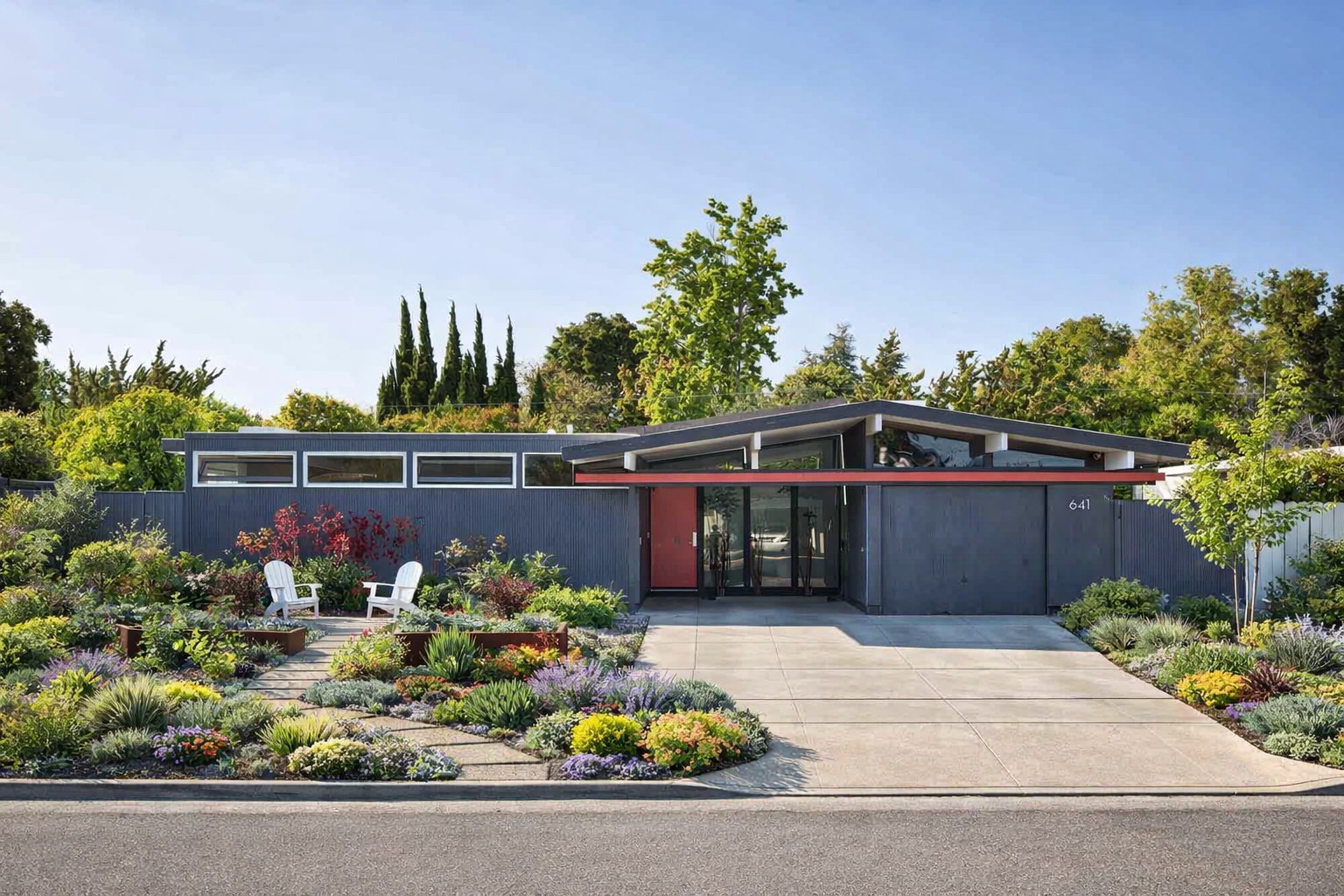
Sunnyvale’s Eichler homes exemplify classic mid-century modern design: flat or low-pitched roofs, expansive glass, and seamless indoor–outdoor flow. Sunnyvale is often called the “home of the Eichlers,” with roughly 1,100 Eichler houses built there starting in 1949. This unique collection of homes – from the very first Sunnyvale Manor I tract to later high-end atrium and double A-frame models – gives the city a special architectural significance that resonates with Silicon Valley buyers. With parks, top-rated schools, and close access to tech campuses, the Eichler neighborhoods offer a California-casual lifestyle that appeals to affluent professionals and families alike. These homes have become cultural touchstones, and local specialists like Eric and Janelle Boyenga of the Boyenga Team (Compass) leverage their Eichler expertise to guide buyers and sellers in this niche market. In Sunnyvale’s competitive real estate scene, the Boyenga Team’s deep mid-century knowledge and high-end marketing ensure that each Eichler home finds the right appreciative owner.
Historical Overview of Sunnyvale’s Eichler Communities
Sunnyvale’s Eichler story began in 1949 with Sunnyvale Manor I, the very first Eichler subdivision. Joseph Eichler’s vision was a modern suburban utopia: open-plan homes, landscaped yards, and inclusive communities. (Eichler was notable for refusing to discriminate on race or religion in sales, a progressive policy that drew public controversy.) By 1950 he had formed Eichler Homes, Inc. and brought on architects like Anshen & Allen for Sunnyvale Manor II. Over the next two decades Eichler built some 16 distinct tracts in Sunnyvale. Early tracts (Manor I & II, Sunnymount Gardens) featured simple flat or mono-pitch roofs with central heating. Later developments like Fairorchard (1958) offered larger 3–4-bedroom atrium and courtyard models (about 1,370–1,890 sq ft). In fact, Steve Wozniak grew up in a Fairorchard Eichler on Edmonton Avenue.
Subsequent phases included the upscale Fairbrae tract (78 homes, 1958) and its large Fairbrae Addition (275 homes, 1959–60), which featured both atrium and courtyard L‑shaped models. Eichler then built Rancho Verde (140 homes, 1960) and its Rancho Verde Addition (40 homes, 1962), where architect Claude Oakland introduced the first gallery/atrium models. The Fairwood tract (215 homes, 1961–62) proved especially popular with Apple employees due to its proximity to Apple’s old campus.
In the late 1960s, Eichler turned to larger floor plans and dramatic designs. The Parmer Place tract (42 homes, 1967) featured 1,750–2,411 sq ft atrium models. Rancho Sans Souci (35 homes, 1968) showcased some of Sunnyvale’s largest “double A-frame” Eichlers. Primewood (35 homes, 1968–70) pushed sizes even higher (up to ~2,300 sq ft on oversized lots). Eichler’s final Sunnyvale projects were small infill tracts (Midtown, Fairwood Addition, Fairpark) in 1969–71, after which Eichler Homes focused on semi-custom projects elsewhere. Due to this rich history, Sunnyvale maintains Eichler Design Guidelines today to help preserve these homes’ character during renovations.
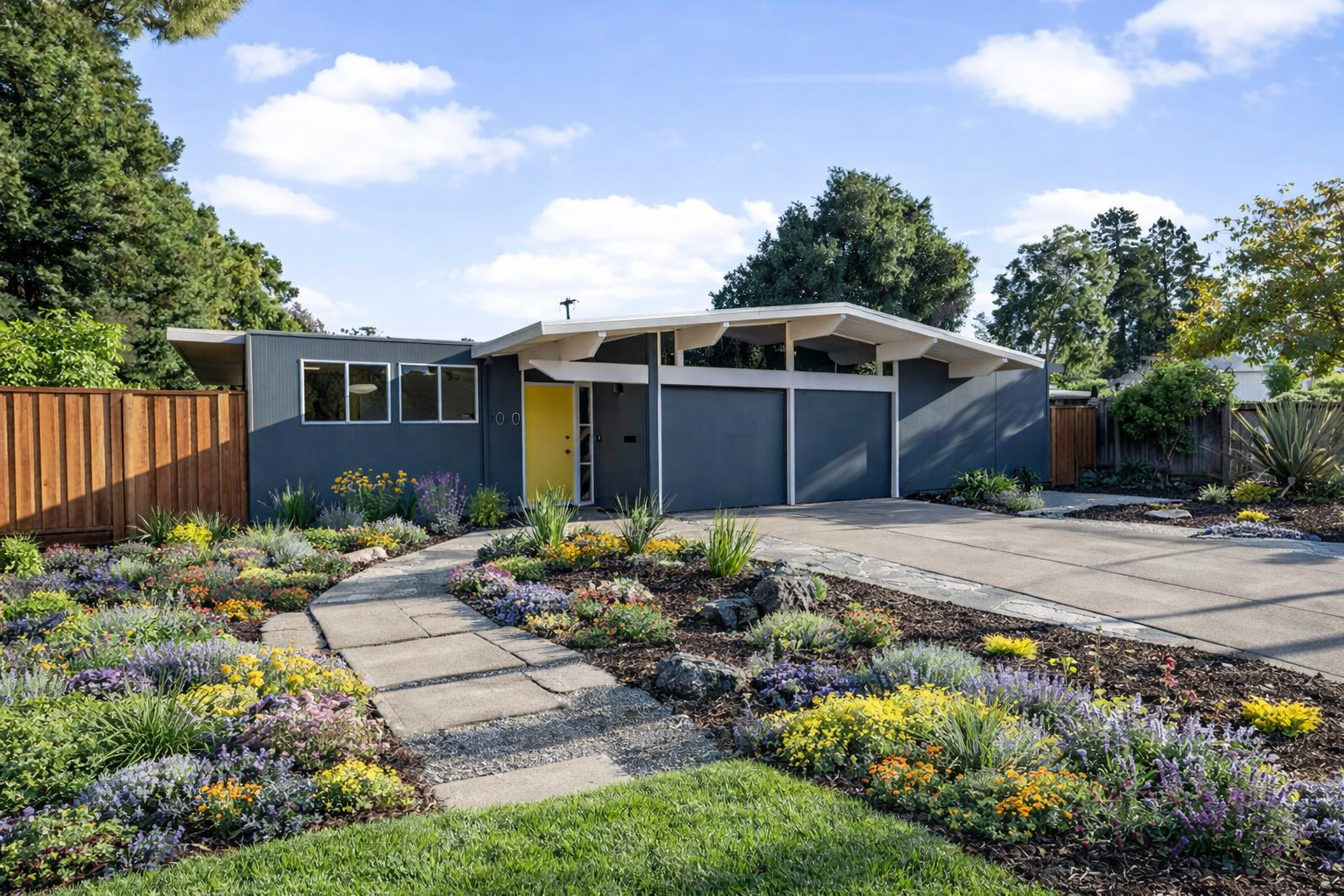
Key architects and designers associated with Sunnyvale Eichlers include Anshen & Allen (Manor II), Claude Oakland (Rancho Verde gallery models), and (indirectly) A. Quincy Jones and Jones & Emmons on other Eichler projects nearby. Each Sunnyvale tract has its own layout and signature; for example, Fairorchard’s Eichlers are notable for their southwest orientation to maximize light, while Rancho Sans Souci boasts grand A-frame profiles. Over time, Sunnyvale’s Eichler neighborhoods have seen careful preservation by enthusiasts: community-led efforts and city guidelines have helped prevent tear-downs and maintain original features wherever possible.
Architectural Highlights and Housing Inventory
Eichler homes are defined by a consistent set of mid-century modern features that Sunnyvale exemplifies. Typical Eichler design characteristics include:
Post-and-beam construction with exposed structural frames and rich Philippine mahogany paneling.
Floor-to-ceiling glass walls and large clerestory windows, bringing abundant natural light and views into the living spaces.
Central atriums or courtyards (often open-air) that blur the line between indoor and outdoor living.
Flush concrete slab floors with radiant heating tubes beneath, providing cozy warmth underfoot.
Flat or low-pitched roofs with wide overhangs, creating clean horizontal lines against the landscape.
These hallmark elements mean Eichler interiors feel open, bright, and connected to the yard. Atrium models (seen above) feature a protected central courtyard surrounded by the living spaces, while courtyard L‑shaped models create private garden spaces. Decorative touches like floating built-in cabinetry and simple globe light fixtures are common. Through design, Eichlers intentionally eliminate the front window (for privacy) in favor of a breezeway or entry atrium that welcomes light. Sunnyvale’s inventory of Eichlers spans nearly every Eichler floor plan. Most homes are single-story, 3 or 4 bedrooms (many original plans were 4BR/2BA), with interior sizes typically ranging from about 1,300 to 2,400 square feet. Lot sizes also vary – older tracts like Fairorchard have medium lots (~6,500–8,000 sq ft), while later tracts like Primewood and Sans Souci featured much larger lots (up to 10,000–12,000 sq ft). Today, most Sunnyvale Eichlers are 3–4 bedrooms; examples include standard 4BR/2BA 1,800–1,900 sq ft plans (Fairorchard) and the rarer double-A-frame models with 2,100+ sq ft and soaring 15-foot-high ceilings (e.g. Sans Souci).
Other nearby homes in Sunnyvale provide a contrast: beyond Eichlers, the city has ranch-style tract houses (1950s–60s) and newer infill homes. However, the Eichler enclaves stand out for their architectural pedigree. Modern buyers value them for their timeless California modernism – open layouts, integrated indoor-outdoor flow, and a “cool” mid-century aesthetic. Indeed, clean lines and abundant natural light resonate with tech-era sensibilities. As one Eichler real estate analysis noted, younger Silicon Valley professionals are drawn to Eichlers as “clean, minimalist” spaces that fit modern living.
Demographics and Socioeconomic Profile
The Eichler neighborhoods are embedded in Sunnyvale, a vibrant Silicon Valley city of about 156,800 residents (2024 estimate). Sunnyvale is highly educated and affluent: roughly 69% of adults have a bachelor’s degree or higher, and the median household income is about $186,170 – far above national norms. Home values reflect this affluence (median home price ~$1.8M). Ethnically, Sunnyvale is diverse: almost half the population is Asian (49.6%), about 26.5% White, and 9.9% Hispanic/Latino. Notably, over 50% of residents were born outside the U.S., reflecting Sunnyvale’s international tech workforce.
Professionals dominate the local profile. Major tech employers have campuses in or near Sunnyvale: Google (14,426 local employees), Apple (12,458), Amazon (6,578), Intuitive Surgical, Lockheed Martin, and Applied Materials, among others. These industries feed Sunnyvale’s economy and draw high-income workers. Many Eichler buyers today are young tech executives, engineers, or entrepreneurs – a trend confirmed by real estate analyses. Affluent “millennial” families prize the neighborhood for its design-forward homes and schools (see below). Homeownership in Sunnyvale is only ~44% owner-occupied, due to high property prices; this means competition is strong, and Eichler listings (rarer by definition) often spark bidding wars.
Generational shifts are notable: as original Eichler owners age or move, their homes are being purchased by tech professionals who appreciate the architecture. Many homes now trade among design enthusiasts, creating a “cult following” for Eichlers. At the same time, Sunnyvale has attracted some migration from pricier Peninsula and San Francisco markets as workers seek suburban homes (especially post-pandemic). Yet because Eichler homes are scarce and well-preserved, demand still far outpaces supply. In short, Sunnyvale’s Eichler tracts reflect a high-education, high-income population that values innovation – whether in technology or architecture.
Schools and Education Landscape
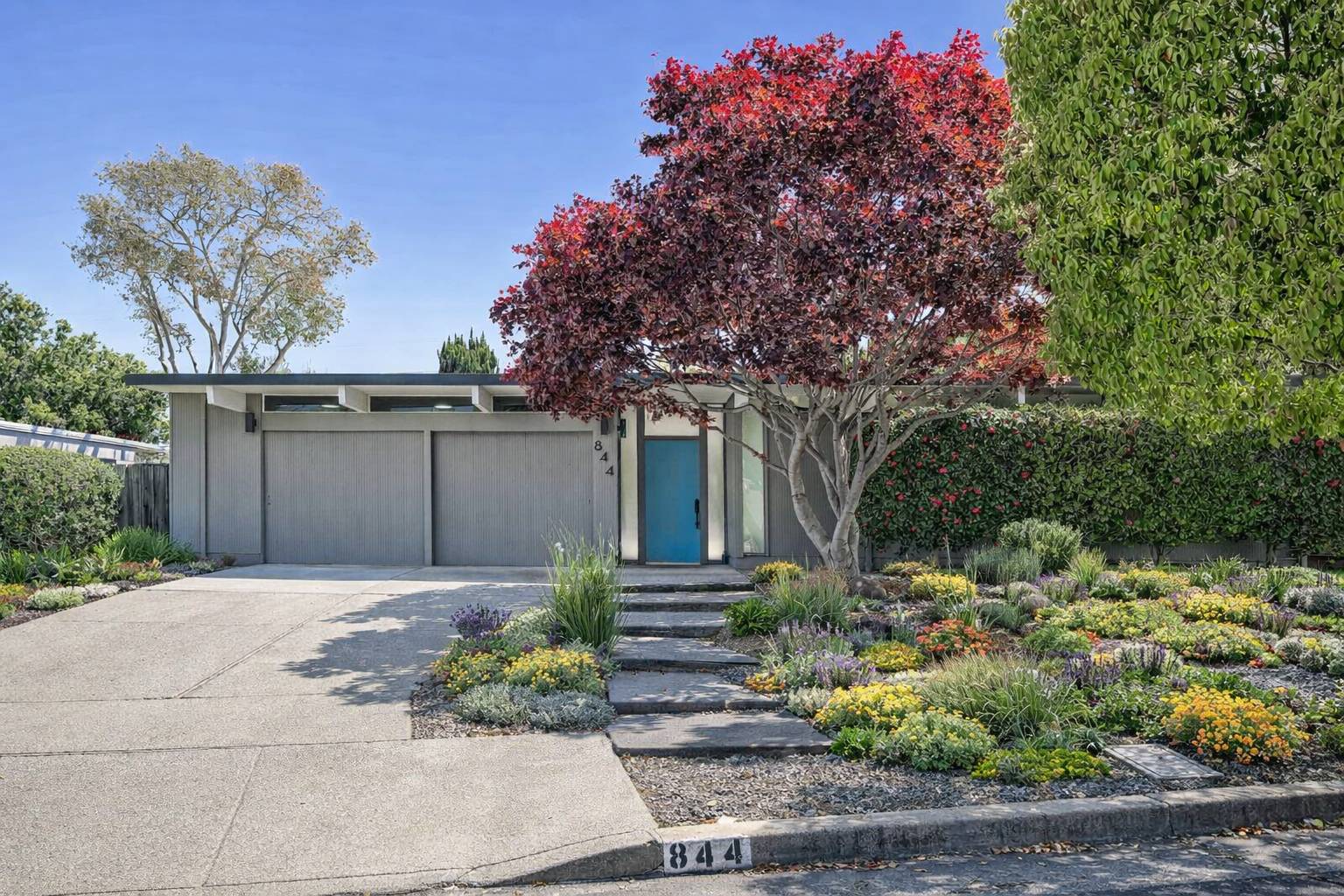
Sunnyvale Eichler neighborhoods are served by several top-rated school districts. Unusually for a single city, parts of Sunnyvale fall under Sunnyvale Elementary School District, Cupertino Union School District, Santa Clara Unified, and even Mountain View Whismanfor some sections. Most Sunnyvale public elementary students attend Sunnyvale SD schools (e.g. Cherry Chase, Cumberland), while some southern tracts (Fairorchard, Fairbrae) are zoned to Cupertino’s highly acclaimed schools. For example, Fairorchard Eichlers send kids to West Valley Elementary and Cupertino Middle School, culminating at Homestead High School – all part of the Fremont Union High District but within Cupertino’s union elementary system. Homestead High, in particular, is renowned (its alumni include Apple co-founders Steve Jobs and Steve Wozniak). Other Sunnyvale Eichler areas may feed Fremont High School (Fremont Union HS District) or Wilcox High in the Santa Clara USD, depending on the tract.
Overall, Sunnyvale’s schools score highly on state rankings. Many Eichler enclaves boast test scores and college prep leagues that attract families. This combination of architectural charm plus “walk-to” community schools makes the area especially appealing. In addition to public options, Sunnyvale offers private education nearby. Notable private schools include the French-American School (FASSV), Stratford School, Challenger School (K–high school in Los Altos), and Helios School (Montessori, Sunnyvale). Higher education options are also accessible: Stanford University (Palo Alto) and Santa Clara University are within commuting distance, and local community colleges (Foothill College, De Anza College) serve the region. In the Bay Area, a strong school reputation is a key driver of real estate value, and Sunnyvale’s Eichler neighborhoods benefit from this synergy of design pedigree and educational quality.
Neighborhood Attractions and Lifestyle
Living in Sunnyvale’s Eichler communities offers a quintessential suburban California lifestyle with easy urban convenience. Neighborhood parks and trails abound. For example, the Sunnyvale Baylands Park and adjacent wetlands preserve (105+ acres of tidal habitat) provide miles of walking and biking along the Bay Trail. Closer to the Eichlers, family-friendly parks like Ortega Park, Las Palmas Park, and Serra Park (all within a few bike-ride miles) offer playgrounds, sports fields, and picnic areas. The city maintains 772 acres of parks and open space, including creekside greenbelts and neighborhood plazas that connect trails through the community. With almost year-round sunny weather, many Eichler families bike or jog the city’s trail networks (like the John W. Christian Greenbelt).
Residents enjoy classic small-town centers. Downtown Sunnyvale (historic Murphy Avenue) is only a 10-minute drive from many Eichler tracts. Here one finds tree-lined sidewalks with cafes, boutique shops, popular restaurants, and a weekly farmers’ market. The modern CityLine shopping complex adds national retailers and a cinema. Sunnyvale also hosts multiple grocery and service centers in each quadrant (e.g. along Fremont Ave and Homestead Rd). Unique local favorites include cozy coffee shops and family-owned eateries in the Heritage District. For recreation, Eichler homeowners often join the Sunnyvale Fairbrae Swim & Racquet Club – a private community pool and tennis club founded during the Eichler era. This club, with its mid-century clubhouse and community events, is a social hub linking several Eichler neighborhoods.
Other attractions add to the lifestyle. The city’s cultural calendar features performances at the Sunnyvale Theater, events at Murphy Park, and art in the community libraries. Nearby, Silicon Valley’s famed tech museums (The Computer History Museum, Intel Museum) and California’s Great America amusement park are just a few miles away in Santa Clara/Palo Alto. Many Eichler homeowners describe Sunnyvale as having a “California casual meets Silicon Valley savvy” vibe: neighbors wave hello at street barbecues, dog-walkers enjoy the landscaped front yards, and yet high-speed internet and tech meetups connect into the global economy. In short, Sunnyvale’s Eichler enclaves offer a relaxed, family-oriented setting with all the amenities — parks, shops, restaurants, and community spaces — that appeal to families, professionals, remote workers, and architecture enthusiasts alike.
Commuting and Tech Employer Access
Sunnyvale’s central location makes commuting to Silicon Valley’s job centers extremely convenient. The city lies within minutes of Apple Park in Cupertino – in fact, some Eichler residents in Fairorchard can bike to Apple’s campus in about 10 minutes. The Googlecampus in nearby Sunnyvale (and the Mountain View headquarters) is just east of the city, and many Eichler homeowners work there. Amazon’s Sunnyvale distribution/office center (North Sunnyvale) and Intuitive Surgical (Sunnyvale HQ) are also close by. Sunnyvale is surrounded by the major tech corridor: NVIDIA and Cisco Systems in Santa Clara, Adobeand others in San Jose, Meta (Facebook) and Netflix’s Bay Area offices to the north, and Stanford University to the west. In fact, the three largest Sunnyvale-area employers are Google (~14,426 local workers) and Apple (~12,458), underscoring the city’s tech-heavy economy.
Transportation infrastructure further connects Sunnyvale to the Bay Area. Downtown Sunnyvale hosts a Caltrain station, and a second Caltrain stop is at Lawrence Station (east Sunnyvale). Caltrain provides a direct link north to Mountain View and San Francisco, and south to Santa Clara and San Jose. (The city also benefits from extensive VTA light rail and bus service.) Major freeways encircle Sunnyvale: US 101 runs north-south through the city, CA-85 and CA-237 provide east-west routes, and I-280 is just a few miles west. These highways give quick access to South Bay tech centers, San Francisco (via the peninsula), and the east bay. In practice, Sunnyvale commuters can reach nearly any Silicon Valley campus in under 30 minutes. This unparalleled tech accessibility – combined with the quiet, tree-lined Eichler streets – is often cited as Sunnyvale’s greatest advantage for working professionals.
Real Estate Market Analysis
The Sunnyvale real estate market is strong and competitive. As of early 2026, the median single-family home price in Sunnyvale was about $1.87 million, roughly a 7% increase year-over-year. Homes typically sell very quickly: recent data show median days on market of only 9 days. Inventory is tight – just dozens of sales per month – reflecting steady demand. Price per square foot is also high (about $1,170/ft²). For context, Redwood City’s median was ~$1.825M (slightly down) and Santa Clara City’s was ~$1.80M; Sunnyvale’s performance (with rising prices and short days on market) underscores its sustained desirability.
Eichler homes command a clear premium over the general market. Recent sales data indicate the median Sunnyvale Eichler sale price is on the order of $2.8–2.9 million – well above the citywide median. In fact, Eichlers often trade in the mid‑to-high seven figures, with top examples reaching into the mid-$3M range. For example, a fully updated 4‑bedroom Eichler in Fairorchard recently sold around $2.9M, whereas a mostly original 3‑bedroom in an ordinary tract might fetch ~$2.1M. In one dramatic case, a Fairorchard Eichler (1166 Maraschino Dr.) was brought from a $2.4M “as-is” price to a $3.155M saleafter $275K of tasteful renovations. This illustrates how features and condition can swing value by hundreds of thousands of dollars in this niche market.
In general, Sunnyvale Eichlers benefit from limited supply (no new Eichlers are built) and a dedicated buyer pool. When an Eichler does list, it often becomes a hotly contested property. Listings typically attract multiple offers and can sell at or above list price. As one broker put it, “if an Eichler comes up for sale in Sunnyvale, it’s a can’t-miss event in the local market”. Over the past decade the trend has been sharply upward: Fairorchard Eichlers that sold for ~$1.25M in 2013 are now routinely valued at $3.0–3.3M. (Mid-century modern style has resurged in popularity, and Eichlers have fully captured that momentum.)
By comparison, adjacent markets have varied. San Jose’s average home price is somewhat lower (median around $1.7M) and Palo Alto’s is much higher (median ~$4–4.5M). Sunnyvale sits in the premium tier for Santa Clara County, thanks in part to these Eichler tracts. For investors, Sunnyvale’s real estate has shown strong appreciation: long-term owners of Eichlers have seen large equity gains. With Silicon Valley’s robust economy, high barriers to new supply, and a unique architectural appeal, Eichler homes in Sunnyvale continue to be considered sound long-term investments.
Case Studies and Sales Examples
Recent transactions illustrate the Eichler market’s vigor. In mid-2023, a Sunnyvale Fairorchard Eichler (4BR/2BA, ~1,770 ft²) underwent modern updates and was listed near $3.3M. It sold quickly, reflecting overwhelming buyer interest in a turnkey mid-century remodel. Likewise, earlier in 2023, another Eichler fetched $3,155,000 on Maraschino Drive – a record at the time. This sale (one of the city’s highest Eichler prices) followed a $275K interior renovation that maximized the home’s architectural strengths.
Even entry-level Eichlers in Sunnyvale command strong prices. A mostly original 3-bedroom Eichler in Sunnyvale (decent condition) might sell for around $2.1M, while a similarly sized atrium model in full move-in condition can easily approach $2.8–$3.0M. One off-market example (February 2025) was a Fairorchard Eichler sold under the $3M mark despite heavy investor interest – still above neighborhood norms. These cases highlight a pattern: well-preserved or sensitively updated Eichlers routinely outperform their neighbors’ home values. In contrast, a comparable traditional tract home without Eichler pedigree typically sells below $2M in today’s Sunnyvale market.
Architectural significance also plays a role. Eichler homes that capture the classic indoor-outdoor design (atrium layouts, floating stairs, etc.) often attract the most enthusiasm. For instance, the Maraschino Dr. home had one of the largest atriums in the tract, adding to its appeal. Similarly, Eichlers with “rare” features (double A-frame ceilings, oversize lots, or integrated landscaped atriums) have fetched especially high per-square-foot prices. In interviews, sellers report multiple strong offers on such homes, sometimes even before listing. Overall, these sales underscore that Sunnyvale Eichlers are sold as much for their design cachet as for shelter – buyers prize the authentic mid-century experience.
The Boyenga Team Advantage
Navigating Sunnyvale’s Eichler market requires deep local and architectural expertise – and this is exactly the Boyenga Team’s specialty. Eric and Janelle Boyenga are celebrated Silicon Valley real estate experts with a design-forward focus. As leading Compass agents, they have built a strong reputation for luxury and mid-century modern properties. The Boyenga Team regularly helps buyers locate rare Eichler listings (often tapping into exclusive off-market networks) and advises sellers on how to maximize value through thoughtful upgrades. They understand how features like atriums, open plans, and historic detail translate into premium prices.
For Eichler sellers, the Boyenga Team leverages Compass’s cutting-edge marketing tools – professional 3D walkthroughs, targeted digital campaigns, and staging guidance – to showcase each home’s architectural story. They also have a vast network of private clients and Eichler enthusiasts, allowing them to pre-market special properties quietly and generate competitive interest before a formal listing. For Eichler buyers, the Boyenga Team provides invaluable insights: they can identify which Sunnyvale tracts fit a family’s lifestyle (top schools, proximity to work) and advise on renovation potential under the city’s Eichler guidelines.
Beyond Eichlers, the Boyenga Team’s Silicon Valley expertise is broad. They understand how Sunnyvale compares to neighboring luxury enclaves (Los Altos, Palo Alto, Saratoga) and can position a Sunnyvale home to appeal to high-end buyers. Clients praise Eric and Janelle for their market knowledge, personalized service, and passion for design. In summary, The Boyenga Team stands at the intersection of architectural history and luxury real estate: they know Sunnyvale Eichlers inside and out, and they use that knowledge – combined with Silicon Valley market savvy – to help their clients win in this competitive landscape.