
Greenmeadow Eichler Homes: Iconic Mid-Century Modern Living in Palo Alto
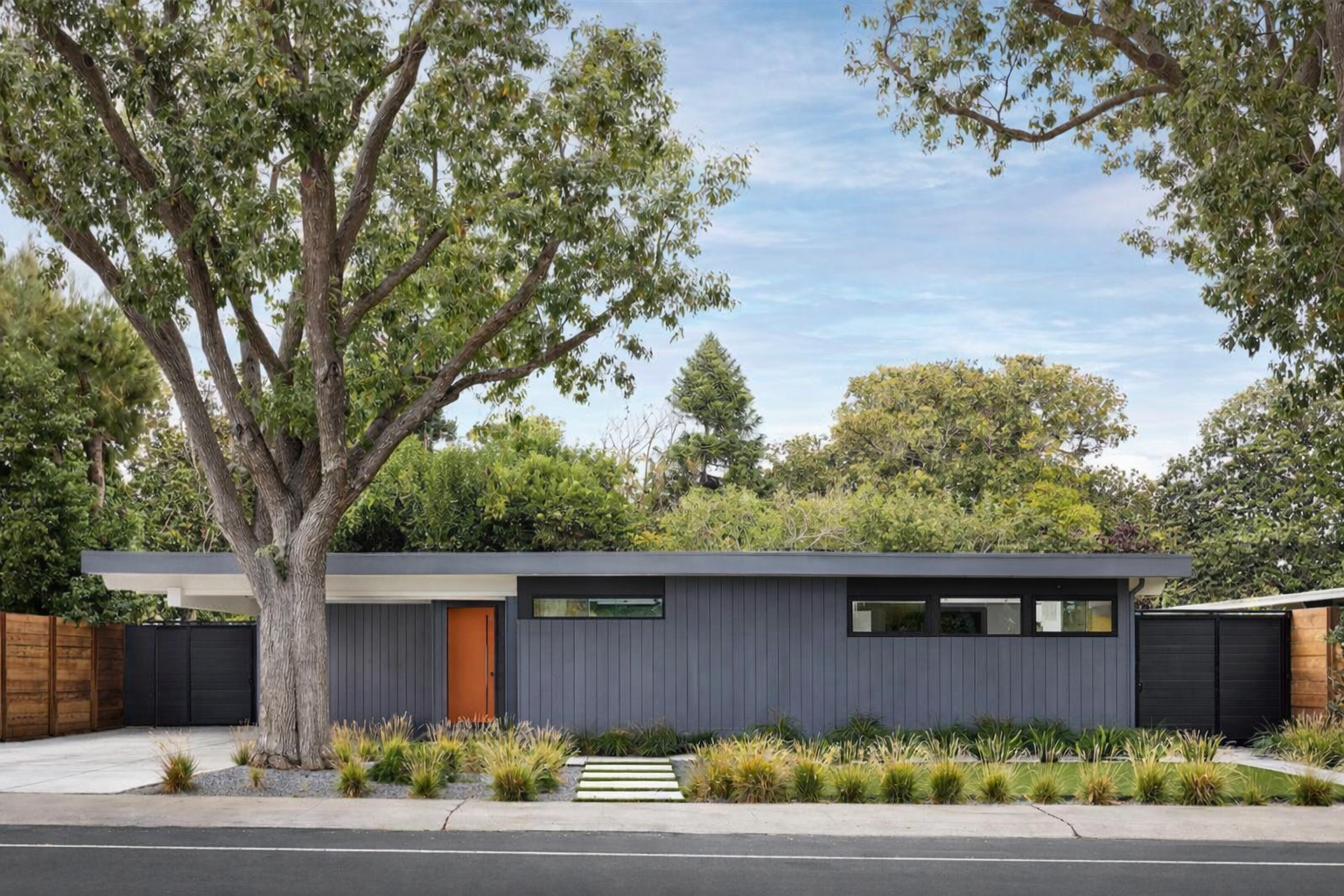
Greenmeadow, developed by Joseph Eichler in the early 1950s, stands as one of Palo Alto’s most significant Eichler neighborhoods. The tract, recognized on the National Register of Historic Places, is celebrated for its flat roofs, extensive glass walls, and sunlit atriums that epitomize Eichler’s mid-century vision. Lush oaks and well-tended courtyards give this community a park-like ambiance, while its private pool and clubhouse foster neighborhood connection. Greenmeadow’s blend of historical cachet and seamless indoor-outdoor design makes it highly coveted among Silicon Valley buyers seeking “architectural authenticity” and a design-forward lifestyle.
The neighborhood’s family-oriented community association (GMCA) is centered around a heated pool and clubhouse, hosting year-round swim programs, picnics and social events. These amenities – from holiday concerts to Fourth of July parades – reinforce Greenmeadow’s tight-knit culture and appeal to affluent buyers who value both privacy and community. For architects and design enthusiasts, Greenmeadow is a living museum of Eichler’s “open plan” ideals: homes with floor-to-ceiling glass, radiant-heated slabs and soaring post-and-beam profiles offer a lifestyle that feels both retro-chic and perfectly suited to modern living.
Historical Overview of Greenmeadow
Greenmeadow was built in two phases (1954–55 and 1961–62) and originally comprised about 270 single-story mid-century modern homes. Architectural leaders A. Quincy Jones and Frederick Emmons designed the first two phases, creating the neighborhood’s signature modular designs and curb appeal. Eichler intended Greenmeadow as a “high-design” community – one of his earliest projects aimed at an upscale market. The streets were laid out to maximize privacy and views, trading traditional yard area for shared amenities: a community center, park and pool were built at the heart of the tract, an innovative concept in post-war suburbia.
Over the decades, Greenmeadow’s architectural heritage has been actively preserved. As a designated historic district, renovations must respect Eichler’s vision. The city’s Eichler Neighborhood Design Guidelines (voluntary advisory controls) and neighborhood CC&Rs encourage restoration of original features. While many owners upgrade kitchens or add solar panels, Eichler integrity (atriums, clerestories, redwood siding) is prized. In recent years, a resurgence of mid-century interest and strong Silicon Valley market trends have spurred sensitive remodels and even reverse-floorplan renovations – all under the oversight of the home owners’ association to maintain cohesion. Prominent local architects and homebuilders sometimes collaborate to reimagine these Eichlers for the 21st century, balancing modern comfort with historic detail.
Greenmeadow also carries cultural significance: it exemplifies Eichler’s inclusive philosophy. Notably, Eichler’s developments were some of the first in California to welcome buyers of any race, prefiguring fair-housing integration. This legacy endures in a community that values diversity and innovation. Today, Greenmeadow’s social fabric includes families, tech executives and creatives who are drawn by the neighborhood’s progressive roots and a collective ethos of “neighbors as friends.” Past notable residents have ranged from academics affiliated with nearby Stanford University to engineers and artists, reinforcing Greenmeadow’s image as an intellectual, creative enclave within Silicon Valley.
Architectural Highlights and Housing Inventory
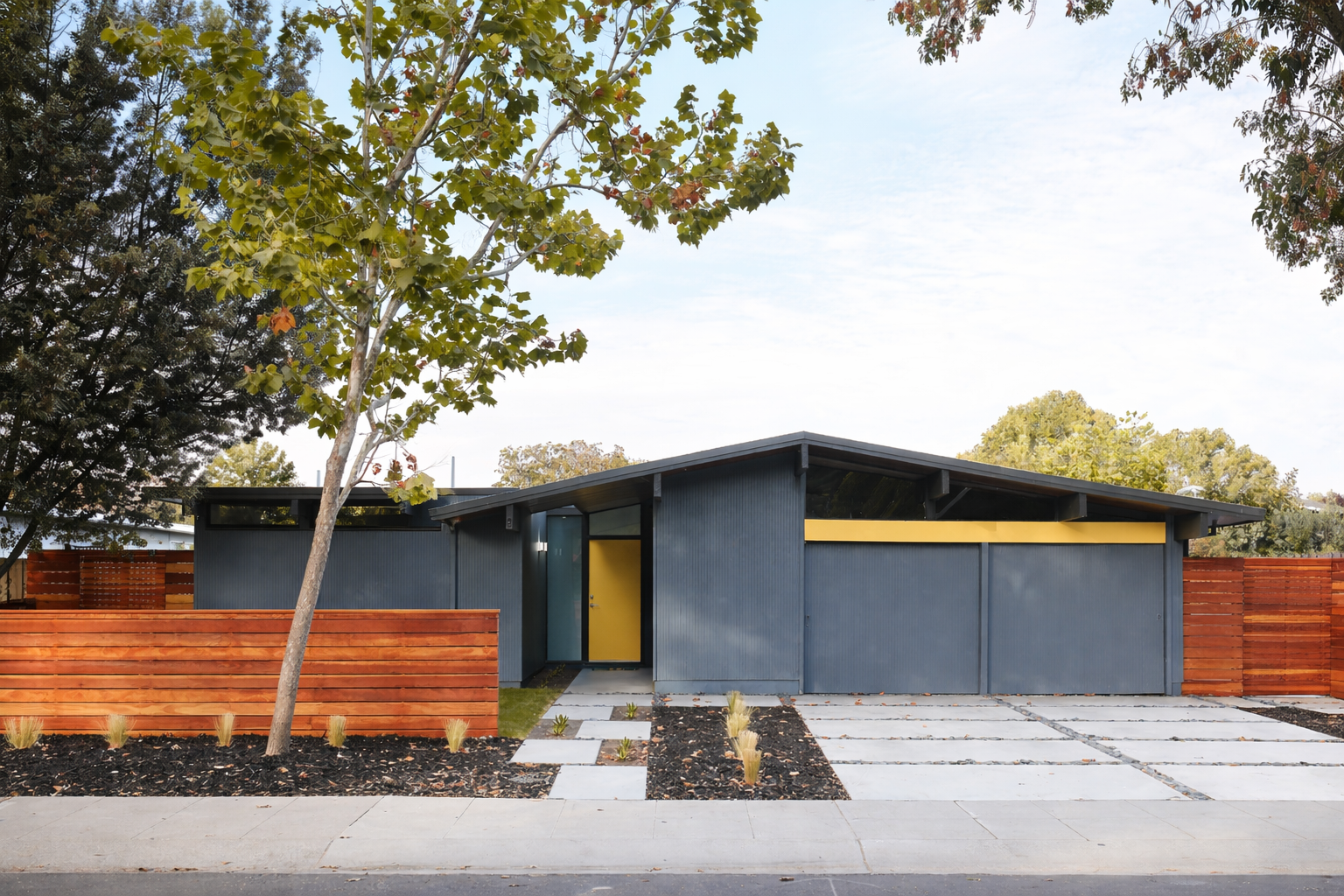
Greenmeadow exemplifies classic Eichler design. Post-and-beam construction is evident in every home, eliminating interior load-bearing walls and allowing open, light-filled layouts. Ceiling beams run visible under smooth flat roofs, creating the distinctive wide eaves and clerestory windows. The central atrium is a defining feature of many Greenmeadow models: a private courtyard with a glass- or wood-framed skylight that brings sunshine into the heart of the home. These atriums foster indoor-outdoor living, often flowing out to living rooms, bedrooms or kitchens through glass pocket doors.
Another hallmark is floor-to-ceiling glass: expanses of glass wall (often on the rear façade) blur the line between interior and garden. Transom glass banks line the high walls, and clerestory windows under the eaves fill rooms with natural light without sacrificing privacy. Red-wood paneling and tongue-and-groove ceilings add warmth and texture, while concrete slab floors (typically with radiant heating) underscore Eichler’s emphasis on modern materials and convenience. Interiors usually include built-in cabinetry and open kitchens that promote social interaction.
Greenmeadow home sizes typically range from about 1,100 to 2,000+ square feet. Most are 3–4 bedrooms with 2–3 bathrooms; models include 3/2 and 4/2 atrium variants, often around 1,500–1,800 sq ft. Lot sizes are generally quarter-acre or smaller, reflecting Eichler’s mid-century density model: Eichler deliberately traded oversized yards for community amenities. There are 243 contributing Eichler houses in the historic core, with a few additional non-Eichler or post-1970 homes peppered at the periphery. (Nearby tracts like Palo Verde, Fairmeadow and Charleston Meadows also contain Eichler homes, but Greenmeadow is distinctive for its high concentration of architect-designed Eichlers.)
To today’s buyers, these homes’ appeal is manifold. The large glass walls and clerestories deliver constant light and a feeling of spaciousness, very different from newer “cookie-cutter” suburbs. The post-and-beam frames create expansive interiors that are easy to customize or expand. Radiant heated floors and wood-paneled ceilings are having a vogue renaissance among design lovers. Even as amenities like a community pool or mid-century amenities have become scarce, Greenmeadow’s homes remain rare cultural artifacts: prospective buyers value them both for investment potential and as architectural treasures. As one market report observes, homes that “retain original Eichler features” (atriums, glass walls, radiant heat) are especially sought after, commanding premium prices because buyers “value these authentic touches”.
Demographic and Socioeconomic Profile
Greenmeadow is an affluent, highly educated Silicon Valley enclave. The latest U.S. Census data show about 1,300 residents in roughly 517 households in the neighborhood. The median household income is around $186,500 per year, and average household income exceeds $270,000 – reflecting a professional and executive population. Educational attainment is extremely high: roughly 76% of adults hold at least a bachelor’s degree (with nearly half holding graduate degrees). Consistent with other Palo Alto areas, the workforce is overwhelmingly white-collar (over 95% in professional or managerial roles), with many employed in tech, engineering, finance or university research.
Ethnically, Greenmeadow is diverse for Palo Alto. About 46% of residents identify as White and roughly 37% as Asian, mirroring Silicon Valley’s international draw. There are smaller percentages of Latino and other groups. Households skew toward married couples and families, but there is also a significant share of executives living with spouses or as young professional couples; homeownership is very high (most residences are owned, not rented). A noteworthy trend is the continued interest by tech professionals relocating from San Francisco or the Peninsula: affluent buyers often trade city apartments for a Greenmeadow Eichler’s space and design. Likewise, families attracted by Palo Alto schools are also drawn to the open floor plans and safe streets. The strong local economy and preference for sustainable, design-conscious living means the market remains competitive even if the broader Bay Area slows; Eichler-centric buyers continue to pursue these homes as unique, long-term investments.
School Districts and Education Landscape
Greenmeadow falls within Palo Alto Unified School District (PAUSD) for K–12. The default assignments are Fairmeadow Elementary (K–5), Jane Lathrop Stanford Middle School (6–8), and Palo Alto High School (Paly, 9–12). Fairmeadow Elementary is known for strong core academics, STEM and arts integration, and a nurturing environment. JLS Middle offers a wide range of electives (including technology and world languages) and emphasizes leadership and creativity. Paly High School consistently ranks among the top high schools in California, with rigorous AP courses, award-winning arts and journalism programs, and high college matriculation rates. These schools’ stellar reputations are a major draw for families, supporting Greenmeadow home values. (Private school alternatives in the area include Castilleja for girls, Challenger and Nueva for younger grades, and nearby co-ed Catholic and secular academies. The renowned public Stanford University campus is also just a few miles north.)
School quality is often cited as a key factor in Silicon Valley home-buying decisions. In Greenmeadow, access to top-rated PAUSD schools underpins both current market demand and future appreciation. The neighborhood’s demographics of educated, high-earning parents reflect a priority on schooling: census data show a median age in the 40s, with many households having school-age children. The proximity of Stanford (2–3 miles) and even community college programs (Foothill College in Los Altos Hills) further enriches educational opportunities for residents of all ages.
Neighborhood Attractions and Lifestyle
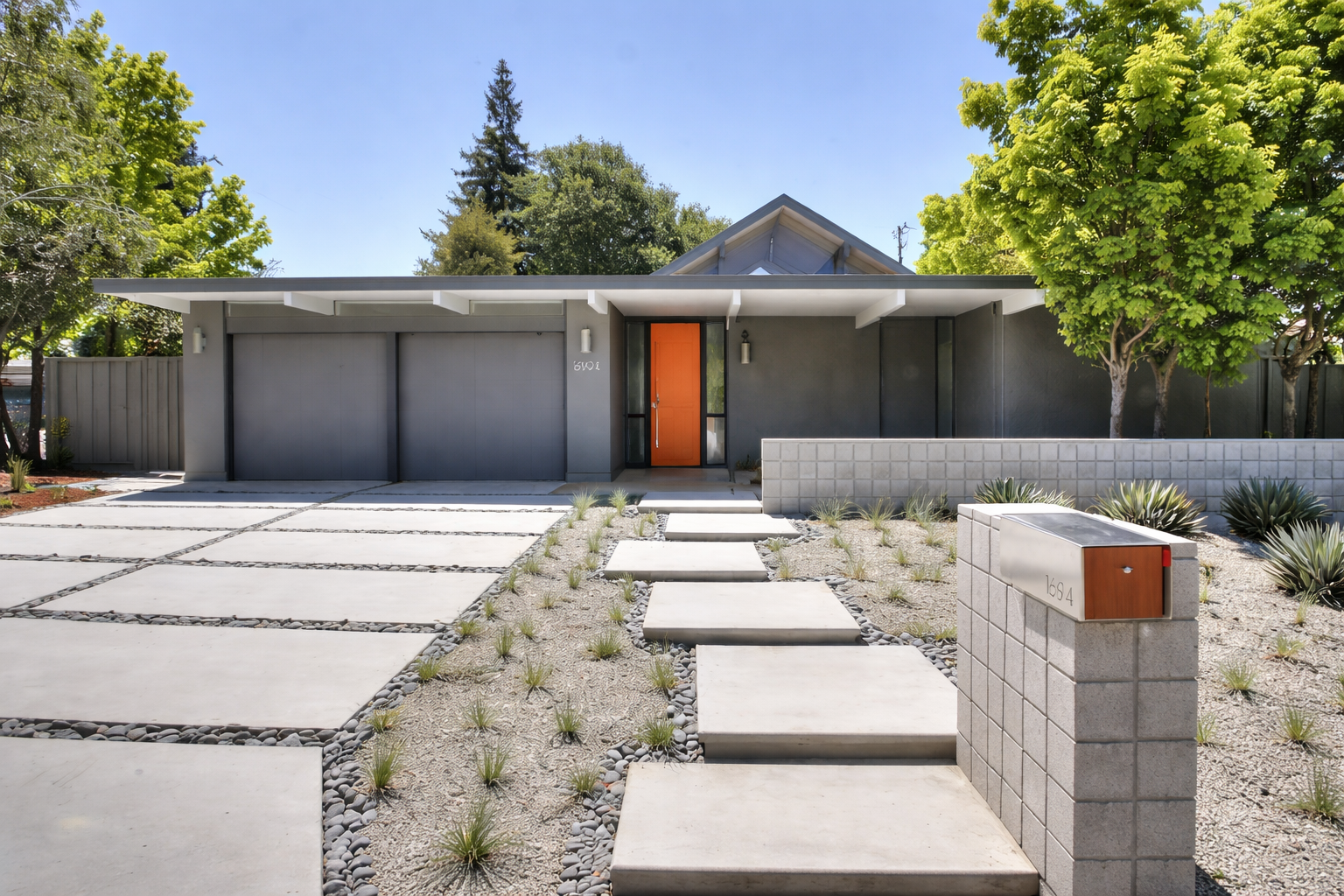
Greenmeadow offers a quintessential Silicon Valley lifestyle with abundant amenities. The community center and park at the block’s center (run by the Greenmeadow Community Association) is a hub – residents swim year-round in the heated pool, use tennis/pickleball courts, and socialize at summer barbeques and holiday events. The neighborhood’s tree-lined streets are quietly serene, with pedestrian pathways and pocket parks. Many families appreciate the 4th of July parade (with the neighborhood band) and the fall festival, fostering a strong sense of community.
Outdoor recreation is nearby. The expansive Arastradero Preserve (just west of 280) offers hiking and biking trails through wooded hills. The nearby Palo Alto Baylands and Shoreline Park (just east in Mountain View) have miles of lagoon trails, wildlife viewing, and sailing. The HOA also manages a flat green space for picnics. Within walking distance are modest local amenities: the Greenmeadow Way corner has a coffee stand and convenience store, and just a short drive away is the Village Square shopping center (Whole Foods, restaurants) and the Town & Country Village with cafes and boutiques. Parents enjoy proximity to Stanford Stadium for college sports, the Children’s Discovery Museum in downtown (10 minutes away) and Stanford Shopping Center’s upscale shops. Seasonal farmers markets (Wednesdays in downtown Palo Alto, Saturdays on California Ave) and local coffeehouses (Coupa Cafe, Blue Bottle, Cinnamon Works) and dining spots in nearby communities offer a variety of venues for food and culture.
For families, Greenmeadow’s safe streets, parks and social calendar are ideal. For remote workers and entrepreneurs, the mid-century homes provide inspiring spaces to live and work. Professionals may also bike or jog to Stanford or Palo Alto’s California Avenue business district. Architecture enthusiasts have tour-worthy surroundings: the neighborhood’s commitment to preservation means neighbors often organize Eichler home tours. In short, Greenmeadow’s lifestyle benefits are broad: it offers suburban tranquility without sacrificing access – from Silicon Valley office parks to urban centers – and a built-in community that celebrates its unique design heritage.
Commuting and Tech Access
Greenmeadow’s location is highly convenient for Silicon Valley commuting. Major tech campuses are a short drive: Apple Park (Cupertino) is roughly 15 miles south (via 280 → 85, about 20–30 minutes), Googleplex (Mountain View) is about 6 miles west (~10–15 min via Foothill Expressway), and Stanford University is just 2–3 miles north (~5–10 min). Other key employers – Meta (Menlo Park, ~10 miles), NVIDIA (Santa Clara, ~12 miles), Adobe and Cisco (San Jose, ~10–15 miles) – are also within a 15–20 minute drive on freeways or arterial roads. The offices of Palantir and Tesla (both in Palo Alto), LinkedIn (Sunnyvale), and defense startups on Middlefield are even closer.
Transportation options: Greenmeadow sits just west of Highway 280 with a convenient access ramp, providing swift north–south connectivity. Highway 85 and 101 are likewise a short drive east or west. For public transit, the Caltrain station in downtown Palo Alto is 3–4 miles away, and shuttles from tech companies frequent PA’s Town & Country area. While Palo Alto’s local busses are limited, dedicated tech shuttles and rideshare options (Uber/Lyft) are plentiful. Biking is a viable option for nearby jobs, given flat terrain and quiet streets. In summary, Greenmeadow’s proximity to the heart of Silicon Valley – combined with an easy highway commute to either San Francisco or San Jose – ensures its residents are well connected to the region’s top employers and educational institutions.
Real Estate Market Analysis
Greenmeadow’s real estate market is exceptionally strong. As of early 2026, the median sale price of a home in Greenmeadow is roughly $3.3 million, with an average price around $840 per sq ft. Inventory is very low (often only a handful of sales per year), and competition is fierce: Redfin rates Greenmeadow as “most competitive”, where homes typically sell in under two weeks and at about 11% above list price. This eclipses even other pricey Palo Alto areas: for comparison, Old Palo Alto has a “somewhat competitive” score of 54.
Over the past decade, Greenmeadow home prices have appreciated impressively (e.g. the FHFA index for Palo Alto Eichlers up nearly 59% from 2015 to 2025). Though prices dipped slightly in late 2025, long-term trends remain upward. Demand stems from the tech-driven local economy and the scarcity of Eichler homes. In Silicon Valley context, Zillow’s data show Greenmeadow’s typical home value (~$3.42 M) is comparable to other high-end tracts (e.g. $3.71 M in nearby Palo Verde) and well above adjacent suburbs (e.g. ~$2.30 M in Mountain View’s Monta Loma).
Eichler homes specifically command premium pricing. Their architectural pedigree and historic designation attract buyers willing to pay more: well-maintained, “renaissance” Eichlers often fetch north of $3M, whereas less updated ones can trail. The examples below illustrate this. Compared to nearby communities (Menlo Park ~$2.7M, Sunnyvale ~$2.1M), Greenmeadow stands out for both price and design cachet. Despite rising interest rates, the architectural novelty and limited supply underpin solid investment potential. In sum, Greenmeadow’s market is characterized by low inventory, high buyer enthusiasm, and consistent premium appreciation driven by Eichler enthusiasts and Silicon Valley professionals alike.
Example Sales and Eichler Case Studies
Recent sales in Greenmeadow highlight buyer demand for authentic Eichler features. For instance, a 4 bd/3 ba Eichler at 3941 Duncan Place (≈1,795 sq ft) sold in Oct 2025 for $3,550,000 – about 19% above its $2,988,000 list – after multiple offers. This beautifully updated home, with a large central atrium and restored wood-panel interiors, became a showcase that fetched well over $1,900/sq ft. Similarly, 176 Ferne Ct (3 bd/2 ba, ~1,507 sq ft) closed for $3,758,000 in Oct 2025 – 14% over list. In contrast, 110 Greenmeadow Way (2 bd/2 ba, ~1,131 sq ft) sold for $1,300,000 (at list), reflecting its smaller size and relatively intact condition.
These examples underscore how renovation and condition drive pricing. Larger, renovated Eichlers can rival comparably sized modern homes in Menlo Park or Woodside. The home at Byron Street (a 6 bed duplex totalling 3,401 sq ft) sold for $2,860,000 in Jan 2026, showing that even non-traditional Eichler configurations command millions. By contrast, more modest Eichlers (fewer beds, smaller lots) trade in the low seven figures. Across sales, attributes such as preserved atriums, quality of original wood, and modern upgrades consistently influence bidding. Importantly, buyers are not just paying for square footage but for the Eichler experience – open living areas, indoor-outdoor flow and mid-century charm. In an environment where multiple offers are common, well-presented Eichlers often set new price records for their size. These case studies illustrate the Greenmeadow market’s blend of design appreciation and Silicon Valley premium.
The Boyenga Team Advantage
Eric and Janelle Boyenga are Silicon Valley real estate leaders and Eichler specialists who bring a wealth of expertise to Greenmeadow. Known for their “Property Nerd” approach, they have built a reputation not simply as top producers but as architectural interpreters. With Compass’s advanced marketing tools and analytics, the Boyenga Team leverages exclusive networks and tailored campaigns to reach design-forward buyers. They advise sellers on how to showcase Eichler authenticity – from restoration of original atriums to staging with mid-century furnishings – maximizing value for these unique properties.
For buyers, Eric and Janelle offer deep insights into Eichler fundamentals. Their specialized portfolio and off-market connections give clients an edge in this competitive niche. They guide clients in evaluating Eichler homes by factors beyond beds and baths – for example, assessing post-and-beam integrity, atrium layout and glazing quality as core value drivers. Their track record in Eichler communities (including Greenmeadow, Fairmeadow, Palo Verde and beyond) means they can pinpoint which upgrades add authentic value versus mere square footage.
Operating under Compass’s banner, the Boyenga Team utilizes cutting-edge technology (3D virtual tours, targeted social ads, 360° media) and Compass’s luxury marketing platform to highlight Greenmeadow Eichlers to a global audience. They have consistently connected Silicon Valley executives and international buyers with significant Eichler homes, often before they hit MLS. In short, the Boyenga Team’s Eichler focus and Silicon Valley savvy make them the ideal advocates for clients in Greenmeadow – whether securing an iconic home or achieving the highest return on an Eichler sale.