
Ranch-Style Homes in San Jose: Architecture, Lifestyle, and Opportunity
Scope and Editorial Premise
San Jose’s residential identity is deeply rooted in the postwar era, a period that produced some of Northern California’s most livable and enduring neighborhoods. Across the city, the California ranch remains a premier housing type, offering a rare combination that affluent buyers understand instinctively: architectural clarity, true lot depth, quiet streets, indoor-outdoor ease, and a daily rhythm that feels more expansive than newer construction often can. As San Jose evolved from a world-class agricultural center into a major postwar suburban landscape, it left behind block after block of low-slung homes whose proportions still feel deeply right for California living. For buyers searching for ranch homes San Jose, single-story homes San Jose, or large lot homes San Jose, these vintage properties continue to deliver something difficult to reproduce today: land, light, and flexibility.
These neighborhoods represent much more than suburban tracts; they are part of a significant architectural and lifestyle tradition. For Silicon Valley professionals, dual-income households, architecture-minded buyers, and downsizers who want elegance without stairs, San Jose’s ranch-heavy districts represent a compelling middle ground between historic charm and modern usability. In this niche, the official sites for the Boyenga Team and their Compass profiles position Eric Boyenga and Janelle Boyenga as long-established Silicon Valley specialists with strengths in design-forward marketing, neighborhood analysis, and home-preparation strategy—an especially relevant mix for ranch-era homes, where value is often unlocked through floor-plan refinement, presentation, and lot-potential storytelling rather than square footage alone.
Why Ranch Homes Still Matter Here
The California ranch house was never merely a style; it was a lifestyle proposition. Preservation sources trace the form to the work of Cliff May and the broader western adaptation of casual, horizontally oriented domestic architecture: low-slung rooflines, strong indoor-outdoor relationships, patios, generous glazing, family-centered plans, and a visual emphasis on width over height. The defining features that buyers still search for today—single-story layouts, long horizontal facades, low-pitched roofs with broad eaves, attached garages, sliding glass doors, open or semi-open living areas, and easy backyard access—were not incidental details. They were the architectural language of postwar California optimism.
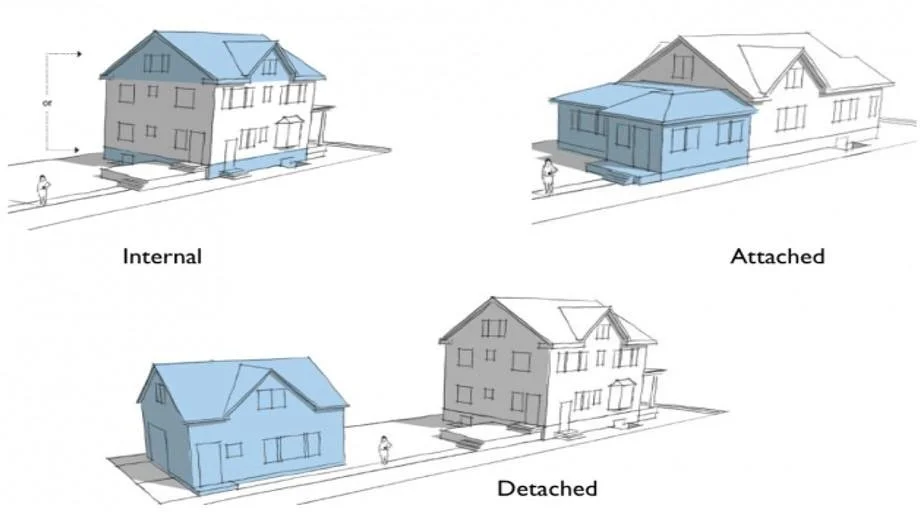
That language has aged remarkably well. In today’s market, ranch homes in San Jose appeal for reasons that feel contemporary rather than nostalgic: they support aging in place, simplify circulation, lend themselves to kitchen-family room reconfiguration, and sit on lots that often accommodate expansions, detached studios, pools, or ADUs. San Jose’s own housing policy has reinforced that flexibility. The city’s ADU program notes that accessory units are allowed on residentially zoned properties, and a 2025 city update reported that ADU permits grew from just 10 in 2015 to 488 in 2024, with larger ADUs now taking a much greater share of approvals. For buyers thinking about multigenerational living, future rental income, or a hybrid work compound, that policy environment makes the ranch typology even more valuable.
The Postwar Story Behind San Jose
The story of San Jose real estate is defined by the city's transformation from an orchard landscape to a postwar suburb. The National Park Service’s multiple-property documentation on San Jose postwar housing describes rapid urban expansion in the 1950s and early 1960s, exactly the years when ranch-style neighborhoods multiplied across what had once been the Santa Clara Valley agricultural basin. This broader pattern matters because the city's classic ranch districts were born from the same regional forces: returning-war-family demand, merchant-builder efficiency, automobile-oriented street planning, and confidence in the idea that a single-story home with a yard represented the ideal middle- and upper-middle-class California life.
San Jose’s postwar housing story also had architectural ambition, not just volume. The NPS documentation shows that merchant builder Joseph Eichler developed 484 single-family homes across eight separate tracts in five San Jose neighborhoods between 1952 and 1963, helping to establish the city as an important laboratory for modern suburban design. Those homes were not ranch houses in the conventional sense, but their planning logic—open living, slabs-on-grade, family-centered layouts, covered parking, and integrated outdoor space—raised the design literacy of the surrounding market. In other words, San Jose’s suburban identity was shaped not only by tract expansion, but by a regional appetite for modern domestic architecture that continues to influence how luxury buyers read mid-century neighborhoods today.
The modern transformation story is already clear at the city level. San Jose’s planning department reports that ADU permitting has accelerated sharply, SB 9 lot-split filings are now material, and San Jose became the first city in California to approve the separate sale of an ADU after adopting the state’s condoization framework. That means the classic ranch neighborhood is no longer static. It is being renovated, expanded, occasionally rebuilt, and increasingly reimagined as a platform for compound living, flexible income strategy, and long-term land optimization.
What the Housing Stock Looks Like Today
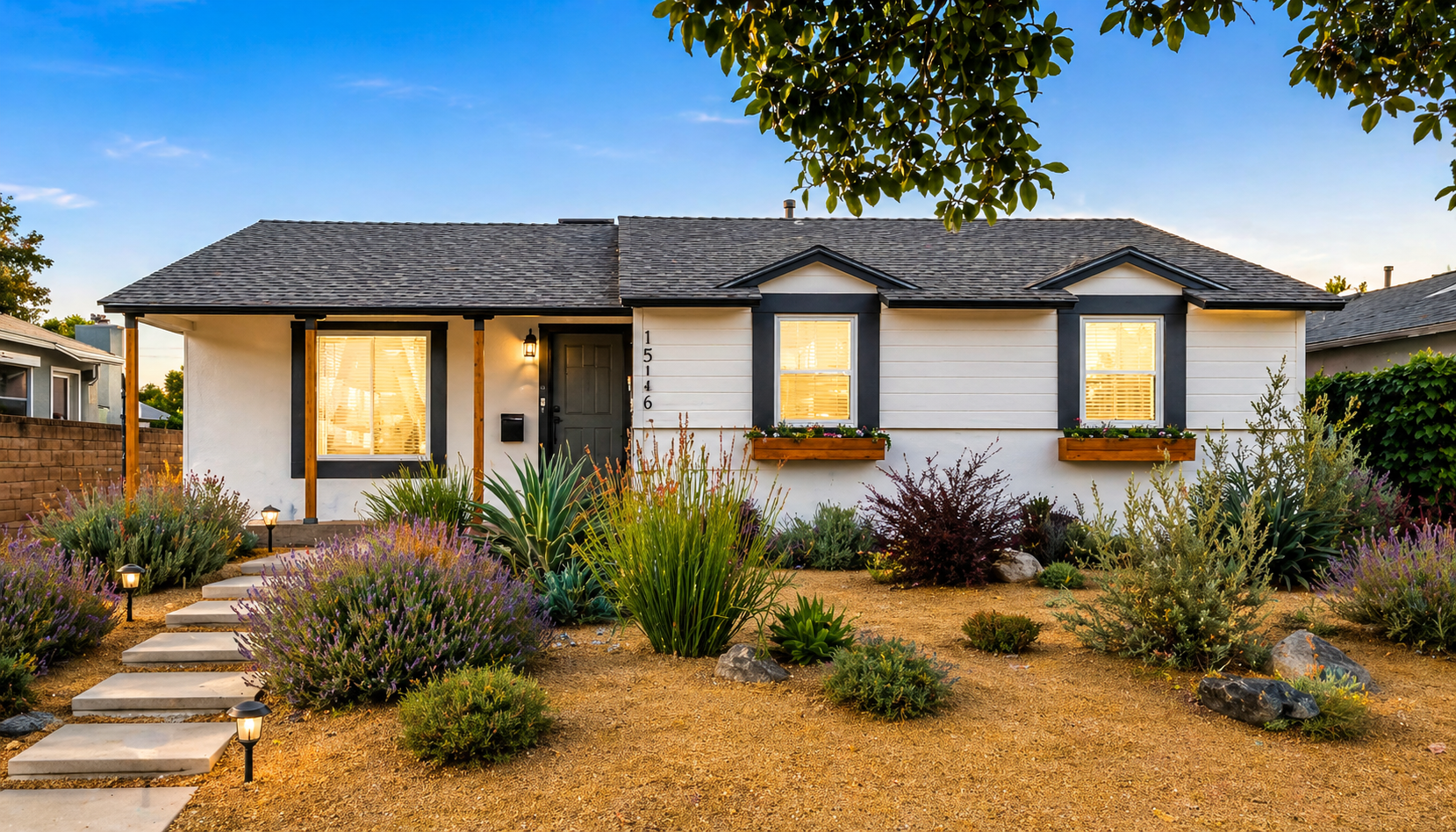
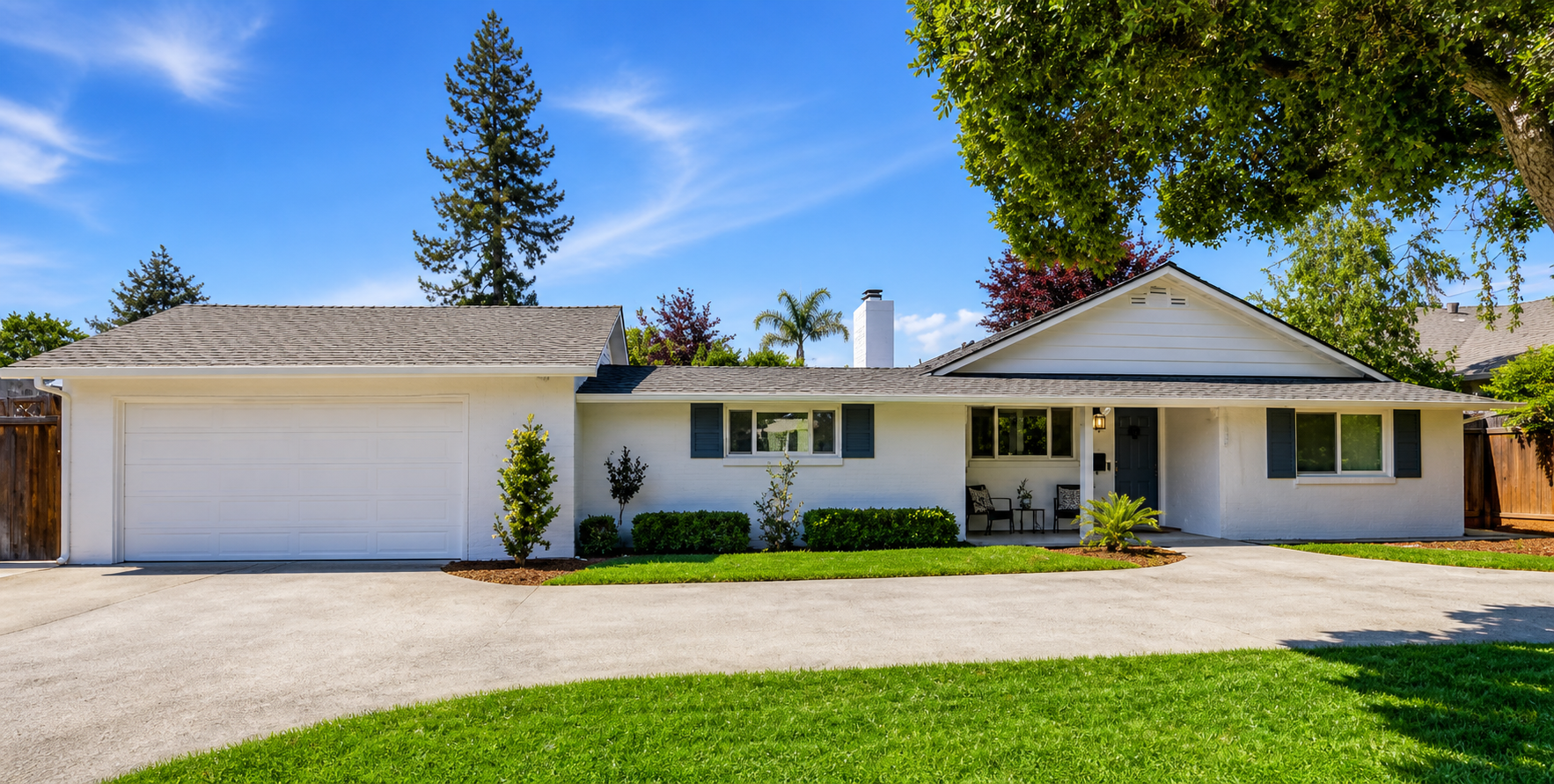
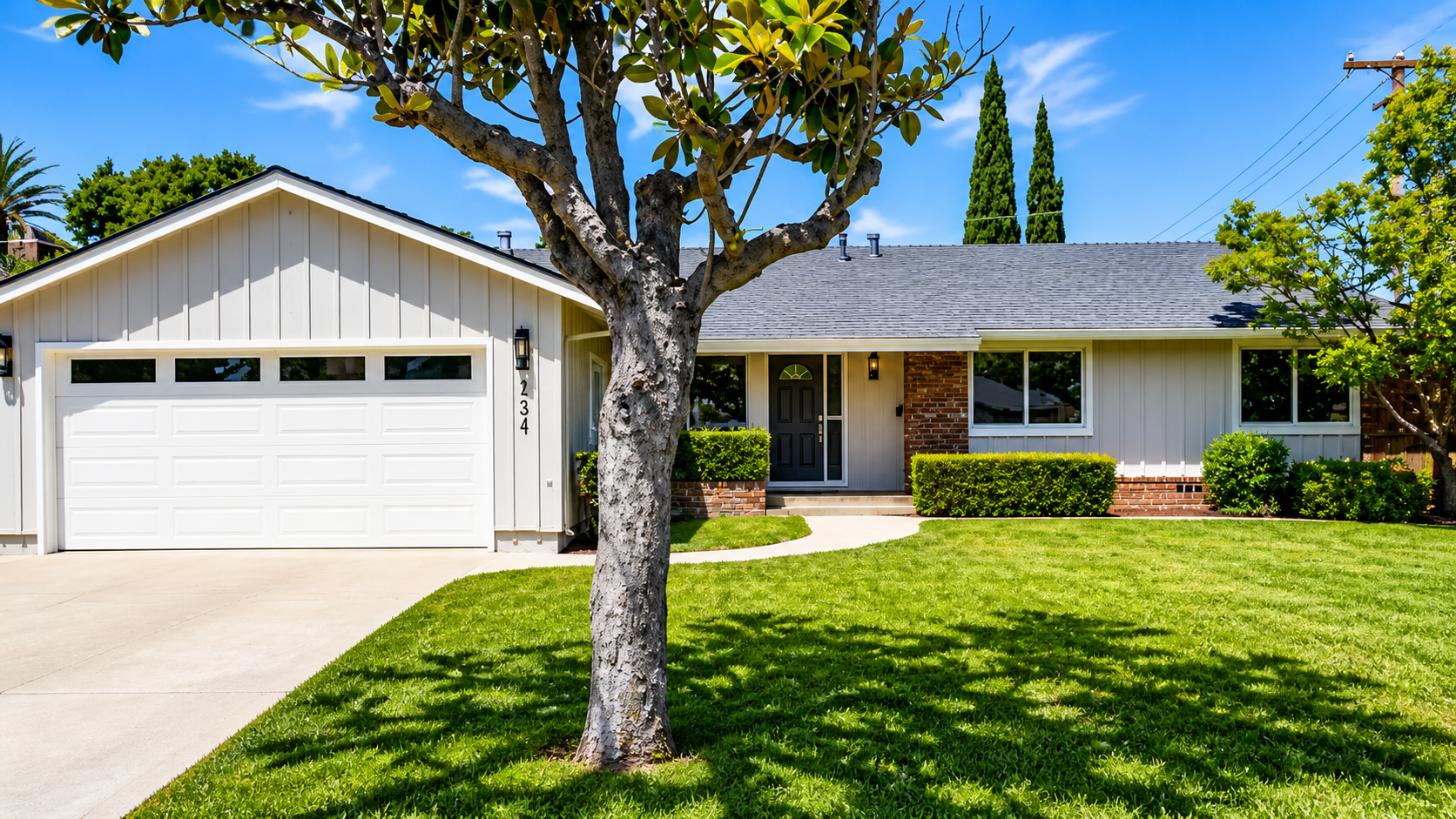
Architecturally, San Jose is a landscape where California ranch homes remain both visually legible and functionally useful. The usual physical markers are easy to spot even after remodeling: one-story massing, broad street-facing facades, attached front-facing or side-facing garages, low or moderately pitched roofs, clean horizontal lines, large front setbacks, sliding or French-door openings to patios, and backyards that serve as true extensions of the living space. Even when updated with oak floors, European cabinetry, curated lighting, or frameless glass, the bones still read as ranch—calm, grounded, and outward-looking rather than vertical and compressed.
Representative San Jose ranch-style examples in 2025 and 2026 span a wide but recognizable band. A compact 3-bedroom, 2-bath ranch at 1539 Princeton Drive measured 1,185 square feet and sold in February 2026. A smaller but land-rich ranch at 5494 Mary Jo Court measured 1,066 square feet on an 8,075-square-foot lot. A remodeled 3-bedroom, 2-bath ranch at 5494 Sharon Lane measured 1,480 square feet on a 6,490-square-foot lot. An Evergreen example at 2847 Norcrest Drive offered nearly 2,000 square feet on an 8,025-square-foot parcel, and an expanded luxury property at 15236 Dickens Avenue sold above $4.5 million, illustrating how ranch-era parcels can support far more ambitious end products after substantial additions or redevelopment.
That range is precisely why single-story homes in San Jose continue to attract diverse buyer groups. Families love the yard depth and future-proof circulation. Downsizers appreciate the absence of stairs without sacrificing privacy or entertaining potential. Investors and value-add buyers see a different equation: these properties frequently offer a compelling split between “house value today” and “site value tomorrow.” Redfin’s current San Jose ranch-style search page showed 11 ranch-style homes on the market at a median listing price of about $1.3 million, with homes generally staying on the market about 20 days and many attracting multiple offers. In a constrained housing environment, ranch homes hold power because they are livable immediately and improvable over time.
Buyers, Schools, and the Neighborhood Profile
San Jose’s 2024 population estimate was 997,368, with 328,550 households and an average household size of 2.97. The city is notably diverse: 39.5% of residents identify as Asian alone, 30.8% as Hispanic or Latino, 42.0% are foreign-born, and 58.9% speak a language other than English at home. The owner-occupied housing rate is 55.8%, the median value of owner-occupied housing units is $1,233,200, the bachelor’s-degree-or-higher rate is 47.3%, and median household income is $146,427. These figures help explain why San Jose real estate sits at the intersection of global talent, entrepreneurial capital, and a highly educated buyer base.
The buyer pool for ranch-style enclaves typically skews toward tech-linked and professional households, especially in western, southwestern, and school-driven submarkets. This is a reasoned inference grounded in the city’s education profile, its concentration of major employers, and the continuing premium placed on land, schools, and commute efficiency in Silicon Valley real estate. In practice, that usually means software engineers, product managers, founders, finance professionals, physicians, and hybrid-work executives competing alongside local move-up families and long-time area residents who want to remain in familiar school and social networks. The architecture matters, but the real draw is the package: single-level living on a meaningful lot within one of the world’s densest innovation economies.
Public School Framework
In San Jose, district boundaries can change by block, and the Santa Clara County Office of Education explicitly directs families to use its district locator by street address or parcel and then verify the actual school assignment with the serving district. In ranch-heavy central and southwest San Jose areas, public school service patterns commonly involve combinations of San Jose Unified, Union School District, Cambrian School District, and Campbell Union High School District. The city’s District 9 school list illustrates exactly how varied that can be, with nearby addresses in ZIP codes such as 95118 and 95124 routed to different elementary and middle districts depending on street location.
Schools influence pricing because buyers evaluate them as a long-term lifestyle allocation. Zillow reported in April 2026 that 40% of buyers say being in a preferred school district is very or extremely important, while a Brookings analysis found that neighborhoods near high-scoring schools are materially more expensive than those near lower-scoring schools. For luxury homes San Jose and family-oriented ranch neighborhoods in particular, that relationship is often visible in both pricing resilience and buyer urgency.
Private School and University Ecosystem
For private-school families, nearby options frequently cross-shopped by San Jose buyers include The Harker School, Bellarmine College Preparatory, Presentation High School, and Archbishop Mitty High School. On the higher-education side, proximity to San José State University and the wider academic gravity of Stanford University reinforce the area’s educated, future-oriented identity. For many buyers, that educational ecosystem signals the kind of region they are buying into—ambitious, credential-rich, and deeply invested in intellectual capital.
Lifestyle, Parks, and Everyday Convenience
The lifestyle appeal of a San Jose ranch neighborhood rests on a subtle but powerful contradiction: it feels suburban without feeling disconnected. Residents are often a short drive from some combination of the Los Gatos Creek Trail, Almaden Lake Regional Park, and the Municipal Rose Garden. The Los Gatos Creek Trail runs from downtown San Jose toward the hills above Los Gatos Creek and supports both recreation and practical bike mobility. Almaden Lake Regional Park spans 65 acres, while the Municipal Rose Garden remains one of the city’s signature civic landscapes.
Dining and retail are equally important to the San Jose story. Santana Row describes itself as a mixed-use district with more than 50 shops and 30 restaurants, while San Pedro Square Market functions as one of downtown’s most social food-and-drink destinations. The Downtown Farmers’ Market returned in 2025 with weekly Wednesday programming, and the city continues to support events such as Viva CalleSJ that close miles of streets for walking, biking, and neighborhood exploration.
For families, this translates into easier weekends and more usable outdoor time. For professionals and remote workers, it means a house that can function as both retreat and base camp. For outdoor enthusiasts, it means trails, creek corridors, and hills access without giving up proximity to shopping and work. Their value is not only their architecture; it is the way that architecture aligns with a broader San Jose pattern of mild-climate living, backyard entertaining, and a city that still offers meaningful open-air life despite its technological intensity.
Commuting and Access to Silicon Valley
Connectivity is one of the most persuasive parts of the San Jose story. The city sits at the center of a dense transportation web shaped by U.S. 101, Interstate 280, State Route 85, and State Route 87. Caltrans identifies Route 85 as an 18.4-mile segment connecting 101 in San Jose to 280 in Cupertino, and its State Route 87 work identifies the corridor between I-280 and SR-85 as a major intra-city connector. Official transit sources also show continued regional rail investment, including BART service at Berryessa/North San José and a planned six-mile Phase II extension through downtown to Santa Clara. For buyers comparing homes for sale San Jose CA, that infrastructure matters because it allows a lower-density neighborhood to remain tightly bound to the region’s economic core.
Employer access is equally central to demand. Major campuses remain distributed around San Jose in a pattern that makes west, southwest, and central neighborhoods especially attractive: Apple lists its corporate address at Apple Park Way in Cupertino; Google identifies its headquarters in Mountain View; Meta maintains its principal place of business in Menlo Park; NVIDIA is headquartered in Santa Clara; Adobe and Cisco are both based in San Jose; and Netflix maintains a major Los Gatos headquarters campus. This constellation is why Silicon Valley real estate buyers often value a ranch neighborhood for the luxury of predictable access to multiple employment centers.
Market Performance and the Boyenga Advantage
As a citywide baseline, San Jose remains an expensive but active seller-tilted market. Redfin reported that in March 2026 the median sale price was $1,488,000, the median sale price per square foot was $897, homes sold in about 10 days, and 508 homes closed that month. On Redfin’s competitiveness model, homes receive an average of three offers, average sale-to-list runs about 4% above ask, and especially hot homes can sell for about 10% over list in roughly seven days. Zillow’s March 2026 city profile put average home value at $1,463,614, with homes going pending in about 11 days. At the metro level, the FHFA all-transactions index for the San Jose–Sunnyvale–Santa Clara area rose from 353.96 in late 2015 to 561.97 in late 2025—an appreciation gain of roughly 59% over the decade. That is the larger market context behind investment homes San Jose and the continued appeal of large lot homes San Jose.
Nearby submarkets help sharpen the pricing story. Cambrian posted a median sale price around $2.2 million and a median sale price per square foot of about $1.31K, with Redfin classifying it as “most competitive.” Willow Glen ran at about $1.87 million in March 2026, with homes selling in roughly nine days and often around 5% above list. West Valleycame in around $2.35 million and about 10 days on market, while South San Jose was far more accessible, at roughly $986,000 to $1.07 million depending on slice and period.
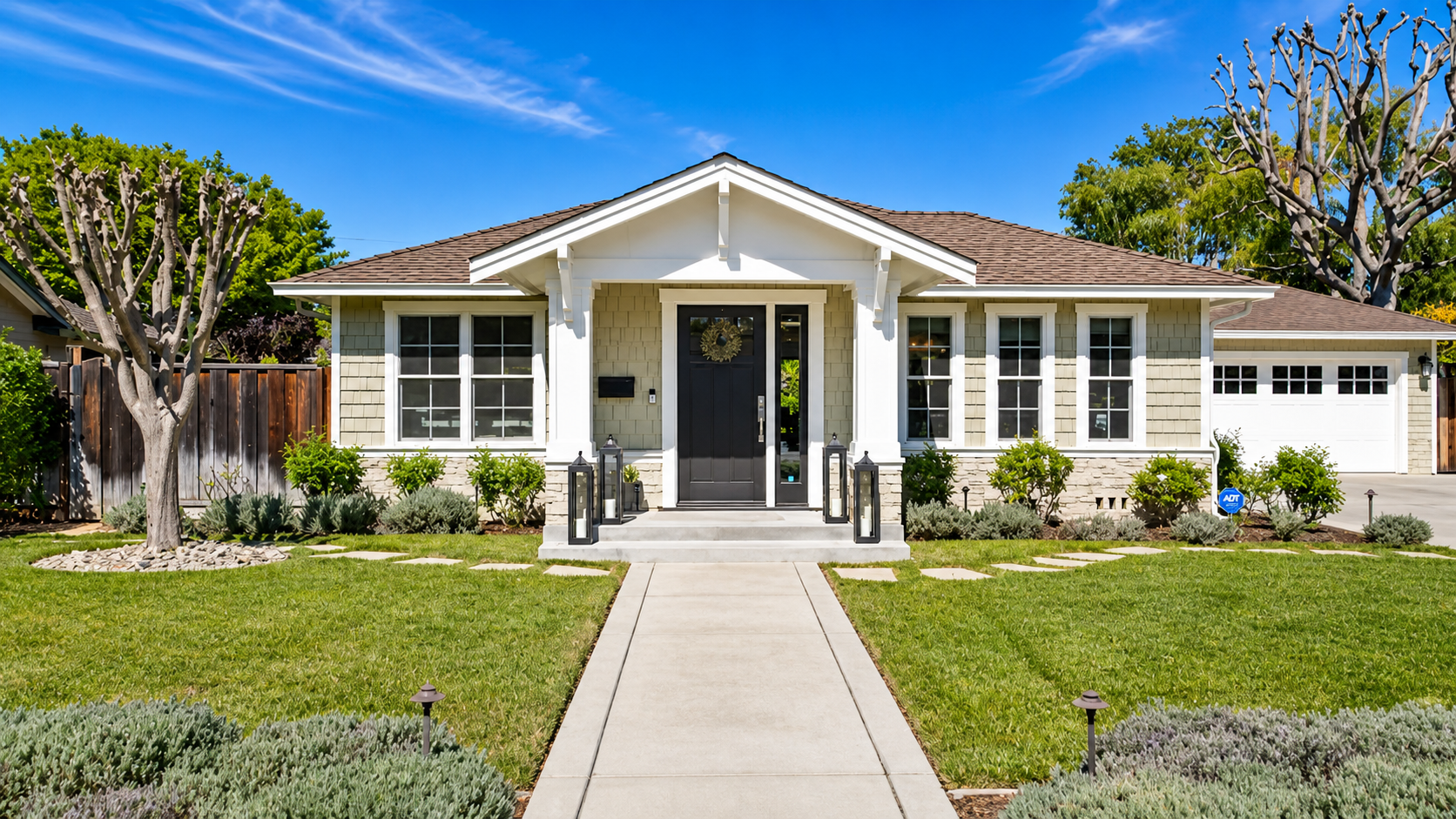
Representative sales make the ranch premium more tangible. At 1539 Princeton Drive, a 3-bedroom, 2-bath ranch of 1,185 square feet was listed at $1,498,888 on January 29, 2026 and sold for $1,800,000 on February 25, 2026—roughly 20% over ask in under a month. A different version of the ranch value story appears at 5494 Mary Jo Court. That home was 1,066 square feet on an 8,075-square-foot corner lot and was explicitly marketed around expansion, development, and ADU possibilities, selling for $1,720,000 on July 31, 2025. By contrast, 5494 Sharon Lane—a remodeled 1959 single-story with 1,480 square feet on a 6,490-square-foot lot—was listed at $2,299,999 on March 12, 2026 and sold at $2,390,000 on April 10, 2026. This is the turnkey premium in plain sight: original-condition ranches trade on land and upside; refined, design-forward ranches trade on immediate lifestyle.
This is precisely where the Boyenga Team story becomes relevant. On their official website and Compass profiles, Eric and Janelle Boyenga emphasize neighborhood expertise, home preparation, negotiation, construction-minded analysis, and marketing strategy. Compass, for its part, describes itself as a modern real estate platform and markets its Private Exclusives program as a way to validate pricing and expose a listing to a broad brokerage network before a full public launch. For buyers, the advantage is obvious: ranch homes often require quick judgment about remodel scope, lot economics, and school-boundary nuance. For sellers, the best ranch-home marketing does not just advertise square footage; it positions the property as a design canvas, a lifestyle asset, and a land-value proposition all at once.