Ponderosa Homes of Sunnyvale

Ponderosa Park sits in the eastern half of Sunnyvale, in the broader landscape that turned from Murphy ranch land and orchard country into postwar suburbia and, eventually, into one of Silicon Valley’s most valuable single-family housing markets. The strongest public source trail does not fully document the original corporate genealogy of “Ponderosa Homes” in Sunnyvale, but it does strongly anchor the neighborhood’s development in the early-to-mid 1960s: Ponderosa Elementary opened in 1964, Santa Clara Unified was formed in 1966 during the valley’s rapid suburban expansion, and Lawrence station sits just north of the Ponderosa area, reinforcing the tract’s classic “family neighborhood with commuter access” logic. In other words, this is a tract whose appeal comes less from architectural manifesto and more from practical Bay Area modernity: one-story living, usable lots, straightforward circulation, and exceptional remodel upside.

That distinction matters. If Eichler is the philosopher-king of Bay Area midcentury tract housing, Ponderosa Park reads more like the gifted engineer: less doctrinaire, more adaptable, easier for today’s buyers to update, expand, and in some cases reimagine with ADUs, larger kitchens, indoor-outdoor family rooms, and luxury finishes. That flexibility is a major reason buyers still chase Sunnyvale’s 1960s housing stock. Public sales data published in May 2026 show early-1960s Sunnyvale houses repeatedly clearing roughly the low-$2 millions to mid-$3 millions depending on size, condition, and finish level, while broader metro affordability remains punishingly high; Redfin data summarized by the San Francisco Chronicle indicated buyers in the San Jose metro needed roughly $426,000 of annual income in April 2026 to afford a mid-priced home.

For a real estate blog, the right Property Nerdish® angle is this: Ponderosa Park is not merely an old Sunnyvale tract. It is a case study in how practical postwar design, Silicon Valley location economics, and renovation optionality can create long-term buyer demand. This guide also keeps continuity with the earlier working brief supplied for the project.

History and neighborhood formation

To understand Ponderosa Park, you have to zoom out before you zoom in. Sunnyvale’s land story begins with Martin Murphy Jr.’s Bay View ranch in the nineteenth century. The rail connection through the area dates to the 1860s, orchards replaced broad wheat farming in the late nineteenth century, and Sunnyvale incorporated in 1912. By the postwar decades, that old agricultural landscape was being subdivided at scale into school-centered suburban neighborhoods built for aerospace, engineering, and then technology workers.

The Ponderosa record is clearer on when than on who. Publicly accessible sources reviewed here did not surface a clean, primary-source builder archive tying the Sunnyvale neighborhood to a fully documented corporate timeline in the way Eichler neighborhoods often are documented. What the sources do show is that Ponderosa Elementary opened in 1964, which makes it a reliable anchor point for the tract’s first-wave buildout; Marian A. Peterson Middle School opened later in 1981; and the larger Santa Clara Unified School District was formally established on July 1, 1966, after voters approved unification in 1965 to serve rapidly growing neighborhoods in Santa Clara, Sunnyvale, San Jose, and Cupertino.

The location clue is equally valuable. Sunnyvale’s own neighborhood description, as reflected in current public summaries, places the Ponderosa area in the city’s predominantly residential southern half, with Lawrence station situated in eastern Sunnyvale north of the Ponderosa neighborhood. That is exactly the sort of postwar planning relationship one expects in a tract built for upwardly mobile commuters: detached homes south of the rail corridor, schools embedded nearby, and quick access to jobs and transit without sacrificing a quiet street grid.

One caution is worth spelling out for readers. A later development company called Ponderosa Homes appears in much more recent South Bay politics, including the 2018 Evergreen Measure B fight in San Jose. The sources reviewed here do not conclusively establish that the later company is the same direct corporate lineage as the original Sunnyvale tract developer, so those histories should not be casually conflated in a careful neighborhood guide.


For visual storytelling, the strongest image package would be an annotated site map showing Lawrence station, Ponderosa Elementary, Peterson Middle, and the neighborhood street fabric; a historic-to-present aerial comparison showing the orchard-to-subdivision transition; and an illustrated “typical Ponderosa ranch plan” identifying how buyers often enlarge kitchens, primary suites, and family rooms today. The historical and district anchors for those graphics come directly from Sunnyvale history, SCUSD chronology, and Lawrence station context.

Architecture and builder DNA

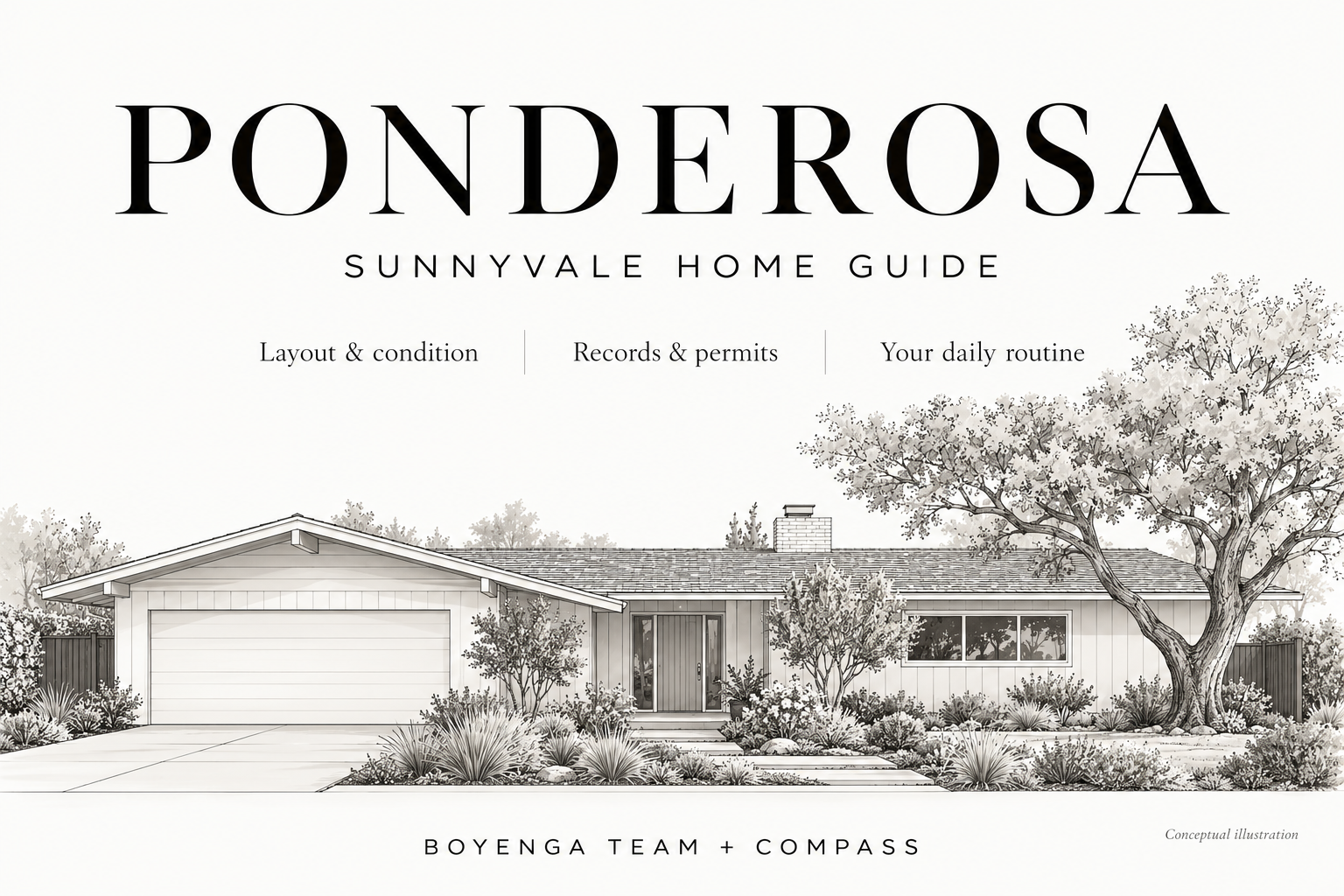
Ponderosa Park’s charm is less about radical modernism and more about intelligent tract livability. Because a public builder catalog was not located in the sources reviewed, the safest way to describe the housing stock is observationally and comparatively: surviving homes in this part of Sunnyvale generally read as early-to-mid-1960s, one-story suburban ranch houses with attached garages, practical family floorplans, broad front windows, low-to-moderate rooflines, and enough lot depth to make remodeling economically rational. In today’s market, that combination matters enormously because buyers can choose among three paths: preserve the house as a clean period ranch, enlarge it into a larger luxury residence, or use the lot for a carefully planned addition and ADU strategy. The continuing strength of similarly aged Sunnyvale sales supports that interpretation, even where a neighborhood-only public sales archive is incomplete.

This makes Ponderosa especially useful to compare against the Bay Area’s better-documented postwar builders. Eichler delivered a design ideology: atriums, post-and-beam framing, slab foundations, radiant heat, walls of glass, and a socially ambitious form of middle-class modernism. Mackay delivered what many enthusiasts call “California Modern”: still modern, still light-filled, but often with raised foundations and forced-air systems that can be easier to retrofit. Ponderosa, by contrast, appears to sit closer to the pragmatic ranch-house end of the spectrum—less architecturally doctrinaire than Eichler, less self-consciously modernist than Mackay’s iconic tracts, but often easier for mainstream families to live in without sacrificing the era’s broad indoor-outdoor sensibility.

Builder comparison table

The table below synthesizes the strongest documented comparison points from NRHP registrations, builder histories, school/district chronology, and current public market context. The Ponderosa row is partly observational because a definitive original tract brochure or corporate archive was not located in the reviewed sources; the Brown & Kauffmann row is therefore presented as contextual shorthand rather than a fully documented monograph entry.

Ponderosa Park vs. Other Notable South Bay Builders

Ponderosa Homes / Ponderosa Park

  • Developed primarily during the early-to-mid 1960s as eastern Sunnyvale expanded.

  • Neighborhood identity is closely tied to the opening of Ponderosa Elementary School in 1964.

  • Characterized by practical single-story ranch floor plans and attached garages.

  • Typically features larger, remodel-friendly lots.

  • Homes are generally easier to expand, reconfigure, and adapt for ADUs.

  • Appeals to buyers seeking classic California ranch living with flexibility for modernization.

Joseph Eichler

  • Built more than 11,000 homes between 1949 and 1966 throughout California.

  • Created many of Silicon Valley's most iconic mid-century modern neighborhoods.

  • Known for atriums, post-and-beam construction, slab foundations, and radiant floor heating.

  • Features extensive floor-to-ceiling glass and strong indoor-outdoor living connections.

  • Highly sought after by architecture enthusiasts and preservation-minded buyers.

  • Best suited for buyers who value design significance and are willing to carefully maintain or restore original features.

Mackay Homes

  • Major Bay Area builder beginning in the 1950s.

  • Helped popularize the "California Modern" style throughout the Peninsula and South Bay.

  • Known for open floor plans, expansive windows, enclosed patios, and raised foundations.

  • Typically incorporated forced-air heating systems rather than slab-based radiant systems.

  • Offers a blend of modern design and practical livability.

  • Attractive to buyers who appreciate mid-century openness but prefer homes that are often easier to renovate.

Brown & Kauffmann

  • Prominent postwar builder throughout Los Altos, Mountain View, Sunnyvale, and surrounding communities.

  • Focused on traditional California ranch architecture and family-oriented neighborhood planning.

  • Known for practical floor plans, attached garages, and conventional construction methods.

  • Emphasized comfortable suburban living rather than architectural experimentation.

  • Often compared to Ponderosa developments because both prioritize functionality and livability.

  • Popular with buyers seeking classic ranch homes that can be remodeled and expanded while preserving neighborhood character.

Key Takeaway

  • Ponderosa Park strikes a balance between the architectural distinctiveness of Eichler neighborhoods and the traditional ranch appeal of Brown & Kauffmann communities.

  • Buyers are often drawn to the neighborhood's combination of period charm, larger lots, flexible floor plans, and long-term remodeling potential.

  • The result is a neighborhood that offers both character and practicality, making it one of Sunnyvale's most enduringly popular communities.

Lifestyle, schools, and the daily geography of living here

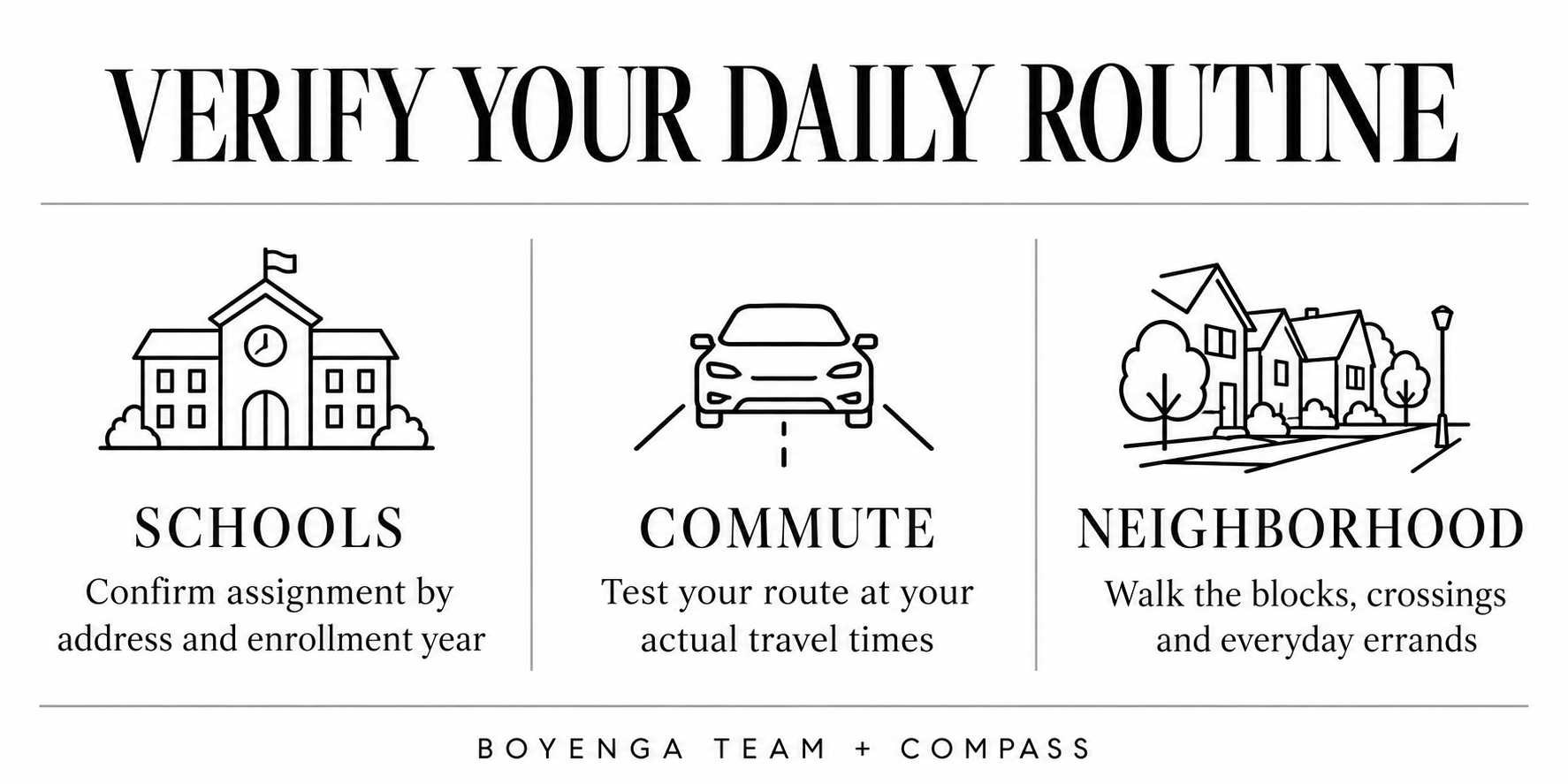
Ponderosa Park’s strongest lifestyle argument is not theatrical; it is efficient. The neighborhood sits inside a city of 155,805 people that still functions as one of Silicon Valley’s most strategically located residential addresses. Sunnyvale’s residential south half gives buyers exactly what many high-earning households want after years of urban density: a detached house, a small private realm, calmer streets, and straightforward access to job centers. That access is not speculative. Lawrence station is in eastern Sunnyvale just north of Ponderosa, and Caltrain reported an average of 686 weekday riders there in fiscal year 2025.

Schools are one of the neighborhood’s most tangible identity markers. Ponderosa Elementary opened in 1964, Peterson Middle opened in 1981, Santa Clara Unified serves Sunnyvale along with neighboring communities, and nearby district verification tools explicitly tell buyers to check school assignment by exact address before making a purchase decision. That is the right message for a credible real-estate blog: school identity matters here, but exact attendance should always be verified property by property.

The lifestyle point buyers often underestimate is how well this sort of tract ages. School-based street grids, modest lot widths, mature landscaping, and easy access to the rail corridor create a neighborhood that feels both settled and useful. That is different from a purely prestige-driven luxury enclave. Ponderosa’s luxury story is subtler: what you are buying is not only the house, but the option value embedded in the lot, the commute pattern, the school adjacency, and the possibility of turning a practical 1960s shell into a much more elevated custom lifestyle without leaving Sunnyvale. That logic helps explain why Sunnyvale was named Zillow’s most popular California market for 2024 and why demand for well-located single-family homes has remained so durable.

Neighborhoods and schools table

Because attendance can vary by exact parcel and district policies, the table below is best read as a buyer-orientation guide, not a legal assignment chart. FUHSD’s boundary page specifically recommends using the district locator before purchasing a home.

Neighborhood Positioning Within Sunnyvale

Ponderosa Park Core

  • Defined by its early-1960s tract-home character and strong neighborhood identity.

  • Built around a traditional, school-centered community fabric.

  • Predominantly single-story ranch homes designed for growing families.

  • Common school associations include Ponderosa Elementary and Peterson Middle School.

  • High school assignment should always be verified by specific property address.

  • Best used when telling the story of a classic Sunnyvale family neighborhood with long-term owner appeal.

North Edge Toward Lawrence Station

  • Benefits from proximity to Lawrence Caltrain Station and major commute routes.

  • Offers a stronger transit-oriented lifestyle than much of Sunnyvale.

  • Popular among hybrid workers and Silicon Valley commuters.

  • School assignments should be verified using district boundary maps and address-specific lookup tools.

  • Marketing emphasis should focus on convenience, connectivity, and commuter accessibility.

Broader East Sunnyvale Comparable Neighborhoods

  • Includes nearby postwar ranch-home communities developed during the same era.

  • Features similar lot sizes, home styles, and neighborhood layouts.

  • Shares convenient access to major technology employers, freeways, and transit corridors.

  • School pathways may vary significantly depending on neighborhood and address.

  • Useful when comparing home values, pricing trends, and buyer demand across adjacent ranch neighborhoods.

  • Provides valuable context when positioning Ponderosa Park against competing Sunnyvale communities.

Marketing Perspective

  • Ponderosa Park Core: Family-oriented neighborhood story.

  • Lawrence Station Area: Commuter and transit-focused story.

  • Broader East Sunnyvale: Value, pricing, and neighborhood comparison story.

For blog photography, this is where a walkability map matters: Lawrence station, school campuses, neighborhood entries, and the quick routes toward central Sunnyvale, Santa Clara, Mountain View, and major employment nodes. The photos should show street canopy, front setbacks, garage placement, and roofline rhythm—not just interiors—because that is how readers visually understand tract quality.

Market behavior, renovation opportunity, and seller strategy

The market story around Ponderosa Park is really a Sunnyvale story told through a single tract. Sunnyvale remains one of the Bay Area’s most watched single-family markets. Zillow’s 2024 popularity data put Sunnyvale at the top of California’s market-interest ranking, and metro affordability data in 2026 remained extraordinarily high. That combination—high demand, limited detached inventory, and punishing entry economics—creates unusually strong pricing support for houses that offer either turnkey polish or unusually good renovation geometry. Ponderosa Park often offers the latter.

Public sales archives reinforce the continuing value of 1960s Sunnyvale product. In the published May 2026 Bay Area homes-sold data, early-1960s Sunnyvale single-family homes traded across a broad but strikingly high band, including 666 Ashbourne Drive at $2.713 million, 1137 Maraschino Drive at $3.08 million, and 850 Quetta Avenue at $3.52 million. Those are citywide examples rather than authenticated Ponderosa Park-only comps, but they are still useful because they show how strongly the market prices well-located 1960s houses in Sunnyvale once lot, condition, and finish are layered in.

For buyers, the renovation opportunity is unusually compelling because California’s ADU framework has become materially more favorable, and SB 9 has expanded the conversation around duplexing and lot strategy in eligible single-family areas. Statewide, ADU activity rose dramatically after the 2016 reforms; applications increased from under 10,000 in 2017 to nearly 30,000 in 2021, and ADUs accounted for about 19 percent of new housing units produced statewide as of 2022. That does not mean every Ponderosa lot is automatically an ADU or SB 9 candidate. It does mean savvy buyers should analyze parcel dimensions, setbacks, easements, driveway configuration, utility capacity, mature trees, and neighborhood design fit before dismissing the lot as “just a ranch house parcel.”

For sellers, preservation is not nostalgia for nostalgia’s sake. In a tract like this, the value often sits in the tension between period integrity and future possibility. A house that keeps its clean roofline, readable façade, strong front picture window, and sensible one-story flow can still photograph beautifully for modern luxury buyers—especially if the kitchen, baths, lighting, flooring, and landscape have been upgraded in a way that respects the home’s original geometry. The worst marketing mistake is often to erase all period character while failing to deliver truly custom-caliber finishes. Buyers then see neither authentic midcentury charm nor true luxury execution; they just see expensive indecision.

The luxury angle, then, is not “old tract equals luxury.” It is more sophisticated: Ponderosa Park can appeal to luxury-minded buyers who want land efficiency, location, and custom-upside without paying Los Altos, Palo Alto, or Cupertino premiums for the same level of design intervention. In that frame, a great Ponderosa listing competes not merely against other Sunnyvale ranches, but against the buyer’s alternative of purchasing a smaller turnkey home elsewhere with far less architectural or lot flexibility.

Renovation priority checklist

Renovation Priority Checklist for Ponderosa-Type Homes

Roofline and Curb-Line Preservation

  • The front elevation is often the home’s strongest midcentury signal.

  • Preserve the original ranch roofline, horizontal curb appeal, and clean street presence.

  • Avoid awkward faux-Tuscan entries, oversized porticos, or overbuilt front additions.

  • Best marketing phrase:

    • “Clean modern-ranch presence”

Kitchen Expansion and Flow

  • Buyers often value open living, kitchen visibility, and entertaining flow more than strict room count.

  • Look for opportunities to connect the kitchen to dining, family, and outdoor areas.

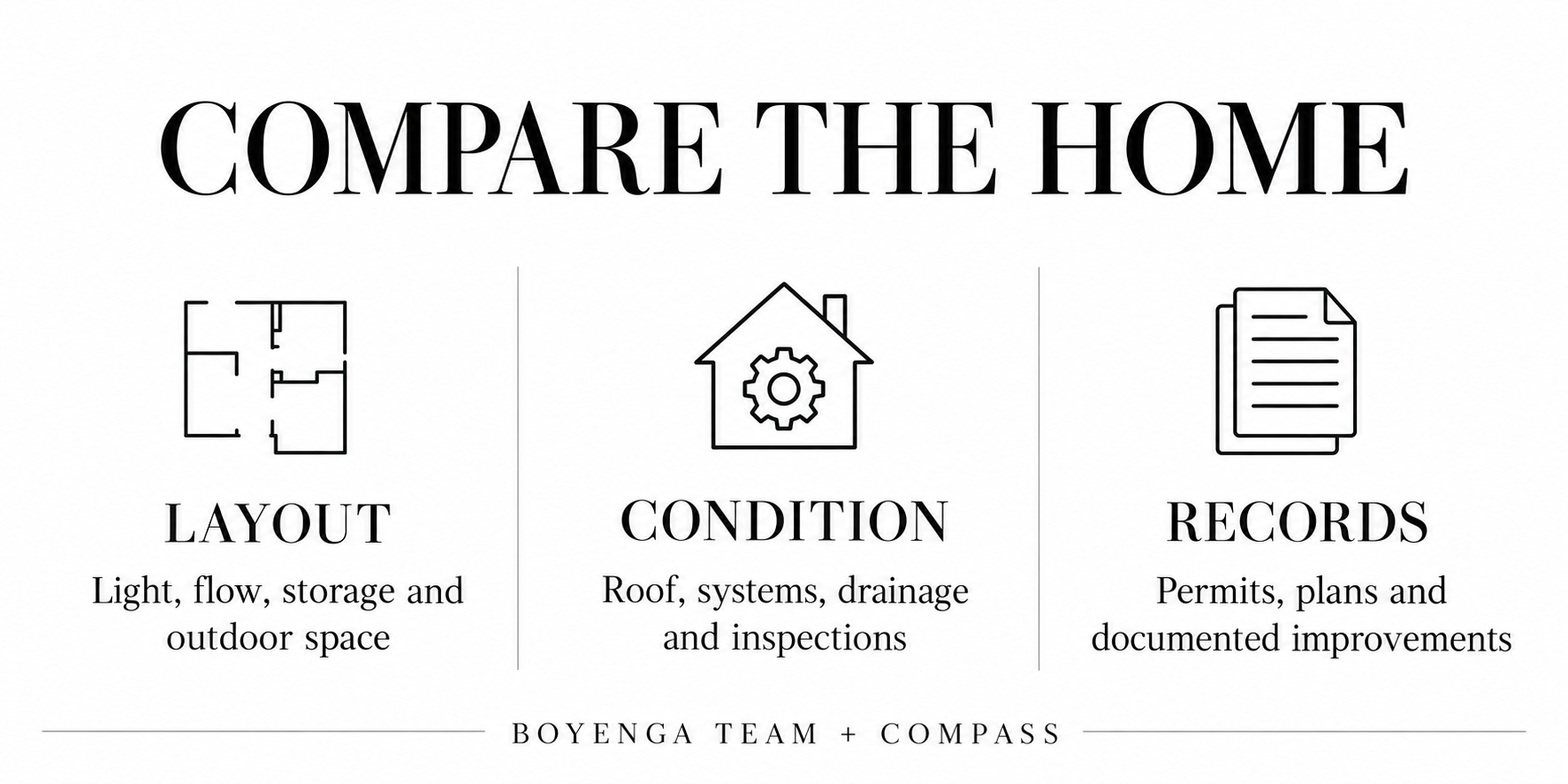
  • Confirm permits, structural changes, beam work, and circulation quality.

  • Best marketing phrase:

    • “Entertainer’s kitchen with everyday practicality”

Primary-Suite Strategy

  • A strong primary suite can move the home into a higher buyer category.

  • Prioritize privacy, closet space, natural light, and a well-scaled bath.

  • Avoid oversized rear additions that consume too much yard or feel out of proportion.

  • Best marketing phrase:

    • “Private retreat within a timeless ranch shell”

Windows, Insulation, and Mechanicals

  • Comfort and efficiency are major buyer concerns in older ranch homes.

  • Upgraded windows, insulation, HVAC, electrical, and plumbing can reduce buyer objections.

  • Preserve window proportions and architectural rhythm while improving performance.

  • Best marketing phrase:

    • “Updated for modern efficiency”

Landscape and Outdoor Rooms

  • The lot is a major part of the value story in Ponderosa-style neighborhoods.

  • Outdoor dining, lawn space, patios, gardens, and play areas all support the California lifestyle.

  • Balance expansion plans against the need for usable yard space.

  • Best marketing phrase:

    • “Indoor-outdoor California living”

ADU / Flex-Space Feasibility

  • Optionality creates premium buyer interest, even when an ADU has not been built.

  • Buyers may value future space for guests, work-from-home needs, rental income, or multigenerational living.

  • Verify local standards, utilities, trees, setbacks, and site logistics before marketing specific potential.

  • Best marketing phrase:

    • “Guest house / office / multigenerational potential”

Documentation and Permits

  • Clear documentation builds trust and supports stronger pricing.

  • Collect plans, permits, invoices, warranties, contractor history, and inspection records.

  • Especially important when marketing a renovated midcentury or ranch-style home.

  • Best marketing phrase:

    • “Confident, transparent offering”

PriorityWhy it matters in Ponderosa-type stockWhat to watchBest use in marketingRoofline and curb-line preservationThe front elevation is often the home’s first midcentury signalAvoid awkward faux-Tuscan or overbuilt entry additions“Clean modern-ranch presence”Kitchen expansion and flowBuyers prize open living more than strict room count in this segmentConfirm permits, structural changes, and circulation quality“Entertainer’s kitchen with everyday practicality”Primary-suite strategyA meaningful suite can shift the buyer pool upwardWatch disproportionate rear additions that kill yard utility“Private retreat within a timeless ranch shell”Windows, insulation, and mechanicalsEnergy comfort is a major buyer objection in older stockPreserve proportion while improving performance“Updated for modern efficiency”Landscape and outdoor roomsThe lot is a major part of the value equationBalance ADU/addition plans against usable yard space“Indoor-outdoor California living”ADU / flex-space feasibilityOptionality creates premium interest even when not builtVerify local standards, utilities, trees, and setbacks“Guest house / office / multigenerational potential”Documentation and permitsTrust is a pricing tool in renovated midcentury homesCollect plans, invoices, permits, and contractor history“Confident, transparent offering”

Boyenga Team perspective

For a Boyenga Team at Compass version of this story, the voice should be confident, specific, and slightly more analytical than generic neighborhood copy. Eric and Janelle Boyenga are best positioned here not simply as agents who “know Sunnyvale,” but as Luxury Home Experts who understand how to interpret an older tract through the lenses of architecture, remodel economics, lot utility, and buyer psychology. In a neighborhood like Ponderosa Park, representation is not just about pricing the house that exists; it is about pricing the future that buyers believe they can create.

That is where a high-level advisory approach matters. For sellers, Eric and Janelle can frame the home as a design asset rather than a dated box, identify which updates actually move luxury buyers, and position the property against both turnkey Sunnyvale inventory and custom-upside alternatives in nearby markets. For buyers, they can look past surface cosmetics and evaluate the house as a package of architecture, lot, school context, commute geography, and long-range resale strength. In other words, they do not just market homes. They interpret them.

SEO assets and excerpt

Excerpt

Ponderosa Park captures a distinctly Sunnyvale version of midcentury living: practical one-story ranch homes, school-centered streets, and the kind of lot utility that makes remodels, expansions, and ADUs genuinely interesting. It is not the loudest modernist neighborhood in Silicon Valley, but it may be one of the smartest.

SEO page title

Ponderosa Homes of Sunnyvale | The Complete Neighborhood Guide
Meta description

Explore Ponderosa Homes and Ponderosa Park in Sunnyvale, CA. Learn the neighborhood’s history, architecture, schools, commute patterns, buyer demand, renovation upside, ADU potential, preservation issues, and why these classic midcentury-era ranch homes continue to attract Silicon Valley buyers seeking location, flexibility, and long-term value.

Page information

A comprehensive, narrative neighborhood guide to Ponderosa Homes of Sunnyvale and Ponderosa Park, with historical context, architecture comparisons, school and commute insights, market analysis, renovation and ADU strategy, seller tips, and a Boyenga Team at Compass luxury-marketing perspective.

Comma-separated SEO keywords

Ponderosa Homes Sunnyvale, Ponderosa Park Sunnyvale, Sunnyvale midcentury homes, Sunnyvale ranch homes, Sunnyvale neighborhood guide, Ponderosa Elementary Sunnyvale, Peterson Middle Sunnyvale, Lawrence station Sunnyvale homes, Sunnyvale real estate, Sunnyvale homes for sale, east Sunnyvale homes, Sunnyvale mid-century ranch, Silicon Valley midcentury homes, Sunnyvale remodel opportunities, Sunnyvale ADU potential, Sunnyvale luxury homes, Sunnyvale luxury real estate, Sunnyvale Compass agents, Boyenga Team Compass, Eric Boyenga, Janelle Boyenga, Luxury Home Experts Sunnyvale, Sunnyvale architecture, postwar Sunnyvale neighborhoods, 1960s Sunnyvale homes, Bay Area ranch homes, Eichler vs Ponderosa Homes, Mackay Homes comparison, Brown and Kauffmann comparison, Sunnyvale school neighborhoods, Sunnyvale commuter neighborhoods, Lawrence Caltrain homes, Sunnyvale family neighborhoods, Sunnyvale single family homes, Sunnyvale home values, Sunnyvale home renovation, Sunnyvale preservation tips, Sunnyvale seller strategy, Sunnyvale buyer demand, Silicon Valley neighborhood blog

Open questions and limitations

The biggest unresolved issue is the exact original corporate history of “Ponderosa Homes” in Sunnyvale. The reviewed sources strongly support the neighborhood’s early-to-mid 1960s formation, school chronology, and location context, but they did not surface a clean primary-source tract brochure, recorder map, or company archive equivalent to the documentation that exists for Eichler neighborhoods. Likewise, public, neighborhood-only sales archives were limited, so the market section uses Sunnyvale-wide 1960s comparable sales and region-wide affordability indicators rather than authenticated Ponderosa Park-only comp sets. Finally, the Brown & Kauffmann comparison is included as local-market context, but detailed primary documentation for that builder relationship was not established in this review.

DevelopmentsProperty NerdPonderosa Homes Sunnyvale, Ponderosa Park Sunnyvale, Ponderosa neighborhood Sunnyvale, Sunnyvale ranch homes, Sunnyvale mid century homes, Sunnyvale California homes, Silicon Valley ranch homes, Sunnyvale real estate, Sunnyvale luxury homes, Sunnyvale luxury real estate, Sunnyvale neighborhood guide, Ponderosa Elementary Sunnyvale, Peterson Middle School Sunnyvale, Lawrence Station Sunnyvale, Lawrence Caltrain homes, Sunnyvale commuter neighborhoods, Sunnyvale architecture, Sunnyvale home builders, Silicon Valley home builders, post war homes Sunnyvale, 1960s homes Sunnyvale, Sunnyvale schools, Sunnyvale family neighborhoods, large lot homes Sunnyvale, ADU opportunities Sunnyvale, Sunnyvale remodeling opportunities, Silicon Valley housing history, Sunnyvale community guide, East Sunnyvale homes, Sunnyvale single story homes, Sunnyvale ranch style homes, Sunnyvale property values, Sunnyvale home appreciation, California ranch architecture, Silicon Valley neighborhoods, Sunnyvale homes for sale, luxury homes Sunnyvale CA, Property Nerds, Property Nerds Silicon Valley, Boyenga Team, Eric Boyenga, Janelle Boyenga, Compass Sunnyvale, Compass Silicon Valley, Luxury Home Experts, Silicon Valley Luxury Home Experts, Sunnyvale architectural homes, Sunnyvale relocation guide, Sunnyvale real estate market, Sunnyvale investment property, Silicon Valley lifestyle, Bay Area neighborhoods, Bay Area architecture, California suburban development, Sunnyvale ADU potential, Ponderosa Park homes for sale, Ponderosa Park neighborhood guide, historic Sunnyvale neighborhoods, best neighborhoods in Sunnyvale, Sunnyvale luxury neighborhood guide