
Brown and Kauffmann Development and Construction at Cherryhill West in 94087
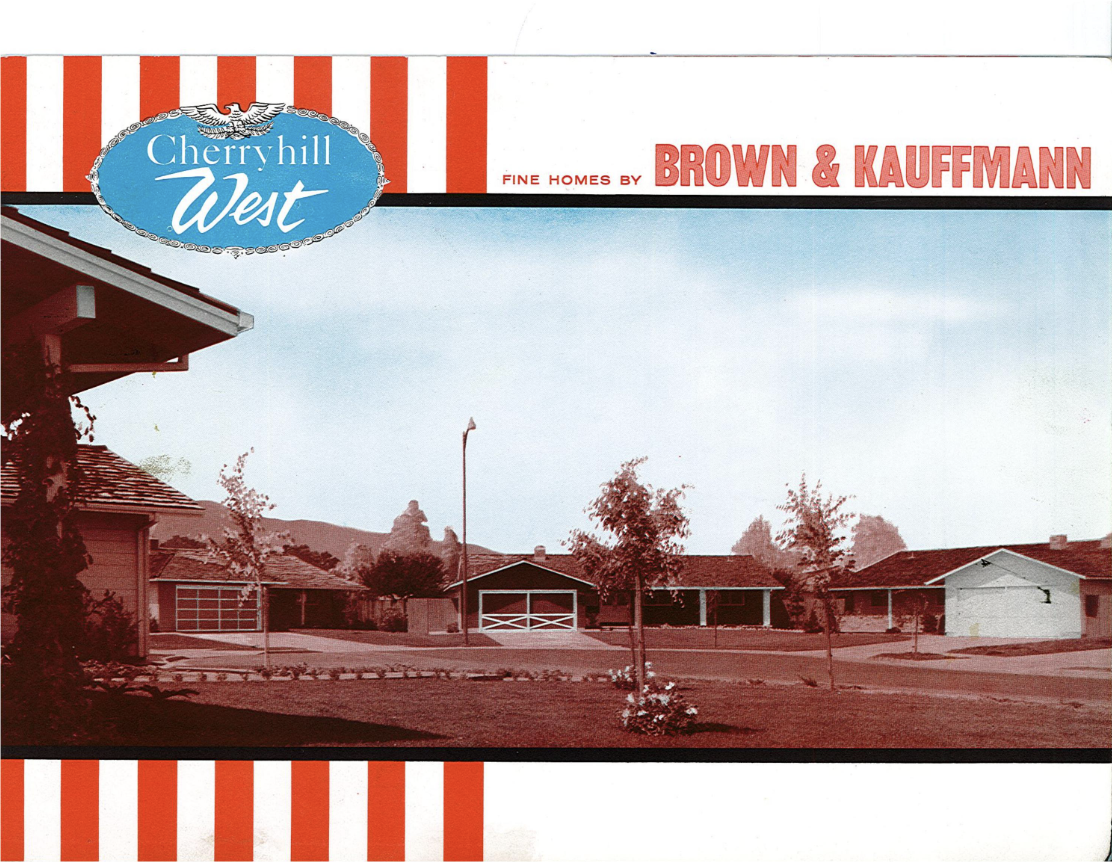
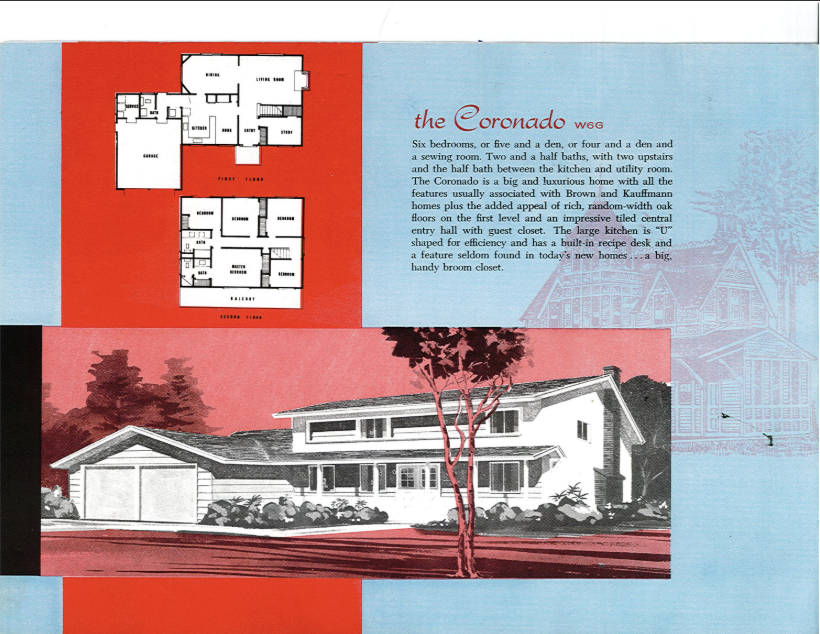
Cherryhill West is a mid-century, single-family subdivision in the 94087 area of Sunnyvale whose housing stock is widely attributed in assessor-reported and MLS-derived public records to Brown and Kauffmann as builder (often shown as “Builder Architect: Brown & Kauffmann”). The development is best understood as a phased tract program (multiple recorded tracts are referenced in legal descriptions) rather than a single contemporary “project,” with many homes reporting original construction years concentrated in the late 1950s through early 1960s.
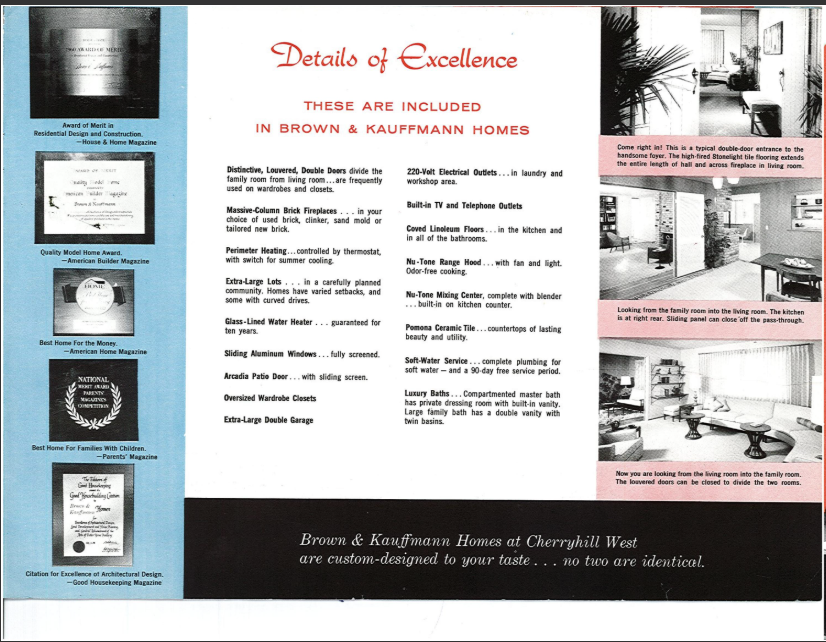
Primary-source-adjacent documentation indicates that Brown and Kauffmann’s Sunnyvale tract marketing was already active by late 1957 under the “Cherry Hill Farms” name, with a widely cited architect-of-record being Alexander C. Prentice Jr. (AIA), and with advertised pricing in the high-$19,000s to low-$20,000s range for at least some models described in that period. A later trade-publication snippet also associates Brown and Kauffmann with planned high-volume buildout language (e.g., “eventual construction of 430 houses of this model”), consistent with a tract strategy.
Official-record access for approvals and permits is fragmented by era. Modern permit and plan-history access for Sunnyvale is centralized through the City’s One-Stop Permit Center and its E-OneStop online system. For subdivision mapping, Santa Clara County’s County Surveyor/Clerk-Recorder ecosystem points users to recorded maps, with online index tools and in-person/other purchase pathways for map documents. Santa Clara County’s Assessor provides parcel-level assessment lookup tools but does not display owner (assessee) names online, which constrains any “notable buyers” analysis from official assessor portals.
Today, Cherryhill West homes trade as high-value Silicon Valley single-family homes, with multi-million-dollar prices and strong price-per-square-foot results in recent years. We’ve written extensively about Cherryhill West and Brown and Kauffmann homes, and we regularly help owners and buyers weigh design lineage, remodel strategy and pricing in 94087.
Scope note (explicit): construction contractors, subcontractors, hard costs, and many original permit numbers for late-1950s builds are unspecified in the publicly accessible sources retrieved here; where modern permit portals exist, the intended mode is interactive search and may require direct portal use or records requests for full historical files.
Site and neighborhood context
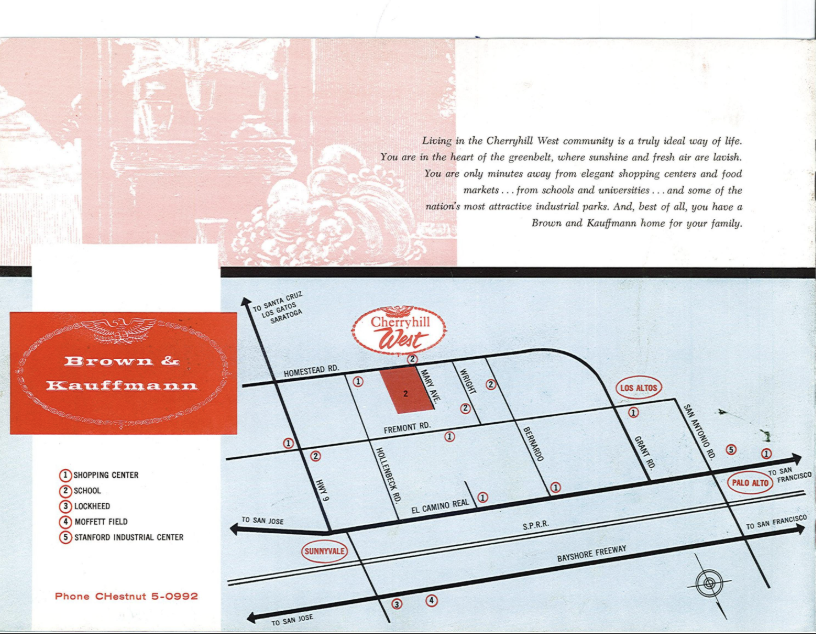
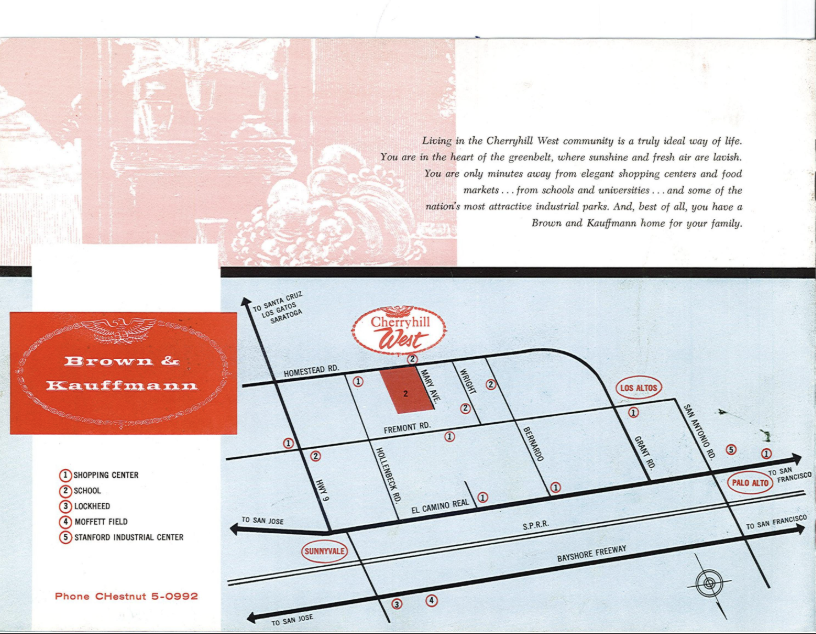
Cherryhill West is commonly referenced in public records and real estate listings as a named “Subdivision Text” / “Subdivision Name,” and appears in legal descriptions tied to tract recordings and county map books/pages (for example, “TRACT 2021 CHERRYHILL WEST BOOK 107 PAGE 18 …” in multiple parcel records). The community sits in Sunnyvale’s 94087 geography and is frequently marketed in a West Valley / Serra Park–Belleville context, with proximity to highly ranked schools and parks being a recurring demand driver in buyer narratives and agent commentary.
A practical way to define the “project footprint” for research purposes is therefore not a single APN, but a collection of parcels whose assessor/MLS data references “Cherryhill West” and/or tract numbers associated with “CHERRYHILL WEST.” The sampling below illustrates how Cherryhill West parcels present across multiple streets and tract references, including both APN identifiers and map book/page tract ties in public-facing listing data.
Representative parcels and tract identifiers
Cherryhill West – Representative Parcels & Tract Identifiers
(Public listing / record references; Redfin sources removed)
1607 Lewiston Dr
APN: 323-20-067
Subdivision Text: Cherryhill West
Year Built: 1959 (per listing record)
Evidence Basis: Compass property history record
1452 La Crosse Dr
APN: 323-16-039
Subdivision Text: CHERRYHILL WEST
Evidence Basis: Compass property record
836 Corvallis Dr
APN: 323-16-029
Subdivision Text: Cherryhill West
Builder Attribution: Brown & Kauffmann (as shown in listing data)
Evidence Basis: Compass property record
826 Cathedral Dr
APN: 323-17-046
Subdivision: Cherryhill West
Evidence Basis: Realtor.com record
1507 Kingsgate Dr
APN: 323-19-002
Subdivision Text: Cherry Hill West
Year Built: 1958 (per listing record)
Evidence Basis: Compass listing record
1539 Klamath Dr
APN: 32324034 (displayed without dashes in record)
Tract Reference: Tract 2021 – Book 107, Page 18, Lot 225
Evidence Basis: Public record summary
875 W Homestead Rd
Tract Reference: Tract 2020 – Book 100, Pages 44–45, Lot 199
Evidence Basis: Public record summary
Interpretation: These examples illustrate how “Cherryhill West” appears across multiple tract recordings and APN sequences, reinforcing its phased subdivision structure rather than a single map filing.
Interpretation: The tract references above support a multi-tract understanding of Cherryhill West—i.e., “Cherryhill West” is a tract-name umbrella that appears across at least Tract 2020 and Tract 2021 (and likely other units/phases).
For neighborhood amenities and positioning, Cherryhill West is often discussed alongside nearby parks and school-service advantages; for example, listings regularly emphasize walkability to parks and top local schools (West Valley Elementary / Cupertino Middle / Homestead High appear repeatedly in buyer-facing materials for the area). The Boyenga Team’s published neighborhood profiles similarly frame Cherryhill West as one of the key non-Eichler ranch-home concentrations within the broader Serra Park/Belleville area, reinforcing a market narrative that blends mid-century character with modern luxury upgrades in a high-demand school context.
Development entity and key participants
Brown and Kauffmann’s role at Cherryhill West is not merely that of a general contractor; available documentation points to an integrated builder-developer model typical of mid-century tract production. In an obituary published by the San Francisco Chronicle, the firm is described as created by a partnership between Wayne Randolph Brown and Sam Kauffmann, beginning with small-scale speculative builds and scaling to subdivisions. That same source explicitly states they “created a development of 260 homes in Sunnyvale next called Cherry Hill Farms,” connecting Brown and Kauffmann directly to a high-count Sunnyvale tract under the Cherry Hill naming lineage.
The same obituary asserts that the firm went on to build “several thousands” of homes in multiple Bay Area communities and that the company received “more than 23 national home building awards,” with recognition attributed to organizations and publications including the National Association of Home Builders, House & Home Magazine, American Builder Magazine, Parents Magazine, and Better Homes and Gardens.
Architect attribution is more specific than is common for tract housing of the era: a mid-century publication scan hosted by USModernist identifies Cherry Hill Farms in Sunnyvale and lists Brown and Kauffmann as builder with Alexander C. Prentice Jr. as architect (noted as AIA). Independent architectural-reference sources corroborate Prentice’s professional standing, including membership ties to the AIA (1955–1972) and independent practice in Palo Alto in the mid-1950s.
Construction leadership beyond the principal partners appears in historical biographical references: for example, a Dartmouth alumni death notice references a construction vice president role at Brown and Kauffmann Inc., indicating a staffed corporate structure consistent with multi-tract delivery (though this does not identify Cherryhill West-specific jobsite personnel).
Cherryhill West – Stakeholder Role Flow (Clean Breakdown)
Phase 1 – Land & Development (1950s)
Orchard-era landholdings assembled into residential parcels
Developer-Builder: Brown & Kauffmann leads tract planning and execution
Architect-of-Record: Alexander C. Prentice Jr., AIA (documented for Cherry Hill Farms phase)
Subdivision mapping and tract recordation completed
Tract maps recorded with Santa Clara County Surveyor / Clerk-Recorder
Phase 2 – Construction & Delivery
Brown & Kauffmann coordinates construction trades and material suppliers
Building plans submitted for City approvals
Permits issued through City of Sunnyvale
Inspections conducted → finals completed → permits closed
Homes delivered to original buyers
Phase 3 – Neighborhood Evolution (1960s–Present)
Properties enter resale cycle
Remodels, additions, and system upgrades completed over decades
Permit history tracked through Sunnyvale’s One-Stop / E-OneStop system
Modern market positioning shaped by architectural lineage and tract identity
Boyenga Team provides contemporary neighborhood expertise, marketing strategy, and representation
Structural Insight:
The flow demonstrates how Cherryhill West transitioned from orchard land to phased subdivision, then into a long-term mid-century neighborhood whose value today is shaped by both original builder pedigree and cumulative remodel history.
Boyenga Team role note (explicit): No primary sources in this research set identify the Boyenga Team as part of the original 1950s–1960s development entity, construction management, or initial onsite sales force for Brown and Kauffmann at Cherryhill West; therefore, any “project management” or “original sales” role for the Boyenga Team is unspecified for the original buildout phase. Their verifiable contributions in the accessible record are modern-era: publishing neighborhood and housing-stock analysis that directly addresses Brown and Kauffmann homes and Cherryhill West identity within 94087.
Timeline and official records
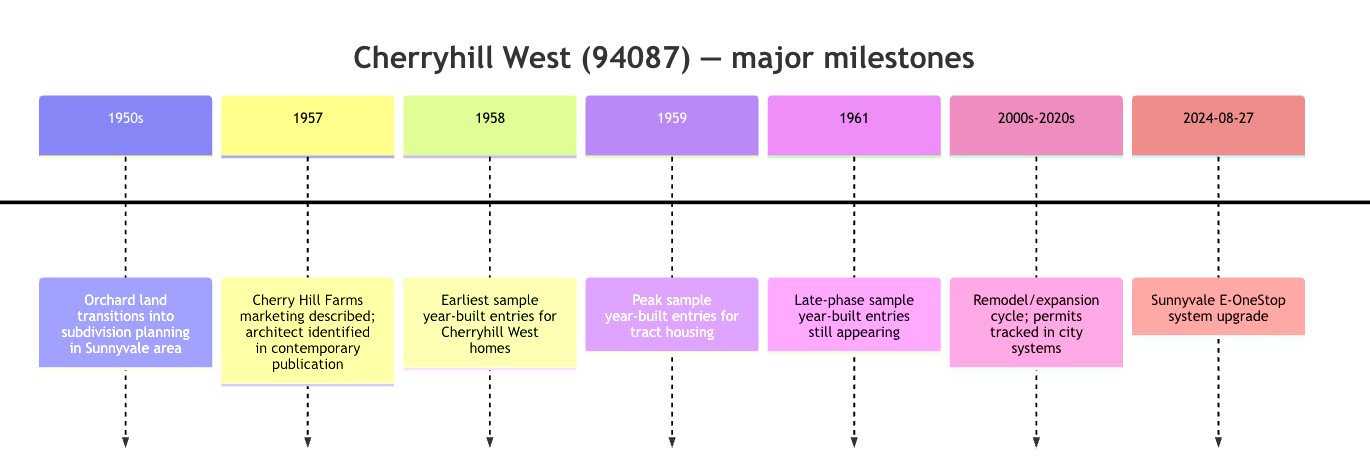
The timeline below is assembled from (a) dated narrative sources describing Cherry Hill Farms marketing and scale, (b) public-record “year built” fields across representative parcels, and (c) official guidance on where tract maps and permits are housed. Because the tract was delivered in the late 1950s/early 1960s, the most authoritative “planning approval” artifacts would typically include recorded subdivision/tract maps and original building permits—many of which may not be fully digitized in public-facing portals without additional records retrieval steps.
Cherryhill West – Development Milestones
Mid-to-Late 1950s
Brown and Kauffmann expands from earlier subdivision work into Sunnyvale
“Cherry Hill Farms” development described as approximately 260 homes
Evidence Basis: San Francisco Chronicle obituary narrative (via Legacy.com)
Confidence Level: High (existence and scale well documented)
Late 1957
Cherry Hill Farms publicly marketed in contemporary housing media
Advertised pricing approximately $19,400–$20,600
Architect identified as Alexander C. Prentice Jr. (AIA)
Evidence Basis: USModernist-hosted magazine scan naming builder, architect, and pricing
Confidence Level: Medium (source is a publication scan; full issue not extracted)
1958–1961
Construction delivery of many Cherryhill West parcels
Sample “year built” fields frequently show 1958, 1959, and 1961
Evidence Basis: Multiple parcel and listing records
Confidence Level:
High for sampled parcels
Medium for full tract-wide distribution
Recorded-Map Era (Tract Mapping)
“Cherryhill West” appears in legal descriptions tied to County map book and page references
Examples include Tract 2020 (Book 100) and Tract 2021 (Book 107)
Confirms phased subdivision structure rather than a single filing
Evidence Basis: Public-record excerpts from listings showing tract/book/page data
Confidence Level: Medium (listings reflect county data but are secondary representations)
Modern Era (Ongoing)
Remodels, additions, and system upgrades tracked through the City of Sunnyvale One-Stop Permit Center / E-OneStop system
Permit history now a key diligence factor for buyers and sellers
Evidence Basis: City of Sunnyvale Permit Center guidance
Confidence Level:
High for existence of the permitting framework
Low for any specific address without portal extraction
August 27, 2024
Sunnyvale permitting system upgraded
Re-registration required for existing online users
Evidence Basis: City Online Services Help notice
Confidence Level: High
Mermaid timeline chart of major milestones
Official records map: what exists and where it lives
The most critical “official record spine” for a tract like Cherryhill West consists of: (1) recorded subdivision/tract maps and surveys, (2) building permits and inspection history, and (3) assessor parcel/APN data linking lots to mapped tracts and legal descriptions. The County Surveyor’s Record Index is described as searchable by APN and by map book & page, which aligns directly with how Cherryhill West is referenced in legal descriptions (e.g., Book 107 Page 18). The Clerk-Recorder notes that recorded map documents are not available by phone or online ordering, implying that tract-map retrieval may require formal request channels, in-person steps, or other non-instant access paths.
On the assessor side, the Office of the Assessor, Santa Clara County describes its online property assessment information system as providing assessment basics (including APN lookup) and explicitly states limitations: data may be out of date, and assessee/owner names are not displayed online due to state-law constraints and update cost. This limitation is central when evaluating “notable buyers” in an official-record framework: without deed-chain research through recorder documents, owner identity will often remain private in common online assessor views.
For city-level permitting and approvals, the City of Sunnyvale directs building/planning customers to the One-Stop Permit Center and its E-OneStop online services, explicitly emphasizing that the system supports permit search, plan history, uploads, comments, inspections, and payments. A public-record request thread on MuckRock adds a secondary-but-useful pointer: Sunnyvale permits were (at least historically) visually searchable through a City GIS web application, and City staff responses referenced downloadable GIS layers associated with the permitting system. These threads support the conclusion that permit data exists in structured form, even if specific late-1950s permits may require special retrieval beyond simple online search.
Permit and approval records table
Original 1958–1961 construction permits likely sit in the City of Sunnyvale’s archives but haven’t been digitized.
Design and architectural features
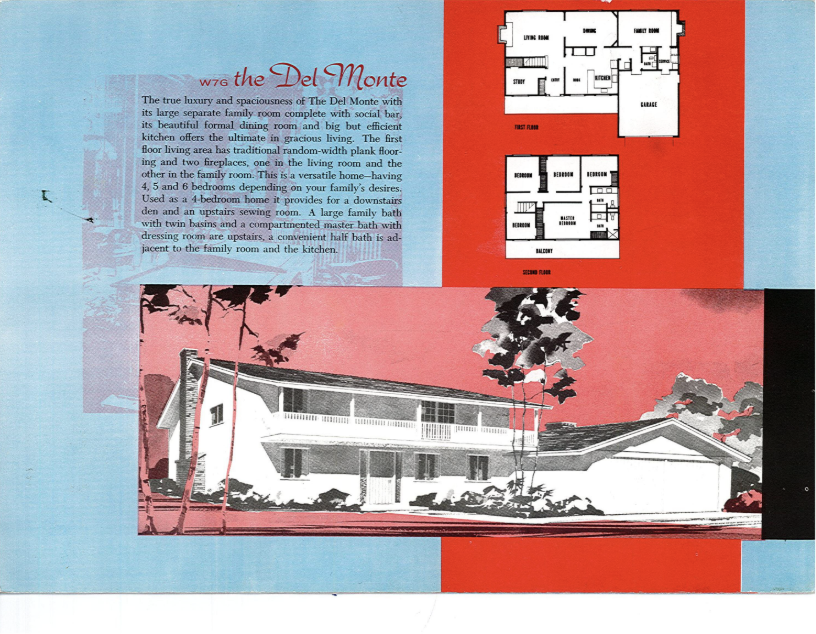
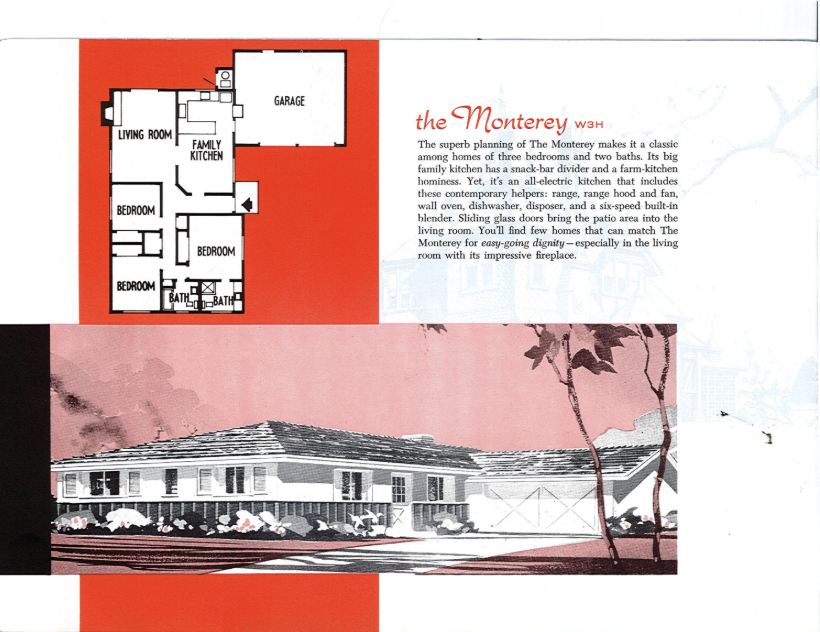
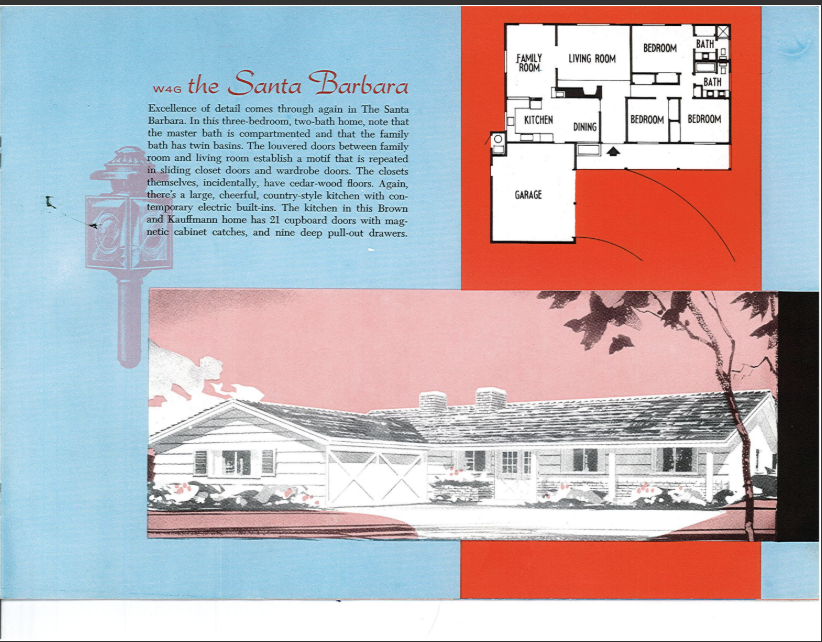
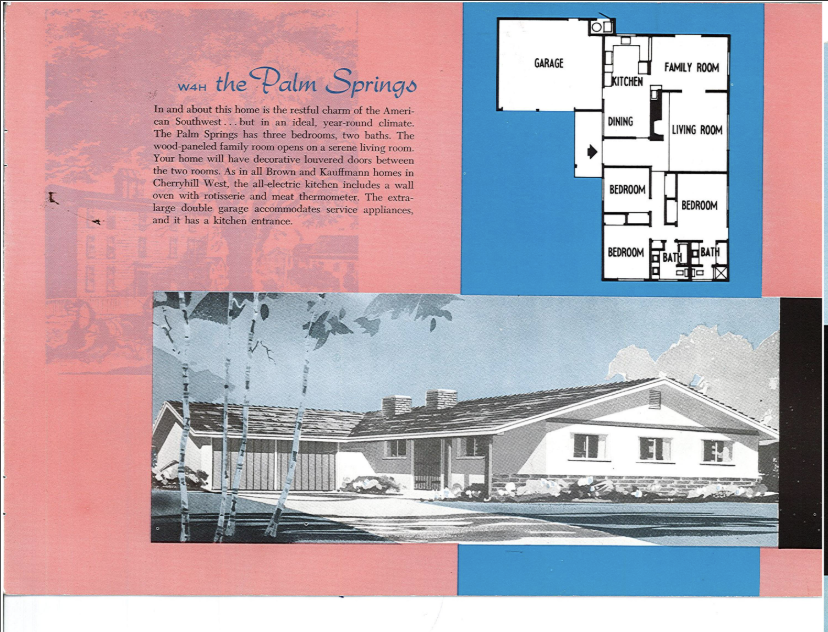
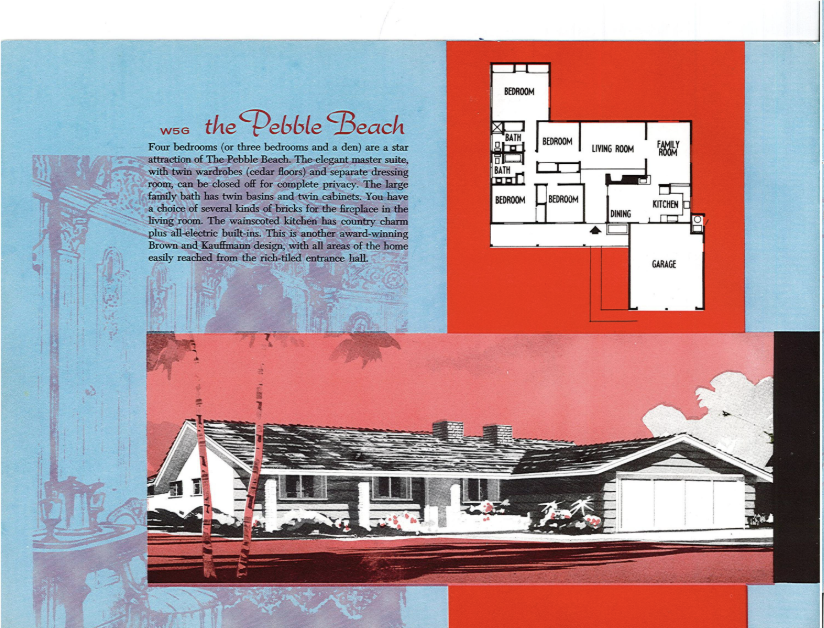
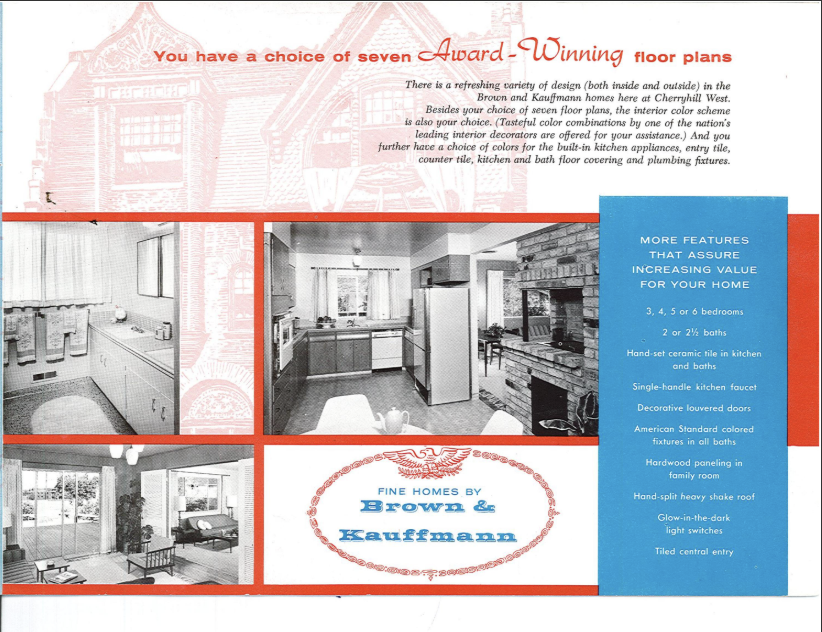
Cherryhill West’s design identity is dominated by single-story California ranch typologies—generally 3–4 bedrooms, ~2 baths—whose massing and lot proportions have proven unusually adaptable to remodel and “expand-and-remodel” strategies that preserve mid-century street character while modernizing interiors. Multiple listing records explicitly describe these as ranch-style homes with recurring material palettes, including wood/stucco exteriors and (in some cases) shake roofs—elements consistent with late-1950s/early-1960s regional ranch construction.
Architect-of-record documentation is clearest for the closely linked “Cherry Hill Farms” phase/name: the USModernist-hosted scan snippet identifies Alexander C. Prentice Jr. (AIA) as architect for Cherry Hill Farms in Sunnyvale, which provides a defensible bridge for interpreting Brown and Kauffmann’s Sunnyvale tract work as architect-guided (at least in marketing and plan authorship), not merely builder-drawn.
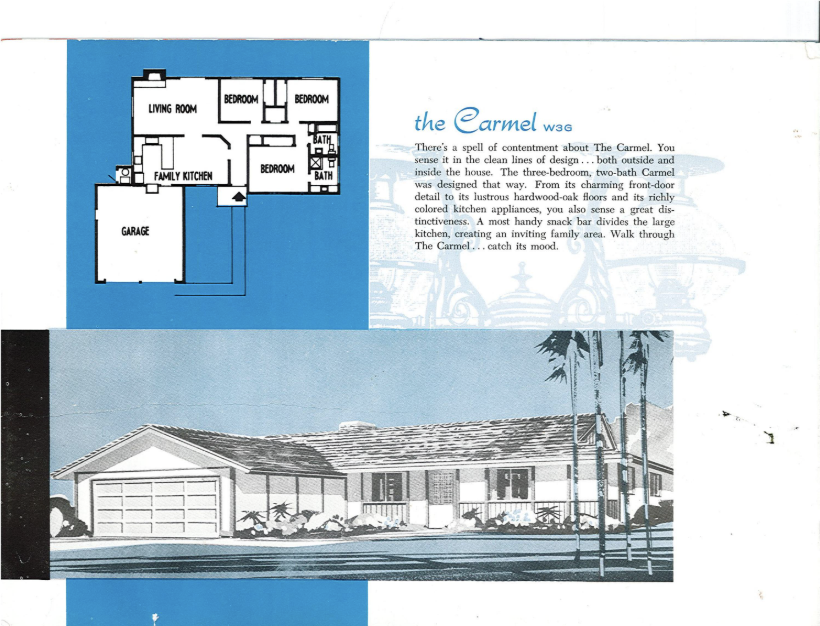
From a “unit mix” standpoint, Cherryhill West is not a multi-family development; the “mix” is instead a set of repeated floorplan families that vary primarily by bedroom count, footprint geometry (rectangular vs L-shaped), and later expansion patterns. Public-record excerpts show recurring living-area sizes such as ~1,512 sqft (3/2), ~1,768 sqft (often 4/2), and larger expansions beyond 2,000 sqft in some cases.
Cherryhill West – Unit-Type Comparison (Plan Families Observed in Public Records)
Type A – “Compact Ranch”
Typical Layout: 3 bedrooms / 2 bathrooms
Approx. Living Area: ~1,512 sq ft
Typical Lot Size: ~8,000 sq ft (frequently observed)
Recurring Features:
Single-story ranch configuration
Wood-frame construction
Legal descriptions tied to Cherryhill West tract recordings
Many homes show later interior upgrades over time
Evidence Reference: Public-record excerpt for 1539 Klamath Dr
Type B – “Core Family Ranch”
Typical Layout: 4 bedrooms / 2 bathrooms
Approx. Living Area: ~1,768 sq ft
Typical Lot Size: ~7,900–8,700 sq ft (common range in samples)
Recurring Features:
Separate family room frequently present
Shake roof noted in some records
Indoor BBQ appears in select listings (often remodel-era feature)
Evidence Reference: Public listings including 1582 Kennewick Dr and 1507 Kingsgate Dr
Type C – “Expanded / Remodeled Variant”
Typical Layout: 4 bedrooms / 2 bathrooms (sometimes more after expansion)
Approx. Living Area: ~1,879–2,314+ sq ft
Typical Lot Size: ~8,000–8,500 sq ft
Recurring Features:
Expanded footprints beyond original ranch plan
Skylights and double-pane windows commonly cited
Energy and systems upgrades typically retrofit
“Expanded & remodeled” frequently used in marketing descriptions
Evidence Reference: Public listings including Lewiston Dr and related Compass / Redfin excerpts
Note: Plan families are analytic groupings based on recurring public-record patterns and listing descriptions, not official builder model names.
Sustainability and energy features: Listings frequently cite double-pane windows, skylights, insulation, and similar “energy features,” but these should be interpreted cautiously as often reflecting remodel-era upgrades rather than original 1958–1961 specifications. The City of Sunnyvale’s modern permitting framework explicitly treats many residential changes as permit-controlled (and thus recordable), further reinforcing that today’s “energy profile” of a given home is typically the cumulative outcome of multiple permitted projects over decades.
Diagrams (conceptual, not to scale)
Conceptual lot-and-house site plan diagram (typical Cherryhill West single-family parcel form factor inferred from recurring listing patterns: front setback, attached garage, backyard entertaining space).
textCopy
STREET
┌───────────────────────────────────────────────┐
│ Front yard / setback (landscaping, walkway) │
│ ┌───────────────┐ ┌───────────────┐ │
│ │ Living / │ │ 2-car garage │ │
│ │ dining core │ │ (attached) │ │
│ └──────┬────────┘ └──────┬────────┘ │
│ │ hallway / bedrooms │ │
│ ┌──────┴───────────────┐ ┌────────┴───┐ │
│ │ Bedroom wing │ │ Utility │ │
│ └──────────┬────────────┘ └────────────┘ │
│ │ sliders / patio doors │
│ Backyard: patio/deck + entertaining + trees │
└───────────────────────────────────────────────┘
Representative front elevation diagram (ranch massing with low/sloped roof, prominent picture window, and garage-forward streetscape).
textCopy
 _________ low roofline __________
 /_________________________________\
 | [ picture window ] | GARAGE |
 |________________________|__________|
 | porch/entry | |
 |________________|_________________|
Note: The floor plan diagrams above illustrate the typical plan families — they aren’t exact reproductions of the original builder plans.
Construction delivery and performance
Construction methods and material systems visible in public-record excerpts align with conventional mid-century tract practice: wood construction, wood roof framing, single-story building height, and foundations typically described as concrete perimeter in multiple listing sources. In Redfin-derived public facts, “Construction Type: Wood” and “Roof Framing Type: Wood” appear repeatedly across Cherryhill West parcels, providing a consistent baseline for how the original structures were put together even when interiors have been remodeled.
From a delivery-model standpoint, Brown and Kauffmann’s corporate narrative describes a scaling process from individual builds to subdivisions, and the Sunnyvale tract is characterized explicitly as hundreds of homes (260 in Cherry Hill Farms per obituary). Trade-publication snippets referencing “eventual construction of 430 houses of this model” support the probability that Brown and Kauffmann’s Sunnyvale work included high-repeat model deployment and a pipeline approach to construction scheduling—typical of tract economics where plan repetition lowers per-unit design and procurement costs.
Details like original construction costs and subcontractors aren’t part of the public record for this tract.
Modern construction interventions (remodels/expansions) are visibly central to how Cherryhill West inventory competes today. Listings reference upgraded mechanical systems (central AC), copper plumbing, skylights, indoor BBQ features, and high-end finishes—features that typically require permits and inspections when they involve major structural/mechanical/electrical/plumbing scope. The City’s stated permitting workflow and inspection requirements reinforce that these interventions should be traceable in City records when properly permitted, making permit-history diligence a key component of both buyer due diligence and seller risk management in this housing stock.
Market performance, community impact, and Boyenga Team positioning
Original pricing and absorption (historical)
In late-1957 marketing-era documentation for Cherry Hill Farms in Sunnyvale, pricing is cited in the approximate range of $19,400 to $20,600 for the houses described, in a context emphasizing market competitiveness and sales velocity. While this data is not a full absorption schedule, it establishes that the tract was positioned as a desirable upper-middle segment product in its time, consistent with the company’s later reputation and award recognition described in the Brown obituary narrative.
Long-run neighborhood impact
Cherryhill West contributed materially to Sunnyvale’s postwar transformation from orchard landscapes to suburban Silicon Valley housing supply by adding hundreds of detached single-family homes at a time when the region was rapidly expanding. The tract’s single-story character and lot sizes (often around ~8,000+ square feet in sampled records) have proven durable, supporting multi-decade retention of neighborhood form while also enabling value-add remodeling and occasional expansions—an economic pattern that, over time, tends to raise both individual property valuations and aggregate neighborhood wealth.
Neighborhood response and preservation dynamics (explicit): The research set here does not include a complete archival sweep of City hearing minutes or contemporaneous newspaper reporting specifically documenting neighbor objections/support during the original 1950s approvals; therefore neighborhood response at the time of initial subdivision is unspecified. In the modern era, neighborhood identity is strongly articulated through real estate narratives emphasizing mid-century character and school proximity; the Boyenga Team’s published content specifically highlights Brown and Kauffmann Cherryhill West homes as a distinctive housing cohort within the Serra Park/Belleville ecosystem.
Contemporary pricing signals and sales performance (modern)
Third-party neighborhood aggregators report Cherryhill West as featuring “very high value” midsize homes, with “closed prices” presented in a multi-million-dollar band and high average $/sf—useful as directional context but not a substitute for MLS-level, address-complete analysis. Property portals and public-record excerpts also show recent high-dollar sales or estimates for individual addresses in and around Cherryhill West tracts, illustrating the neighborhood’s role in the upper tier of Sunnyvale’s single-family market.
Why the Boyenga Team is strategically advantaged in Cherryhill West
Cherryhill West’s value proposition is unusually “multi-disciplinary”: buyers and sellers simultaneously evaluate (1) mid-century architectural identity and remodel risk, (2) permit-history cleanliness, (3) micro-location premiums (schools/parks/commute), and (4) the design-maturity of prior renovations. This combination rewards representation that is both market-quantitative and design-literate—precisely the niche the Boyenga Team publicly signals through long-form neighborhood scholarship.
In published neighborhood profiles, the Boyenga Team explicitly identifies Cherryhill West ranch homes as built by Brown and Kauffmann and characterizes the housing stock with tract-level observations (typical bedroom/bath patterns, lot sizes, architectural details, and the way owners modernize these homes without erasing their mid-century DNA). From a seller’s standpoint, this kind of narrative is not “fluff”; it functions as positioning architecture—translating what might otherwise be “an older ranch house” into a coherent, premium product story grounded in builder pedigree and neighborhood identity. From a buyer’s standpoint, it supports sharper due diligence: if you treat Cherryhill West as a tract system with repeat plan families and predictable remodel pressure points, you can evaluate offerings faster and negotiate with clearer insight into what is original vs. modified—and what should appear in permit history.
Boyenga Team contribution statement (explicit, per request):
Sales: Unspecified for original 1950s–1960s tract sales; modern resale representation is outside the scope of the sources captured here.
Marketing: Specified in the form of published Cherryhill West / Brown and Kauffmann neighborhood analysis content.
Project management: For original tract construction, unspecified; for modern remodel/permit-navigation advisory roles, the City’s permitting system establishes the framework but no source here attributes project-management duties to the Boyenga Team for specific remodels.
Thinking about buying or selling in Sunnyvale?
We’re Eric & Janelle Boyenga — the Property Nerds at Compass. Since 1996, we’ve helped Silicon Valley families buy and sell with data-driven pricing, sharp negotiation and beautiful marketing. Let’s talk about your next move — no pressure, just answers.
Get Your Free Home Valuation Call or Text (408) 373-1660 Email Us
Selling? Ask about Compass Concierge — we front the cost of staging, paint and repairs, and you pay nothing until closing.