
Darvon Park, Santa Clara: Premium Neighborhood Guide
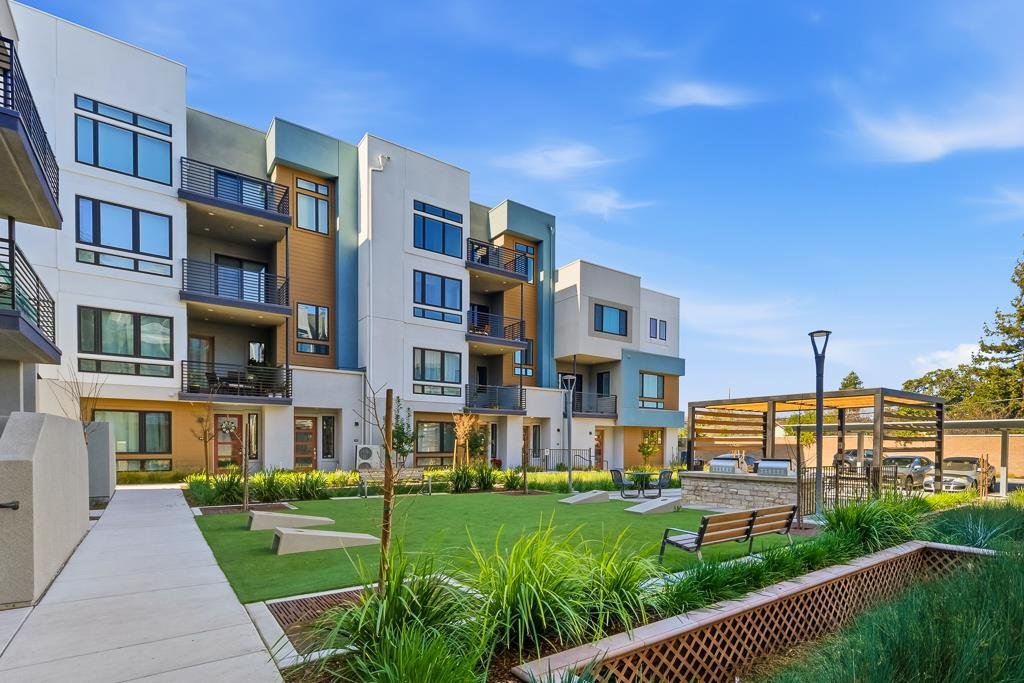
Darvon Park is a quietly coveted residential enclave in Santa Clara’s 95051 district, offering a blend of mid-century charm and Silicon Valley sophistication. Developed in the late 1950s as a tract of single-family homes, the neighborhood has matured into a dynamic community prized for its proximity to major tech campuses, parks, and top schools. Darvon Park’s tree-lined streets host a diverse mix of ranch-style and two-story homes, many thoughtfully updated for modern living. Silicon Valley professionals appreciate its convenient location (minutes from Apple Park and NVIDIA) and family-friendly amenities (nearby Bowers Park and Bracher Park). In this competitive market – where Santa Clara homes now sell in roughly a week at $2M median prices – The Boyenga Team’s local expertise and design-focused approach provide invaluable guidance for buyers and sellers in Darvon Park.
Darvon Park’s appeal is reinforced by soaring demand: homes here are commanding strong premiums. Recent sales of 3–4 bedroom Darvon Park houses (~1,500 sq ft) have closed around $2.3–2.4M (roughly $1,500+/sqft). For example, a fully renovated 3bd/2.5ba ranch at 1873 Shamrock Ave (1,534 sq ft) sold for $2,390,000 in April 2024, and another at 2861 Mark Ave (1,574 sq ft) fetched $2,410,000. These high-dollar transactions reflect the neighborhood’s status as a hidden gem in the Santa Clara market. (Santa Clara’s citywide market median is about $2.0M, with only ~0.73 months of inventory.)
Darvon Park’s sunny streets feature classic mid-century ranch and two-story homes, many renovated for today’s lifestyles. Families and professionals are drawn to its quiet character and proximity to Silicon Valley workplaces and amenities.
Historical Overview
Darvon Park’s origins date to Santa Clara’s postwar housing boom. The tract was developed in the late 1950s (1955–60) in three phases from Bowers Creek west to Calabazas Creek. Interestingly, the development was originally branded “Rancho Camino,” but developers re-dubbed it Darvon Park to sound more upscale. Early home sites were platted on modest 5,000–7,000 sq ft lots, with a variety of floorplans: 3-bedroom, 2-bath ranches (~1,200–1,500 sq ft) and the occasional larger 4–5 bedroom, 3-bath plans (~2,200 sq ft).
Over the decades, Darvon Park evolved with Silicon Valley’s growth. In its early years it provided affordable family housing for the emerging tech workforce; by the 1980s–90s many original owners modernized kitchens, bathrooms and added second stories or home offices. A locally listed sale illustrates this trend: at 2926 Taper Ave, an original 1957 ranch was given an “extensive remodel and upstairs addition”, resulting in a 5-bed/4-bath home. (That home sold in early 2024 for $2,700,000.) Today’s Darvon Park blends preserved mid-century style with contemporary updates. While there has been little high-density redevelopment, many homeowners have refreshed exteriors with new roofs, dual-pane windows, and professional landscaping. City zoning remains predominantly single-family, and recent trend has favored renovating rather than teardown – creating value while maintaining the neighborhood’s established character.
Architectural Highlights and Housing Inventory
The housing stock in Darvon Park is quintessential postwar California suburban, with ranch-style and traditional single-story designs dominating the landscape. Many original homes feature low-pitched roofs, horizontal layouts, and attached garages. Typical floor plans when built were 3 beds/2 baths (≈1,200–1,400 sq ft) or 4 beds/2.5–3 baths (up to ~2,200 sq ft). Over time, homeowners have tended to upgrade interiors: open-concept kitchens, granite or quartz countertops, and modern light fixtures are common, along with exterior paint and fencing. Some properties have been expanded upward or rearward – adding master suites or ADUs – while others remain largely original, cherished for their classic simplicity.
Many Darvon Park homes combine vintage charm with updates. Ranch-style houses on quiet cul-de-sacs contrast with two-story models; today’s buyers often seek light-filled rooms and indoor-outdoor flow, so many have opened up interiors and created large backyard decks.
Lot sizes in Darvon Park typically range 5,000–6,500 sq ft, so yards are generous but not huge. Bedrooms and baths span 3–5 bedrooms and 2–4 baths, with the most common layout being a 3–4 bed, 2–3 bath plan. (Builders originally offered “optional” bedrooms upstairs in larger models.) Modern renovations frequently include hardwood floors or polished concrete slab heating, dual-pane windows, and landscaped yards. Despite the mid-century origins, architectural variety abounds: some homes echo a mild Cape-Cod or classic ranch motif, while others have been fully remodeled into contemporary style. Townhomes and condos are not common within Darvon Park proper, but a handful of adjacent developments in Santa Clara 95051 (e.g. on Agnew Road or S. Park Lane) offer alternative choices for buyers seeking lower-maintenance living.
Darvon Park appeals to a broad range of buyers. Move-up families value its space, schools, and parks, while investors and tech professionals like its location and potential for renovation. Its mix of original charm and updated finishes makes it attractive to architects and design-minded buyers – mirroring the wider trend in Silicon Valley where Mid-Century Modern sensibilities meet current luxury expectations. As one recent listing touts, Darvon Park offers “bright open floor plans” and “gourmet kitchens” coupled with roomy family room and resort-style yard.
Demographics and Socioeconomics
Darvon Park lies within the City of Santa Clara (population ~127,000), one of the most affluent and educated cities in Silicon Valley. Santa Clara’s households enjoy a median owner-home value of about $1.2M (2017–2021) and median household income well above $100k, reflecting its tech-industry workforce. Over 65% of adults in the city hold a bachelor’s degree or higher, and many are engineers, executives or entrepreneurs at nearby firms. Ethnically, Santa Clara is diverse (≈46% Asian, 36% White, 16% Hispanic). Darvon Park likely mirrors these patterns: many residents work in technology and professional fields, while families and long-term homeowners add to the community mix.
About half of Santa Clara’s households rent, but Darvon Park’s character as a single-family neighborhood means it has a higher owner-occupancy rate. You’ll find a blend of generations: long-time owners who raised children here, and younger dual-income families drawn by the schools and commute. Recent years have seen migration of affluent buyers from San Francisco and the Peninsula to Santa Clara suburbs, due to space and value. In Darvon Park’s case, Silicon Valley tech demand drives interest – especially from buyers who appreciate the neighborhood’s combination of private yards and quick commute to campuses.
As in much of Silicon Valley, income levels are very high: households often earn $200k+ combining tech salaries. The region’s scarcity of land means buyers are willing to pay premiums for desirable enclaves like Darvon Park. Trends include some owners choosing to rent properties (taking advantage of Silicon Valley rental demand) and young tech families moving in for good schools. Ethnically, Darvon Park is similar to greater Santa Clara – with a significant Asian American population (reflecting STEM workforce patterns) alongside Caucasian, Latino, and other communities.
School Districts and Education Landscape
Darvon Park is served by the Santa Clara Unified School District (SCUSD). Its assigned public schools are excellent draws for families:
Bowers Elementary School (K–5), just a few blocks east of Darvon Park on Cabrillo Ave. (GreatSchools rating ~6/10).
Juan Cabrillo Middle School (6–8) on Cabrillo Ave, serving the same area (GreatSchools ~6/10).
Adrian Wilcox High School (9–12) in central Santa Clara (8/10).
These schools are walking or short-driving distance, an advantage noted in local listings. Bowers Park (attached to Bowers Elementary) provides a play area at the school, and Bracher Park is also nearby. SCUSD is known for strong academics and tech focus, and Wilcox High in particular has solid programs in STEM and athletics.
Beyond the public system, families have ample private and higher-education options. Darvon Park is less than a mile from Santa Clara University, a respected Jesuit university. San Jose State University, Stanford University and other campuses are a reasonable commute away (Stanford is ~10 miles north via 280). For younger children, local private schools (e.g. Challenger School, Parsons, or the Independent School in Santa Clara) are within short drives. Nearby, Mission College (community college) sits just south on Mission College Blvd., expanding educational access for tech career changers and certificate programs.
School quality has a strong impact on home values here. Buyers often cite the SCUSD schools when choosing Darvon Park. Highly rated nearby schools (like Wilcox’s 8/10 score) bolster the neighborhood’s appeal. In fact, Darvon Park’s reputation among local families is partly built on these educational assets. The synergy of good schools and safe, quiet streets in a tech hub contributes to Darvon Park’s enduring demand.
Parks, Recreation and Lifestyle
Living in Darvon Park means enjoying an active, suburban California lifestyle. The neighborhood is homey and walkable, with sidewalks and mature trees lining the streets. It has a close-knit, family feel – neighbors stroll with strollers or pets, and schools and parks are neighborhood hubs. The presence of children and multigenerational families gives the area a warm community vibe.
Darvon Park residents enjoy easy access to green space and recreation. The seven-acre Bowers Park (2582 Cabrillo Ave) sits adjacent to Bowers Elementary/Cabrillo Middle, offering playgrounds, picnic areas, barbecue grills and restrooms. Just south is Bracher Park (2560 Alhambra Dr) with basketball courts, tennis courts, soccer fields, and shaded lawns. A little farther north is Central Park at 909 Kiely Blvd, which is the city’s largest (with tennis, athletics fields, playground, lawn picnic areas, etc). In short, Darvon Park is sandwiched by multiple well-equipped parks, making weekend playdates, sports or dog walks convenient.
Nature and trails are also within reach. Calabazas Creek runs along the western edge of Santa Clara, and Calabazas Park (in nearby San Jose) features a BMX track, ball courts and trails along the creek. (Trail enthusiasts can walk or jog its paved loop, which the city maintains.) For families, Rancho San Antonio Preserve and the Baylands are a short drive. Within Darvon Park, many streets dead-end at creeks or pedestrian paths, reinforcing the quiet atmosphere.
Residents benefit from a close-in urban lifestyle as well. A block west of Darvon Park is El Camino Real and Agnew Road, a commercial corridor with a Target, Sprouts Market, coffee shops, and diverse restaurants (Thai, Chinese, American bistro, etc.). The Hellyer Park Golf Course and batting cages are about 1.5 miles east on Monterey Rd. Walkable retail centers include Lawrence Expressway Plaza (Trader Joe’s, Whole Foods) just north. With so many conveniences within a mile, errands are quick and make Darvon Park feel very livable.
Seasonally, Santa Clara’s festivals and farmers markets are accessible. For example, Central Park hosts a weekly farmers market featuring local produce and artisans, a draw for health-conscious families (the market at 950 Jackson St. is a community institution). Nearby cultural venues – like the Triton Museum of Art and the Santa Clara Convention Center – provide entertainment and community events year-round. In short, Darvon Park’s lifestyle balances quiet neighborhood charm with urban convenience: great for families and professionals alike.
Commuting and Tech Employer Access
Darvon Park’s location is a commuter’s dream in Silicon Valley. Major freeways and tech campuses are all within easy reach. For example, San Tomas Expressway and Lawrence Expressway are only a few minutes away, providing north-south routes to Sunnyvale and Cupertino. Highway 101 is about 1–2 miles east, connecting to San Jose and the Peninsula. Highway 280 sits ~2 miles north, and Interstate 880 (~3 miles west) gives another north-south option. Crucially, these routes put Apple Park (~7 miles), Google/Mountain View (~8 miles), and Stanford University (~10 miles) within a 15–20 minute drive in light traffic. On routes like Lawrence and El Camino Real, commuters glide directly to the Apple and NVIDIA campuses by way of 85/237 or 101/87, respectively.
Tech employers surround Darvon Park. In practice, the neighborhood is “moments from leading tech campuses including NVIDIA, Intel, Apple, and AMD”. The 3069 Agate Dr. listing touts “major Silicon Valley employers including Apple and NVIDIA” a few exits away. Cisco’s San Jose headquarters (Holger center) and Adobe’s Alviso Rd office are also a short drive south. Commuters to Santa Clara University (0.6 miles east) or downtown San Jose (Caltrain) have options: the Santa Clara Caltrain station and VTA light rail at Lawrence/Montague are each ~2 miles away, enabling transit access to the broader Bay Area.
Daily commute times are among the lowest in Silicon Valley, partly because Darvon Park lies near many employers. Google’s new Sunnyvale campus and Meta’s Menlo Park office are about 15+ miles northwest (via 880/85) or 20+ miles north (via 280). Even those drive distances keep Darvon Park in the sweet spot of Silicon Valley commutability. Major highways and thoroughfares (El Camino, Lawrence, San Tomas, Central Expy) “make commuting easy”. For airport travelers, Mineta San Jose International and Moffett Field are each about a 10–15 minute drive. In sum, Darvon Park’s connectivity to tech jobs and transit corridors is a top selling point, well reflected in local marketing materials.
Real Estate Market Analysis
The Darvon Park market reflects Santa Clara’s robust real estate dynamics. Overall Santa Clara home prices have appreciated strongly – median SFH prices are around $2.0–2.1Mtoday, roughly a doubling over the past 10 years. Average price-per-square-foot in Darvon Park (~$1,500) is in line with nearby communities (Sunnyvale’s median ~$2.3M and Cupertino ~$2.5M). Inventory remains tight: only a few homes sell here per month, and those that do often see multiple offers. Redfin reports Santa Clara homes are selling in 7 days on average at 117% of list price. Darvon Park listings generally move even faster than that, reflecting its “hidden gem” status. For instance, a 2024 listing at 1727 Andrea Pl (3bed/2.5ba, 1,528 sq ft) was met with strong demand and sold very quickly (Redfin estimated value ~$1.9M).
Price trends have been upward: since 2015, Darvon Park home values have roughly doubled. Even after the recent market cooldown in Silicon Valley, desirable homes here are fetching top dollar. Sellers report that fully renovated homes command the highest per-square-foot premiums. A case in point: a tastefully updated 2,658 sq ft home at 2926 Taper Ave sold for $2,700,000 (about $1,016/sqft), well above the typical average. In contrast, homes requiring work (or with unique layouts) may trade at a relative discount in this neighborhood. Overall, expert analysis ranks Darvon Park’s investment potential as strong – it’s an established suburban enclave in Silicon Valley’s core, and it lacks the oversupply issues seen in farther-out Bay Area markets.
Compared to nearby Santa Clara subdivisions, Darvon Park is viewed as a good value for the location and land size. It generally sells at a slight premium to Sunnyvale tract homes of similar vintage, due to slightly lower density and larger lots. By the numbers: 2025 median prices in Sunnyvale (94086/94087) hit ~$1.9M (SFH) while Darvon Park homes are trending in the $2.1M–$2.3M range for comparable size. This premium is justified by Darvon Park’s quieter setting and school assignments. Against Cupertino or Los Altos, Darvon Park is more affordable, making it attractive to buyers priced out of those markets. Investment-wise, analysts note the durable upside of Santa Clara real estate, especially in single-family neighborhoods like Darvon Park – aided by ever-growing tech employment and limited land to build new housing.
Case Studies and Recent Sales
Real Darvon Park transactions illustrate its market dynamics. Consider the following examples:
2926 Taper Ave – A two-story ranch with “extensive remodel and upstairs addition”, expanding it to 5 bedrooms and 4 bathrooms. This 2,658 sq ft home sold in early 2024 for $2,700,000. Its upgrades included solar panels, new HVAC, and an entertainer’s backyard, reflecting how added square footage and modern amenities drive value.
1873 Shamrock Ave – A classic one-story with 3 beds and 2.5 baths (1,534 sq ft). It sold for $2,390,000 (April 2024) after a high-profile campaign. The price ~$1,558/sqft demonstrates the appetite for well-maintained older homes.
2861 Mark Ave – Another 3-bed, 2.5-bath home (1,574 sq ft) that fetched $2,410,000in March 2024. It had renovated finishes and a large lot, again showing that size plus quality can command top dollar.
2433 Borax Dr – A 4-bedroom, 3-bath residence (1,686 sq ft) sold May 2024 for $1,925,000. While smaller than some contemporaries, its sale price still averaged ~$1,142/sqft – solid given it was a duplex property.
On the listing side, aggressive marketing is common. Recent listings note “quick access to major tech employers” and “resort-style backyard” to attract buyers. Competition is often intense: multiple-offer situations occur frequently. Agents report that buyers target Darvon Park precisely for its combination of architectural character and Silicon Valley location, leading to bidding wars on well-priced homes.
Overall, these case studies show that buyer demand in Darvon Park is strong across the board. Original mid-century homes in good condition move almost as fast as fully remodeled ones, though remodeled properties (or those with significant additions) capture higher prices per square foot. The trajectory is clear: today’s Darvon Park sellers are reaping generous rewards on well-updated properties, and purchasers believe they are securing rare suburban homes near Silicon Valley’s tech corridor.
The Boyenga Team Advantage
For buyers and sellers in Darvon Park, working with Silicon Valley specialists can make all the difference. The Boyenga Team of Compass is renowned for its deep local knowledge and expertise in design-forward homes. In fact, Eric and Janelle Boyenga have “established themselves as the preeminent specialists” in Eichler and mid-century modern properties throughout Silicon Valley. Their firm’s track record is impressive: ranked the #1 Compass Team in Silicon Valley, with over 2,100 homes sold ($2.1B in volume).
The Boyenga Team’s approach is highly data-driven – Eric Boyenga calls himself a “property nerd” – meaning they analyze hyper-local sales, buyer demographics, and pricing trends to position each Darvon Park property effectively. They combine this analytics prowess with aggressive marketing: professional staging, virtual tours, and targeted online campaigns to reach the right buyers. Importantly for sellers, The Boyenga Team also taps exclusive channels like Compass Private Exclusives to find off-market buyers. (In Darvon Park’s tight inventory, this can mean uncovering hidden demand or securing a sale quietly, if desired.) For buyers, The Boyenga Team’s network often reveals upcoming listings or well-priced opportunities before others.
Beyond strategy, Eric and Janelle bring sterling client service. Testimonials praise their clear communication and problem-solving through complex negotiations. In marketing Darvon Park homes, they emphasize the community’s rare value-proposition: a premium Silicon Valley location without the extreme price of Palo Alto or Cupertino, combined with unique mid-century appeal. By consistently achieving record sales in Eichler-rich areas and applying that expertise to Darvon Park, The Boyenga Team helps sellers “maximize value” and helps buyers “find the right architecturally significant home”. In short, their specialized insight and Compass’s luxury tools deliver a significant advantage to anyone investing in Darvon Park real estate.
Sources: Authoritative data were drawn from Santa Clara city and school district reports, real estate market analyses (Redfin, local realtors), historical summaries of Darvon Park’s development, and neighborhood sales listings. Photos are representative of Santa Clara residential streetscapes and parks.