
Bonnie Brae: The Definitive Guide to Santa Clara’s Mid-Century Modern Sanctuary
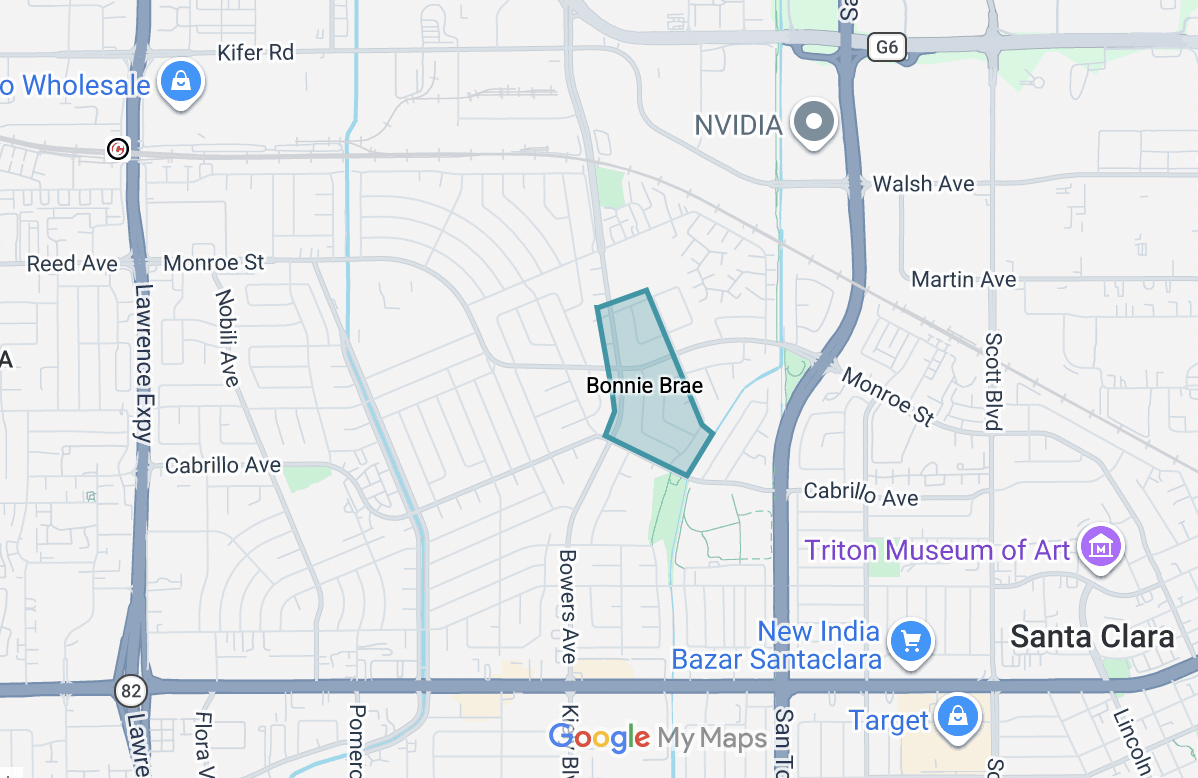
The Silicon Valley residential landscape is often characterized by a relentless drive toward the future, yet certain enclaves manage to preserve an essential sense of place while embracing the vanguard of modern luxury. Bonnie Brae, a premier neighborhood nestled within the 95051 ZIP code of Santa Clara, stands as a premier example of this equilibrium. For the affluent homebuyer, the relocation client, and the seasoned Silicon Valley professional, Bonnie Brae represents a strategic intersection of architectural legacy and contemporary lifestyle. It is a community where the understated elegance of mid-century ranch aesthetics meets the sophisticated demands of the global technology elite.
In a region where proximity is the ultimate currency, Bonnie Brae offers an unparalleled advantage. Located in the heart of Santa Clara, it provides residents with nearly instantaneous access to the world’s most influential technology campuses, including Apple Park, NVIDIA, and Intel. However, the neighborhood's appeal transcends its geographic convenience. It is defined by its architectural diversity, characterized by a cohesive original tract of homes that has served as a canvas for high-end renovations and stunning contemporary rebuilds.
The Boyenga Team, recognized as the foremost real estate experts in Silicon Valley, understands that securing a home in Bonnie Brae is more than a transaction; it is an acquisition of a specific, high-design lifestyle. As founding partners of Compass Silicon Valley and the original "Property Nerds," Eric and Janelle Boyenga bring a data-driven, design-forward approach to this competitive market, ensuring that their clients capitalize on both the aesthetic and financial upside of this unique neighborhood.
Historical Context: From Agricultural Abundance to Suburban Sophistication
The history of Santa Clara is a narrative of rapid transformation, shifting from the "Valley of Heart's Delight"—an agricultural paradise of prune and apricot orchards—to the global epicenter of the technological revolution. Bonnie Brae is a primary chapter in this story. The neighborhood’s development was a direct response to the post-World War II industrial expansion that fundamentally reshaped the Santa Clara Valley. As defense contractors and early semiconductor firms began to proliferate in the 1950s and 1960s, the demand for high-quality housing for a burgeoning professional class led to the creation of several iconic residential tracts.
Bonnie Brae was platted in the early 1960s, emerging as a "delightful neighborhood" that departed from the more rigid, high-density grids of earlier urban centers. It was designed as a sanctuary for the emerging middle and upper-middle classes of the aerospace and burgeoning tech sectors. Unlike other areas that were built out in a single, rapid phase, Bonnie Brae’s original development of approximately 263 single-family homes allowed for a sense of established tranquility that persists today.
Development Phases and Impact on Bonnie Brae:
Orchard Era (Pre-1950)
Agricultural dominance; large land parcels
Established the fertile soil and generous lot sizes
Post-War Boom (1950–1959)
Rapid tract development; introduction of the “California Modern” style
Influenced the architectural DNA of the region (e.g., Mackay and Eichler homes)
Bonnie Brae Inception (Early 1960s)
Planned community of ~263 homes near Monroe and Bowers
Created a cohesive residential core for tech professionals
Modernization Era (1990–2010)
Kitchen/bath remodels; early second-story additions
Maintained relevance during the dot-com boom
Contemporary Luxury (2010–Present)
High-end rebuilds; ADUs; smart homes
Elevated Bonnie Brae into a luxury-tier neighborhood
While the name "Bonnie Brae"—Gaelic for "Beautiful Hill"—is shared by several historic neighborhoods in North America, including well-known districts in Denver and New Jersey, the Santa Clara enclave is distinct in its Silicon Valley identity. It was not built as a Scottish village simulation but as a functional, elegant expression of the California Dream. The neighborhood’s evolution has been marked by a steady demographic shift; as property values soared, the original engineer and manager profiles were replaced by tech executives and entrepreneurs who recognized the neighborhood’s inherent value and potential for expansion.
Architectural Styles and Residential Inventory
The architectural identity of Bonnie Brae is rooted in the "California Ranch" tradition, a style that revolutionized suburban living by emphasizing horizontal flow, open floor plans, and a seamless connection between indoor and outdoor spaces. In Bonnie Brae, this style has been elevated through decades of sophisticated investment.
The Mid-Century Ranch Legacy
The original homes in Bonnie Brae, constructed in the early 1960s, typically featured three to four bedrooms and two bathrooms, with footprints ranging from 1,200 to 1,600 square feet. These structures were built with a level of quality and craftsmanship that has allowed them to endure as excellent candidates for modernization.
Low-Slung Silhouettes: Characteristic of the era, these homes feature low-pitched gable or hipped roofs with deep overhanging eaves that provide natural shade and a sense of grounding.
Open Living Spaces: The original floor plans often integrated "L-shaped" or rectangular layouts that eliminated unnecessary walls, fostering an informal and social living environment.
Indoor-Outdoor Continuity: Large floor-to-ceiling windows and sliding glass doors were designed to draw the eye toward the backyard, treating the outdoor space as a primary living room.
Contemporary Rebuilds and Modern Luxury
Today, a stroll through Bonnie Brae reveals a sophisticated tapestry of architectural styles. The trend toward high-end "rebuilds" has transformed the neighborhood’s aesthetic. Buyers are increasingly acquiring original properties for the value of the land—often lots between 6,000 and 10,000 square feet—and constructing bespoke contemporary estates.
Expanded Footprints: Modernized residences in Bonnie Brae often expand original sizes to 2,500 square feet or more, incorporating second stories and grand entryways.
High-End Finishes: It is now common to find homes featuring quartz waterfall islands, professional-grade European appliances (Wolf, Miele), and smart home integration.
Mediterranean Influence: While the ranch remains the dominant form, several homes have been reimagined with Mediterranean or Contemporary Spanish influences, featuring stucco facades, tile roofs, and arched windows.
The ADU Renaissance
In alignment with California’s progressive housing laws and the unique needs of Silicon Valley families, Accessory Dwelling Units (ADUs) have become a significant feature of the Bonnie Brae inventory. Given the reasonably sized lots, many homeowners have added high-end secondary units that serve as executive home offices, guest houses, or multi-generational suites. This trend adds a layer of versatility to the properties, further bolstering their long-term market value.
The Mid-Century Ranch Legacy
Low-Slung Silhouettes
Low-pitched roofs with deep overhangs
Natural shading and grounded visual presence
Open Living Spaces
L-shaped and rectangular layouts
Minimal walls and social flow
Indoor-Outdoor Continuity
Floor-to-ceiling windows
Sliding glass doors connecting to yards
Contemporary Rebuilds and Modern Luxury
Expanded homes now commonly exceed 2,500 sq ft
Second stories and dramatic entryways are standard
High-end finishes include quartz islands and appliances like Wolf and Miele
Smart home systems are now expected
Mediterranean and Spanish-influenced redesigns are increasingly present
The ADU Renaissance
ADUs used as:
Executive home offices
Guest houses
Multi-generational suites
Adds flexibility and long-term property value
Housing Evolution Comparison:
Original 1960s Homes
1,200–1,600 sq ft
3BD / 2BA
Galley kitchens with Formica
Basic yards and patios
Minimal energy systems
Contemporary Homes
2,200–3,000+ sq ft
4–5BD / 3–4BA
Open-concept kitchens with stone islands
Outdoor kitchens, spas, designer landscaping
Solar, EV charging, advanced HVAC
Demographic and Socioeconomic Profile
The population of Bonnie Brae is a microcosm of Silicon Valley’s intellectual and economic vitality. The 95051 ZIP code hosts a demographic that is exceptionally educated, professionally accomplished, and culturally diverse.
Intellectual Capital
Education is the cornerstone of the Bonnie Brae community. Over 70% of residents hold a bachelor’s degree or higher, a figure that is nearly double the national average and significantly higher than the already-educated San Jose metro area (55.5%). A substantial portion of the population (approximately 39-40%) holds post-graduate degrees, reflecting a concentration of PhDs, MDs, and JDs.
Professional and Economic Profile
Socioeconomically, Bonnie Brae is an enclave of the "upper-middle" and "upper" classes. The median household income in the area exceeds $162,000, with over 50% of households earning more than $200,000 annually. This financial strength is driven by the neighborhood’s role as a residence of choice for senior professionals in the tech, engineering, and healthcare sectors.
Key Indicators:
Median household income: ~$162,111 (over 2× national average)
Post-graduate degrees: ~39.2%
Foreign-born population: ~48.3% (primarily Asian)
High homeownership rate (strong seller’s market)
Major employment sectors: Tech, healthcare, education
The cultural fabric of the neighborhood is enriched by its global diversity. Nearly half of the residents are foreign-born, with a strong representation of families from Asia who bring a diverse array of perspectives, culinary traditions, and linguistic richness to the community. This internationalism is not just a statistic; it is a lived experience that contributes to the neighborhood's sophisticated and inclusive atmosphere.
The Educational Landscape: A Priority for Discerning Families
For luxury homebuyers, the quality of local schools is often the single most important factor in a property’s long-term valuation. Bonnie Brae is exceptionally positioned within the Santa Clara Unified School District (SCUSD), providing access to institutions that emphasize critical thinking, global citizenship, and future-readiness.
Public Schools: A Legacy of Excellence
The neighborhood’s children are primarily assigned to institutions that are not only high-performing but also deeply integrated into the local community.
Bowers Elementary School: Highly rated (A- Niche grade) and known for its warm, caring environment and specialized kindergarten facilities. Parents frequently highlight the school's commitment to safety and its "hidden gem" status within the district.
Bracher Elementary School: Another A- rated institution, Bracher is celebrated for its small school feel and supportive principal. The small class sizes allow for personalized attention, which is highly valued by the neighborhood's professional parents.
Juan Cabrillo Middle School: Serving grades 6-8, Cabrillo focuses on preparing students for the rigors of high school through collaborative problem-solving and a strong curriculum.
Adrian Wilcox High School: A top-tier high school (7/10 GreatSchools) that offers a robust range of AP courses and extracurricular activities, ensuring that graduates are prepared for elite universities.
Private Education and Higher Education Proximity
In addition to strong public options, Bonnie Brae residents benefit from proximity to some of the region's best private schools, including the Monticello Academy and St. Lawrence Elementary and Middle School.
The neighborhood is also situated just minutes from Santa Clara University (SCU), California’s oldest operating institution of higher learning. The presence of SCU adds a collegiate energy to the area and provides residents with access to high-level lectures, cultural events, and the stunning Mission Santa Clara de Asís.
Public Schools:
Bowers Elementary (K–5)
A- rating
Safe environment, strong community
Bracher Elementary (K–5)
A- rating
Small class sizes, strong leadership
Juan Cabrillo Middle (6–8)
Collaborative learning environment
Adrian Wilcox High (9–12)
7/10 rating
Strong AP and extracurricular offerings
Higher Education:
Santa Clara University
Elite academic presence
Cultural and intellectual hub
Neighborhood Attractions and The Santa Clara Lifestyle
The lifestyle in Bonnie Brae is defined by its ability to offer both suburban tranquility and urban accessibility. It is a neighborhood where weekend mornings are spent in lush parks and evenings are celebrated at Silicon Valley’s most prestigious dining destinations.
Parks and Recreation
Bonnie Brae is designed for the active, outdoors-oriented lifestyle that California is famous for. Within walking distance, residents have access to several major parks.
Bowers Park and Eddie Souza Park: These parks serve as the communal heart of the neighborhood, offering expansive green spaces, playgrounds, and community garden plots.
Santa Clara Youth Activity Center and Skate Park: These nearby facilities provide specialized recreation for teenagers and children, emphasizing the neighborhood's family-centric orientation.
Central Park and the International Swim Center: Just a short drive away, these world-class facilities offer everything from competitive swimming to the tranquil 52-acre park setting.
Upscale Dining and Retail
Residents of Bonnie Brae are minutes away from the epicenter of luxury shopping and gourmet dining in the Bay Area.
Westfield Valley Fair and Santana Row: These adjacent destinations represent the pinnacle of high-end retail (Gucci, Prada, Tesla) and dining. Iconic venues like JOEY Valley Fair, Mastro’s Steakhouse, and Fogo de Chão provide the perfect backdrop for business lunches or sophisticated date nights.
Santa Clara Square Marketplace: This modern outdoor complex features a Whole Foods Market and a curated selection of restaurants like Il Fornaio and Puesto, catering to the health-conscious and design-minded local professional.
Local Cultural Staples: For an authentic taste of the area’s diversity, residents frequent Burma Bistro for Burmese cuisine or Kunjip for comforting Korean dishes, reflecting the neighborhood's international palate.
Commuting and Technology Employer Access: The Heart of the Hub
In Silicon Valley, time is the ultimate luxury. Bonnie Brae is uniquely positioned to maximize it. It is situated in what is colloquially known as the "Commuter’s Sweet Spot," offering a nearly unparalleled geographic advantage for tech professionals.
Proximity to Corporate Campuses
Many of the world's most influential technology giants are located within a five-to-fifteen-minute drive from Bonnie Brae.
Apple Park: The iconic "spaceship" campus is approximately 10 minutes away, making Bonnie Brae a highly desirable enclave for Apple executives and engineers who value a short commute without sacrificing privacy.
NVIDIA and Intel: These global leaders in semiconductors and AI are headquartered in Santa Clara, offering residents a commute that can often be measured in minutes rather than hours.
Applied Materials and AMD: With these major employers just a short distance away, the neighborhood serves as a primary residential hub for the region's high-tech workforce.
Infrastructure and Transit Connectivity
Bonnie Brae’s location near the San Tomas Expressway and Highways 101 and 280 provides rapid access to the broader San Francisco Bay Area.
Public Transit: The Santa Clara Caltrain station and VTA light rail lines offer reliable, multimodal options for those commuting to San Francisco or Palo Alto.
Airport Access: San Jose International Airport (SJC) is within a 15-minute drive, an essential convenience for the global business traveler.
Future Connectivity: The planned BART extension into Santa Clara is expected to further enhance regional mobility and support long-term property appreciation.
Major Destinations:
Apple Park
~4.5 miles / 10–12 minutes
Via Wolfe Rd / Lawrence Expy
NVIDIA HQ
~2.5 miles / 6–8 minutes
Via San Tomas Expressway
Intel
~3.5 miles / 8–10 minutes
Santa Clara University
~3 miles / 10 minutes
San Jose Airport (SJC)
~5.5 miles / 15 minutes
Connectivity Advantages:
Access to Highways 101 & 280
Caltrain + VTA
Future BART expansion
Real Estate Market Analysis: Performance, Value, and Trends
The Bonnie Brae real estate market is characterized by extreme competition, constrained inventory, and a consistent upward trajectory in valuation. As a "seller's market," the neighborhood requires a sophisticated approach to both acquisition and disposition.
Current Market Dynamics (2025-2026)
In early 2026, the Santa Clara housing market has continued its "red hot" trend. Median home prices in the city have surpassed the $2 million mark for single-family residences, with the 95051 ZIP code—encompassing Bonnie Brae—showing even higher levels of appreciation due to its architectural pedigree and central location.
Median Listing Price: Homes in Bonnie Brae typically list between $1.8 million and $2.5 million, with custom rebuilds and expanded luxury estates commanding significantly more.
Price per Square Foot: The average price per square foot in this enclave ranges from $1,100 to $1,300, reflecting the high value placed on land and the quality of modernization.
Days on Market (DOM): The velocity of the market is intense. Turnkey properties in Bonnie Brae often move to "pending" status within 5 to 12 days.
Sale-to-List Ratio: Competitive bidding is the standard; the average sale-to-list price ratio for single-family homes in Santa Clara currently stands at approximately 109.9%.
Appreciation and Investment Resilience
Santa Clara’s real estate market benefits from several systemic advantages that are particularly evident in Bonnie Brae. The city operates its own municipal utility department (Silicon Valley Power), which results in utility rates that are often 30-40% lower than neighboring cities served by PG&E. For the high-net-worth individual, this operational efficiency, combined with the extreme proximity to major tech campuses, creates a "valuation floor" that makes Bonnie Brae a highly resilient asset during broader market shifts.
Current Market (2025–2026):
Median listing price: $1.8M–$2.5M+
Price per sq ft: $1,100–$1,300
Days on market: 5–12 days
Sale-to-list ratio: ~109.9%
Market Comparison:
Santa Clara median price: ~$2,062,500
Bonnie Brae: ~$2,150,000+
Days on market: 5–9 for hot homes
Sale-to-list: 112%+ for premium homes
Inventory: extremely low
10-year appreciation: ~7.3%
Key Advantage:
Lower utility costs via Silicon Valley Power
Strong “valuation floor” due to proximity to tech hubs
Case Studies and Representative Sales Examples
To truly appreciate the value of a Bonnie Brae acquisition, one must examine the performance of specific residences that reflect the neighborhood's potential for transformation and equity growth.
Case Study 1: The Modernized Masterpiece
2206 Quinn Avenue This 4-bedroom, 3-bathroom residence serves as a prototype for the neighborhood’s high-end transformation. Originally a 1959 ranch, the property was expanded to 1,821 square feet and completely modernized. Last sold in late 2020 for $1,760,000, the property’s current valuation (as of early 2026) is estimated at $2,516,339. This nearly 43% increase in value over five years highlights the massive return on investment for owners who prioritize high-design renovations and maintenance.
Case Study 2: The Turnkey Ranch Premium
2533 Elliot Street A beautifully remodeled 3-bedroom, 2-bathroom home located in the heart of the tract. Sold in 2022 for $1,400,000, this property demonstrates the "turnkey premium." By early 2026, the estimated value has risen to $1,854,610. The property’s success was driven by its modern finishes, open-concept floor plan, and professional landscaping—features that resonate deeply with busy tech professionals seeking move-in-ready homes.
Case Study 3: The Expansion Potential
2619 Elliot Street This property sold in December 2020 for $1,550,000. Its sale at the time was a benchmark for the neighborhood, reflecting the high demand for well-maintained original tracts with "reasonably sized lots that allow for significant expansion possibilities". It serves as a reminder that in Bonnie Brae, the land value is often as significant as the structure itself.
Property AddressSale DateSale PriceEst. 2026 ValueKey Value Driver 2206 Quinn AveNov 2020$1,760,000$2,516,3394BD Expansion; Full Remodel.2619 Elliot StDec 2020$1,550,000~$2,250,000Location; Lot Size; Maintenance.2533 Elliot StOct 2022$1,400,000$1,854,610High-end modern design finishes.2560 Monroe StSep 2025$1,896,000 (Est)~$1,950,000Move-in condition; proximity to Bowers.
The Boyenga Team Advantage: Engineering Luxury in Silicon Valley
In a neighborhood as competitive as Bonnie Brae, the difference between a successful acquisition and a missed opportunity often comes down to the expertise of the representing agents. Eric and Janelle Boyenga, the founding partners of The Boyenga Team, have built their reputation as the "Property Nerds" of Silicon Valley by combining deep architectural knowledge with cutting-edge data science.
Architectural Storytelling and Design Insight
The Boyenga Team doesn't just sell homes; they sell a design-led lifestyle. Their specialized knowledge in mid-century modern (MCM) architecture and restorative construction makes them uniquely qualified to market the homes of Bonnie Brae. They understand the value of a post-and-beam ceiling, the importance of "indoor-outdoor flow," and the premium commanded by authentic MCM details.
Leveraging the Power of Compass
As part of the #1 real estate team for Compass in Silicon Valley, the Boyenga Team utilizes a suite of exclusive tools designed to maximize results for their clients.
Compass Concierge: This program allows sellers to fund strategic renovations—from painting and flooring to full kitchen remodels—with no upfront cost and zero interest, ensuring they earn the absolute maximum return on their home.
Private Exclusives: The Boyenga Team has access to a targeted network of "off-market" inventory. In a low-inventory neighborhood like Bonnie Brae, this access can be the difference between finding a dream home and being locked out by market competition.
Predictive Analytics: Using AI-driven market intelligence, the team can identify likely buyers and sellers, allowing them to time the market with surgical precision.
A Client-First Philosophy
"We Engineer Happiness" is more than a slogan for the Boyenga Team; it is a pledge to provide a "painless and predictable process" while protecting their clients' best interests. Whether you are a first-time luxury buyer or a trustee managing a complex family transition, the team’s combined century of real estate experience ensures that every detail is handled with professional rigor and empathetic care.
The Future of Bonnie Brae
Bonnie Brae is more than just a collection of 263 homes in the 95051 ZIP code. it is a vital, evolving community that represents the best of Silicon Valley residential living. As the global economy continues to center itself around the innovation hubs of Santa Clara, the value of well-located, architecturally significant enclaves like Bonnie Brae will only continue to rise.
The neighborhood offers a unique "win-win" for homeowners. For those who value the past, the preserved mid-century ranch homes provide a timeless, elegant foundation. For those who look to the future, the generous lots and proximity to world-changing tech campuses provide the perfect canvas for contemporary luxury and long-term equity growth.
For the discerning buyer seeking to enter this market, the path forward is clear: success requires a combination of local insight, architectural appreciation, and data-driven strategy. There is no team better equipped to provide this than Eric and Janelle Boyenga. Their reputation as "Property Nerds" is earned every day through their dedication to design, their mastery of technology, and their unwavering commitment to their clients' happiness. Bonnie Brae is waiting—and The Boyenga Team is ready to open the door.