
Koreatown, Santa Clara – Silicon Valley’s Vibrant Korean Enclave
Executive Summary
Santa Clara’s Koreatown is an emerging cultural and culinary hub in Silicon Valley, anchored along El Camino Real near Lawrence Expressway. Once a quiet suburban strip, it’s now home to dozens of authentic Korean restaurants, markets, spas, and boutiques. Since the 1980s, a large Korean American community has settled here – about 3% of Santa Clara County’s population today – helping Santa Clara evolve a “Koreatown” identity despite initial resistance to an official designation. The area’s walkability, festival-driven culture, and proximity to Santa Clara University and tech campuses make it highly attractive to buyers seeking character and convenience.
Real estate here reflects a blend of older single-family ranch homes and new townhomes/condos. Buyers pay premium for location: as of early 2026, Santa Clara’s median single-family home price is ~$1.6M (Zillow) and demand is fierce (average 13 days to pending). Meanwhile, the condo market is cooler (median ~$735K), though still drawing interest from tech professionals and families. Local schools (e.g. Laurelwood and Millikin Elementary, rated 10/10) and citywide commute times (~22.6 minutes) further enhance appeal.
The Boyenga Team at Compass, with 2,200+ homes sold and $2.3B in sales, specializes in marketing Santa Clara’s historic and luxury homes. Leveraging their data-driven, design-forward approach, they guide discerning buyers to Koreatown’s unique offerings and help sellers maximize value in this competitive market.
Introduction: A Hidden Gem of Culture and Cuisine
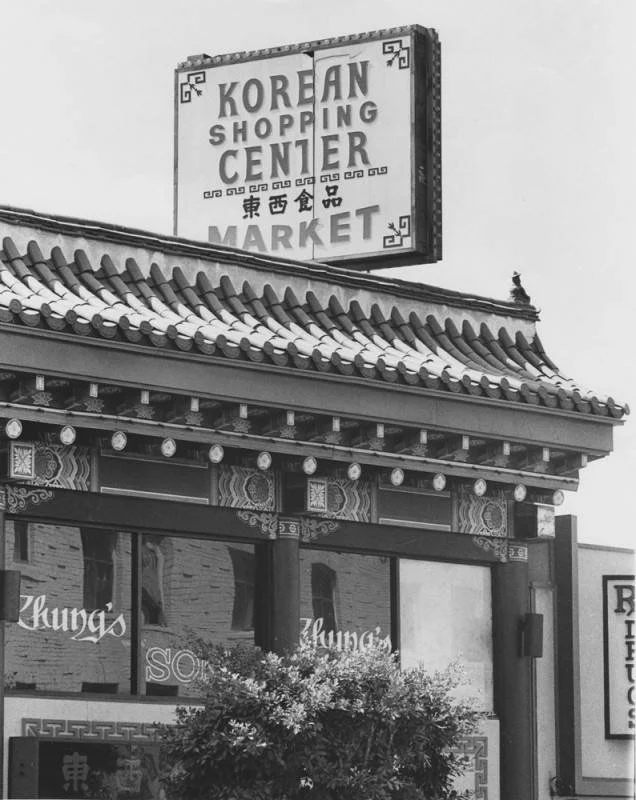
Santa Clara’s Koreatown is defined by its strip of Korean-owned businesses along El Camino Real. A stroll here reveals an authentic “slice of Seoul” in Silicon Valley: family-run BBQ houses, noodle shops, dessert cafés, and markets bustle amid strip malls and parking lots. Marketing professionals now tout it as a must-visit dining destination – Discover Santa Clara calls it “one of the most vibrant dining hubs in the city,” where “the community is deeply rooted” and the Korean food authentic. Landmark eateries like Jang Su Jang (Michelin-recommended BBQ), Paik’s Noodle, Seorai, Sulbing Café, and many others draw crowds from across Silicon Valley.
This lively walkable corridor is just a few minutes’ drive from Santa Clara University and downtown Santa Clara, giving it a unique urban-in-suburb feel. Koreatown offers both the neighborhood charm of tree-lined residential blocks (filled with mid-century ranch and bungalow homes) and the convenience of urban living (shops, parks, and transit nearby). Tech professionals and families alike appreciate the blend of character homes and modern convenience: local real estate agents note buyers often “stop in” on this corridor to grab dinner after work, thanks to easy highway access (US-101/I-280) and the adjacent Lawrence Caltrain station. In this dynamic setting, The Boyenga Team naturally emerges – experts in Silicon Valley’s historic and design-forward homes – ready to connect buyers and sellers who value Koreatown’s rich culture and tech-centric location.
Historical & Cultural Evolution
Koreatown’s story begins in the 1980s, when the first Korean-owned stores and restaurants opened along El Camino Real. Over the next decades, the Korean American community in Santa Clara County grew from only 0.5% of the population in 1980 to about 3% by 2021. During the 1990s–2000s, a cluster of family-run Korean businesses became firmly established. In 2006 a proposal to officially designate the El Camino corridor “Koreatown” (driven by local shop owners) met resistance: the City Council declined the signage change, noting it wasn’t a traditional residential enclave. Nonetheless, “facts on the ground” continued: dozens of authentic Korean eateries and shops were already building Koreatown’s identity.
In recent years, media and community efforts have highlighted Koreatown’s evolution. In 2008, Sunset magazine featured Santa Clara’s Koreatown as a travel destination, spotlighting boulangeries like Paris Baguette, Korean grills like Beque, and even a Korean spa on the strip. By 2015, the San Francisco Chronicle noted Koreatown’s prowess: “[at first glance] Koreatown looks like a sea of weathered strip malls… But delve a little deeper and you’ll discover… some of the Bay Area’s best Korean restaurants and… shops”. In the 2020s, local government has embraced the culture: the City launched the annual Santa Clara Korean Cultural Festival in 2021, celebrating food, music and performance. By 2025, the festival drew over 1,000 attendees to Central Park, featuring K-pop dance teams and cultural workshops.
As one historian notes, Koreatown’s businesses often competed by expanding their menus for wider appeal – reflecting the community’s evolution from niche enclave to regional draw. Today, Santa Clara’s Koreatown is “a unique suburban Koreatown” that, while less dense than LA’s Koreatown, has carved out a distinctive identity.
Architectural Character & Housing Inventory
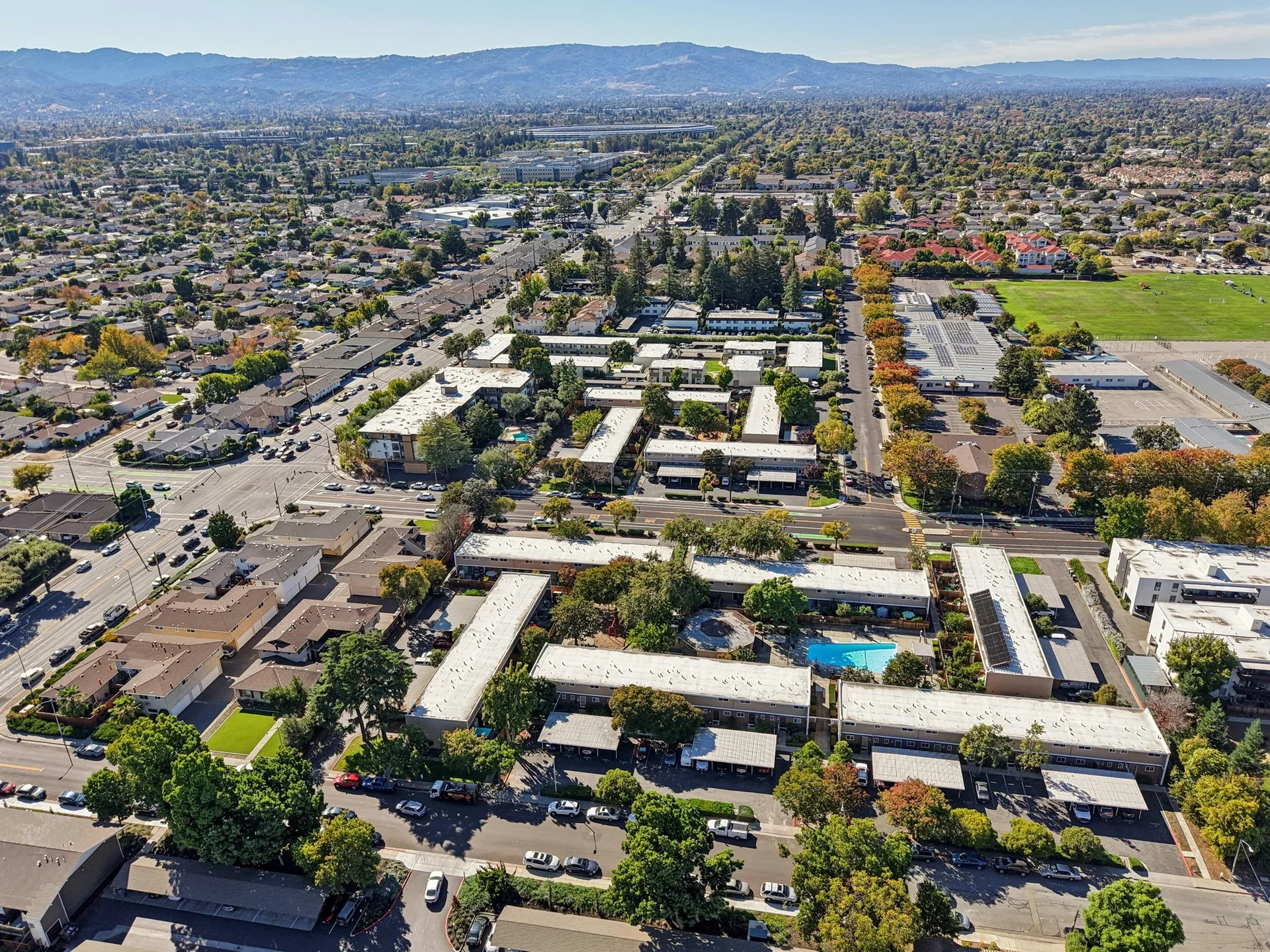
Koreatown’s housing reflects Santa Clara’s post-war growth. Inland from El Camino Real, most streets feature mid-century ranch and bungalow homes built in the 1950s–60s. These typically are single-story, 3–4 bedroom houses (~1,200–1,800 sq ft) on 6,000–8,000 sq ft lots, with mature landscaping and two-car garages. Some Eichler-style homes also exist, characterized by flat roofs and open atriums, prized by mid-century modern enthusiasts. These original tract houses offer character rarely found elsewhere in Silicon Valley, though supply is limited and values are high.
Along the El Camino Real corridor itself, the architecture is changing rapidly. A series of new mixed-use developments are replacing low-rise strip malls. For example, the proposed “Moonlite” project at 2610 El Camino would transform a 14-acre mall into 601 housing units: two 6–7 story condo towers (140 and 136 units), a 166-unit rental tower (with 27% affordable units), and 159 modern three-story townhomes with private garages. Similarly, Toll Brothers’ “3131 Camino” development is underway, featuring townhouse-style condos: 1–4 story floor plans with 2–3 bedrooms, private 2-car garages, and rooftop decks. These new homes appeal to buyers seeking low-maintenance contemporary living.
Housing Types
Midcentury Ranch
Description: 1950s–60s one-story homes; wide front lawns, detached
Example Size/Features: ~3–4 beds, 1,200–1,800 sq ft; 6–8k sq ft lot; 2-car garage
Eichler Modern
Description: 1950s modernist tract homes (post-and-beam, atrium)
Example Size/Features: ~3 beds, 1,300–1,600 sq ft; open floor plan, private patios
Townhome/Condo
Description: New construction (2020s) along ECR corridor
Example Size/Features: 2–3 beds, 1,200–2,000 sq ft; 2-story + roof deck; 2-car garage
Apartment
Description: Mid-rise buildings (1970s–80s or newer infill)
Example Size/Features: 1–2 beds, 600–1,200 sq ft; community amenities; street parking
Mixed-Use Retail
Description: Ground-floor shops/restaurants with apartments above
Example Size/Features: Large floor plates for businesses; residences above shops
Buyers are often drawn to Koreatown for its character and convenience. While historic mid-century homes hold nostalgic appeal, many clients (including tech professionals) prefer move-in-ready new construction. Agents note that restored ranch houses command a premium if well-updated, but most new inventory consists of condos and townhomes. In general, Santa Clara’s walkable, 2-story homes are rare in the region, driving demand – particularly for the limited supply of single-family homes with yards. As one buyer demographic observed, Koreatown’s mix of historic charm and modern infill is unique: it offers “space and privacy” not found in denser tech hubs.
Demographic & Socioeconomic Profile
Santa Clara’s Koreatown reflects the city’s diversity and affluence. Overall, Santa Clara’s population is about 133,000, with Asians making up roughly 50% (the highest racial group). The 95050 zip (covering much of Koreatown) has a similar mix – roughly 35% Asian (including many Korean American families), 36% White, and 22% Hispanic. High educational attainment is the norm: nearly two-thirds of adults hold at least a bachelor’s degree. Median household income is around $179K, reflecting Silicon Valley’s dual-income tech economy.
Most residents work in professional sectors. The tech industry is prominent (Santa Clara hosts headquarters or major campuses for NVIDIA, Intel labs, and is a short commute to Apple, Google, etc.), along with healthcare (regional hospitals) and academia (SCU faculty). The area also features entrepreneurs and small business owners drawn by Koreatown’s entrepreneurial energy. Household types vary: many long-term Hispanic and Asian families live in the older neighborhoods, while newer arrivals – including Bay Area transplants – occupy the new condos and townhomes. Because Koreatown is largely non-residential, owner-occupancy is low (Santa Clara’s homeownership is ~41%); rentals and investor-owned homes are common in the corridor.
Compared to pricier neighbors like Los Altos or Palo Alto, Koreatown offers relatively more affordable entry points into Santa Clara. This attracts some buyers relocating from San Francisco or out-of-area cities who prioritize culture and convenience over coastal proximity. The community is known for its cultural festivals, Lunar New Year celebrations, and the friendly vibe of mom-and-pop shops. These community bonds – alongside the majority homeowner’s strong civic pride – contribute to Koreatown’s enduring appeal.
Schools & Education
Koreatown falls under the Santa Clara Unified School District (SCUSD). The city’s schools are generally well-regarded, and Koreatown families benefit from several top-rated campuses nearby. Notable public schools serving the area include: Laurelwood and Millikin Elementary (both rated 10/10), Juan Cabrillo Middle School (rated 6/10), and Santa Clara High School (rated 8/10).
Schools (SCUSD)
Laurelwood Elementary
Level: Elementary
Grades: K–5
GreatSchools Rating: 10/10
Millikin Elementary
Level: Elementary
Grades: K–5
GreatSchools Rating: 10/10
Juan Cabrillo Middle
Level: Middle
Grades: 6–8
GreatSchools Rating: 6/10
Santa Clara High School
Level: High School
Grades: 9–12
GreatSchools Rating: 8/10
These schools emphasize strong academics and extracurriculars (Laurelwood and Millikin, in particular, are lauded citywide). Parents also have access to excellent private education: nearby institutions include Santa Clara University, Wilcox High (in neighboring Campbell), and top-notch private schools like Saint Clare, Presentation, and Notre Dame-bellarmine programs. Koreatown’s appeal to families is bolstered by a feeling of community – the walkable neighborhood streets and community centers (like Challenger Middle School or Central Park) host playdates and local events.
Proximity to Santa Clara University (a major Jesuit college of ~5,500 students) adds to the area’s educational ambiance. The cultural heart of the city lies near SCU’s campus – downtown cafes, libraries, and the Triton Museum of Art – and is just a few minutes’ drive from Koreatown. This makes Koreatown attractive to academics and parents seeking a “college town” atmosphere.
Attractions & Lifestyle
Koreatown’s lifestyle is built around its Korean amenities. Dining is the undeniable centerpiece: award-winning Korean BBQ (Jang Su Jang, Korean Spring BBQ), noodle houses (Paik’s Noodle, Nolboo), hot chicken, and authentic bakeries (Paris Baguette) line the avenue. For dessert, spots like Sulbing Café serve bingsu (shaved ice) and Korean-style pastries, creating a day-to-night appeal where families dine early and younger crowds enjoy late-night eats. Many eateries are family-run and feature pet-friendly patios or tatami rooms, reflecting a community vibe.
Beyond food, Koreatown offers wellness and shopping amenities. The Lawrence Health Center spa (saunas, exfoliation) and Korean beauty shops (SkinFood, Olive Young inside Koreatown Plaza) cater to self-care; grocery needs are met by large Korean markets (Mega Mart, Hankook Supermarket just across Lawrence in Sunnyvale) stocking hard-to-find ingredients. Regular markets and pop-up events (e.g. street food festivals) celebrate Korean holidays, drawing diverse crowds. On weekends, locals often combine lunch at a Korean BBQ with a stroll in adjacent Central Park or a visit to the Triton Museum nearby. The area’s pedestrian friendliness – many shops are within easy walking distance – is a key lifestyle draw for families and remote workers.
For entertainment, Koreatown residents rely on nearby Silicon Valley attractions: a short drive brings you to California’s Great America theme park, Santana Row’s shopping, or Levi’s Stadium. On quiet evenings, the neighborhood’s tight-knit community means casual gatherings at local cafes or community spaces. Seasonal events like the Korean Cultural Festival at Central Park (hosted by the city) and Korean church gatherings also enrich local life. In sum, Koreatown offers a unique blend of suburban calm and multicultural vitality – an unusual find in tech-centric Silicon Valley.
Commuting & Employer Access
Located at the junction of El Camino Real and Lawrence Expressway, Koreatown enjoys excellent connectivity to Silicon Valley’s core. Major highways are minutes away: US-101 is accessible via Lawrence (north/south), and I-280 is reachable via Scott Boulevard a bit east. This puts Cupertino’s Apple Park (~8–10 miles southwest), Mountain View’s Google campus (~12 miles north), and Menlo Park’s Meta office (~18 miles north) all within a 20–30 minute drive, traffic permitting. Santa Clara’s local employers – notably NVIDIA just a few minutes east on Bowers Avenue – are very close (about 3 miles, ~5–10 minutes).
Santa Clara’s mean commute is about 22.6 minutes, reflecting the region’s broad network of tech jobs. Public transit options are moderate: the VTA Light Rail doesn’t run directly here, but the nearby Lawrence Caltrain station (on Homestead Road in Sunnyvale) provides commuter rail to San Francisco and San Jose. VTA buses and company shuttles stop along El Camino Real, linking to tech campuses and regional transit. A table of approximate commutes illustrates regional access:
Commute / Employer Access
Apple Park, Cupertino
Distance (approx.): 8 miles S
Typical Drive (rush hour): ~15–20 min (via US-101)
Transit Options: Limited; mostly drive
Googleplex, Mountain View
Distance (approx.): 12 miles N
Typical Drive (rush hour): ~20–25 min (via US-101 N)
Transit Options: Bus/shuttle along ECR
NVIDIA, Santa Clara
Distance (approx.): 3 miles E
Typical Drive (rush hour): ~5–10 min (via Central Expy/Scott)
Transit Options: Walk/bus, close by
Meta, Menlo Park
Distance (approx.): 18 miles N
Typical Drive (rush hour): ~25–30 min (via US-101 N)
Transit Options: Caltrain (to nearby Palo Alto)
Downtown San Jose
Distance (approx.): 15 miles SE
Typical Drive (rush hour): ~20 min (via CA-82/Bascom)
Transit Options: Caltrain (to Diridon)
Santa Clara University
Distance (approx.): 3 miles W
Typical Drive (rush hour): ~5–10 min (via El Camino W)
Transit Options: Bus (VTA #?)
These connections mean Koreatown residents enjoy suburban home life without being remote from Silicon Valley’s major employers. Access to the entire Bay Area (e.g. SFO, Oakland) is facilitated by US-101/I-880 and the future Milpitas BART extension. In summary, Koreatown offers quick highway access and proximity to employer hubs, supporting the mobile tech-oriented lifestyles of its professionals.
Real Estate Market Analysis
The Santa Clara housing market has remained exceptionally strong in 2026. Citywide, the median single-family home sold for about $1.60–1.65 million, and even smaller ranch homes routinely fetch well over $1.3M. In the Koreatown area, scarcity of land drives prices: renovated 3-bed ranchers often exceed $1.5M. New townhomes and condos typically list from the mid-$1M’s upward (e.g. Toll Brothers 3131 Camino townhomes are in the $1.4–1.8M range). According to Zillow, Santa Clara homes go under contract in only ~13 days on average, underscoring fierce demand.
Key market metrics (Santa Clara city vs. county):
Market Metrics
Median Home Sale Price
Santa Clara (City): $1.605M (Jan ’26)
Santa Clara County: $2.02M (Feb ’26)
Average Home Value (Zillow)
Santa Clara (City): $1.742M
Santa Clara County: $2.505M
Condo Median Price
Santa Clara (City): $734K (Mar ’26)
Santa Clara County: $734K (Mar ’26)
Sale/List Price Ratio
Santa Clara (City): ~1.012 (1.2% over list)
Santa Clara County: ~1.057 (5.7% over list)
Median Days on Market
Santa Clara (City): 13 days
Santa Clara County: 21 days
Months Supply (SFH)
Santa Clara (City): ~1.1 months
Santa Clara County: ~1.3 months (Feb ’26)
Buyer Competition
Santa Clara (City): 60%+ of sales > list
Santa Clara County: 105.7% sale/list ratio
The data show Santa Clara remains a seller’s market. Inventory is tight: only 100 active listings citywide (Feb 2026), down year-over-year. In Koreatown, new developments are quickly absorbed – condos can spend just days on market. Recent trends highlight a divergence: single-family homes are appreciating modestly (year-over-year prices up a few percent), while condo values have softened (–11% YOY in early 2026). The lack of new single-family stock puts a premium on Koreatown houses in good condition, often leading to multiple-offer scenarios.
Investors also note Koreatown’s resilience: tech-driven demand and cultural attractions insulate it from downturns. Over the last decade, the area has seen steady price growth. The Silicon Valley Real Estate Report confirms long-term appreciation and low vacancy for Santa Clara. With upcoming mixed-use projects, the neighborhood looks set to intensify its character and value. Overall, Koreatown’s market is robust: buyers know that owning here means both a piece of Silicon Valley and a taste of an authentic cultural enclave.
Case Studies & Sales Examples
Representative transactions illustrate Koreatown’s market dynamics. For example, in late 2025 a fully renovated 3-bedroom ranch home near Lawrence/Kiely closed at $1.48M, reflecting multiple competitive offers. In contrast, an original-condition ranch across the street, needing updates, sold for about $1.30M around the same time. Condos and townhomes also command strong prices: a new 2-bedroom in the 3131 Camino community went pending at $1.35M shortly after release, while one of their model homes (3 beds, rooftop deck) recently sold for $1.55M. These examples show premiums for turn-key and designer homes: updated finishes and smart layouts often translate into 5–10% higher prices.
Buyer profiles vary: a typical Koreatown buyer might be a dual-income tech couple (often one of Korean heritage) seeking cultural vibrancy, or a family relocating from San Francisco/southern Bay looking for good schools (and parking). Competition is high: it’s common for desirable listings to receive 3–5 offers and sell at or above list. The relative shortage of single-family homes means neighboring Santa Clara neighborhoods (e.g. Rivermark or Northside) are occasionally pooled in comps, but Koreatown’s unique mix of homes and location often justifies a price premium. In sum, recent sales underscore that Koreatown real estate is characterized by quick turnover, strong buyer demand, and significant value locked in its cultural-lifestyle appeal.
The Boyenga Team Advantage
For buyers and sellers in Koreatown, The Boyenga Team offers a proven competitive edge. Founders Eric and Janelle Boyenga are Silicon Valley real estate veterans: over 2,200 homes sold and $2.3 billion in career sales. They are Compass founding partners who combine deep local knowledge with data-driven marketing. Known as “Property Nerds,” the Boyenga Team specializes in architecturally significant and luxury homes across the Valley, exactly matching Koreatown’s portfolio of vintage ranches and stylish new construction.
Eric and Janelle take a strategic, design-forward approach: from staging homes to capturing professional photography and 3D tours, they showcase a property’s unique character (be it an Eichler atrium or a chef’s kitchen in a Koreatown condo). They have a strong reputation among Silicon Valley’s affluent and international clientele, leveraging Compass’s network for off-market opportunities. For example, they often find Koreatown prospects when new condo inventory is limited, previewing developer units at 3131 Camino or making early outreach to owners of unlisted ranch homes.
Key advantages of working with The Boyenga Team here: their deep insight into Koreatown’s micro-market (they’ve sold dozens of homes in Santa Clara’s historic neighborhoods), their architectural expertise (helpful for valuing midcentury vs modern properties), and their tech-savvy, bilingual marketing (many clients appreciate agent backgrounds in science/engineering). They also emphasize a concierge experience: guiding buyers through competitive bidding and renovation referrals, and helping sellers stage authentic family narratives. With an in-house designer and the resources of Compass, the Boyenga Team consistently helps clients “act decisively” in this fast-moving market.
Overall, choosing The Boyenga Team means partnering with Silicon Valley’s top agents for character-rich homes – a perfect match for Koreatown’s discerning, design-minded clientele. Whether finding a rare Koreatown gem or securing the best price for a seller, their expertise turns Silicon Valley real estate nuances into client advantage.