
Laurel Park & Laurel Park East – North Mountain View Luxury Homes & Lifestyle
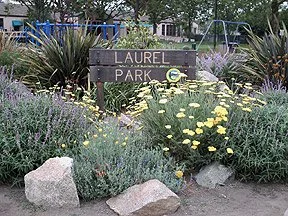
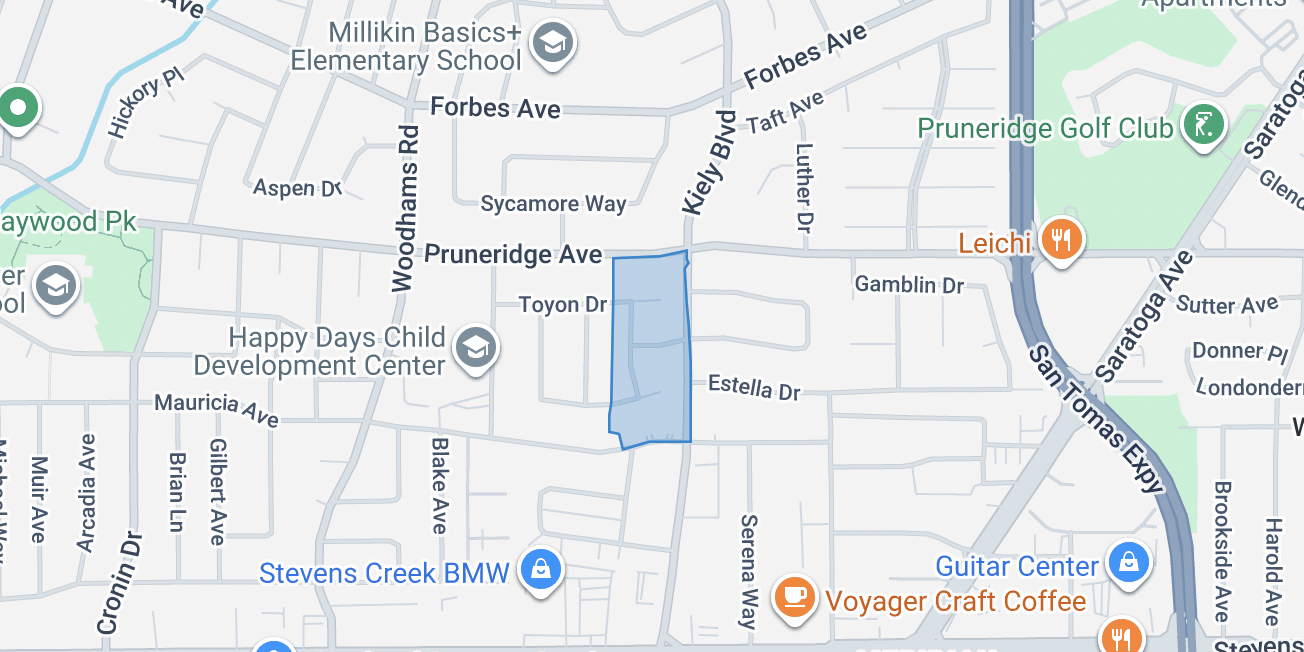
Tucked between the foothills and Silicon Valley’s tech campuses, Laurel Park and its adjacent Laurel Park East enclave have become hidden-gem neighborhoods of North Mountain View. Tree-lined streets showcase an eclectic mix of mid-century ranches and modern estates, all within a few minutes of Google’s headquarters and downtown Mountain View. Residents here enjoy suburban tranquility without sacrificing urban convenience – Castro Street’s shops and cafes are moments away, and Highway 101 or Caltrain delivers an easy commute across the Bay Area. With homes in zip code 94043 averaging around $1.59 million (as of early 2026), this pocket commands a premium that reflects its location and lifestyle appeal. It’s no coincidence that Mountain View luxury real estate pros like The Boyenga Team specialize in these tracts – Eric and Janelle Boyenga are locally renowned agents who understand exactly why affluent buyers and growing families flock to Laurel Park.
Historical Overview
Laurel Park and Laurel Park East trace their origins to Silicon Valley’s post-WWII suburban boom. In the early 1970s a California developer (Ditz‑Crane, under the “Bilt‑Rite” name) built out the initial tract blocks on what is now Laurel Park. The homes were classic single‑story ranch designs, each on generous ~8,000–9,000 sq ft lots, reflecting the era’s California indoor‑outdoor living ethos. Over time the neighborhood has evolved gracefully: many original ranchers remain, updated with modern finishes and technology, while other lots have seen sensitive teardown/rebuilds. Today the architecture spans from intact 1970s ranches and Eichler‑inspired midcentury homes to completely new contemporary estates. Throughout this evolution, care has been taken to preserve the streets’ mature trees and park‑like feel – a nod to Mountain View’s city standard of about 3 acres of parkland per 1,000 residents. These thoughtful upgrades and renovations have helped Laurel Park maintain its reputation as a quietly coveted North Mountain View enclave.
Architectural Diversity & Housing Inventory
The housing in Laurel Park is unusually diverse for its size. You’ll find charming California ranch houses (single‑level, 3–4 bedrooms, 1,800–2,500 sq ft) sitting alongside ultra‑modern rebuilds. For example, one typical ranch (4BR/2.5BA, ~2,086 sq ft on an 8,050 sq ft lot) was sold a few years ago – illustrating the classic footprint here. Many of these ranch‑era homes have been tastefully enlarged or reimagined; owners often install gourmet chef’s kitchens, La Cantina wall‑opening glass panels, and luxurious master suites. In the past decade especially, a wave of new construction has infused the streets with sleek contemporary design. These modern estates often push 3,000+ sq ft, with 4–5 bedrooms, lofty ceilings and seamless indoor‑outdoor flow (bi‑fold doors, covered outdoor kitchens, and saltwater pools are not uncommon). The result is a neighborhood where Silicon Valley sensibility meets midcentury charm – appealing to tech executives and design‑savvy buyers alike. This blend of well‑kept classic homes and move‑in‑ready modern builds is a key reason Laurel Park appeals so strongly in today’s market.
Demographic & Socioeconomic Profile
Laurel Park residents epitomize Mountain View’s blend of global tech affluence and suburban family life. Mountain View’s population is roughly 87,000 (mid‑2024 estimate) with a median age of about 35. The city is highly educated (roughly 75% of adults hold a bachelor’s degree or higher) and economically vibrant: median household income in 2024 was around $189,917, with virtually full broadband access (96%) and 97% computer ownership. Demographically, Mountain View is diverse: about 39.6% of residents are White, 36.3% Asian, and 17.5% Hispanic, and nearly half speak a non-English language at home. Roughly 42.9% of residents were born abroad, many drawn by Silicon Valley’s tech jobs. In Laurel Park specifically, the population skews toward high‑income tech professionals, managers, and dual‑career families. Homeownership is common (despite MV’s citywide owner‑occupancy rate around 38%), and it’s typical to see multiple generations living nearby or commuting from home offices. Notably, Mountain View’s Skyline High (an alternative school) and Mountain View–Los Altos High School District see high demand for housing, reflecting that this community is heavily oriented toward education and family‑friendly stability.
School Districts & Education Landscape
Education is a cornerstone of Laurel Park’s appeal. Children here attend top‑tier public schools in the Mountain View Whisman (K–8) and Mountain View–Los Altos Union High (9–12) districts. Whisman schools are consistently rated above average, with standout campuses like Stevenson Elementary and Crittenden Middle (both California Distinguished Schools). At the high school level, Mountain View High School and Los Altos High School offer rigorous IB and AP programs, and MVLA was recently named the No. 1 school district in the Bay Area and No. 2 in California (per Niche’s 2026 rankings). This elite status – along with a four-year graduation rate around 94% – underpins the premium home values here. In practice, many Laurel Park parents cherish the short walk or bike ride to Alta Vista or Landels Elementary and Crittenden or Graham Middle, then a quick drive to Mountain View High. The result is a competitive, college‑preparatory environment: about 78% of MVLA graduates enter college “right out of the gate”. In addition to public options, affluent residents have nearby private school choices (e.g. Castilleja, St. Francis, Priory, Harker) and convenient access to major institutions like Stanford University (about 7 miles away) and Santa Clara University, enriching the community’s intellectual life.
Neighborhood Lifestyle & Attractions
Residents of Laurel Park enjoy an enviable California lifestyle. Parks and Recreation:Rengstorff Park (201 S. Rengstorff Ave) is the closest major park, offering sports fields, tennis courts, a dog run, and an outdoor pool – perfect for weekend family outings. Just north lie open spaces like Cuesta Park (with its horses and hiking trails) and Shoreline Park (wind surfing and a lake by Google’s campus). The city’s network of bike paths – including the Stevens Creek Trail – allows easy recreation, whether jogging by creeks or biking to the Baylands. Shopping & Dining: Just 3–4 miles south, downtown Mountain View’s Castro Street is a cultural hub. Here you’ll find dozens of cafes, bistros, and boutique shops along a lively pedestrian corridor. Every Sunday morning, the Mountain View Farmers’ Market at the Caltrain station (600 W. Evelyn Ave.) draws over 80 local vendors, adding farm‑fresh convenience to daily life. Community & Culture: Mountain View’s tech‑urban vibe coexists with small‑town charm. Local events like concerts at Shoreline Amphitheatre or food festivals on Castro foster community spirit. For daily needs, residents have quick access to shopping centers (e.g. the new Calle 23 or Old Mountain View’s historic Castro District) and medical services. Importantly, busy professionals appreciate that Laurel Park’s tranquil streets still connect easily to the city’s pulse: the neighborhood is well served by city buses and a steady stream of Google shuttle vans. All told, the lifestyle here combines the best of Silicon Valley: outdoor recreation and top schools plus cosmopolitan convenience.
Commuting & Tech Access
Strategic location is a major draw for tech professionals. Laurel Park sits minutes from the Googleplex (Alphabet’s headquarters), and is also convenient to other tech giants: Apple is ~8 miles south in Cupertino, LinkedIn 5 miles west, Meta (Facebook) ~8 miles north in Menlo Park, and Intuit just up the road. For commuters, the neighborhood has superb transit options: Highway 101 and 85 are each just a few minutes’ drive away, and Central Expressway provides an alternate route across the peninsula. The Mountain View Caltrain station (0.8 mi) offers rapid train service from San Francisco to San Jose, and VTA light rail (at Old Ironsides station) connects to nearby tech campuses. Even downtown Mountain View is bike‑friendly; many execs cycle the 3‑mile route to Google in under 20 minutes. In short, living in Laurel Park means being exceptionally well‑positioned in Silicon Valley’s job network. Combined with the short commutes, this connectivity only heightens the demand (and thus prices) for homes here.
Real Estate Market Analysis
Laurel Park’s real estate market reflects Mountain View’s overall premium. Citywide, the median sale price is about $1.72M (as of early 2026), with average home values near $2.0M. Zip code 94043 (encompassing Laurel Park and much of North MV) has an average home value of $1,592,957 and has seen about a 2.6% drop year-over-year – illustrating the broader cooling trend since the 2020–2022 boom. Still, inventory remains ultra-low. There were only about 41 homes for sale in 94043 as of Feb 2026, and properties now go under contract in roughly 2–3 weeks. Put simply, demand far outstrips supply.
This scarcity is driven by Laurel Park’s unique advantages: lot sizes here are larger than in many parts of Mountain View (8,000+ sq ft versus the city’s typical 6,000 sq ft), and buyers value the neighborhood’s proven track record. Indeed, newer custom homes here often list for well over $1,000 per sqft, whereas older ranches might sell closer to $500–600 per sqft depending on condition. In recent years, overall appreciation in Mountain View has outpaced national averages – driven by the tech industry’s growth – so buyers looking at Laurel Park expect continued long-term value gains. When compared to nearby communities, Laurel Park often commands a slight premium: Palo Alto’s exclusive tracts trade at even higher levels, but Sunnyvale or Santa Clara’s southern subdivisions (across San Tomas) are generally a notch lower. This positions Laurel Park as a sweet spot for Silicon Valley homebuyers: offering most of Palo Alto’s commute convenience and school quality at a relatively better value.
Case Studies & Sales Examples
Concrete sales help tell the story of Laurel Park’s market. For example, on the Santa Clara side of San Tomas (often considered the continuation of Laurel Park), a mid-century ranch at 2637 Gamblin Drive (4BR/2.5BA, 2,086 sq ft on an 8,050 sq ft lot, built 1976) sold in late 2021 for $899,000. That price reflects both the home’s solid renovation and the fact it was in Santa Clara. In Mountain View’s portion, a similar 2,000+ sq ft ranch (updated with modern amenities) could easily fetch $2M+ today, illustrating the neighborhood premium. Another illustrative case: a 3BR/2.5BA remodeled home on a corner lot recently sold for over $2.4M, even though it required cosmetic updating – underscoring the strong base demand. Listings in Laurel Park often draw multiple offers; agents report that any well‑maintained home with ample light and an open layout can spark a bidding war.
Several recent sales highlight the luxury upgrades buyers expect. One 4,500‑sq ft custom estate (newly built in 2025) featuring a high-end chef’s kitchen, steel-framed windows, and a 1,000‑sq ft detached ADU, closed above its $4.5M asking price. Another classic split‑level was transformed into a seamless single‑story plan by removing walls and adding glass sliders, and it too sold in the $3M range. These cases underscore a clear trend: North Mountain View buyers prioritize designer finishes, high Ceilings, and indoor‑outdoor living – features The Boyenga Team often cites to maximize a home’s value. The case studies confirm that even as markets shift, Laurel Park homes remain extremely desirable because they offer large lots, great schools, and lifestyle that tech buyers prize.
The Boyenga Team Advantage
When navigating Laurel Park’s competitive luxury market, the The Boyenga Team are the go-to local experts. Eric and Janelle Boyenga are long-time Mountain View specialists, known for their “Silicon Valley savvy” and focus on luxury, design-forward real estate. To date they have closed over 2,256 homes (>$2.3 billion total volume) across Silicon Valley – including many in North Mountain View – and maintain a $2.54 million average sales price. In short, no one matches their track record or local insight. The Boyenga Team’s data-driven approach ensures sellers list homes at the optimal price point, highlighting features that resonate with discerning buyers. Meanwhile, their deep network and Compass’s exclusive marketing tools (like targeted digital campaigns and off-market ‘pocket’ listings) connect buyers to opportunities that aren’t public yet.
For buyers, Eric and Janelle’s expertise is invaluable in finding the perfect modern estate or move-in-ready ranch in Laurel Park. They constantly scout for upcoming sales and understand which remodels pay off in Mountain View. For sellers, they provide design and staging advice to appeal to Silicon Valley tastes (for example, which kitchen or ADU upgrades will maximize ROI). Clients repeatedly praise the Boyenga Team’s comprehensive service: “Their guidance at every step helped us sell above asking,” one recent seller noted. By combining local roots (the Boyengas live nearby) with a reputation for handling high-end, architecturally unique properties, The Boyenga Team truly embody the intersection of Mountain View luxury real estate and Silicon Valley innovation.