
Westwood Oaks, Cupertino Real Estate & Top Schools
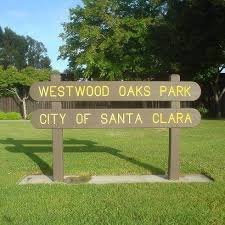
Westwood Oaks is regarded as one of Cupertino’s most desirable residential enclaves – a serene, tree-lined neighborhood prized for its quiet feel, architectural charm, and unbeatable school district access. Tucked on the western edge of Santa Clara (bordering Cupertino), Westwood Oaks offers suburban calm within easy reach of Silicon Valley’s tech hubs. Its classic 1950s ranch homes and established street-tree character belie a unique location: just minutes from Apple Park and other tech campuses. Buyers — from tech executives to design-conscious families — flock here for the combination of prestige and livability. Cupertino’s top-ranked schools (often cited by Westwood Oaks sellers) keep demand high, driving multiple-offer bidding wars and strong long-term value. In this context, The Boyenga Team emerges as Silicon Valley real estate experts; their deep Cupertino market knowledge and school-zone focus make them the ideal guides for buyers and sellers in Westwood Oaks.
Historical Overview of Westwood Oaks
Westwood Oaks is essentially a product of Silicon Valley’s post-war suburban boom. In the mid-1950s, the Bohannon Company parceled out farmland here, building tract homes (“16 more homes by Bohannon” in 1956) that laid the neighborhood’s foundation. These early ranch-style homes reflect the era’s efficient planning: family-sized lots (~6,000–7,000 sq ft) and modest, single-story footprints. As Cupertino and Santa Clara grew through the late 20th century, orchards gave way to subdivisions (Cupertino incorporated in 1955 and soon after its first housing tracts). The opening of Cupertino High (1958) and later the rise of Apple and other Silicon Valley giants accelerated population growth; by 2000 Cupertino’s population had jumped to ~50,000. Within Westwood Oaks itself, few original homes remain untouched: many owners have remodeled or expanded their ranch houses (adding vaulted ceilings or second stories) to suit modern needs. Yet the neighborhood’s low-density character endures. Unlike adjacent cities that have introduced multi-family projects, Westwood Oaks remains overwhelmingly single-family. Its historical essence — quiet streets, ranch roots, mature oaks — has largely been preserved even as land values climbed. Today Westwood Oaks represents a bridge between Cupertino’s orchard-and-ranch past and its high-tech future. Buyers and homeowners here value that continuity: the neighborhood feels timelessly residential even as new tech campuses rise nearby.
Architectural Character and Housing Inventory
Westwood Oaks’ housing stock is dominated by mid-century ranch-style homes, many on larger suburban lots. Most original structures are single-story ranches built in the late 1950s, with typical lot sizes around 6,000–7,000 sq ft. For example, a recently refreshed ranch at 548 Hubbard Avenue (built 1959) is 1,794 sq ft on a 6,512 sq ft lot. Over time many owners have expanded these homes: vaulted ceilings, indoor/outdoor flow, and even a few second-story additions. This gives Westwood Oaks a mix of “classic ranch bones” and more modern interiors. Buyers now expect open living areas and upgraded kitchens: recent sales often emphasize reimagined floor plans with gourmet kitchens and home offices. The Boyenga Team notes that “Westwood Oaks is a stable mid-century tract where thoughtful updates – especially those respecting the ranch proportions – tend to be rewarded”.
Single-story Ranch Homes: The majority of houses are postwar ranches on ~6k sq ft lots. These typically had 3–4 bedrooms, attached garages, and large backyards.
Expanded/Remodeled Homes: Many of the original ranches have been extensively remodeled. Owners commonly create open floor plans, skylights, and indoor/outdoor transitions. Some have added second levels or large family-room extensions. These remodels usually trade at a premium price per square foot.
Custom Rebuilds: A few buyers choose to tear down and build modern luxury homes. Custom infill houses often feature contemporary design, high-end finishes, and floor plans for multi-generational living. These are relatively rare but command the highest prices in Westwood Oaks.
Condo/Townhome Comparables: While Westwood Oaks itself has no condos, many entry-level Silicon Valley buyers enter Cupertino via nearby townhouse projects. Those buyers often “trade up” from condos to single-family homes here as their families grow.
In terms of size and scale, renovated homes in Westwood Oaks typically range from ~1,500 up to 3,000 sq ft. Older ranches (e.g. ~1,800 sq ft) now frequently sell in the low-to-mid $2 million range, while fully modernized or new-build homes (4+ bedrooms, 2,400 sq ft+) often reach $3 million or more. Garages are generally 2-car but some are extended or converted for additional storage or living space. Importantly, Westwood Oaks’ relatively large lots provide flexibility: side yards and backyards can support room additions or accessory structures without losing the neighborhood’s open feel.
This architectural diversity (from intact ranch to organic-modern updates) makes Westwood Oaks attractive to a broad buyer spectrum. Younger families appreciate the entry point for single-family home ownership in Cupertino, while luxury buyers seek the high-end remodels and rebuilt estates. The scarcity of homes means inventory is always tight, fueling competition. Buyers are savvy about renovation vs. rebuild economics: many prefer to pay a premium for a home where the quality-of-life improvements (designer kitchens, indoor-outdoor patios, smart-home features) have already been made. In all cases, design-forward presentation sells: an “organic-modern ranch” aesthetic – preserving horizontal lines and warm natural materials – is often cited as the sweet spot for appealing to today’s buyers.
Demographic and Socioeconomic Profile
Cupertino (and by extension Westwood Oaks) is one of Silicon Valley’s most affluent, highly-educated communities. According to census data, roughly 80.9% of Cupertino adults hold a bachelor’s degree or higher, and the median household income is about $199,778 (2017–21 data). Ethnically, the area is majority Asian (~69.4%), reflecting the global draw of tech jobs. About 53% of residents are foreign-born, underscoring a deeply international population. These metrics align with Cupertino’s role as a tech hub: many homeowners are software engineers, executives, or other professionals at Apple, Google, Facebook, Intel, NVIDIA and similar companies.
Westwood Oaks in particular attracts families and long-term owners. The owner-occupancy rate in Cupertino is extremely high (~89.3%), and Westwood Oaks reflects that trend: most homes are owned by families who intend to stay for many years. Typical households are family-oriented (average size ~2.9 persons), though a strong contingent of new-parent millennials and migrating tech workers also anchor the local base. Cultural diversity is celebrated: community events at local parks and schools often feature a mix of cultures.
Two trends are evident in recent years: first, the continued influx of Silicon Valley engineers seeking top-tier school zones has bolstered Westwood Oaks. Many of these buyers have sold condos or townhomes elsewhere to “trade up” into a single-family home with a yard and top schools. Second, savvy investors eye Cupertino as a stable, inflation-resistant market. Even with multi-million-dollar prices, rental demand remains high here – families seeking Cupertino schools will pay premium rent, and affluent retirees or executives often rent luxury homes too. In short, the Westwood Oaks demographic is one of deep pockets, high education, and a strong focus on preserving wealth and quality of life.
Schools and Education Landscape
Westwood Oaks’ desirability is closely tied to Cupertino’s stellar school system. It straddles the Cupertino Union School District (K–8) and Fremont Union High School District (9–12), which together feature some of California’s best public schools. In practice, most Westwood Oaks children attend:
Eisenhower Elementary (Cupertino Union SD): A highly-rated K–5 school (GreatSchools 7/10) serving the neighborhood. Eisenhower consistently posts above-average test scores.
Warren E. Hyde Middle (Cupertino Union SD): A well-regarded 6–8 school in Cupertino (Niche calls it “highly rated” with 77% math and 80% reading proficiency). It’s also a California Distinguished School.
Cupertino High School (Fremont Union HSD): The neighborhood’s feeder high school (known locally as “Tino”) is among the top in the state. Niche ranks Cupertino HS #33 of 1,988 public California high schools (an A+ rating). About 86% of its students are proficient in reading. FUHSD’s emphasis on STEM and college prep makes it a draw.
(For context, nearby Monta Vista High – also in FUHSD – is often mentioned. Monta Vista is ranked among California’s very best, at #98 of 1,988, with 90% of students at least proficient in math. Some Cupertino buyers choose neighborhoods specifically for Monta Vista’s reputation, though Westwood Oaks itself feeds Cupertino High.)
In sum, Westwood Oaks offers access to top public schools at every level, and this drives competition. Families often cite the school boundaries when making offers. The link between schools and property values is well-documented: homes in the Cupertino Union and FUHSD boundaries command premiums over nearby districts. Parents know that children here get an excellent education and competitive college preparation. As one measure, Cupertino’s middle and high schools routinely appear in statewide rankings and have strong college admission outcomes. This school premium helps stabilize Westwood Oaks’ real estate market; even market downturns tend to have less impact on Cupertino school-zone neighborhoods.
Neighborhood Lifestyle and Amenities
Daily life in Westwood Oaks is quintessential suburban Cupertino. Residents enjoy quiet, walkable streets shaded by mature trees. The sense of community is strong – neighbors maintain pristine lawns and often walk or bike to the local park. Westwood Oaks Park (460 La Herran Drive) is the core neighborhood green space, recently renovated (2024) with playgrounds, picnic areas and sports courts. A short drive or bike ride reaches Jenny Strand Park (250 Howard Drive) with athletic fields, plus Central Park (909 Kiely Blvd) – Santa Clara’s signature multi-amenity park with trails, playgrounds and community events.
For shopping and dining, the neighborhood combines suburban ease with nearby urban options. Main Street Cupertino – about 2 miles east – offers boutique shops, cafes, restaurants and a weekly farmers market. Franklin Square and Vallco Shopping Center (soon to be redeveloped) add grocery, retail, and cinema options. Within a few minutes’ drive are national retailers (Target, Whole Foods, etc.) as well as local staples like coffee houses and sushi bars. Health and fitness amenities abound: the Apple-owned YMCA and the upscale Cupertino Sports Center are both nearby. Jollyman Park (swimming pool/skate park) and the major recreation complex at Cupertino Memorial Park (armory, lawn bowling, dog park) are also in easy reach.
Parents especially appreciate the family-friendly vibe: sidewalks and bike lanes lead to local schools, and community centers offer preschool programs and sports leagues. Tech professionals value the work-life balance: a commute of less than 10 minutes to Apple means more time for weekend hikes in the coastal mountains or tech-free family time. For others, the convenience of valley-wide travel stands out – Interstate 280 is just east, Lawrence Expressway to the west – making any Silicon Valley destination reachable in under 30 minutes. Yet each evening brings them back to calm cul-de-sacs, kids playing street basketball, and dinners on well-kept patios.
Overall, Westwood Oaks offers a “best of both worlds” lifestyle: the prestige of Cupertino living with the tranquility of a suburban retreat. It’s the kind of neighborhood where families push strollers to the park on summer weekends, tech execs bike to work, and neighbors know each other by name. This exceptional livability – paired with schools and commute access – is exactly what draws buyers to Westwood Oaks (one of Cupertino’s best neighborhoods by every measure).
Commuting and Tech Access
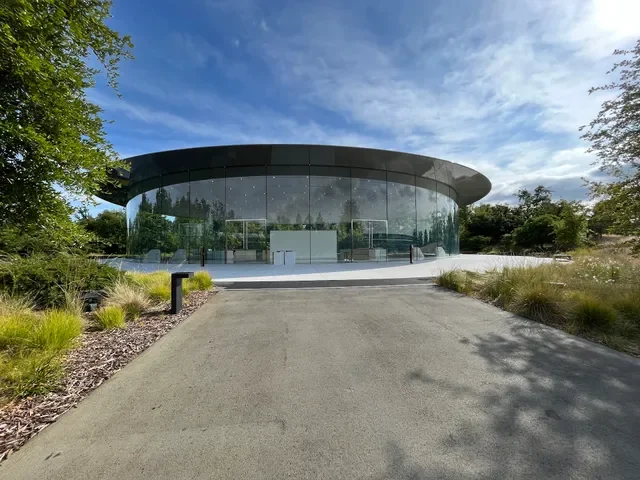
Strategically located, Westwood Oaks puts Silicon Valley jobs within easy reach. Apple Park (1 Apple Park Way) is literally a stone’s throw away; many Westwood Oaks residents work there or at nearby tech campuses. Google’s Sunnyvale campus (around Mathilda Ave) and NVIDIA’s HQ (int’l Pkwy, Santa Clara) are a short drive down Lawrence Expressway or El Camino. Intel’s main campus in Santa Clara (Mission College Blvd) is also easily accessed via Lawrence/280. Highways 280 and 85 are the major arterials: I‑280 northbound connects to 101 and points north (San Francisco/Peninsula), while I‑280 south and Lawrence bring drivers to 85/237 and the western valley. Commuting by car is generally 10–20 minutes to most Silicon Valley tech hubs. (For example, one Westwood Oaks home listing notes an “easy commute to Silicon Valley employers: Apple, Nvidia, Intel, and Kaiser”.)
Public transit options exist but are secondary. Lawrence Station (Caltrain) in Sunnyvale is about a 10-minute drive; it offers direct service to downtown San Jose and San Francisco. VTA Light Rail stations near Lawrence/Prospect provide rail access to Mountain View and East San Jose. Cupertino’s city bus lines and express shuttles serve employees at nearby campuses (Apple offers extensive private shuttles throughout Cupertino). Bike infrastructure is improving: Cupertino and Santa Clara maintain bike maps and on-street lanes, and many residents do bike commutes (especially to Apple Park). However, Westwood Oaks is best characterized as car-dependent—garages and driveways are the norm.
In summary, the location excels for tech-oriented commuters. Within Silicon Valley, nothing is far: Apple Park is a few minutes away, and the entire peninsula is reachable via major highways. For someone working at Google, NVIDIA, or even further (Menlo Park, Santa Cruz, San Jose), Westwood Oaks offers a shorter or equal commute compared to most Cupertino neighborhoods. This connectivity (the “tech commute homes” quality) is a major selling point. Buyers in Westwood Oaks rarely sacrifice convenience for school zones: here you can have both.
Real Estate Market Analysis
Westwood Oaks sits at the high end of the Cupertino/Santa Clara market, with prices reflecting both its school-driven demand and Silicon Valley location. Across all of Cupertino (city-wide), the market is extremely competitive: as of early 2026, the median home price is about $3.24 million and inventory is tight. Homes sell very quickly (around 10 days on market) with multiple offers being the norm. In surrounding areas, similar dynamics hold: for example, in Santa Clara’s 95051 zip (which includes Westwood Oaks) median sales hover around $1.8 million with only 15–20 homes sold per month. In either case, sale-to-list ratios exceed 100% (e.g. ~108% in 95051), reflecting the strong buyer competition and low turnover.
Median Prices & Trends: The past 5–10 years have seen dramatic appreciation. Around 2018-2019, Cupertino home prices surged to all-time highs (median in the $2.5–3.0M range). After a brief 2020–2021 correction, by 2024–2025 prices were back on the rise. According to Redfin, Cupertino prices jumped +33.4% year-over-year in early 2026. Westwood Oaks typically outperforms the broader area: fully modernized ranches now routinely list above $3M, and large new homes have sold over $4M. By comparison, Sunnyvale’s median is in the high $1M’s to low $2M’s, and west San Jose can be in the $3M’s for older homes. But Cupertino’s prestige and school premium ensure Westwood Oaks commands the top of the market. Even within Cupertino, Westwood Oaks houses often sell for more than average Cupertino homes in lesser school areas.
Price per Square Foot: A remodeled Westwood Oaks home can fetch well over $1,000/sq ft. For instance, a fully updated 1,800 sq ft ranch might sell for $3.2M (about $1,780/sq ft). By contrast, homes needing major work might be priced around $1,200–$1,400/sq ft. In general, $/sq ft in Westwood Oaks tracks significantly above the Santa Clara/Sunnyvale averages because the lot sizes and home conditions are superior.
Days on Market & Inventory: Listings in Westwood Oaks move very quickly. The broader market sees ~10–16 days on market, but standout homes in Westwood Oaks often go pending in a week. This neighborhood rarely has more than a handful of active listings at any time. Many homes are sold quietly or even off-MLS, which the Boyenga Team facilitates via their Private Exclusive network. For buyers, this means new listings must be watched closely and offers prepared to be competitive; for sellers, it means pricing within reason is often rewarded with multiple bids.
Appreciation & Outlook: Over a decade, Cupertino has delivered robust appreciation (well above the national average). The top-end markets like Westwood Oaks typically see modest downturns if any, given their school and community strengths. The low supply insulates values: prices rarely collapse here. Going forward, the outlook remains strong. As long as Cupertino schools remain elite and Silicon Valley employers remain strong (Apple’s headquarters alone is a huge stabilizer), Westwood Oaks is expected to maintain, if not increase, its premium. It’s seen by many experts as a relatively “recession-proof” enclave due to the quality of demand.
Competitive Dynamics: Sellers should expect competitive offers, often with appraisal/loan contingencies waived. Given the buyer pool (tech pros, executives), the ability to move fast and offer earnest-money deposits is critical. One notable pattern: homes that present well (professional staging, modern finishes, yard landscaping) frequently sell at or above list price. In 2025–2026, well-priced, renovated ranches often went 5–10% over asking, whereas homes needing updates might sit on the market longer. Entry-level bank-owned or fixer properties are rare, but when they appear they’re snapped up by flippers or investors eyeing the school rental market. Overall, Westwood Oaks consistently outperforms Sunnyvale and west San Jose on price growth, and rivals top Cupertino neighborhoods like Monta Vista for strength.
Case Studies and Example Properties
To illustrate, consider these Westwood Oaks home examples from recent sales:
548 Hubbard Avenue (4bd/2ba, 1,794 sq ft; 1959 ranch): This single-story home (on a 6,512 sq ft lot) was refreshed and marketed off-market. Its estimated value was ~$3.16 million (about $1,760/sq ft). The high price reflects both the turnkey condition and Cupertino school access.
2243 Emmett Court (4bd/3ba, 1,758 sq ft): A fully remodeled ranch on a ~6,000 sq ft lot sold in early 2026 for $2.78 million. It featured a new kitchen and master suite. The buyer profile was a local tech family upgrading from a condo.
3110 Via Siena Place (4bd/3ba, 1,957 sq ft): A two-story expansion sold for $2.36 million. This represents a more modest remodel (original 1958 structure with added second floor). The sale attracted multiple offers, with the winning bidder being a mid-career engineer relocating to Cupertino for the schools.
Accessory Comparisons: By contrast, a teardown buyer must pay land prices around $1.5–$1.7M upfront. Many owners prefer to renovate in place. For example, one seller invested ~$200k to update a 3bd ranch, then listed it at $2.3M and saw it sell for $2.4M (10% ROI on the remodel). By contrast, building a new ~3,000 sq ft home might cost $4M+, but that yield is generally achieved only by the highest-end buyer.
These cases highlight key points: upgraded mid-century homes yield the highest demand and best returns. A “move-in ready” Westwood Oaks ranch can easily top $2.5M, whereas a similar floor-plan in a lesser area of Santa Clara might go for $1.8–$2.0M. Luxury new construction (3,000+ sq ft) in Westwood Oaks can list north of $4M, reflecting the maximum ceiling on these lots. Competitive scenarios are the norm: buyers often find themselves in 5–10-offer situations. The Boyenga Team notes that when a home is well-positioned (price, staging, photography), it typically receives multiple strong bids within days.
The Boyenga Team Advantage
Eric and Janelle Boyenga in a custom remodeled kitchen (team photo).
For Westwood Oaks buyers and sellers, few agents rival the Boyenga Team’s expertise. Since 1996, Eric and Janelle have built a reputation as Silicon Valley’s “original real estate innovators”. They specialize in Cupertino and neighboring communities – especially school-driven neighborhoods like Westwood Oaks – and have sold over 2,200 homes (>$2.1 billion) in these markets. The Boyengas pride themselves on being true “Property Nerds,” blending deep local knowledge with cutting-edge technology and marketing. As one Compass profile notes, they “blend deep local knowledge with cutting-edge marketing, predictive analytics, and digital strategy to deliver superior results” across Silicon Valley, including Cupertino.
Their expertise directly benefits clients in Westwood Oaks. For sellers, they offer Compass Concierge (0%-cost renovation and staging) to maximize home presentation. They then deploy a targeted 3-phase marketing plan — from pre-launch buzz to digital storytelling — ensuring every angle (MLS, social, off-market networks) is covered. The Boyenga Team even leverages Compass Private Exclusives to discreetly sell homes off-MLS to vetted buyers, which is ideal in a tight, high-end market. This means Westwood Oaks listings get exposure to the most qualified luxury buyers while maintaining privacy if desired. In fact, the Boyengas’ own branding of Westwood Oaks as an “organic-modern ranch canvas”reflects their design-forward approach: they don’t just list homes, they craft narratives around lifestyle and architecture that resonate with discerning Silicon Valley buyers.
For buyers, The Boyenga Team is invaluable in navigating such a competitive market. They help clients identify the most promising properties – whether a mid-century gem or a teardown project – by analyzing school boundaries, zoning, and renovation potential. Because Westwood Oaks has some tricky boundary lines (a few blocks technically feed Santa Clara schools while most feed Cupertino and FUHSD), having an agent who double-checks assignment maps is crucial. Eric and Janelle will produce address-specific school verification and advise whether a buyer might also consider nearby Cupertino neighborhoods (like Monta Vista). Their negotiation skills also shine: given their track record (Top 100 teams nationally), they know how to structure bids and escalation clauses to help buyers win under pressure, or position sellers’ offers to maximize value.
In short, The Boyenga Team brings a century of combined experience in Silicon Valley’s luxury markets. They speak the language of architectural design (with specialties in mid-century and modern homes) and employ modern real estate data tools and staging strategies to give every client an edge. For anyone entering Westwood Oaks, whether buying or selling, partnering with the Boyenga Team means tapping into unparalleled local insight, the latest Compass technologies, and a genuine focus on client success.