
Maywood / Fairmede, Santa Clara (95051) – A Mid-Century Modern Oasis
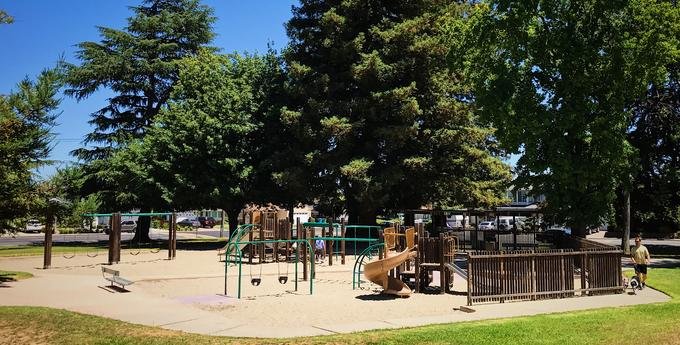
Nestled at the southwestern edge of Santa Clara, the Maywood/Fairmede neighborhood (ZIP 95051) stands out as one of Silicon Valley’s most architecturally compelling residential enclaves. Developed in the 1950s by visionary builder John C. Mackay, this tract of homes embodies the classic “California Modern” style – think clean horizontal lines, open floor plans, floor-to-ceiling glass, and seamless indoor/outdoor living. Often compared to Eichler neighborhoods (even dubbed “Eichler-style” by locals), the original Mackay homes here share the same post-and-beam aesthetics and airy atriums that define mid-century modern design.
Residents praise Maywood/Fairmede for its quiet, tree-lined streets and cohesive neighborhood feel. Families flock here for top-rated Cupertino schools, and design enthusiasts are drawn to the vintage character. Tech professionals appreciate the central Silicon Valley location – Apple’s Cupertino campus is minutes away, NVIDIA’s Santa Clara headquarters just up the road, and Google (Mountain View) and Meta (Menlo Park) are all within a short commute. In short, this is a design-forward suburb that offers the best of both worlds: Silicon Valley accessibility and authentic mid-century allure. The Boyenga Team, Silicon Valley’s Eichler and modernist home specialists, can attest to the tract’s enduring popularity: they describe Maywood Park as “a unique mid-century modern neighborhood blending architectural history with top-rated schools and Silicon Valley convenience”.
1. Historical Development
The origins of Maywood/Fairmede trace to the post-World War II housing boom. In the mid-1950s, developer John Calder Mackay (partnered with Lawton Shurtleff) founded Mackay Homes with the goal of mass-producing modernist tract houses. Mackay even hired Anshen & Allen, the same architects who designed many early Eichlers, so the homes share many design DNA points with Eichler developments.
Construction in Maywood began around 1954–1955, resulting in roughly 200 single-story homes. A few years later, in 1957, Mackay built the nearby Fairmede tract – about 100 homes designed to complement Maywood’s style. (In fact, Mackay’s other Santa Clara projects included Sunshine Meadows in 1953, which even won an AIA national design award in 1954.) These were Santa Clara’s first postwar modern subdivisions, introducing the region to the sleek “California Modern” aesthetic. Early marketing touted “Mackay Wonder Homes” with “dream kitchens” and “panoramic window walls” to bring sunlight into daily life.
Over the decades, Maywood/Fairmede evolved thoughtfully. Many original homes have been sensitively restored, with owners preserving hallmark features (mahogany paneling, wide eaves, exposed beams) while upgrading kitchens and systems. A notable trend has been adding modest expansions: since standard lots are about 6,000–7,000 sq ft, many families have built rear additions or enclosed patios to gain extra bedrooms or family rooms. Second-story additions are rarer, but at least one has been permitted to create more space. Even so, the neighborhood’s mid-century character remains remarkably intact – long-time residents note that “much remains truly original” in Maywood Park.
2. Architectural Highlights and Housing Inventory
Maywood and Fairmede boast an exceptionally cohesive mid-century modern housing stock. The tracts are filled with classic Mackay homes – single-story, post-and-beam ranches with an indoor/outdoor ethos. Key architectural features include:
Open floor plans and post-and-beam construction: Interiors minimize walls, exposing broad beams overhead. This creates flowing living spaces and allows large expanses of glass walls.
Expansive glass and sliding doors: Many homes feature floor-to-ceiling windows or “panoramic” glass walls facing backyards. Living rooms open directly to patios or courtyards, blurring inside/outside.
Private orientation: The street-facing side of the houses is often a blank wall or clerestory windows for privacy, while the rear opens fully with glass toward gardens.
Atriums and courtyards: Though not as large as later Eichler atriums, many homes have enclosed front patios or small atrium courtyards by the entrance. These serve as light-filled buffer zones and reinforce the indoor/outdoor theme.
Low-pitched rooflines: The neighborhood is known for gently sloping gable roofs and in some cases butterfly or twin-peaked roofs. These maintain a modern horizontal profile, often with broad eaves shading the glass walls.
Natural materials and vintage finishes: Original exteriors were usually vertical wood siding (plywood paneling or board-and-batten) painted in earth tones. Inside, ceilings were often Celotex fiberboard panels painted white, and walls featured drywall or rich Philippine mahogany paneling. Many homes had hardwood floors and large brick or stone fireplaces as focal points.
Built-in modern conveniences: For the 1950s, these homes had “dream kitchens” with built-in appliances and efficient layouts. Features included sliding glass doors, exposed aggregate patios, and roof sheathing for insulation – though unlike Eichlers, Mackays did not have radiant floor heating.
Typical homes in these tracts are 3-bedroom, 2-bath ranch houses. Early floor plans ranged about 1,200–1,400 sq ft. Over time, many houses have been expanded to 1,600–1,900+ sq ft by adding rooms to the rear. Lots are substantial (around 0.14 acre on average), often including a front courtyard and sizable back yard – a layout ideal for indoor-outdoor living.
Architectural appeal: The mid-century philosophy – clean geometry, honest materials, and harmony with nature – is a huge draw. Buyers love the original details: Philippine mahogany wall paneling, old-school globe pendant lights, exposed redwood beams and authentic globe door hardware. As one observer notes, well-maintained originals “are particularly sought after, often outpacing the appreciation rates of neighboring homes”. In fact, Eichler/Mackay homes are often likened to classic cars of real estate – rare collector items prized for authenticity.
3. Design Culture and Buyer Profile
The Maywood/Fairmede lifestyle attracts a specific but diverse clientele. The typical buyer here is:
Design-savvy tech professional: Many owners work in Silicon Valley’s tech industry and have an appreciation for modern design. They value the aesthetic and cultural history of mid-century homes.
Architects, designers, and enthusiasts: Serious lovers of architectural history, including Eichler aficionados, seek out these tracts as an authentic piece of California Modernism.
High-income dual-income families: With median household incomes around $196,690 in ZIP 95051 (well above regional averages) and 70% of adults holding a bachelor’s degree or higher, the area skews professional and affluent. Many homes are occupied by dual-career couples in engineering, management, or design fields.
Owner-occupants: Unlike some Silicon Valley areas heavy with rentals, Maywood/Fairmede is overwhelmingly owner-occupied. Long-term residents often belong to an informal modernist community (some streets feel like family neighborhoods).
Relocating families: Santa Clara’s connection to the top-rated Cupertino school district draws migrating families from San Francisco, the Peninsula, and other Bay Area tech hubs. Indeed, many buyers relocate from SF or the Peninsula seeking more space and better schools, while still maintaining a commute to Valley companies.
In short, this is a neighborhood where mid-century architectural culture and modern Silicon Valley affluence intersect. The design appreciation runs deep: the community has revived many original features, and local efforts (forums, social media groups) often discuss period restoration. At the same time, buyers prize the convenience of newer comforts – so they tend to fix up kitchens, bathrooms, and systems in a contemporary style that complements the vintage bones.
4. Schools and Education
One of Maywood/Fairmede’s greatest assets is its school alignment. Although the homes lie within the City of Santa Clara, they are zoned to the Cupertino Union School District (CUSD) and the Fremont Union High School District (FUHSD). This means children attend Cupertino’s elite public schools. Specifically:
Eisenhower Elementary (CUSD): A top-rated neighborhood elementary located right at the edge of Maywood Park. The school adjoins the park, making walking or biking to school trivial for local families.
Hyde Middle School (CUSD): Also a highly regarded middle school within Cupertino. It’s only a short drive or bike ride away, continuing CUSD’s strong curriculum.
Cupertino High School (FUHSD): A highly ranked high school known for rigorous academics and strong AP programs. Cupertino High benefits from the district’s tech-rich community (internship ties with companies like Apple).
All these campuses consistently receive award-winning distinctions in California. The draw of Cupertino schools significantly boosts demand and values in Maywood/Fairmede. As one local analysis notes, “buyers pay a premium for Maywood Park as it offers the style of an Eichler-like mid-century home plus the top-tier schools”. (It’s rare to get Cupertino schools with a Santa Clara address!)
Nearby private schools also serve affluent families. The neighborhood is minutes from Sacramento Street Montessori (elementary) and other private academies. Plus, for higher education, both Santa Clara University (a Jesuit university in Santa Clara city) and Stanford University (Palo Alto) are within easy commuting distance, enhancing the area’s overall educational appeal.
5. Lifestyle, Amenities and Local Appeal
Living in Maywood/Fairmede offers a distinctly suburban yet sophisticated lifestyle. The streets themselves are quiet and walkable, lined with mature trees and wide sidewalks – an unusual tranquility in Silicon Valley. At the same time, modern conveniences are just around the corner:
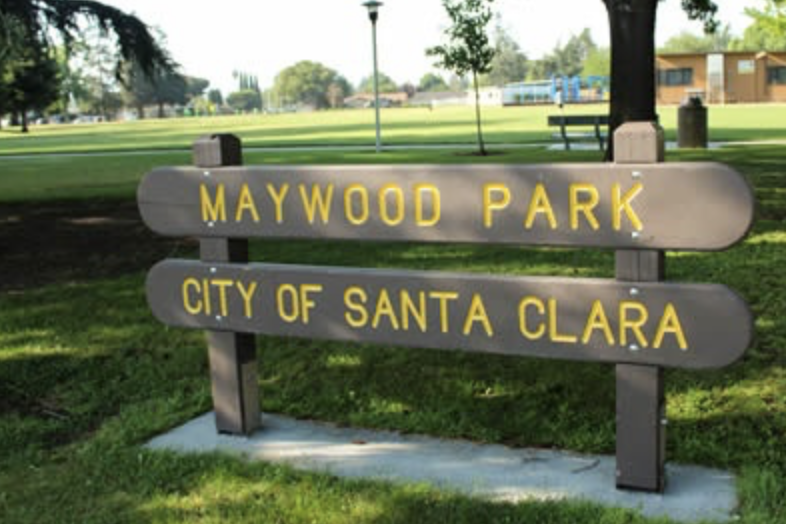
Parks and Recreation: The neighborhood’s hub is Maywood Park, a 9.5-acre green space adjoining Eisenhower Elementary. It features playgrounds, tennis courts, basketball courts, picnic areas, and a community room (reservable for events). Families and neighbors gather here for sports, barbeques, and summer concerts.
Local Shops and Dining: The immediate area around Pruneridge Avenue and Lawrence Expressway has several eateries, cafes, and shops. (For example, a Starbucks and coffee bistro sit near Maywood Park, and casual restaurants line Stevens Creek Blvd.) The Pruneridge Shopping Center to the south has a grocery store and pharmacy. For more variety, the Pruneyard in nearby Campbell and the Santana Row/Valley Fair district in San Jose (a 5–10 minute drive via 280 freeway) offer upscale shopping, dining, and entertainment.
Walkability and Community: While mostly residential, the tract is relatively walkable. A walk score reflects that some errands can be done on foot. The flat, grid layout and sidewalks encourage family strolls and bike rides. Neighbors frequently bike together to parks and schools. Local residents often organize mid-century house tours and block parties, fostering a friendly community vibe.
Farmers Markets and Lifestyle: Health-conscious residents enjoy access to fresh produce markets. Notably, the Kaiser Permanente Santa Clara Farmers’ Market operates year-round on Fridays at 710 Lawrence Expy (adjacent to a large medical center). Cupertino and Sunnyvale also host weekly farmers markets nearby. Overall, the lifestyle here is one of suburban comfort – safe streets and yards for kids, yet close to urban culture (tech campuses, coffee culture, craft breweries and foodie restaurants in Santa Clara and Cupertino).
For remote workers, the neighborhood offers serene home offices (many houses have den spaces or studies) plus community co-working options in downtown Sunnyvale/Cupertino just a short drive away. Fast internet (Santa Clara has its own fiber power utility) and a peaceful street atmosphere make working from home very livable.
6. Commuting and Tech Access
Maywood/Fairmede sits in the heart of Silicon Valley, with outstanding connectivity to the region’s major employers. Tech giants are all within a short drive:
Apple (Cupertino): Apple Park (1 Infinite Loop) is under 2 miles north – typically about a 5-minute drive via Lawrence Expressway or Pruneridge.
NVIDIA (Santa Clara): NVIDIA’s headquarters on Walsh Avenue is roughly 4 miles east, about a 10-minute drive.
Google (Mountain View): The Googleplex is about 10–12 miles south (Charleston Road campus), typically 15–20 minutes by car via 280 or 85.
Meta (Menlo Park): Meta’s Menlo Park offices lie ~12 miles north; it’s reachable in ~20 minutes via 280 or 101 on light traffic.
Cisco, Adobe, Hewlett-Packard: These and other Peninsula and Santa Clara employers are similarly accessible along 280/880/101.
Major commute routes include Highways 280, 880 and 101 all within a few miles. Lawrence Expressway (State Route 82) and Stevens Creek Boulevard are primary surface streets leading in and out of the neighborhood. For transit, the nearest Caltrain station is in Santa Clara (operated by VTA), with the Lawrence VTA Light Rail station also providing public transit. (Ride-sharing and tech shuttles are also common in the area.) The typical one-way commute to downtown San Jose is about 15–20 minutes by car, and to the Peninsula or Mountain View around 20–30 minutes, depending on traffic.
7. Real Estate Market Analysis
Maywood/Fairmede’s real estate market is exceptionally strong and competitive, driven by the neighborhood’s unique charm and limited supply. Key market indicators for ZIP 95051 (which includes this area) show a premium performance:
Home Prices: As of early 2026, the median sale price in 95051 is about $1.83–1.90 million. Prices have risen roughly 7–9% year-over-year (Redfin reports +9% YOY in Feb 2026). Zillow’s ZHVI shows an average home value around $1.905M. These figures are higher than the broader Santa Clara city median (~$1.8M) and well above nearby Sunnyvale (around $1.7M).
Price per Square Foot: 95051 commands about $1,100–$1,200 per sq ft (Redfin’s Feb 2026: ~$1.2K/ft²). This beats many nearby areas due to the design appeal.
Inventory and Days on Market: Inventory is very low. Zillow reported only ~51 active listings in late Feb 2026 for all of 95051. Homes go pending quickly – about 12–16 days on market on average. The market is “most competitive” (Redfin’s compete score 98/100), with multiple-offers common.
Sale-to-List Ratios: In the current market, well-priced modernized Eichler/Mackay homes often sell above list price. Redfin notes that in 95051, “the average home sells for about 8% above list price”. In recent competitive deals, properties have fetched $200–$300K over asking.
Long-term trends: Over the past 10–15 years, mid-century modern architecture has surged in popularity, and Maywood/Fairmede has benefited. As [30] notes, each turnover often brings high-end renovation and value-boosting improvements, fueling appreciation. The combination of rare architecture plus school and location demand means these homes have generally outperformed the broader market in prolonged upcycles. The “Eichler premium” is real: experts have quantified that well-preserved Eichler/Mackay homes can sell for roughly $1 million more than the median Silicon Valley home. This premium is driven by scarcity (fixed inventory of 200 homes) and a passionate buyer base.
Comparisons: Nearby neighborhoods like Sunnyvale or West San Jose have similar price levels, but often without the design cachet. Cupertino (especially newer developments) typically costs more, while older Sunnyvale Eichler tracts (Fairbrae, etc.) have slightly lower medians (~$2–3M for Eichlers). In Maywood/Fairmede, the Cupertino school tie actually pushes values on par with Cupertino neighborhoods, despite the Santa Clara address. Investors view this area as a solid long-term bet – it often weathers market slowdowns better, as even in a soft cycle the uniqueness preserves price floor.
8. Case Studies and Sales Examples
Original vs. Remodeled: Smaller, unaltered Mackay homes (~3-bed, ~1,200–1,300 sq ft) regularly sell above $1.5M, even without major upgrades. For instance, a standard 3/2 ranch on a 6,000 sq ft lot might fetch ~$1.6–$1.8M if in good condition. By contrast, similarly sized Eichler homes in standard Santa Clara often sell for less, highlighting the Maywood premium. Now compare to a tastefully updated home: in 2023, a ~1,700 sq ft expanded Mackay ranch with modern kitchen/baths drew bidding wars and closed around $2.3–2.5M (roughly $200K–$300K over ask). The key difference was maintaining the mid-century aesthetic while adding luxury finishes.
Expanded Homes: Many buyers add square footage. A 3-bedroom home enlarged to ~1,900+ sq ft with a new family room or bedroom can break $2.5M–$2.6M when fully remodeled. Even a modest addition (enclosing a patio) can markedly raise value. By contrast, teardown/new builds (while rare) illustrate the high land value: a tear-down plot in Maywood can be sold for well over $1.5M on its own.
Atrium vs. Hallway Plans: Some original Mackay models have central entry courtyards; others have a conventional foyer. Owners who preserved or enhanced a courtyard (e.g., with skylights or water features) tend to highlight this in listings as a design feature. Altered floorplans (for example, opening the kitchen fully to the living room) have been popular upgrades, often increasing appeal. Data suggests homes that retain original features (like wood ceilings and built-ins) command higher prices per square foot than those completely gutted, underscoring the market’s love for authenticity.
Overall, these case examples confirm one consistent theme: architectural integrity matters. A renovated Maywood Park Eichler still looks like a mid-century gem, and buyers will pay a premium for a home that “still delivers that mid-century modern ‘wow’ factor”. Conversely, homes that lose all their character (over-closed porches, small transoms instead of clerestories, etc.) tend to sell for less relative to their square footage. In bidding wars, design-conscious improvements — period-appropriate windows, restored woodwork, minimalist new kitchens — often tilt the outcome.
9. The Boyenga Team Advantage
Amidst this specialized market, The Boyenga Team stands out as Silicon Valley’s leading experts in Eichler and mid-century modern real estate. Eric and Janelle Boyenga not only sell homes here; they’ve authored in-depth neighborhood guides (as cited above) and built niche market intelligence on these properties. They know where every Mackay model is, and can pinpoint the “hidden” potential in a fixer or the subtle design nuances that attract modernist buyers.
Clients benefit from the Boyengas’ design-forward approach. For sellers, they advise on architecturally sensitive staging and renovations: e.g. restoring original ceilings and hardwood floors, then blending in high-end appliances and light fixtures that complement the vintage vibe. For buyers, the team scouts off-market Eichler/Mackay opportunities and uses Compass’s marketing to reach out to the right audience of enthusiasts.
The Boyenga Team also brings unparalleled market data to the table. Their analysis (shared in Silicon Valley Eichler publications) tracks the Eichler premium and price trends by zip code, so clients know exactly how a Maywood Park ranch should be priced versus a standard home. In short, whether you’re selling one of these homes or hunting for one, working with a specialist who “engineers happiness” through design knowledge and strategic negotiation makes all the difference.