
Sunny Brae: Santa Clara’s Hidden Gem of Diverse Homes and Upside
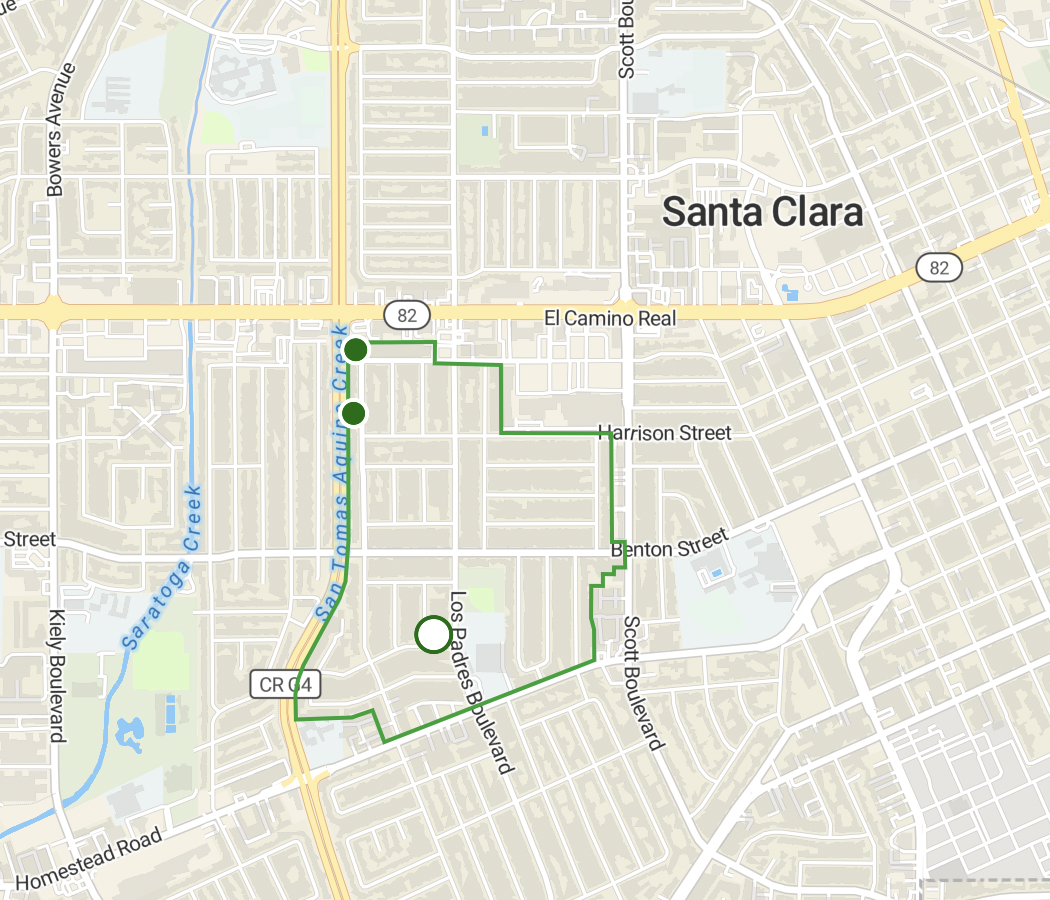
Sunny Brae is quietly earning a reputation as one of Silicon Valley’s best-kept secrets. This centrally located Santa Clara neighborhood offers an unbeatable combo of architectural variety, livable lifestyle, and investment upside. Here you’ll find original California ranch and mid-century homes side-by-side with expanded cottages and sleek modern rebuilds – not a cookie-cutter tract. Wide, tree-lined streets and a relaxed suburban feel give Sunny Brae a peaceful, hometown vibe even as it sits minutes from Silicon Valley’s tech campuses. Agents and buyers alike are drawn to Sunny Brae for its value-plus-upside proposition: solid home prices today with the flexible opportunity to renovate or reimagine the property. As Seb Frey notes, Sunny Brae is “quiet, friendly, and highly livable” – a mature neighborhood of well-maintained streets where daily life feels easy, yet “trees and quiet blocks” keep it special. (Indeed, NeighborhoodScout confirms Sunny Brae’s median home price around $2.08M – high by most measures – but still lower than pricier adjacent Santa Clara locales.)
The area’s architectural diversity is a major draw for design-conscious buyers. Homes here range from original 1950s ranches to late 20th-century updates and brand-new contemporary infills. This means a buyer might choose an affordable fixer-upper (and pay attention to its renovation potential), or opt for a turnkey mid-century gem or even commission a new-build. Experts like The Boyenga Team specialize in exactly these kinds of neighborhoods; their Compass profile touts “architectural insight” and “modern marketing” for mid-century and Eichler-era homes, underscoring the way Sunny Brae’s variety plays to design-forward buyers. In fact, Boyenga Team agents see Sunny Brae as fertile ground for creative homeowners and investors: the lack of any homeowners’ association (no HOA fees or design restrictions) means owners have full freedom to remodel, add second stories, or add an ADU (legal under the R1-6L zoning). That optionality – a chance to transform a 1950s ranch into a light-filled modern home or build out rental units – is one reason Sunny Brae has become so popular.
As Silicon Valley real estate continues its cycles, more high-end buyers (including many coming from pricier San Francisco or Peninsula markets) are targeting Sunny Brae. They’re drawn by the blend of lifestyle convenience (shopping and dining at nearby Town Center, parks, etc.) and the promise of building equity. The Boyenga Team has identified Sunny Brae as exactly the kind of neighborhood where design-minded buyers can find “value + upside” – meaning fair current prices on smaller homes plus the chance to greatly add value through renovations or new construction. This guide will delve into Sunny Brae’s history, home styles, residents, schools, amenities, commute options, market trends, and ultimately why The Boyenga Team considers it a luxury marketing opportunity for well-informed buyers and sellers.
Historical Overview
Sunny Brae’s story begins in the postwar housing boom. Unlike nearby Eichler-style tracts, Sunny Brae was largely builder-driven. Records show the neighborhood was platted around 1950–1951 on what had been farmland, with local firms (like Passeta Builders) laying out 580 homes in the tract. The city’s archives even refer to it simply as “Sunny-brae (1951)” in oral histories, placing it firmly in that early-1950s wave of suburban expansion. Originally, most houses were single-story ranchers: three-bedroom, one to one-and-a-half bath homes of roughly 1,000–1,200 square feet on ~5,500–6,000 sq ft lots. These modest but well-built homes reflected the era’s values – simple floorplans, attached garages, and big yards. They were not the work of a single architect, but rather a patchwork of local designs, so the neighborhood never felt uniform or “cookie-cutter.”
Over the decades, Sunny Brae evolved. In the 1960s–70s, many homeowners added space (attic conversions, single-level additions) as families grew. By the 1980s–90s a wave of more substantial remodels and two-story additions began, modernizing older ranches. In recent years, a handful of outdated homes have been torn down entirely and rebuilt with contemporary architecture. Notably, Sunny Brae has no HOA, so there have been no style restrictions – homeowners have felt free to customize. The result is a diverse architectural tapestry. On any Sunny Brae block you might see a 1950s ranch, a 1970s split-level, and a crisp new infill. This layered evolution (from mid-century starter homes to high-design remodels) is at the heart of Sunny Brae’s appeal: there are options. Buyers can pick from intact originals or move-in-ready modernizations.
Another historical note: Sunny Brae has remained very “neighborhood-oriented.” As Seb Frey’s overview puts it, the area’s established charm and sense of community grew out of these decades of steady ownership. Street fairs, local park events, and stable roots all echo its origin as one of Santa Clara’s long-standing suburban subdivisions. In short, Sunny Brae isn’t brand-new, but that history gives residents a sense of place and purpose – and plenty of “future project” potential for the next owner.
Architecture & Housing Inventory
Sunny Brae’s homes come in all sizes and styles. The original stock was mostly single-story ranches, and many still retain that classic look. According to local sources, the earliest houses were ~3-bedroom, 1-1.5 bath ranch homes of about 1,000–1,200 sq ft on 5,500–6,000 sq ft lots. These one-level plans typically had a living room with picture windows, a combined kitchen/dining area, and attached garage – the quintessential California ranch layout. Seb Frey notes that Sunny Brae is “defined by its collection of mid-century single-family homes” with “classic ranch-style architecture”. Many of the older houses still show those midcentury touches: low-slung rooflines, deep eaves, and the occasional sunken living room or original hardwood floors.
Over time, however, many homes have been expanded or updated. Two-story additions are common – for example, many buyers have finished out the attic or built a second level for extra bedrooms and bathrooms. This means you’ll now find something like 1.5-story houses and standalone two-stories next to the one-level originals. Interior remodels are also prevalent: kitchens and baths have been opened up, finished with modern cabinetry and stone counters. For instance, the recently sold ranch at 1343 Maryann Dr (built 1958) was fully updated and features an open kitchen with quartz countertops and recessed lighting, blending vintage charm with new finishes.
At the same time, detached accessory units (ADUs) are increasingly present. Santa Clara’s R1-6L zoning explicitly permits “secondary dwellings… and accessory dwelling units” on these parcels. In practice, that means many Sunny Brae lots have extra cottages or converted garages that rent out. This adds to the housing mix, so some blocks have a main house plus a smaller ADU or studio behind it. From an investor’s perspective, that doubles rental income potential; for families, it creates space for guests, an in-law unit, or home office.
Meanwhile, a few builders have taken advantage of Sunny Brae’s location to knock down and rebuild. These new construction homes tend to be 2-3 stories with 3,000+ sq ft and high-end finishes, pushing the price ceiling upward. (For example, an almost-complete spec home listed recently was touted at over $2.5M for ~3,000 sq ft.) But they remain a small fraction of the total. The majority of the inventory is still traditional, mostly 2-4 bedroom single-family homes.
Size ranges: Today you can find reworked ranches of ~1,000–1,500 sq ft, larger remodeled ranches up to ~2,000 sq ft, and multi-story homes from ~2,400 up to 3,000+ sq ft on bigger lots.
Lot sizes: Most lots remain around 5,000–6,000 sq ft, although there are some parcels up to ~7,500 sq ft in corner locations. Large yards make it easy to add an ADU or extension without feeling cramped.
Home styles: The prevailing look is suburban ranch/mid-century. But walk a few blocks and you’ll see everything from 1950s Eichler-ish boxes (rare) to Spanish-style stucco homes (some in the adjacent Monterey Highlands area), all the way to crisp white stucco/wood moderns on new builds. Many homes have personal touches – perhaps a stone fireplace, a vaulted ceiling added in a remodel, or an expansive deck – reflecting the “design-forward” mindset of current owners.
Buyers are attracted to this mix because it offers choice. Some want a cozy original home to fix up; others want move-in ready space. Crucially, there is optionality: if family needs grow, homeowners can add on or build up. Conversely, if buyers prefer a blank slate, they can select a teardown lot and build brand-new. In Silicon Valley’s competitive market, that flexibility is a key selling point.
Demographic & Socioeconomic Profile
Sunny Brae is a well-to-do, educated, and diverse community. A NeighborhoodScout analysis (which groups Sunny Brae with neighboring Monastery Gardens) shows that Sunny Brae’s median home value is about $2.08 million, placing it above ~91% of California neighborhoods and in the top 1–2% nationwide. Likewise, residents’ incomes reflect this wealth: the area ranks among the top ~15% highest-income neighborhoods in the U.S.. In fact, only about 2.1% of children here live in poverty, which is a very low rate.
Occupationally, Sunny Brae/Santa Clara is tech-dominated. Over half (58.6%) of the workforce are in executive, management or professional roles. (The next largest categories are sales/service at ~21.7%, then clerical/support at ~10.2% and manufacturing/labor at ~9.5%.) This aligns with the fact that many residents work at nearby Silicon Valley employers (see next section). Education levels are high; most households have at least a college degree, given the professional job mix.
The population mix is fairly multicultural. About 55.7% of Sunny Brae families speak English at home. Among the rest are sizable Asian and Hispanic households: common languages include Spanish, Vietnamese, languages of India (Hindi/Punjabi), and Chinese (Cantonese/Mandarin). Ancestry data shows around 23% identify as Asian, 19.9% Hispanic/Latino, 8% Italian, 7.5% Portuguese, etc.. In other words, Sunny Brae reflects Santa Clara’s broader diversity, with no one ethnicity dominating the scene.
Homeownership is the majority but not absolute. NeighborhoodScout notes a “mixture of owners and renters”. Many original homes are still owner-occupied by longtime residents or high-tech couples, but some have become rentals or flip-construction sites. It’s also common for younger dual-income couples (engineer/manager teams) to move in, taking advantage of both incomes to afford renovation costs or new mortgages. Over the last few years, there’s been a bit of “San Francisco to Silicon Valley” migration as well – Bay Area professionals who no longer find SF affordable or desirable are discovering Sunny Brae’s more reasonable pricing and suburban lifestyle. This trend has injected new energy, especially among tech workers seeking convenience without the Peninsula’s premium.
In summary, Sunny Brae’s people are largely affluent, well-educated, and heavily employed in Silicon Valley’s tech economy. There’s a significant family presence too, given the parks and schools. This stable socioeconomic profile (high incomes, dual earners, professional jobs) helps keep real estate demand and prices steady over time – even when the market ebbs and flows, Sunny Brae homes hold their value better than average.
Schools & Education
School quality is a major factor for Sunny Brae families, which in turn supports long-term demand. The neighborhood falls within Santa Clara Unified School District (SCUSD). The assigned public elementary is C. W. Haman Elementary (K-5), just around the corner on Homestead Road. The middle school is Buchser Middle School (6-8), a short drive away, and high schoolers attend Santa Clara High School. (All are part of SCUSD.) As of recent ratings, Haman is considered above average. According to GreatSchools, Haman Elementary scores around 5/10 (average) for test results, roughly on par with other SCUSD schools. Buchser Middle and Santa Clara High tend to score in the 3–4/10 range on GreatSchools, again reflecting typical district performance. While these are modest scores, locals often point out that school performance has been improving and that the district has made efforts to boost STEM and college readiness. In practice, Sunny Brae parents often supplement with private tutoring or clubs, or consider private schools for advanced academies. (Nearby private options include Montessori academies and Catholic schools in San Jose.)
Speaking of proximity, Sunny Brae is also centrally located near several colleges and universities. Santa Clara University (a private Jesuit university) lies just a few miles southeast on El Camino Real – many graduates and staff live in Sunny Brae. Foothill College (Los Altos) and De Anza College (Cupertino) are within 5–10 miles, serving those looking for community college or extension courses. San Jose State University is only about 6–7 miles to the southeast, and even Stanford University is reachable within 20–25 miles north. For families with older kids or adult learners, having these higher-ed options nearby is an attractive bonus. All told, the presence of steady schools and easy access to universities underpins demand for Sunny Brae real estate – buyers know that good education opportunities tend to make home values more resilient in the long run.
Lifestyle & Amenities
Sunny Brae’s lifestyle is best described as suburban convenience with Silicon Valley flair. On the local front, the biggest amenity is the Santa Clara Town Center just north of the neighborhood. This open-air shopping area, renovated in 2014, features a Super Target, Sprouts Farmers Market, HomeGoods, and a host of restaurants and shops (Bistro 33, PF Chang’s, Panda Express, and more). Residents can grab groceries, eat out, get dry cleaning, or do banking within easy walking distance of the neighborhood’s northern edge. Many Sunny Brae homes report that they’re literally in walking distance to this center – a unique convenience for a suburban tract.
Local parks and recreation add to the appeal. Steve Carli Park (formerly Sunnybrae Park) is the neighborhood’s 3-acre green space next to Haman Elementary. It offers playgrounds, picnic benches, basketball and tennis courts, and a youth baseball diamond. This park is effectively the community’s backyard – kids play here after school, and block parties or casual soccer games happen on weekends. A half-mile east, Maywood Community Park adds tennis and picnic areas, and Montague Community Center is another short drive for pool and tennis. But families also appreciate that sidewalks, mature trees, and quiet blocks make Sunny Brae itself very walkable. For example, Redwood’s Walk Score for Sunny Brae is 8.1/10, meaning “most errands can be done on foot”. Parents can safely walk to Haman or Steve Carli Park, neighbors chat on sidewalks, and after-school bike rides are common.
As for daily conveniences, residents have plenty. Within a few miles are several shopping corridors: Lawrence Expressway (with Kohl’s, Bed Bath & Beyond, etc.), El Camino Real in Santa Clara, and De Anza Blvd/El Camino in Cupertino (with restaurants and markets). Valley Fair and Santana Row are about a 10–15 minute drive, offering high-end dining and shopping. Coffee shops and casual eateries abound in the area – Sunny Brae locals mention favorites like Diedrich’s Coffee, Mayette’s Cakery, and various taquerias and cafes nearby. The bottom line: whether it’s grabbing lattes, dinner, or groceries, Sunny Brae residents rarely have to travel far.
For young families and remote workers, this balance of suburban quiet and urban convenience is ideal. Kids enjoy the parks and good safe streets, while parents like being so central to Silicon Valley. The neighborhood’s walkable feel and plenty of amenities were even cited in buyer reviews – one recent Sunny Brae homeowner noted how the home was in the “heart of Santa Clara,” within walking distance of stores, restaurants, parks, and schools. All these factors make Sunny Brae feel complete: you have suburban peace at home but everything you need just a short walk or drive away.
Commuting & Tech Access
Sunny Brae’s location is a commuter’s dream. It sits right by Highway 101 and not far from 880 and 237, giving quick freeway access to the whole Bay Area. Within minutes you can reach the Santa Clara tech corridor: NVIDIA’s headquarters (near Levi’s Stadium) is only about 2–3 miles away, just north on Great America Parkway. Apple’s main campuses in Cupertino and Sunnyvale are roughly 6–8 miles to the south, about a 15-minute drive without traffic. Google’s Mountain View campus is similarly around a 15-minute drive to the southwest. Even Meta’s Palo Alto offices are within 20 minutes north. In practice, many Sunny Brae residents report easy 15–30 minute commutes: NeighborhoodScout finds that 57.4% of residents travel 15–30 minutes one-way to work. About 74.7% drive alone, and 8.7% carpool.
In concrete terms, Sunny Brae is arguably “strategically located without the premium of the Peninsula”. Boyenga Team notes that “NVIDIA, Apple, Google are all within easy commute” from Sunny Brae. Access to freeways is excellent: U.S. 101 and I-880 both cross the northern Santa Clara area, and Lawrence Expressway provides a fast route to U.S. 101 or 237 (heading toward the Tri-Valley). To the east, 237 connects quickly to the Alviso area (though that is mostly for reach into the South Bay or North Valley). Commuters can also take Pruneridge Avenue from Sunny Brae to 85/280 via Cupertino.
Beyond cars, transit options include the VTA Light Rail: two light-rail stops (Monroe and Lick Mill) are within a mile, providing service toward downtown San Jose or Mountain View. Caltrain’s Great America Station is 2 miles northwest if train to San Francisco or Palo Alto is needed. This transit access means Sunny Brae can be both auto-centric and transit-friendly.
For those who work from home or locally, Sunny Brae checks many boxes. Tech companies’ satellite offices and design firms are scattered around Santa Clara; even if one finds themselves at home office half the time, the neighborhood has hotel co-working spaces and coffee shops minutes away. And when a commute is required, the location is hard to beat. As one Sunny Brae listing puts it, the home is just a short drive from “major employers NVIDIA, Apple, Google… and convenient freeway access”. In summary, Sunny Brae’s commuting profile is excellent: short drives to top tech campuses, plenty of highway options, and some transit alternatives, all while avoiding the longer commute headaches of more distant suburbs.
Real Estate Market Analysis
Sunny Brae’s real estate market has been solid in recent years. Median home prices are in the mid-to-high $1M range. For example, Neighborhoods.com reports closed sales in Sunny Brae running roughly $1.325M to $2.401M, with a median sale price around $1.585M. Zillow data for ZIP code 95050 (which covers most of Sunny Brae) shows an average value of about $1.63M as of early 2026. (By comparison, the adjacent 95051 area has a higher Zillow median of ~$1.91M, reflecting how Sunny Brae can be slightly more affordable than its neighbors.) In citywide terms, Santa Clara’s median home price was roughly $1.72–$1.80M in early 2026, which means Sunny Brae trades a bit below the city median. But given Sunny Brae’s lot sizes and renovation potential, many buyers see that as an advantage.
Price per square foot varies by condition. In 2021, a completely updated ranch at 1168 Block Dr (1,087 sq ft) sold for $1.35M (about $1,560/sqft), reflecting a premium for its modern finishes. In contrast, a modest unrenovated ranch at 1086 Sunset Dr (1,039 sq ft)sold for $1.13M (about $1,088/sqft). Another example: 1343 Maryann Dr (1,313 sq ft)sold for $1.58M (≈$1,203/sqft), whereas a partly original 3/1 ranch of similar size sold at the lower end of the range. These comps show that condition matters greatly in Sunny Brae. Renovated or expanded homes routinely sell at the top of the range, often exceeding $1,200–$1,500 per sqft, while “fixer” homes sell closer to $1,000/sqft or less.
Inventory is fairly tight. As of early 2026 there were only ~32 active single-family listings in 95050, a modest pool given the 580-house size of Sunny Brae. Homes move quickly: Zillow reports that Sunny Brae-area listings go to pending in about 15 days on average. Citywide, the market is brisk – Redfin noted Santa Clara’s Jan 2026 homes were selling at ~105% of list price and often in about 9–11 days on market. Sunny Brae has largely followed suit: well-priced, renovated homes frequently attract multiple offers.
Appreciation trends have been upward. From 2021 to 2024, Bay Area prices climbed significantly, and while 2023 saw a plateau, early 2024 shows renewed growth. The Redfin analysis above suggests Santa Clara values are up ~7–8% YoY. Anecdotally, many Sunny Brae homes bought in 2019–2020 have already seen ~$300K–500K equity gains by 2025. Even small homes like 1168 Block indicate this: bought at $1.35M in 2021, it’s now estimated at ~$1.72M (Feb 2026) by Redfin. For buyers, this means that sound purchases here still have built-in growth, especially once any value-boosting renovations are done.
In the new construction market, spec homes and fully rebuilt mansions in Sunny Brae can list for $3M–$4M, but these are outliers. Generally, new builds command roughly $900–$1,200 per sqft depending on finishes, a notch below the pricier clubs of Los Altos or Palo Alto. For example, a brand-new 2-story on a corner lot might be listed for ~$1,200–$1,300/sqft, or about $3M for ~2,500 sq ft. Remodel premiums can push an older house’s effective price into that range too. In short, Sunny Brae homes occupy the upper-middle tier of Santa Clara pricing: not as high as Country Club Estates or Old Quad, but stronger than south Santa Clara or Gilroy.
Compared to nearby enclaves like the Santa Clara Country Club area or North San Jose, Sunny Brae is competitive. It often sells at a discount relative to those areas while offering similar lot sizes and potential. It’s also cheaper than pricier neighborhood clusters further north (e.g., Maywood/Fairmede 95051). Buyers appreciate that bargain factor: you can get a 2,000+ sq ft updated ranch for mid-$2M here, whereas in a comparable Palo Alto tract you’d pay $3M+. The flip side is that Sunny Brae may have more older inventory to fix up.
Key Market Metrics: Recent data suggests a Sunny Brae median sale around $1.5–1.6M. Price-per-foot for updated homes often hits $1,200+, whereas fixer-uppers run ~$1,000/sqft. Typical days-on-market is under 15. Active inventory hovers in the 30–40 home range. Year-over-year appreciation has been in the high single digits. Sellers in Sunny Brae are generally seeing about 105% of list price on average, reflecting the seller’s market, especially for move-in-ready homes.
Case Studies & Buyer Behavior
To understand Sunny Brae’s market dynamics, it helps to compare specific cases:
Renovated vs. Original Homes: Buyers consistently favor turnkey homes. For example, consider 1086 Sunset Dr (built 1950, 1,039 sqft, 3BR/1BA) which sold for $1.13M. This property had many original features (it was listed as a vintage beauty with original appliances), so it attracted a modest price. Contrast that with 1343 Maryann Dr (built 1958, 1,313 sqft, 3BR/1BA) which, after a full modern remodel, sold for $1.58M. Both were similar in age but the updated house commanded ~40% more. In practice, a completely up-to-date Sunny Brae home often sells 10–20% above similar-size homes that need work.
Investor vs. End-User Demand: Sunny Brae has seen interest from both flippers and families. Investor purchases often target the cheaper, ranch-stock homes with the intent to remodel and flip. One such example was 1086 Sunset: it reportedly changed hands as a rehab project. By contrast, many end-users (tech-professionals, couples) are writing all-cash or well-financed offers on the already-modern homes or those prime for adding an ADU. The competitive dynamic means that “perfect” homes often have multiple offers, whereas incomplete or outdated ones might sit longer or require price concessions.
What Drives Offers and Pricing: Location and condition are key. Homes on quieter cul-de-sacs or in the interior of Sunny Brae can fetch a premium over those on busier fringes. Proximity to Haman School and Steve Carli Park also boosts interest for families. Design features matter: open floor plans, natural light, and big yards are commonly noted as buyer “must-haves” in listings and agent summaries. Outdoor spaces — fruit trees, patios, or room for an RV — are regularly highlighted. Finally, the potential to expand is a frequent psychological driver. Buyers often imagine adding a second story or an ADU and will outbid others on lots where those possibilities are greatest.
In summary, offer prices in Sunny Brae hinge on move-in readiness and value-add opportunities. Sellers who invest in smart upgrades (new kitchens, baths, refreshed paint/floors) consistently earn offers well above list. Renovation budgets here often pay off handsomely: spending $100K on updates might yield $150K–$200K in sale price increase. The opposite is also true: homes with deferred maintenance or outdated fixtures can see comparably lower bids, even at discount prices. Thus, even within this one neighborhood, you see a wide range in sale outcomes, driven by buyer psychology and the design-driven market.
The Boyenga Team Advantage
In a neighborhood like Sunny Brae – where architecture, design, and hidden potential reign – The Boyenga Team stands out as the expert guide. They are Silicon Valley real estate veterans who have built a brand around modern and mid-century homes. On their website, the Boyenga Team explicitly labels themselves “mid-century / Eichler real estate experts”, signaling the exact niche Sunny Brae belongs to. This emphasis on “architectural insight” and “modern marketing” is more than tagline; it reflects years of selling the type of homes Sunny Brae offers. For sellers, the Boyenga Team uses high-end visuals (professional photography, digital renderings of potential expansions, video tours) and Compass’s tech tools (Compass Coming Soon, Collections, targeted social ads) to generate buzz. Their Compass platform access also means they often know about – and bring to market – off-market or pre-market opportunities, which is a big plus in a tight market.
For buyers, the Boyenga Team’s deep neighborhood knowledge is invaluable. They can quickly identify which Sunny Brae properties have the highest upside – for example, a small ranch that could be doubled in size, or a corner lot ideal for a new build. They maintain long-standing relationships with local architects, designers, and contractors, so they can advise a buyer on renovation costs and feasibilities. And if a buyer is looking for an off-market deal, the team’s status with Compass gives them special feeds of “coming soon” properties not yet on the open market.
Most importantly, The Boyenga Team helps clients maximize value at every step. If you’re selling, they’ll highlight your home’s design-forward features (mid-century windows, vaulted ceilings, integrated indoor-outdoor flow) and target buyer segments who appreciate them. They’ll also tap into their network of high-net-worth buyers who specifically seek unique Silicon Valley homes. If you’re buying, they’ll educate you on which upgrades are likely to return the most equity and which neighborhoods in Santa Clara are appreciating faster. In short, they translate market data (like the sales numbers cited above) into practical strategy.
In Sunny Brae, a neighborhood of inherently “optional” homes, having a team like Boyenga in your corner means unlocking that optionality. They will spot the ADU potential, stage the house to look like a larger, livable space, and find that rare buyer willing to pay for vision. Their track record (having closed hundreds of Silicon Valley deals) and brand presence ensure that a listing gets premium exposure – whether it’s featured in a Compass luxury newsletter or picked up by Architectural Digest editors who love mid-century makeovers.
When you combine Sunny Brae’s affordable prices with The Boyenga Team’s design-savvy, the math for sellers is clear: you can confidently pursue aggressive pricing. And for buyers, working with Boyenga is like having an expert adviser on how to tap the neighborhood’s untold potential. It’s this alignment of Sunny Brae’s intrinsic “value + upside” and Boyenga’s marketing prowess that makes the community so exciting right now.